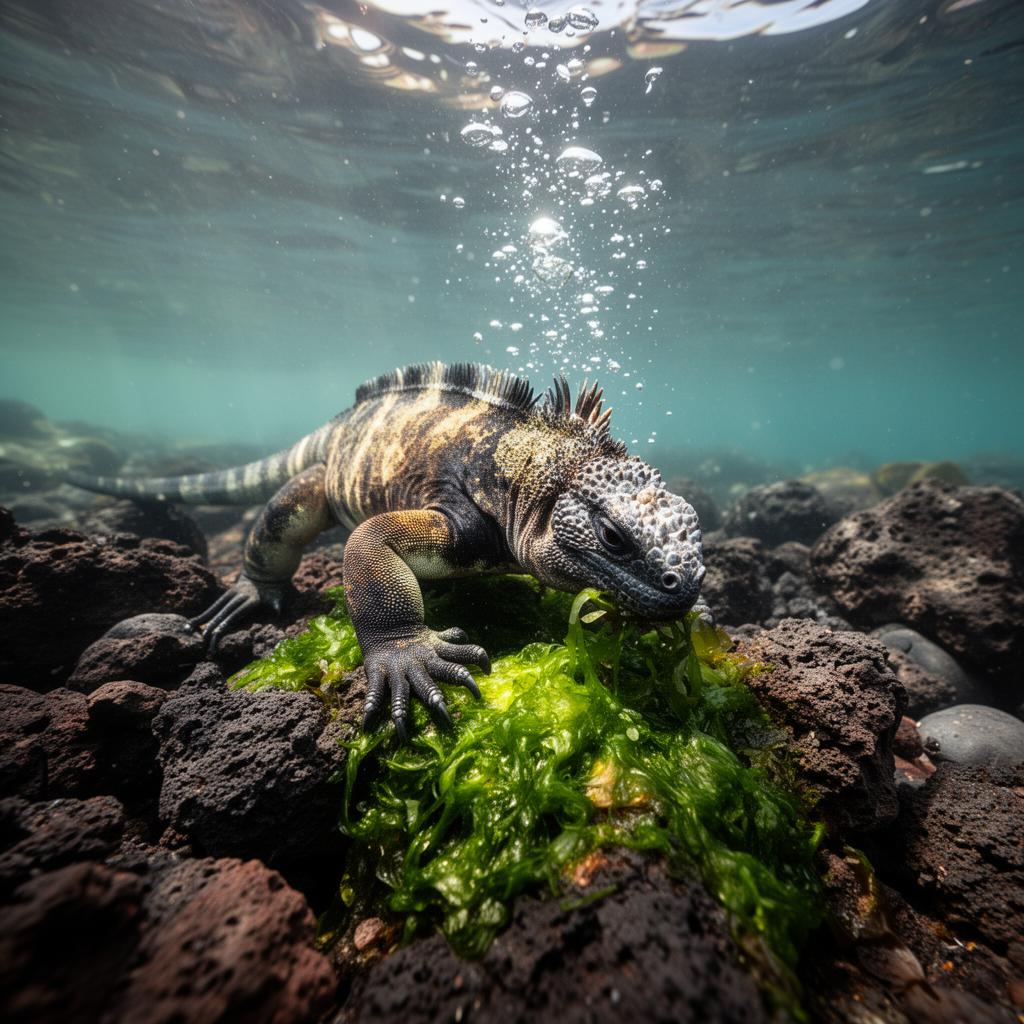
You’ve seen the iconic images, perhaps even dreamt of stepping foot on the volcanic shores of the Galápagos, following in Darwin’s footsteps. But beyond the land-based giants and the blue-footed boobies, there’s a truly extraordinary spectacle unfolding beneath the waves, one that continues to captivate scientists and divers alike: the marine iguanas of Cabo Douglas, Fernandina. This isn’t just another dive; it’s a living, breathing testament to evolution, a journey back in time to witness a behaviour found nowhere else on Earth.
Why Marine Iguanas Belongs on Your Bucket List
Imagine sliding into the cool embrace of the Pacific, the vibrant blues giving way to the darker hues of the deep, and then, you see them. Not sleek fish or graceful sharks, but prehistoric-looking lizards, perfectly at home in an environment alien to their reptilian kin. Marine iguanas are a true biological anomaly, the world’s only seagoing lizards. This isn't a fleeting glimpse; at Cabo Douglas, you'll witness them in their element, defying all expectations as they plunge into the ocean to forage. It's a surreal, humbling experience that speaks volumes about the incredible adaptability of life on our planet.
The "WOW" factor here isn't about size or vibrant colour, but about sheer uniqueness and ancient lineage. These aren't just animals performing a trick; they are living fossils, perfectly evolved for their niche. Divers who appreciate evolutionary marvels, unique animal behaviours, and a genuine sense of discovery will find this experience deeply rewarding. It’s for those who look beyond the typical reef scene, seeking an encounter that stays with you long after you’ve toweled off. To be in the water, watching these creatures battle the currents and temperatures, is to connect with a wildness that transcends the ordinary.
For Darwin, these creatures represented a puzzle, an enigma that fueled his theories. For you, they represent a chance to witness nature’s ingenuity firsthand. This truly is a globally unique encounter, a testament to the Galápagos' unparalleled biodiversity. It distinguishes itself from other "bucket list" dives by offering a window into a specific, highly specialised behaviour of a species found nowhere else. It's not just a dive; it's an educational and awe-inspiring pilgrimage for the true nature enthusiast.
What You'll See and Do
At dive sites like Cabo Douglas on Fernandina Island, the spectacle begins almost immediately. You’ll typically approach the dive site via tender, often spotting iguanas basking on the dark volcanic rocks, absorbing the morning sun. Once in the water, usually after a surface swim towards the shore, the real show commences. You'll observe marine iguanas, specifically the subspecies Amblyrhynchus cristatus cristatus, gracefully (or perhaps, comically, depending on your perspective) propelling themselves through the water, sometimes in groups. Their flat tails act as rudders, while their powerful, clawed feet give them purchase on the rocky seafloor.
The primary behaviour you'll be privileged to witness is their feeding. These cold-blooded reptiles dive to surprising depths, often up to 15-20 metres (50-65 feet), though you’ll often see them much shallower, diligently grazing on the red and green algae that cling to the submerged volcanic rocks. Watching them scrape the algae with their blunt snouts, their nostrils closing tightly, is mesmerising. After a foraging session that can last from a few minutes to half an hour, they return to the surface, often quite cold, to warm themselves on the sun-drenched lava flows. Other marine life typically encountered in these cooler waters includes Galápagos sharks, white-tip reef sharks, colourful endemic fish such as the Galápagos damselfish, and a variety of rays and often playful Galápagos sea lions.
Dive styles in this area usually involve drift dives along the coast, allowing you to cover more ground and observe more iguanas without expending too much energy. Depths usually range from 5 to 20 metres (16 to 65 feet), making it accessible for most certified divers. The focus is always on observation and respectful encounter, giving these unique creatures plenty of space to carry on their daily routines undisturbed. Your dive guide will be adept at spotting feeding iguanas and positioning the group for optimal viewing opportunities without intrusion.
Best Time to Go
The Galápagos offers exceptional diving year-round, and the marine iguana experience is no exception. However, there are seasonal nuances to consider. The "warm" season, from December to May, brings warmer water temperatures, typically 24-28°C (75-82°F), and calmer seas, though nutrient upwellings are less pronounced. The "dry" or "cool" season, from June to November, sees water temperatures drop to 18-23°C (64-73°F), with ambient air temperatures around 20-25°C (68-77°F). This period is characterised by the nutrient-rich Cromwell Current, leading to richer marine life and more active feeding behaviour from the iguanas.
Visibility can vary greatly throughout the year and even day-to-day, but generally ranges from 10 to 25 metres (33 to 82 feet) at Cabo Douglas. The richer the water in nutrients, the lower the visibility might be, but this trade-off is often worth it for the sheer abundance of life. Currents can range from mild to strong, particularly in certain channels and around headlands. While marine iguanas are present year-round, some divers prefer the cooler months for the increased marine activity, accepting the trade-off of colder water and potentially choppier surface conditions. Ultimately, anytime is a good time to witness this unique spectacle, as their feeding behaviour is a daily necessity regardless of the season.
How to Dive Marine Iguanas
Accessing the remote dive sites around Fernandina Island, including Cabo Douglas, is almost exclusively done via liveaboard. Day trips simply don't have the range or time to reach these pristine, outer islands. A liveaboard experience not only provides unparalleled access to these remote locations but also offers a more immersive journey through the archipelago, allowing for multiple dives and encounters. Reputable liveaboards ensure you visit the best sites at optimal times, maximising your chance for unforgettable interactions with marine iguanas and other iconic Galápagos species.
In terms of certification, an Open Water Diver certification is the minimum requirement, but it’s highly recommended that you have at least 50-70 logged dives and genuinely feel comfortable in varied conditions, including currents. An Advanced Open Water certification is beneficial, as it provides experience with deeper dives and navigation. We strongly recommend earning a Nitrox certification prior to your trip, as enriched air allows for longer bottom times, particularly valuable for observing these unique behaviours. A Drift Diver specialty course would also be highly advantageous given the common presence of currents. For gear, a 5mm or even 7mm wetsuit with a hood is advisable, especially during the cooler months, due to the colder water temperatures. Bring your own masks, fins, and computers, and ensure your regulator is recently serviced. A dive light can also be useful for peering into crevices where other critters might hide, though it's not essential for the iguana encounters themselves.
Conservation and Responsible Diving
The Galápagos Islands are a UNESCO World Heritage site and a protected national park, making conservation paramount. When diving with marine iguanas, ethical behaviour is key. Maintain a respectful distance, typically at least two metres (six feet), and absolutely never attempt to touch, feed, or interfere with them. Remember, you are a guest in their natural habitat. Avoid sudden movements or loud noises that could distress them. When photographing, use natural light where possible, and avoid flash photography that could disrupt their behaviour. Your dive guide will reinforce these practices, ensuring that your presence has a minimal impact on these vulnerable creatures. By adhering to these guidelines, you contribute to the ongoing preservation of this extraordinary ecosystem, allowing future generations to witness the same astounding natural wonders.
Plan Your Trip
Ready to witness Darwin’s perplexing lizards in their element? The marine iguanas of Cabo Douglas offer an unparalleled dive experience, a true journey to the heart of evolution. Browse Blue Rides’ selection of premium Galápagos liveaboards and embark on the adventure of a lifetime, where ancient wonders meet modern exploration.
