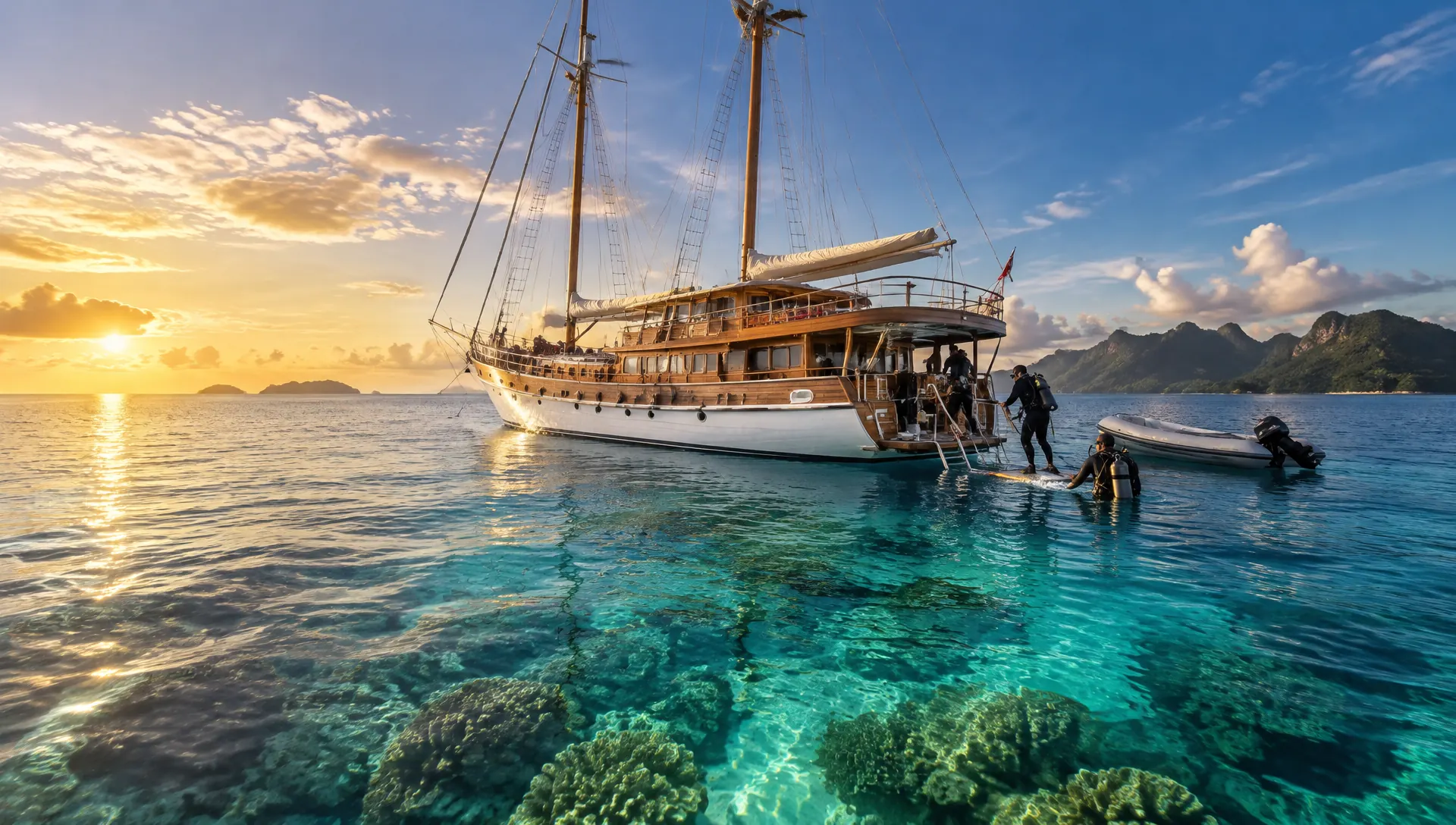
The captain reroutes to sheltered sites or shortens crossings. Trips are almost never cancelled mid-week, and the diving usually continues with a changed site list.
Weather is the normal variable of liveaboard diving rather than an exception, and every captain plans around it. Wind, swell and current dictate which sites are safe on any given day, and the itinerary you were sent is a plan the crew adapts continuously.
What typically happens in poor conditions: the boat moves to the lee side of an island, swaps an exposed offshore pinnacle for a sheltered reef, shortens or reschedules a crossing, or reorders the week so the exposed sites are dived when the forecast improves. Diving continues; the site list changes.
In extreme conditions — a tropical storm, a port closure, or a national park suspension — a trip can be shortened or cancelled outright. Operators then normally offer a pro-rata refund or a credit for a future departure, and this is exactly where trip insurance covers the rest of your costs.
How to reduce the impact: travel in the destination's main season, choose a larger steel-hulled vessel if you are sensitive to motion, avoid booking a flight home within hours of disembarkation, and take the captain's calls at face value. A crew that reroutes for safety is doing precisely what you are paying them for.