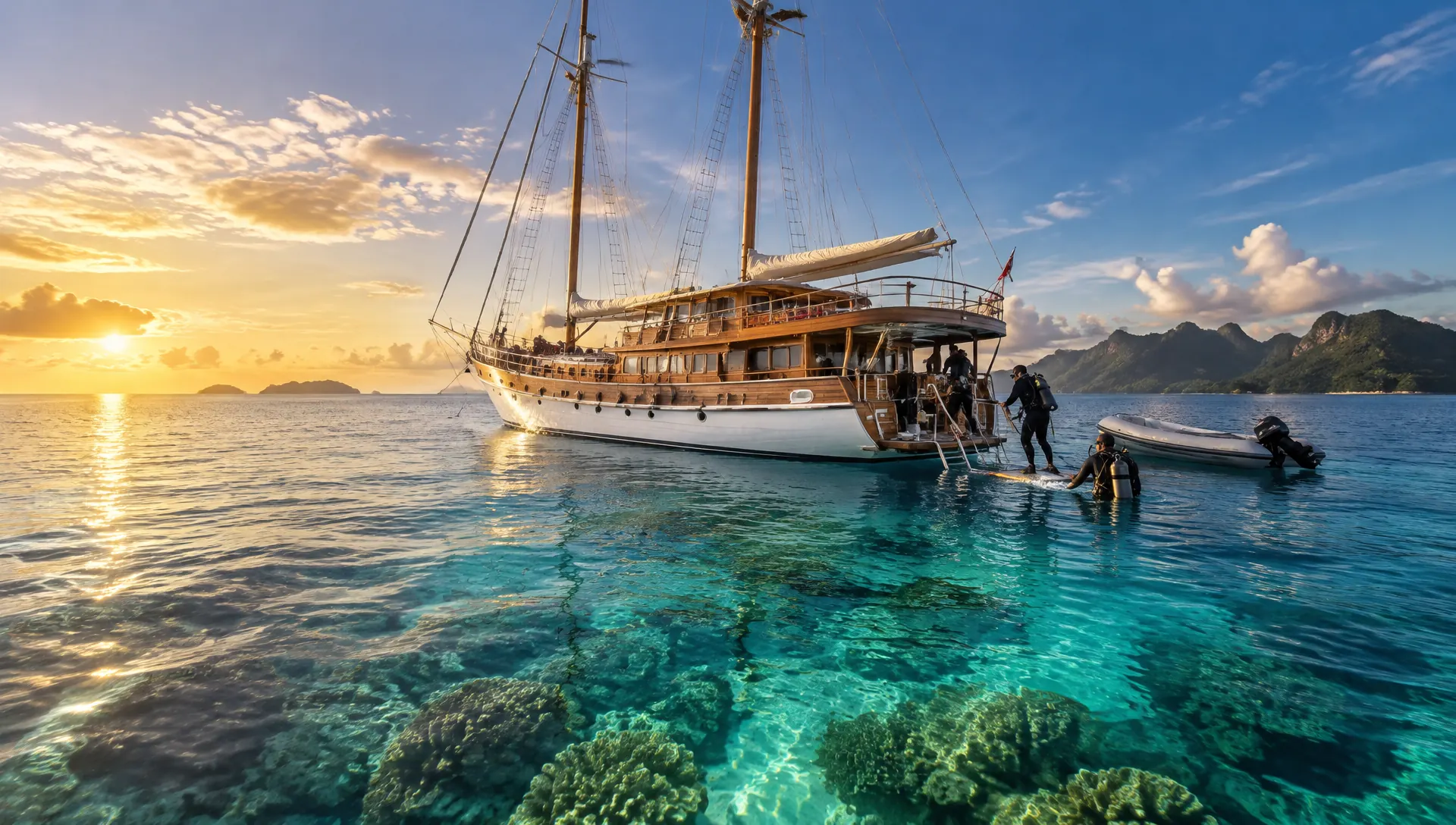
Yes. Double cabins are standard, and non-diving partners do well on itineraries with snorkelling, island stops and deck space, less so on remote expedition trips.
Liveaboards work well for couples, and most vessels have double or queen cabins alongside the twin configurations. Book early if you want a double: boats usually have fewer of them than twins, and they sell first.
When both partners dive, the format is close to ideal — shared briefings, shared dives, no logistics, and evenings on deck. When one partner does not dive, destination choice becomes the deciding factor. Itineraries with shallow snorkelling, tender drops, island walks and cultural stops keep a non-diver genuinely occupied: the Maldives, Raja Ampat, Egypt, Komodo. Expedition trips to Galápagos, Cocos or Socorro do not, and a non-diver will spend most of the week reading.
Things worth checking for a non-diving partner: whether there is a reduced non-diver rate, whether snorkelling is guided, whether the boat has shaded deck space and Wi-Fi, and whether the itinerary includes any land activity at all.
One honest caution: a liveaboard is a small space shared with 20 people for a week, and privacy is limited. Couples who want a romantic escape with long private dinners are usually happier at a dive resort. Couples who want to dive four times a day together will love it.