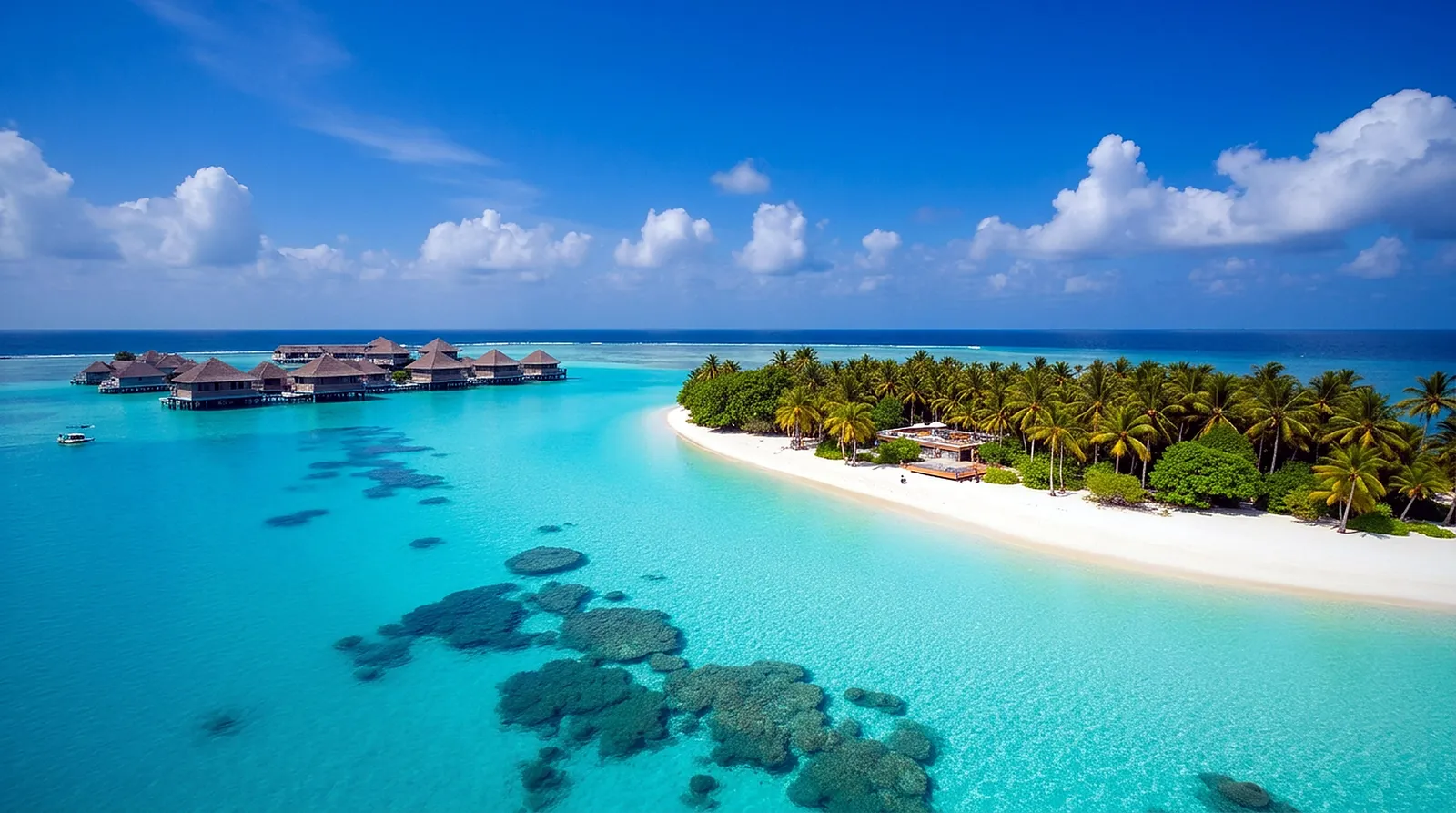
Conditions in January
Welcome to January in the Maldives, a dream come true for divers seeking pristine waters and abundant marine life. This month falls squarely within the dry season, meaning you can generally expect sunny skies and calm seas. The northeast monsoon winds are dominant during this period, but they typically bring pleasant, stable weather rather than disruptive storms. Surface conditions are usually tranquil, making for comfortable boat rides between dive sites.
Water temperatures in January are consistently delightful, hovering around a balmy 27–29°C (81–84°F) across the atolls. This warmth makes for incredibly comfortable diving, allowing you to focus on the spectacular underwater scenery rather than shivering. Visibility during this time of year is excellent, often reaching 20–30 meters (65–100 feet) or even more in certain areas, providing crystal-clear views of the vibrant coral reefs and the creatures that call them home.
Currents are a significant factor in Maldivian diving, and January is no exception. The northeast monsoon influences the water flow, typically pushing currents from east to west through the atolls' channels. These currents can range from mild to strong, especially in the more open channels, and are often the key to spotting larger pelagic species. While strong currents can be exhilarating, they also mean that some dives are drift dives, requiring good buoyancy control and a comfortable attitude towards moving water. Your experienced liveaboard crew will always brief you thoroughly on the expected conditions for each dive site.
What you will see
January in the Maldives is prime time for encountering a breathtaking array of marine life, particularly megafauna. The currents, while sometimes challenging, are the lifeblood of these ecosystems, bringing nutrient-rich waters that attract a multitude of pelagics. You can anticipate frequent encounters with reef sharks – blacktip, whitetip, and grey reef sharks are common sights patrolling the reef edges and channels. Eagle rays and stingrays are also regularly spotted gliding gracefully over the sandy bottoms or through the currents.
For many, the stars of the Maldivian show are the manta rays, and January offers fantastic opportunities to see them. While Hanifaru Bay's plankton blooms are usually later in the year, other cleaning stations throughout the central and southern atolls become hotspots. Divers often witness mantas circling gracefully as smaller fish clean parasites from their bodies. Keep your eyes peeled for schools of vibrant snappers, fusiliers, and bannerfish adorning the colourful hard and soft coral gardens.
Beyond the large animals, the Maldivian reefs are teeming with fascinating macro life. Nudibranchs, often in dazzling colours, are meticulously camouflaged on the corals, while various species of moray eels peek from their crevices. Macro enthusiasts will also delight in spotting pipefish, ghost pipefish, and a variety of shrimp and crab species hiding among the reef structures. Larger species like napoleon wrasse and various species of tuna and barracuda are also frequently sighted, making every dive a potential spectacle. The rich currents ensure a constant flow of nutrients, leading to healthy reefs that support an incredible diversity of life.
Top dive sites this month
In January, the central and southern atolls of the Maldives truly shine. While many sites are excellent year-round, the prevailing currents make certain locations particularly rewarding. For exhilarating shark action, you absolutely must visit Maaya Thila in Ari Atoll. Often referred to as "the shark factory," this pinnacle is renowned for its numerous whitetip reef sharks, often seen hunting in the evening or resting during the day. Its abundant fish life and impressive soft corals also make it a standout for day dives.
Another must-dive in the central atolls is Fish Head (Mushimasmingili Thila), also in Ari Atoll. This offers a thrilling drift dive where strong currents attract grey reef sharks, snappers, and schools of fusiliers. Further south, the atolls of Laamu and Fuvahmulah offer truly unique encounters. Fuvahmulah is globally recognised for its pelagic action, and January is an excellent time to encounter oceanic whitetips, thresher sharks, tiger sharks, and even mola mola, making it an advanced diver's paradise. Another notable site is Alimatha Jetty in Vaavu Atoll, famous for its extraordinary night dives where nurse sharks and stingrays gather in significant numbers, offering an almost guaranteed incredible close encounter.
Practical tips for your trip
Given the consistently warm water temperatures of 27–29°C (81–84°F) in January, a 3mm wetsuit is generally more than sufficient for most divers. Some experienced divers might even opt for a rash guard or shorty if they're comfortable with slightly less thermal protection. However, if you do multiple dives a day or tend to get cold easily, a 3mm full suit will provide ample warmth and protection against minor bumps or stings. Remember, liveaboards mean repeated immersion, so a little extra insulation can go a long way in maintaining comfort throughout your trip.
January in the Maldives is suitable for a wide range of divers, but it particularly appeals to those with some experience. While many sites are accessible to beginners (especially those with good buoyancy), the potential for strong currents, especially in channels and thilas, means that advanced divers will get the most out of the more thrilling encounters. Good current awareness and comfort with drift diving are recommended for fully appreciating all the Maldivian reefs have to offer this month. Liveaboard availability tends to be high in January as it's a popular month, but booking in advance is still crucial, especially with premium operators like Blue Rides, to secure your preferred itinerary and vessel.
When packing, think light and quick-drying. Besides your standard dive gear, don't forget reef-safe sunscreen, a hat, a re-usable water bottle, and any personal medications. While most liveaboards provide towels, a quick-dry towel can be handy. Because you'll be spending most of your time on the boat or in the water, comfortable swimwear and casual clothing for evenings are all you'll really need. Be aware that alcohol is generally not available on inhabited local islands, but liveaboards operate under different regulations and usually offer a bar service. Ensure you have appropriate dive insurance that covers emergency medical evacuation, as medical facilities in the Maldives, especially on remote atolls, can be limited. Embrace the currents, and prepare for an unforgettable diving adventure!
Year-round overview for the Maldives
Frequently asked questions
Is January a good month to dive in the Maldives?
What can you see diving in the Maldives in January?
Should I book a the Maldives liveaboard for January or wait?
Find a liveaboard for January
Compare available the Maldives liveaboards departing in January.
Search and Book