About HMAS Brisbane
The HMAS Brisbane, an ex-Royal Australian Navy guided missile destroyer, was scuttled in 2005 off the Sunshine Coast, Queensland, transforming into a vibrant artificial reef and a world-class dive site. This 133-meter vessel, which served from 1967 to 2001 and participated in the Vietnam and Gulf Wars, now rests upright on a sandy bottom at 28 meters, with its main deck accessible at shallower depths. Before its sinking, the ship was prepared with large entry and exit points, allowing divers to explore various internal sections like the boiler room and engine room, alongside its exterior. The wreck acts as a thriving ecosystem, attracting a diverse range of marine species that have colonized its structure over time. Conditions at the HMAS Brisbane are generally favorable, characterized by good visibility and typically mild currents, making it an accessible wreck dive for various skill levels. Its proximity to the shore also ensures a quick boat ride to the site, enhancing the overall dive experience. Due to its size, two dives are often recommended to fully explore its features and abundant marine life.
Highlights
Former guided missile destroyerArtificial reef ecosystemInternal wreck penetrationAbundant marine lifeWell-preserved structureBoiler and engine room explorationWorld-class dive site
Season calendar
Best months to dive here
Jan
Feb
Mar
Apr
May
Jun
Jul
Aug
Sep
Oct
Nov
Dec
Good
Dive site facts: HMAS Brisbane
- Depth
- 15–28 m
- Current
- Mild to none
- Visibility
- 15–30+ m
- Water temperature
- 19–27 °C
- Entry
- Boat
- Level
- Open Water Diver
- Dive type
- Wreck, artificial reef
- Night dive
- Possible
- Region / port
- Sunshine Coast, Queensland
- Coordinates
- -26.6167, 153.1333
Conditions & Currents
The HMAS Brisbane generally experiences mild to no current, making it a relatively easy wreck dive suitable for various skill levels. However, as it is located in open sea conditions, there is no protection from surrounding islands or reefs, meaning conditions can be weather-dependent. Visibility can vary daily, influenced by the predominant ocean currents rather than tides. Divers should always carry a safety sausage (SMB) and a whistle due to the open water location.
Marine life & sighting chances
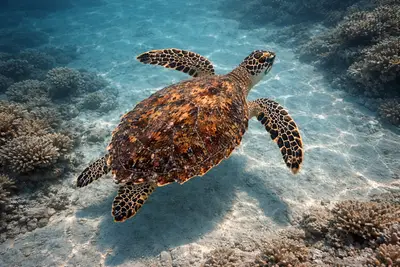
Hawksbill Turtle
common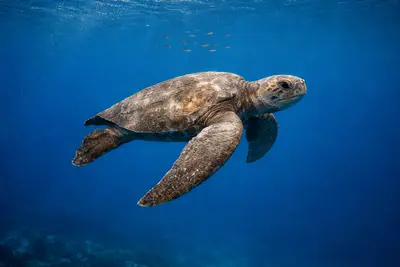
Loggerhead Turtle
common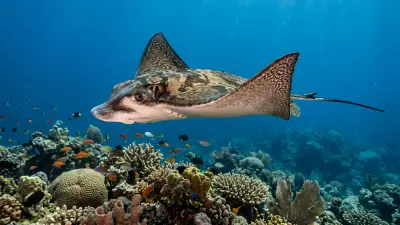
Bull Ray
commonShovel Nose Ray
common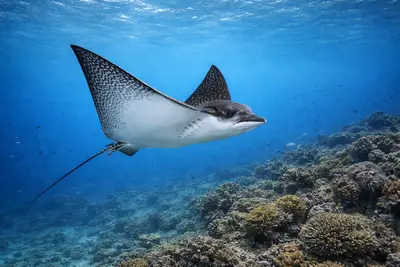
Eagle Ray
common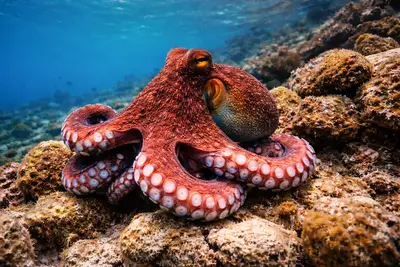
Octopus
common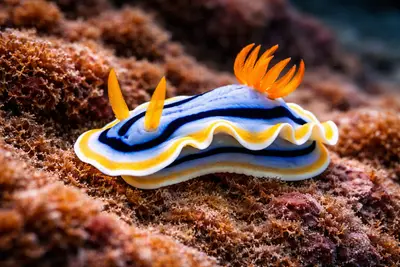
Nudibranch
common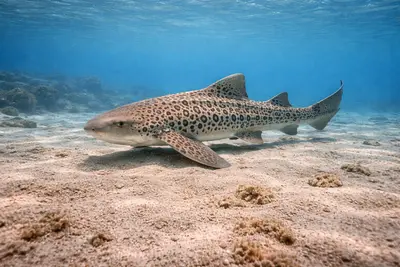
Leopard Shark
occasional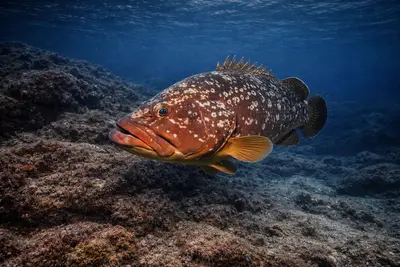
Queensland Grouper
common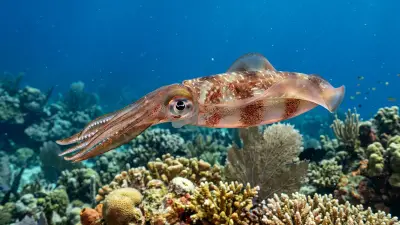
Squid
common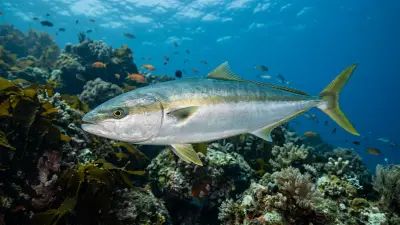
Yellowtail Kingfish
common
Red Emperor
common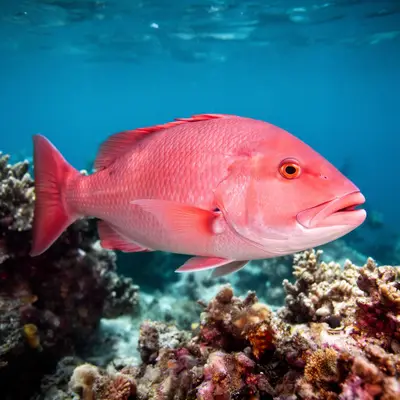
Snapper
commonDive profile & how the dive runs
Divers typically begin their exploration with an orientation dive around the exterior of the 133-meter wreck, which rests upright on a sandy bottom at 28 meters. The main deck lies around 15-18 meters, offering ample depth for Open Water certified divers. For those with appropriate training or guided by an experienced divemaster, the second dive often involves penetrating the interior through pre-cut access points. You can explore significant areas like the boiler and engine rooms. The dive route generally follows the length of the ship, allowing for observation of the diverse marine life colonizing its structure. Safety stops are conducted in the shallower parts of the wreck or during ascent.
Underwater photography
The HMAS Brisbane offers exceptional opportunities for both wide-angle and macro photography. For capturing the sheer scale of the 133-meter wreck and its various structures like the stacks and control room, a wide-angle lens is ideal. Consider using natural light in shallower areas or strobes for deeper sections and internal shots to bring out the vibrant colors of corals and marine growth. For macro enthusiasts, the wreck is teeming with smaller critters such as nudibranchs, blennies, and intricate coral details, requiring a macro lens to capture these subjects. Always maintain excellent buoyancy control, especially inside the wreck, to avoid disturbing silt and ensure clear shots.
Combine with nearby dive sites
- Wolf Rock
Wolf Rock is a spectacular dive site located just 2 kilometers off Double Island Point, near Rainbow Beach, Queensland, and marks the last…
- North Solitary Island
North Solitary Island, located within the protected Solitary Islands Marine Park off the coast of New South Wales, Australia, represents a…
- Julian Rocks
Julian Rocks, known as Nguthungulli by the local Bundjalung people, is a prominent marine reserve located approximately 2.5–3 km off the…
- Lady Elliot Island - Lighthouse Bommies
Lighthouse Bommies, situated just off the western side of Lady Elliot Island, is a renowned dive site on the Southern Great Barrier Reef…
- South Solitary Island
South Solitary Island, located approximately 8-9 nautical miles offshore from Coffs Harbour, New South Wales, Australia, is a premier dive…
Getting there & logistics
Access to the HMAS Brisbane is primarily from Mooloolaba on the Sunshine Coast, Queensland, a short 15-20 minute boat ride offshore. It is also accessible from Noosa. The Sunshine Coast Airport (MCY) is about a half-hour drive south of Mooloolaba, while Brisbane Airport (BNE) is approximately an hour's drive north. Diving the HMAS Brisbane requires booking with an authorized dive center, as it is a protected area. Trips typically involve double dives, with night dives sometimes offered. There is ample free parking and facilities like change rooms and storage available at local dive centers.
Safety & environment
Diving the HMAS Brisbane is generally safe, but adherence to specific protocols is crucial. Due to its open-sea location, divers must carry a whistle and a safety sausage (SMB). Gloves are highly recommended when exploring the wreck's exterior, as surfaces are covered with barnacles and oysters. While Open Water certification allows for external exploration, entering the wreck requires an experienced dive guide and a torch. The nearest recompression chamber is in Brisbane. Always ensure your dive insurance covers wreck diving and any potential evacuation needs, especially given that it is an offshore site.
Who it suits — and who it doesn't
Suited for
- Open Water certified divers (for external exploration)
- Wreck enthusiasts
- Underwater photographers
- Divers interested in artificial reef ecosystems
- Divers seeking a site with generally mild currents
Less suited for
- Divers without Open Water certification
- Divers unwilling to dive with a guide for interior penetration
- Divers prone to seasickness in open water conditions
- Divers with poor buoyancy control (especially for wreck penetration)
FAQ
HMAS Brisbane FAQ
Do I need special certification to dive the HMAS Brisbane?
No, you only need an Open Water Diver certification to dive the exterior of the HMAS Brisbane. However, if you wish to penetrate the interior of the wreck, it is strongly recommended to have a wreck specialty certification or be accompanied by an experienced dive guide.
What is the maximum depth of the HMAS Brisbane dive?
The HMAS Brisbane rests on a sandy bottom at a depth of 28 meters. The main deck of the wreck is shallower, typically around 15 to 18 meters, making it accessible for Open Water certified divers to explore the upper sections and exterior.
Is it possible to dive inside the HMAS Brisbane?
Yes, it is possible to dive inside the HMAS Brisbane. Large holes were purposefully created during its scuttling to allow for easy entry and exit. An experienced dive guide can escort divers through areas like the boiler room and engine room, and a torch is mandatory for interior exploration.
What kind of marine life can I expect to see?
The HMAS Brisbane is a thriving artificial reef. Divers commonly encounter various species of turtles (hawksbills, loggerheads), bull, shovel nose, and eagle rays, octopus, nudibranchs, squid, and a variety of fish including Queensland groupers, yellowtail kingfish, red emperor, and snapper.
What are the typical diving conditions?
Diving conditions at the HMAS Brisbane are generally favorable, characterized by good visibility, often exceeding 15 meters, and mild to no currents. Water temperatures range from 19°C in winter to 27°C in summer. However, as it's an open sea site, conditions can vary based on weather.
Where does the dive boat depart from?
Dive boats for the HMAS Brisbane typically depart from Mooloolaba, on the Sunshine Coast, Queensland. The site is located just 5 kilometers (2.9 nautical miles) offshore, resulting in a short 15-20 minute boat ride to the wreck.
Are night dives available on the HMAS Brisbane?
Yes, night dives on the HMAS Brisbane are possible. Diving at night offers a different perspective on the wreck and its inhabitants, as many nocturnal species become active. It's an excellent opportunity to witness unique marine behavior.
Why dive HMAS Brisbane from a liveaboard?
HMAS Brisbane is one of Australia's signature dive sites. A liveaboard sleeps you on the water and puts you in the water for three to four guided dives per day, including dawn and night dives that day-boat operators rarely offer. You skip the daily commute back to port and reach quieter, less-crowded sites in the same region on a single trip.
Below are the liveaboards that include HMAS Brisbane on their Australia itineraries.
Liveaboards diving HMAS Brisbane
These liveaboards may visit HMAS Brisbane on selected itineraries — the exact dive sites depend on departure, weather and conditions.
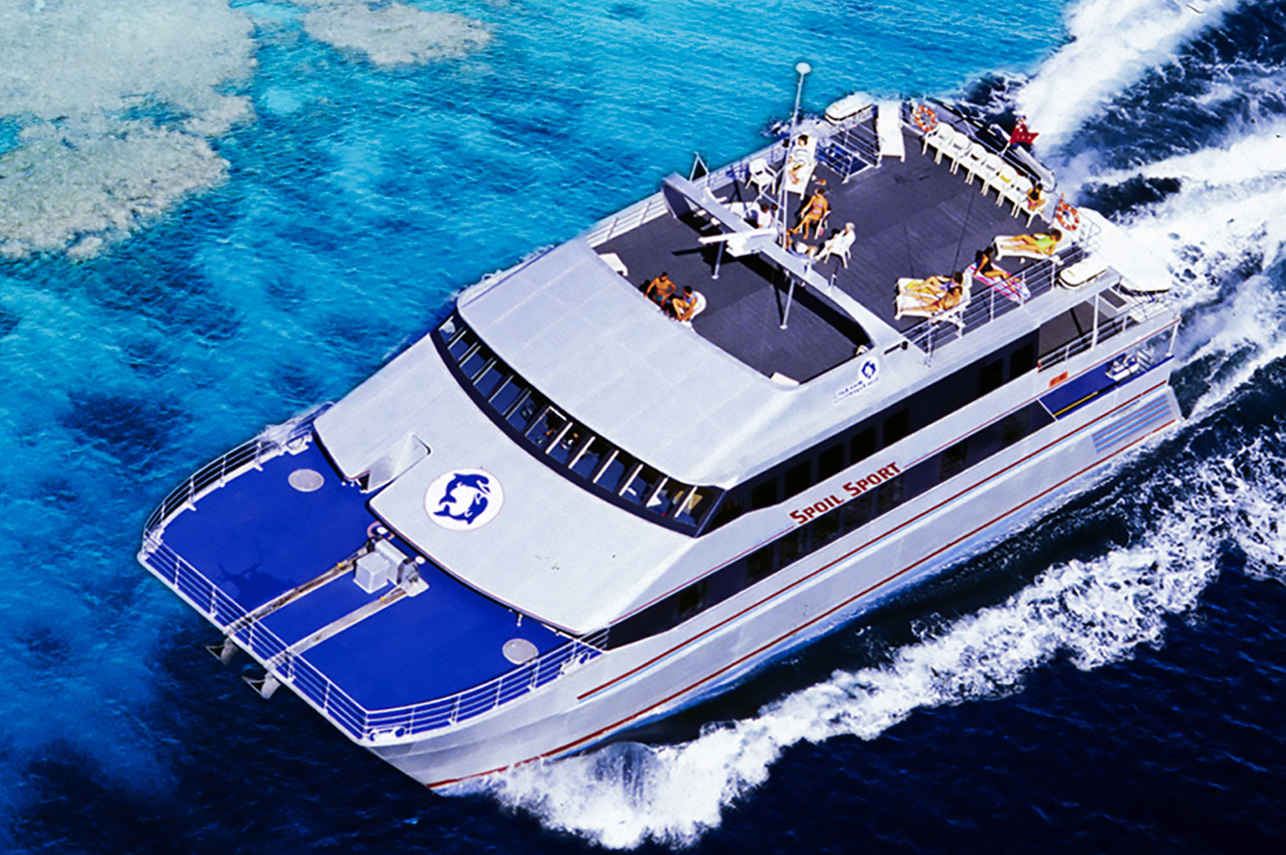
Spoilsport
Australia
28 guests30 m
$406/day
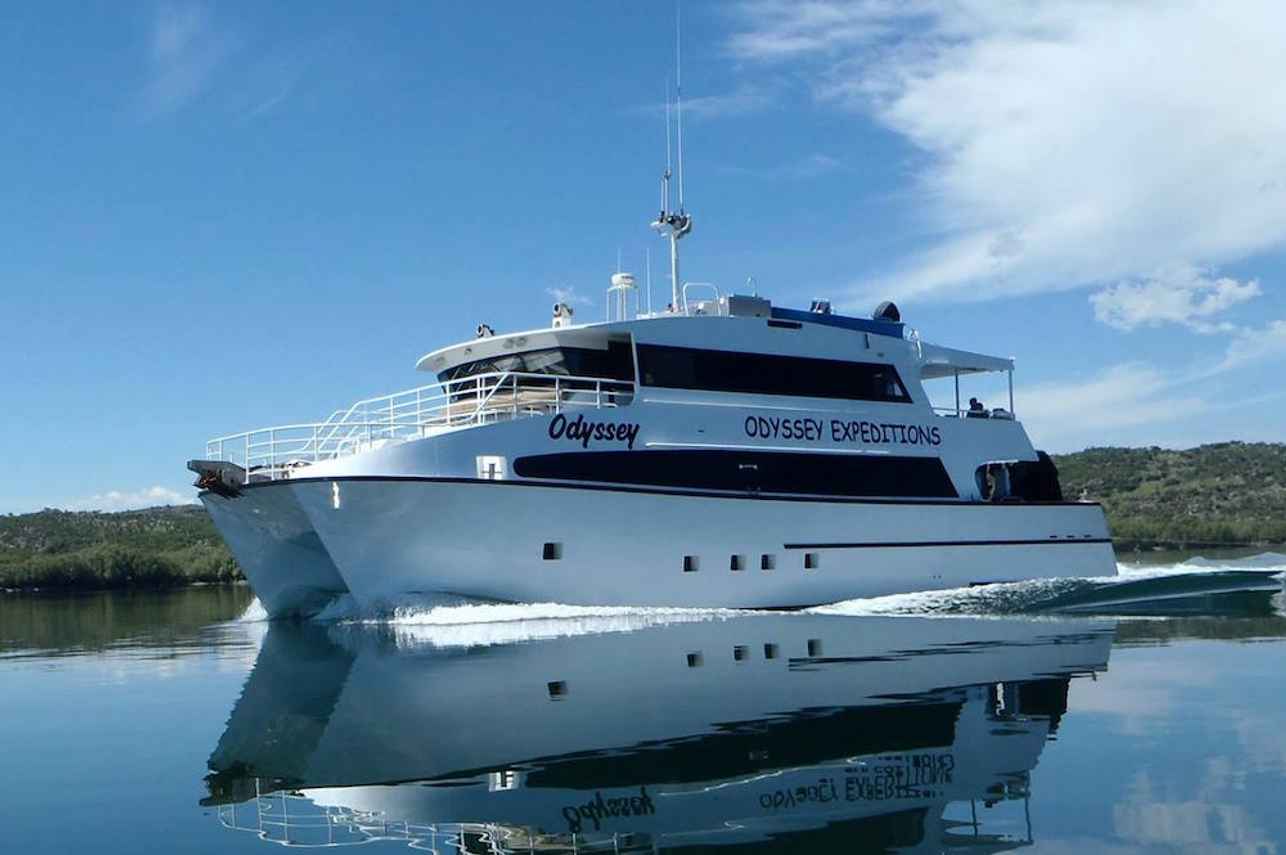
Odyssey Liveaboard
Australia
20 guests24 m
$392/day
Dive sites similar to HMAS Brisbane
Same character, same waters — six more sites divers love for the exact same reasons.Compare seasons, access and liveaboard routes — then pick the site that fits your trip best.
© Esri — Maxar, Earthstar, GIS
SS Yongala
Australia
The SS Yongala, resting off the Queensland coast in the Great Barrier Reef Marine Park, is renowned globally as a top wreck dive destination.
- Suitable for
- Advanced
- Current
- Strong
- Access
- Liveaboard or dayboat
- Depth
- 14–30 m
- Theme
- Wreck
The HMS Perth is a decommissioned missile destroyer scuttled as an artificial reef and dive site in 2001. This impressive wreck is located near Albany in Western Australia, resting on a sandy bottom off the south coast.
- Suitable for
- Advanced
- Current
- No current
- Access
- Liveaboard or dayboat
- Depth
- 25–35 m
- Theme
- Reef / Wreck
© Esri — Maxar, Earthstar, GIS
Agincourt Reef
Australia
Agincourt Reef sits on the outer edge of the Great Barrier Reef, roughly 60–72 km off Port Douglas in Far North Queensland, at the southern end of the true ribbon reefs that run…
- Suitable for
- Beginner
- Current
- Moderate
- Access
- Dayboat
- Depth
- 2–20 m
- Theme
- Reef / Wall
© Esri — Maxar, Earthstar, GIS
Cocos Keeling - Canons
Australia
Cocos Keeling - Canons offers a distinctive dive experience within the Cocos (Keeling) Islands lagoon, making it Australia's most remote dive destination.
- Suitable for
- Beginner
- Current
- Mild
- Access
- Dayboat
- Depth
- 8–12 m
- Theme
- Reef
© Esri — Maxar, Earthstar, GIS
Raine Island
Australia
Raine Island is a pivotal dive site located in the Far Northern Great Barrier Reef, approximately 85 kilometers east-north-east of Cape Grenville and just over 4 nautical miles south of the island itself.
- Suitable for
- Advanced
- Current
- Strong
- Access
- Liveaboard only
- Depth
- 5–40 m
- Theme
- Reef / Wall
© Esri — Maxar, Earthstar, GIS
Neptune Islands
Australia
The Neptune Islands, nestled at the mouth of South Australia's Spencer Gulf, offer an unparalleled opportunity to encounter great white sharks.
- Suitable for
- Advanced
- Current
- Strong
- Access
- Liveaboard or dayboat
- Depth
- 5–15 m
- Theme
- Drift