About Cocos Keeling - Canons
Cocos Keeling - Canons offers a distinctive dive experience within the Cocos (Keeling) Islands lagoon, making it Australia's most remote dive destination. This site, officially known as the Gerhard Cannon Site, is notable for its six iron cannons, dating from the early to mid-19th century, which lie rusted in two clusters on the seabed. These cannons, likely salvaged from historic shipwrecks, are surrounded by a debris field that includes metallic wreckage, old telegraph cables, and even what local rumor suggests is a forgotten safe. The dive site runs shallow, typically between 8 to 12 meters, allowing for relaxed multi-level profiles suitable for various certification levels, often as a post-lunch dive. Beyond its historical artifacts, Canons is a vibrant natural reef, home to a diverse array of marine life. It is particularly known for frequent sightings of 'Kat', the resident dugong, as well as dolphins and manta rays that are often seen entering or leaving the lagoon. During summer months, giant triggerfish nest here, and fine sand under ledges can reveal white cap partner gobies. The Cocos (Keeling) Islands generally boast an average visibility of 25 meters, clear turquoise waters, and consistently warm temperatures ranging from 26°C to 29°C. The islands are surrounded by a protected marine park, home to over 600 species of fish and nearly 100 species of coral, contributing to the rich biodiversity observed at sites like Canons. This combination of unique historical elements and thriving reef ecosystems provides an engaging and memorable dive for visitors.
Highlights
Historic iron cannonsResident dugong 'Kat'Dolphin and manta ray sightingsHealthy reef lifeShallow, multi-level profileEarly to mid-19th century artifactsClear, warm Indian Ocean waters
Best Season
Diving at Cocos Keeling - Canons is excellent year-round due to consistently warm water and calm conditions. However, the summer months are particularly noted for nesting giant triggerfish and increased manta ray activity.
Dive site facts: Cocos Keeling - Canons
- Depth
- 8–12 m
- Typical dive
- 12 m, duration depends on diver
- Current
- Mild
- Visibility
- 25 m
- Water temperature
- 26–29°C
- Entry
- Boat
- Level
- All certification levels
- Dive type
- Historical, reef, marine life
- Night dive
- Possible
- Region / port
- Cocos (Keeling) Islands, Australia
- Coordinates
- -12.0882, 96.8731
Conditions & Currents
Conditions at Canons are generally favorable, with small, gentle waves and moderate wind, making for good diveability. Although there may be a sizeable offshore swell, the site itself is well-protected. The average water temperature of 28°C means a 3mm wetsuit is usually sufficient. Tide movements are present, with high tides reaching approximately 0.9m and low tides at 0.4m, but the site's protected nature mitigates extreme current impacts. Visibility typically averages 25 meters, allowing for clear views of the historical artifacts and marine life. This site is suitable for various diver levels due to its calm and shallow nature, but awareness of general conditions is always recommended.
Marine life & sighting chances

Dugong (Kat)
common
Manta Ray
summer months · common
Dolphin
common
Giant Triggerfish
summer months · common
White Cap Partner Goby
occasional
Damselfish
common
Parrotfish
common
Angelfish
common
Nudibranch
occasional
Octopus
occasional
Hard Coral
common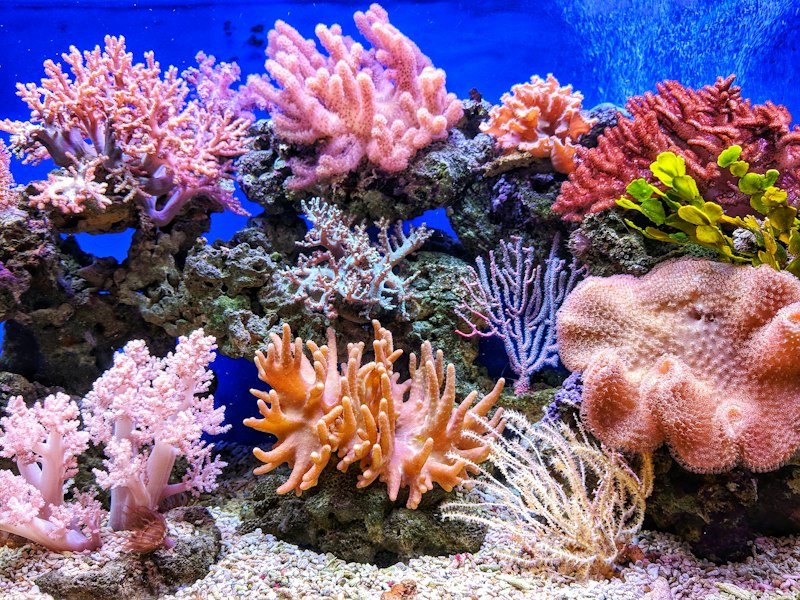
Soft Coral
commonDive profile & how the dive runs
Diving at Canons typically begins with a boat entry, often following a leisurely lunch on Direction Island. The site's shallow depth, ranging from 8 to 12 meters, allows for an easy exploration. Divers navigate across the seabed, observing the two distinct clusters of six iron cannons and the surrounding historical debris field, which includes metallic wreckage and old telegraph cables. The dive is usually conducted as a multi-level profile, allowing ample time to explore the historical artifacts and the abundant natural reef life, including frequent sightings of the resident dugong 'Kat', dolphins, and manta rays. The shallow depth naturally facilitates extended bottom times and a safe ascent directly from the site without specific turn points, concluding with a standard safety stop at 5 meters. This relaxed profile makes Canons suitable for divers of all experience levels.
Underwater photography
Canons, with its clear, warm waters and shallow depths, offers excellent wide-angle photography opportunities for capturing the historical cannons alongside marine life. A wide-angle lens is ideal for showcasing the scale of the artifacts and schooling fish. For close-up shots of gobies or nudibranchs, a macro lens can also be effective. Natural light is often sufficient due to the shallow profile and good visibility, but strobes can enhance color and detail, particularly for the rusted iron. Buoyancy control is paramount to avoid disturbing the historical site or the sandy bottom, especially when seeking out smaller creatures. Be mindful of marine life, giving ample space to the resident dugong and mantas.
Combine with nearby dive sites
- Cocos Keeling - Broccoli Patch
Known for blooming coral and easy descent, home to white tip reef sharks, turtles, and dolphins.
- Cocos Keeling - Enterprise
Features a large bommie on a drop-off, attracting grey reef sharks, dogtooth tuna, and groupers.
- Cocos Keeling - Cabbage Patch
An area of green and gold cabbage-shaped coral, with thousands of anthias and chromis, spotted garden eels, and sleeping white tip reef sharks.
- Cocos Keeling - Rose Wall
A wall covered in rosy hard coral, frequented by schools of surgeonfish and parrotfish.
- Cocos Keeling - Ski Run
Starts at the reef edge, leading to a glassfish bommie, with trevally feeding, sleeping white tip reef sharks, and long garden eels.
Getting there & logistics
Accessing the Cocos (Keeling) Islands, Australia's most remote dive destination, requires flights to Christmas Island, typically from Perth, followed by onward travel. The diving itself is primarily operated by Cocos Dive, the sole dive operator on the islands, based out of West Island. Due to its remote location, liveaboard options are less common for local dives, with most excursions being day trips by boat to sites like Canons, which are just a short ride from shore. Booking dives well in advance is highly recommended due to limited availability and seasonal tour operations. There are no specific park fees mentioned for individual dive sites, but travel to the remote territory involves standard flight and accommodation costs.
Safety & environment
The nearest recompression chamber facilities are not readily available on the Cocos (Keeling) Islands due to their extreme remoteness. In the event of a dive emergency requiring recompression, evacuation to mainland Australia (Perth) or a facility in a neighboring country would be necessary, a process that can be time-consuming and logistically complex. Therefore, comprehensive dive insurance with emergency evacuation coverage is essential for all divers. Site-specific hazards at Canons are minimal due to its shallow, protected nature, but standard safe diving practices, including monitoring air consumption and no-decompression limits, are always crucial. Divers should stay hydrated, follow guide instructions, and avoid touching or disturbing the historical artifacts and marine life.
Who it suits — and who it doesn't
Suited for
- Divers interested in historical wreck elements
- Divers seeking unique marine life encounters like dugongs
- All certification levels due to shallow depth
- Underwater photographers targeting historical subjects
- Divers who appreciate calm, clear conditions
Less suited for
- Divers seeking very deep or challenging currents
- Those looking for large pelagic action exclusively
- Divers who prefer shore entries
- Anyone without comprehensive dive insurance
FAQ
Cocos Keeling - Canons FAQ
What is the historical significance of the cannons at this site?
The cannons at Cocos Keeling - Canons are iron artifacts from the early to mid-19th century, likely salvaged from numerous shipwrecks around the Cocos atoll. They were historically carried on vessels for signalling and basic defense. The site also includes other debris, such as metallic wreckage and old telegraph cables, contributing to its rich historical tapestry.
Is 'Kat' the dugong always seen here?
While 'Kat', the resident dugong of the Cocos Keeling Islands, is frequently sighted at the Canons site, her appearance is not guaranteed on every dive. She considers this one of her favorite spots, making it a prime location for encounters, but like all wild marine life, her presence can vary.
What kind of dive experience can I expect at Canons?
Canons offers a relaxed, multi-level dive experience, typically ranging from 8 to 12 meters in depth. It's often done as an afternoon dive, allowing for easy exploration of both the historical cannons and the vibrant reef life. The calm, clear waters make it enjoyable for divers of all experience levels.
How clear is the water and what are the temperatures?
The Cocos (Keeling) Islands boast excellent visibility, averaging around 25 meters, and the water at Canons is consistently clear and turquoise. Water temperatures are very comfortable, typically staying between 26°C and 29°C year-round, meaning a 3mm wetsuit or rash guard is usually sufficient.
Are there any specific seasons to see particular marine life?
While marine life is abundant year-round, the summer months are particularly noted for the nesting of giant triggerfish at Canons. Manta rays and dolphins are also frequent visitors, often seen entering or leaving the lagoon. The resident dugong, 'Kat', is a common sight throughout the year.
Why dive Cocos Keeling - Canons from a liveaboard?
Cocos Keeling - Canons is one of Australia's signature dive sites. A liveaboard sleeps you on the water and puts you in the water for three to four guided dives per day, including dawn and night dives that day-boat operators rarely offer. You skip the daily commute back to port and reach quieter, less-crowded sites in the same region on a single trip.
Below are the liveaboards that include Cocos Keeling - Canons on their Australia itineraries.
Liveaboards diving Cocos Keeling - Canons
These liveaboards may visit Cocos Keeling - Canons on selected itineraries — the exact dive sites depend on departure, weather and conditions.
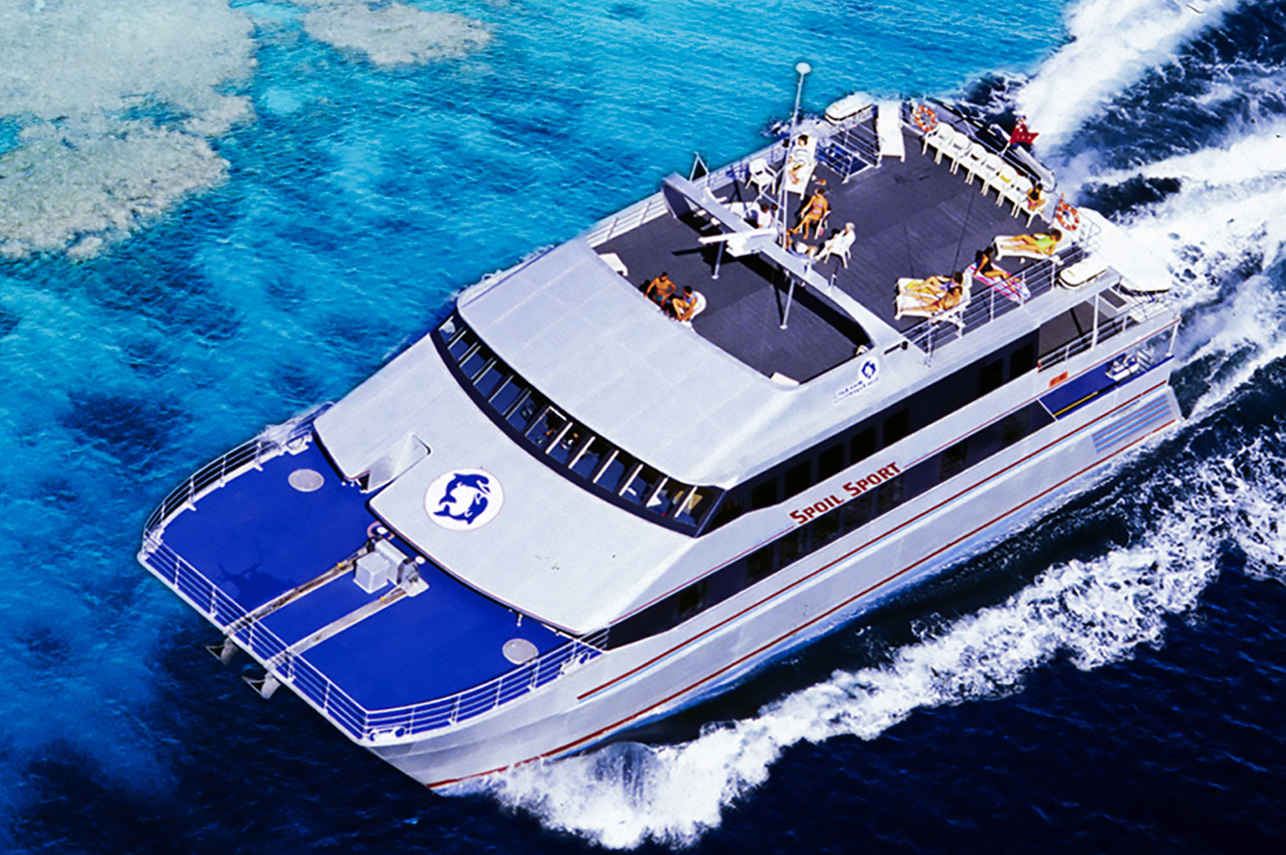
Spoilsport
Australia
28 guests30 m
$405/day
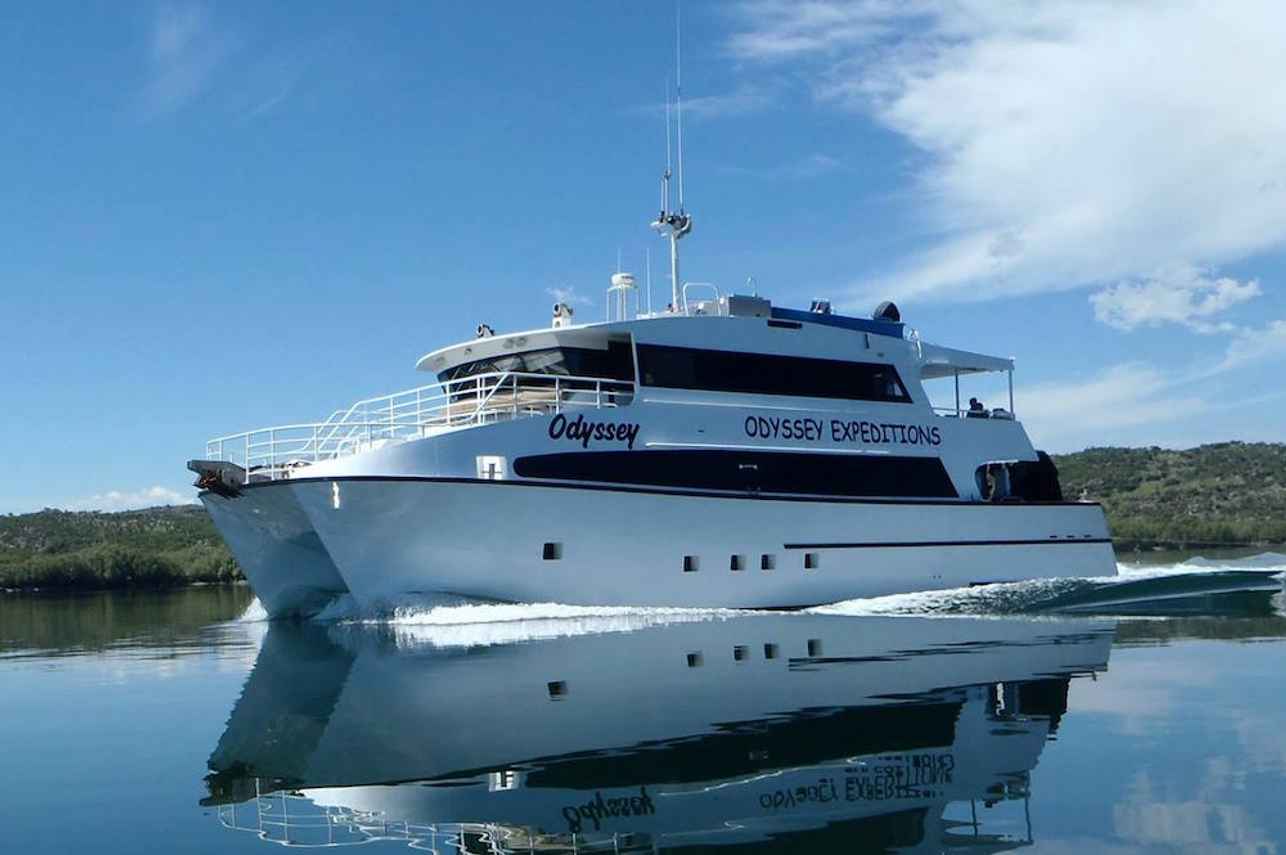
Odyssey Liveaboard
Australia
20 guests24 m
$392/day
Dive sites similar to Cocos Keeling - Canons
Same character, same waters — six more sites divers love for the exact same reasons.Compare seasons, access and liveaboard routes — then pick the site that fits your trip best.
© Esri — Maxar, Earthstar, GIS
Agincourt Reef
Australia
Agincourt Reef sits on the outer edge of the Great Barrier Reef, roughly 60–72 km off Port Douglas in Far North Queensland, at the southern end of the true ribbon reefs that run…
- Suitable for
- Beginner
- Current
- Moderate
- Access
- Dayboat
- Depth
- 2–20 m
- Theme
- Reef / Wall
© Esri — Maxar, Earthstar, GIS
Raine Island
Australia
Raine Island is a pivotal dive site located in the Far Northern Great Barrier Reef, approximately 85 kilometers east-north-east of Cape Grenville and just over 4 nautical miles south of the island itself.
- Suitable for
- Advanced
- Current
- Strong
- Access
- Liveaboard only
- Depth
- 5–40 m
- Theme
- Reef / Wall
© Esri — Maxar, Earthstar, GIS
Bare Island East
Australia
Bare Island East is a highly regarded shore dive in Sydney, celebrated for its diverse and colourful sponge gardens.
- Suitable for
- Intermediate
- Current
- Mild
- Access
- Shore / dayboat
- Depth
- 2–11 m
- Theme
- Reef
© Esri — Maxar, Earthstar, GIS
Cocos Keeling - Broccoli Patch
Australia
Broccoli Patch is a premier dive site nestled within the Cocos (Keeling) Islands lagoon system, offering a gentle yet captivating underwater experience.
- Suitable for
- Beginner
- Current
- Mild
- Access
- Dayboat
- Depth
- 5–10 m
- Theme
- Reef
© Esri — Maxar, Earthstar, GIS
Milln Reef
Australia
Milln Reef, located approximately 60km offshore from Cairns within the Great Barrier Reef, stands out as a highly favored outer reef destination for both divers and snorkelers.
- Suitable for
- Intermediate
- Current
- Moderate
- Access
- Liveaboard or dayboat
- Depth
- 4–22 m
- Theme
- Reef
© Esri — Maxar, Earthstar, GIS
Gravel Loader
Australia
The Gravel Loader dive site in New South Wales offers a productive jetty dive experience, particularly appealing for its unique artificial reef habitat.
- Suitable for
- Beginner
- Current
- Moderate
- Access
- Shore / dayboat
- Depth
- ≤ 9 m
- Theme
- Reef