Damselfish
Pomacentridae
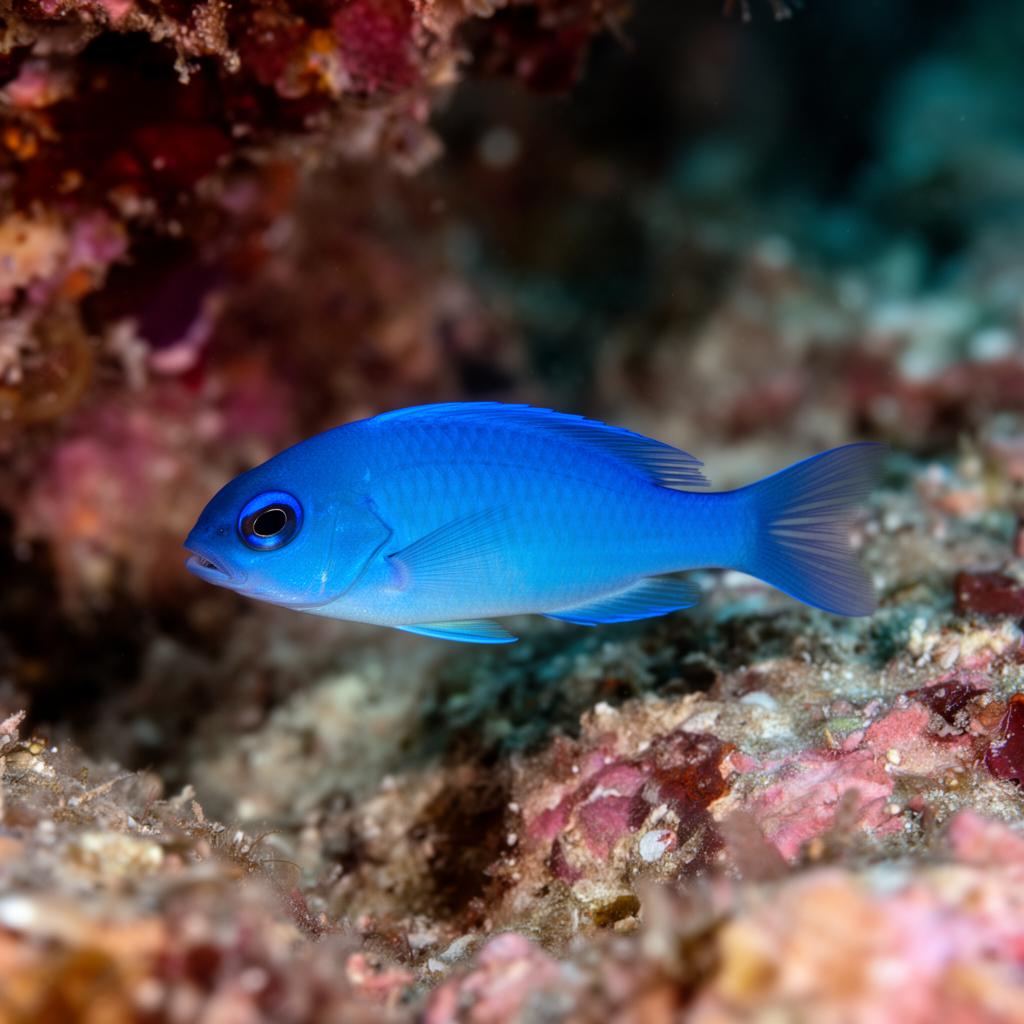
About Damselfish
Small but fiercely territorial reef fish that farms its own algae garden
Quick Facts
- Habitat: Damselfish, members of the family Pomacentridae, are a ubiquitous and essential component of tropical and subtropical coral reef ecosystems worldwide. They are found in virtually all warm oceanic waters, from the **Indo-Pacific** to the **Caribbean Sea**, and represent one of the most diverse groups of reef fish. While some species, like the iconic **Blue Chromis (Chromis cyanea)**, form vast schools in the water column above reefs, others, such as the numerous species of **Dascyllus** (e.g., Threespot Damselfish, Dascyllus trimaculatus) or **Pomacentrus**, are more territorial and closely associated with the intricate structures of hard and soft corals. Many damselfish species exhibit strong site fidelity, often remaining within a very small home range for their entire adult lives. Juveniles frequently seek refuge within the branches of live corals, among the spines of sea urchins, or within anemones, much like their larger clownfish relatives (which are also damselfish). Their presence is a reliable indicator of **healthy reef environments**, thriving in areas with complex topography and abundant food sources. In locations like the **Great Barrier Reef**, the **Red Sea**, and the **Florida Keys**, damselfish are omnipresent, enhancing the vibrancy and ecological balance of these underwater habitats. They are generally found in shallower waters, typically from the **surface down to 30 meters (100 feet)**, though some species may inhabit deeper slopes.
- Diet: The diet of damselfish is as diverse as their species count, encompassing a range of feeding strategies that underscore their ecological significance. Many species, particularly those forming schools in the water column like **Chromis spp.**, are primarily **planktivores**. They actively filter **zooplankton** and small invertebrates from the water column using their small, upward-pointing mouths. These species often exhibit rhythmic feeding behaviors, especially during periods of strong currents that bring a fresh supply of plankton. Other damselfish are more herbivorous, grazing on **algae** that grows on hard substrates. They tirelessly nip at rocky surfaces and dead coral, helping to control algal growth and prevent it from overgrowing live corals. This grazing behavior is crucial for maintaining the health of coral reefs. A notable example of this is the various species of **garibaldi (Hypsypops rubicundus)** found in the cooler waters off **California**. Some damselfish species are **omnivorous**, supplementing their diet of plankton or algae with small benthic invertebrates, detritus, or even fish eggs from other species. Larger, more territorial damselfish might also ambush unsuspecting small crustaceans that venture too close to their shelter. Their feeding habits generally peak during **daylight hours**, often tapering off as dusk approaches when many reef predators become more active.
- Best season: Damselfish are present year-round in their tropical and subtropical habitats, making them a consistent and reliable sighting for divers regardless of the season. However, there are periods when their activity or abundance might be particularly high. For most **tropical regions**, the **warmer months**, typically from **late spring through autumn** (e.g., April to October in the Northern Hemisphere, November to May in the Southern Hemisphere), often coincide with higher plankton blooms, which can lead to increased feeding activity among planktivorous species. In the **Caribbean**, the months of **May through September** offer excellent visibility and warm waters, leading to vibrant schooling displays of chromis. In the **Indo-Pacific**, the **dry season** (e.g., May to October for much of Southeast Asia or the Great Barrier Reef) generally provides the most stable weather and best underwater conditions, indirectly benefiting damselfish observation due to improved light penetration and current patterns that deliver food. During spawning seasons, which can vary widely by species and location but often occur during warmer months, territorial damselfish, particularly males, become exceptionally visible as they **guard their egg patches**. For instance, in the **Florida Keys**, damselfish spawning can be observed from **late spring to early fall**. While you can always find damselfish, focusing on these **peak activity periods** in specific locations will offer the most dynamic and engaging encounters.
Fun Facts
Damselfish cultivate their own algae gardens and aggressively defend them,They are known to attack divers many times their size,Some species create a clicking sound to warn intruders
Diving Tips
Encountering damselfish while diving is an **inevitable and delightful experience**, given their ubiquitous presence on healthy reefs. To observe them without causing disturbance, maintain a **calm and slow approach**. Avoid making sudden movements, as this can startle even the most territorial individuals. Pay close attention to their **"gardening" behavior**; many damselfish actively farm algae, removing detritus or less desirable algal species from their chosen patch. This provides an excellent opportunity to observe **micro-ecosystem management** in action. For species like the notorious **Sergeant Major (Abudefduf saxatilis)** or various **Dascyllus species**, divers might notice their **territoriality**. They are not shy about defending their space, especially when guarding eggs. While their nips are harmless, it's best to **respect their boundaries** and avoid placing hands or cameras too close to their nesting sites. Look for smaller individuals seeking shelter within **anemones** or the **spines of sea urchins**; these juveniles are often brilliantly colored. Identifying different damselfish species can be a fun challenge, as coloration and patterns vary greatly. Note their size, body shape, and fin characteristics. Remember to practice **excellent buoyancy control** to avoid inadvertently contacting corals or stirring up sediment, which can disturb foraging damselfish and obscure visibility for others. Always adhere to the **"look, don't touch"** principle, and never attempt to feed marine life, as this can disrupt natural behaviors and diets. Observing damselfish provides a fantastic window into the dynamic and often aggressive social structures of coral reef communities; their constant activity is a **sign of a thriving reef ecosystem**.