About Bullwinkle East
Bullwinkle East is a popular shallow reef dive located on the south side of Grand Cayman, exclusively accessed by boat. This site is renowned for its fascinating topography, which includes numerous coral heads, arches, tunnels, and swim-throughs woven into a healthy coral garden. It provides a relaxed yet structured reef experience, suitable for confident recreational divers seeking an engaging exploration without extreme depths. The reef primarily consists of elkhorn coral and supports a diverse range of marine life. Divers can frequently encounter various fish species, including damselfish with their distinctive blue dots, as well as lionfish and stingrays. Larger creatures like hawksbill turtles and nurse sharks are also occasional visitors to this vibrant ecosystem. Conditions at Bullwinkle East are generally calm with excellent visibility, often exceeding 30 meters. The typical depth range is quite shallow, making it appealing for extended bottom times and less demanding dives. While the site is shallow, its overhead environments within the swim-throughs necessitate good buoyancy control and situational awareness. This site is part of Grand Cayman's extensive network of dive locations, known for its pristine reefs and calm, clear Caribbean waters. It caters to both scuba divers and can be explored by snorkelers over its shallower sections, offering a classic Cayman Islands reef adventure.
Highlights
Shallow coral reefCaves and swim-throughsElkhorn coral gardenDiverse marine lifeBoat access onlyExcellent visibilityCalm conditions
Season calendar
Best months to dive here
Jan
Feb
Mar
Apr
May
Jun
Jul
Aug
Sep
Oct
Nov
Dec
Excellent
Dive site facts: Bullwinkle East
- Depth
- 8–19 m
- Typical dive
- 9 m, 50–60 min
- Current
- Mild
- Visibility
- 30 m
- Water temperature
- 26–29°C
- Entry
- Boat from mooring
- Level
- Beginner friendly, good buoyancy for swim-throughs
- Dive type
- Reef, swim-throughs, macro, wide-angle
- Region / port
- Grand Cayman, South Side
- Coordinates
- 19.2637° N, 81.3664° W
Conditions & Currents
Currents at Bullwinkle East are generally mild, contributing to the site's reputation as a relaxed dive. The Cayman Islands have a limited tidal range, which translates to minimal fluctuation and less dramatic current strength compared to other global dive locations. Divers should expect flat calm surge and easy entry from the boat, typically via a public mooring. While boat traffic near the mooring requires surface awareness, underwater conditions are usually tranquil, allowing for unhurried exploration of the reef's features. Visibility is consistently excellent, often around 30 meters, and rarely affected by strong currents or sediment, ensuring a clear and enjoyable dive for all skill levels.
Marine life & sighting chances
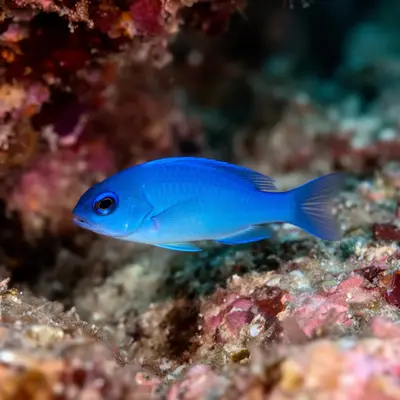
Damselfish
commonYellowtail Damselfish
common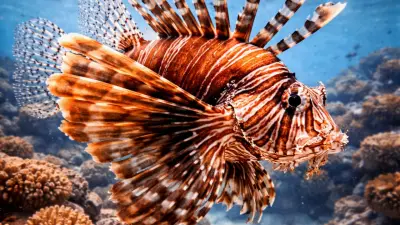
Lionfish
common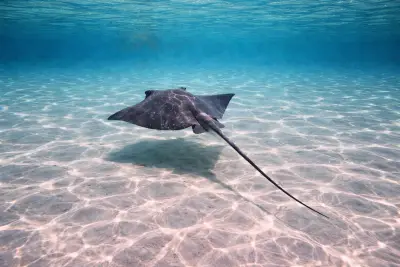
Stingray
occasional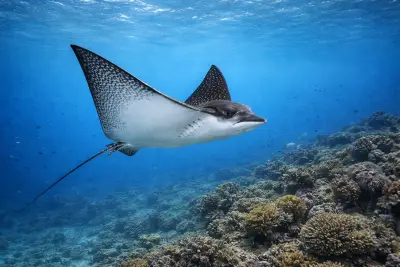
Eagle Ray
occasional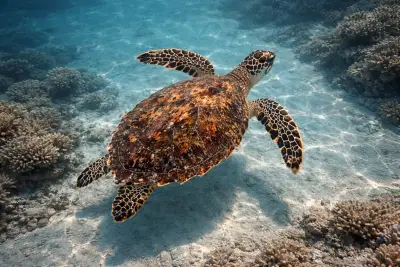
Hawksbill Turtle
occasional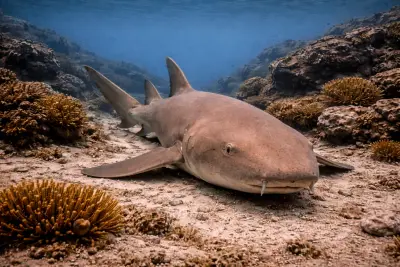
Nurse Shark
occasional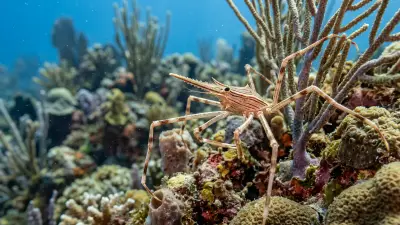
Yellowline Arrow Crab
occasionalDive profile & how the dive runs
Entry to Bullwinkle East is typically a giant stride or back roll from the dive boat, directly onto the mooring line. Divers descend to the shallow reef, which starts around 8 meters, and navigate through a series of coral heads and swim-throughs. The dive progresses gently along the reef, exploring the various arches and canyons at depths ranging between 8 and 19 meters. The unique topography allows for varied routes, keeping divers engaged with plenty of overhead environments. Turnaround is typically based on gas consumption and planned bottom time, often after exploring the main structures of the reef. The ascent is gradual, with safety stops performed along the mooring line or at the shallowest part of the reef, usually around 5 meters, before returning to the boat.
Underwater photography
Bullwinkle East is well-suited for both wide-angle and macro photography due to its diverse topography and abundant marine life. For capturing the expansive coral gardens and swim-throughs, a wide-angle lens is ideal. Consider shooting with natural light in the shallower areas or using strobes to bring out the vibrant colors of the elkhorn coral and sponges within the arches. For macro subjects like yellowline arrow crabs or juvenile damselfish, a dedicated macro lens will yield excellent results. Pay close attention to buoyancy to avoid silting the pristine coral and maintain respectful distance from marine life. The clear water provides excellent conditions for capturing sharp, colorful images.
Combine with nearby dive sites
- Oro Verde Wreck
The Oro Verde Wreck, situated off Grand Cayman's Seven Mile Beach, offers a unique underwater experience as an artificial reef.
- Stingray City Sandbar
Stingray City Sandbar, located in the North Sound of Grand Cayman, is a world-renowned marine attraction.
- Cemetery Wall
Cemetery Wall, located on Cayman Brac, is a renowned wall dive named for a nearby cemetery.
- Angelfish Reef
Angelfish Reef, situated southwest of Norman Island in the British Virgin Islands, and also identified as a site near George Town in Grand…
- Great Wall
The Great Wall is a famous dive site located off Little Cayman, celebrated for its spectacular underwater wall and rich biodiversity.
Getting there & logistics
Diving at Bullwinkle East originates from Grand Cayman, with Owen Roberts International Airport (GCM) serving as the main international gateway. Direct flights are available from North America and the UK. Access to the dive site is exclusively by boat, typically as part of a half-day or full-day dive trip arranged with local operators. Trips often depart from various ports around Grand Cayman, usually combining Bullwinkle East with one or more other nearby shallow reef or wall dives. There are no specific permits or park fees mentioned for this site beyond standard operator costs, which include boat travel and guide services. Most liveaboard and land-based dive packages in Grand Cayman will incorporate this type of reef dive into their itineraries.
Safety & environment
While Bullwinkle East is considered beginner-friendly with mild conditions, divers should be aware of a few site-specific considerations. The presence of caves and swim-throughs means maintaining good buoyancy control and situational awareness is crucial to avoid contact with the reef and navigate overhead environments safely. Stay vigilant for boat traffic near the mooring and during surface intervals. The nearest recompression chamber is located on Grand Cayman at the Hyperbaric Medicine Department of Health City Cayman Islands, offering advanced medical support. Divers should always carry appropriate dive insurance that covers hyperbaric treatment and emergency evacuation. Adhere strictly to local marine park rules, which prohibit touching marine life or wearing gloves, to protect the delicate ecosystem.
Who it suits — and who it doesn't
Suited for
- Beginner scuba divers
- Divers seeking easy swim-throughs
- Underwater photographers (macro & wide-angle)
- Divers preferring shallow reef dives
- Divers interested in diverse reef life
- Snorkelers on calm days
Less suited for
- Divers exclusively seeking deep wall dives
- Divers uncomfortable in overhead environments
- Freedivers (due to boat access and structure focus)
- Divers seeking strong current drift dives
FAQ
Bullwinkle East FAQ
What kind of marine life can I expect to see at Bullwinkle East?
Bullwinkle East is home to a good variety of marine life. You can frequently spot damselfish, including yellowtail damselfish, and lionfish. Occasional sightings include stingrays, eagle rays, hawksbill turtles, and nurse sharks, making it a vibrant site for underwater encounters.
Is Bullwinkle East suitable for beginner divers?
Yes, Bullwinkle East is considered beginner-friendly due to its shallow depths, mild currents, and easy swim-throughs. While it is beginner-friendly, good buoyancy control is recommended to comfortably navigate the arches and tunnels and protect the coral reef.
What are the typical diving conditions at Bullwinkle East?
Diving conditions at Bullwinkle East are generally excellent, characterized by warm Caribbean water and flat calm seas. Visibility frequently exceeds 30 meters, and currents are typically mild, making for a relaxed and clear diving experience throughout the year.
How do I access Bullwinkle East for a dive?
Bullwinkle East is exclusively a boat-access dive site. Dive operators from Grand Cayman will take you to the public mooring. Shore entries are not possible, so planning a trip with a local dive shop is necessary.
Are there any specific hazards to be aware of when diving Bullwinkle East?
Key hazards at Bullwinkle East include potential boat traffic near the mooring line, so maintaining surface awareness is important. The swim-throughs are overhead environments, requiring good buoyancy and situational awareness. Otherwise, the site is generally calm and safe for competent divers.
Why dive Bullwinkle East from a liveaboard?
Bullwinkle East is one of Cayman Islands's signature dive sites. A liveaboard sleeps you on the water and puts you in the water for three to four guided dives per day, including dawn and night dives that day-boat operators rarely offer. You skip the daily commute back to port and reach quieter, less-crowded sites in the same region on a single trip.
Below are the liveaboards that include Bullwinkle East on their Cayman Islands itineraries.
Liveaboards diving Bullwinkle East
These liveaboards may visit Bullwinkle East on selected itineraries — the exact dive sites depend on departure, weather and conditions.
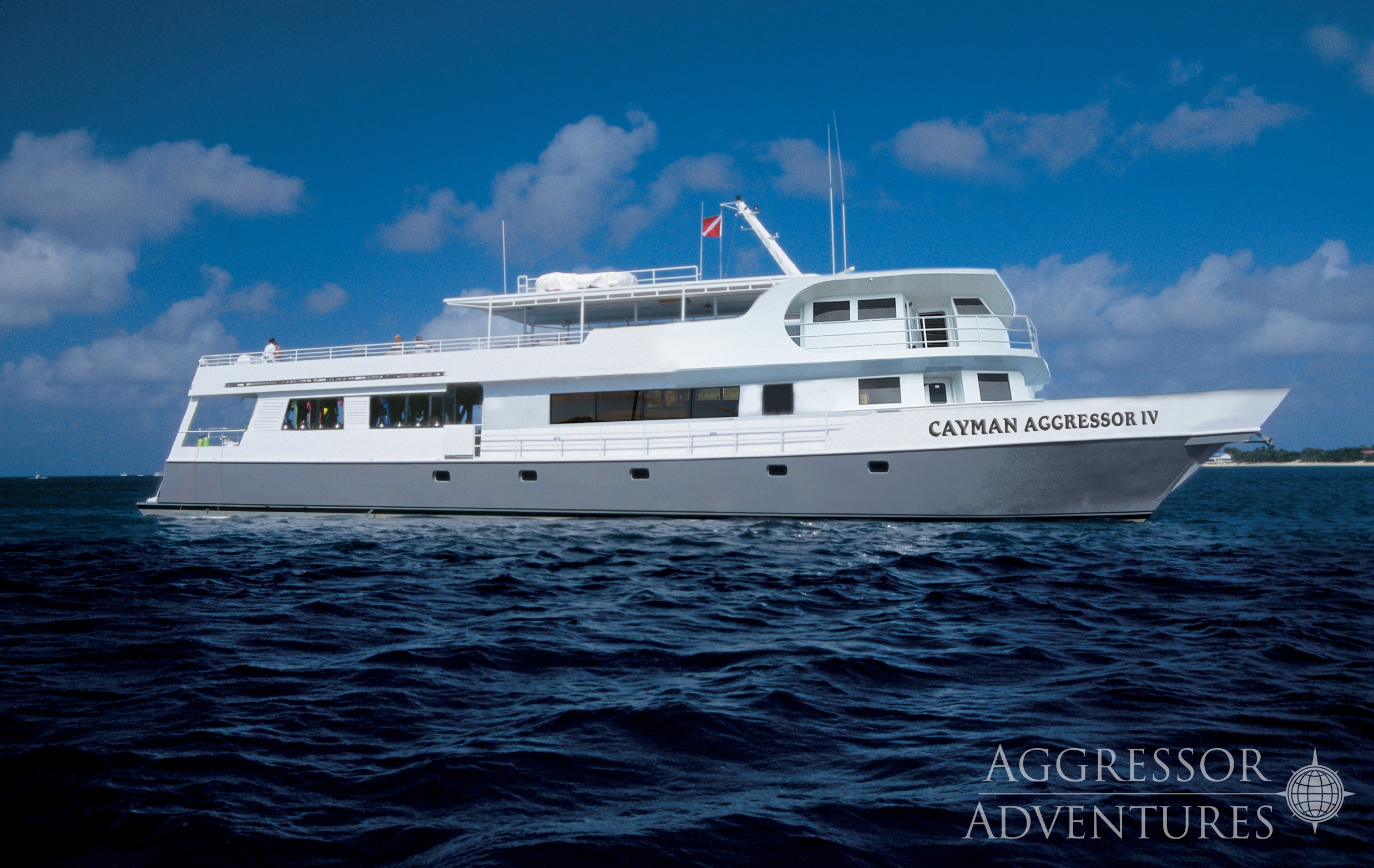
Cayman Aggressor IV
Cayman Islands
18 guests32.9 m
$337/day
Dive sites similar to Bullwinkle East
Same character, same waters — six more sites divers love for the exact same reasons.Compare seasons, access and liveaboard routes — then pick the site that fits your trip best.
© Esri — Maxar, Earthstar, GIS
3 Fathom Wall
Cayman Islands
3 Fathom Wall is an exciting and fish-filled dive site located in the Cayman Islands, specifically at the intersection of the renowned Bloody Bay Wall.
- Suitable for
- Intermediate
- Current
- Mild
- Access
- Liveaboard only
- Depth
- ≤ 3000 m
- Theme
- Reef
© Esri — Maxar, Earthstar, GIS
Angelfish Reef
Cayman Islands
Angelfish Reef, situated southwest of Norman Island in the British Virgin Islands, and also identified as a site near George Town in Grand Cayman, is a captivating dive location…
- Suitable for
- Beginner
- Current
- Mild
- Access
- Liveaboard only
- Depth
- 8–17 m
- Theme
- Reef
Aquarium is a well-regarded dive site located in the West Bay region of Grand Cayman, known for its pristine waters and rich marine ecosystems.
- Suitable for
- Beginner
- Current
- Mild
- Access
- Liveaboard or dayboat
- Depth
- 40–60 m
- Theme
- Reef
© Esri — Maxar, Earthstar, GIS
Big Table Rock
Cayman Islands
Big Table Rock is a well-known dive site located in George Town, Grand Cayman, offering a diverse and visually striking underwater landscape.
- Suitable for
- Intermediate
- Current
- Mild
- Access
- Dayboat
- Depth
- 10–30 m
- Theme
- Reef / Wall
© Esri — Maxar, Earthstar, GIS
Big Tunnels
Cayman Islands
Big Tunnels is a prominent dive site located on the West Side of Grand Cayman, specifically south of Northwest Point and near Orange Canyon, forming part of the extensive western wall system.
- Suitable for
- Intermediate
- Current
- Mild
- Access
- Liveaboard or dayboat
- Depth
- 17–27 m
- Theme
- Reef
© Esri — Maxar, Earthstar, GIS
Blackie's Hole
Cayman Islands
Blackie's Hole is a notable marine dive site located off Grand Cayman's West Bay and Seven Mile Beach.
- Suitable for
- Intermediate
- Current
- Mild
- Access
- Liveaboard or dayboat
- Depth
- ≤ 15 m
- Theme
- Reef