Emperor Penguin
Aptenodytes forsteri
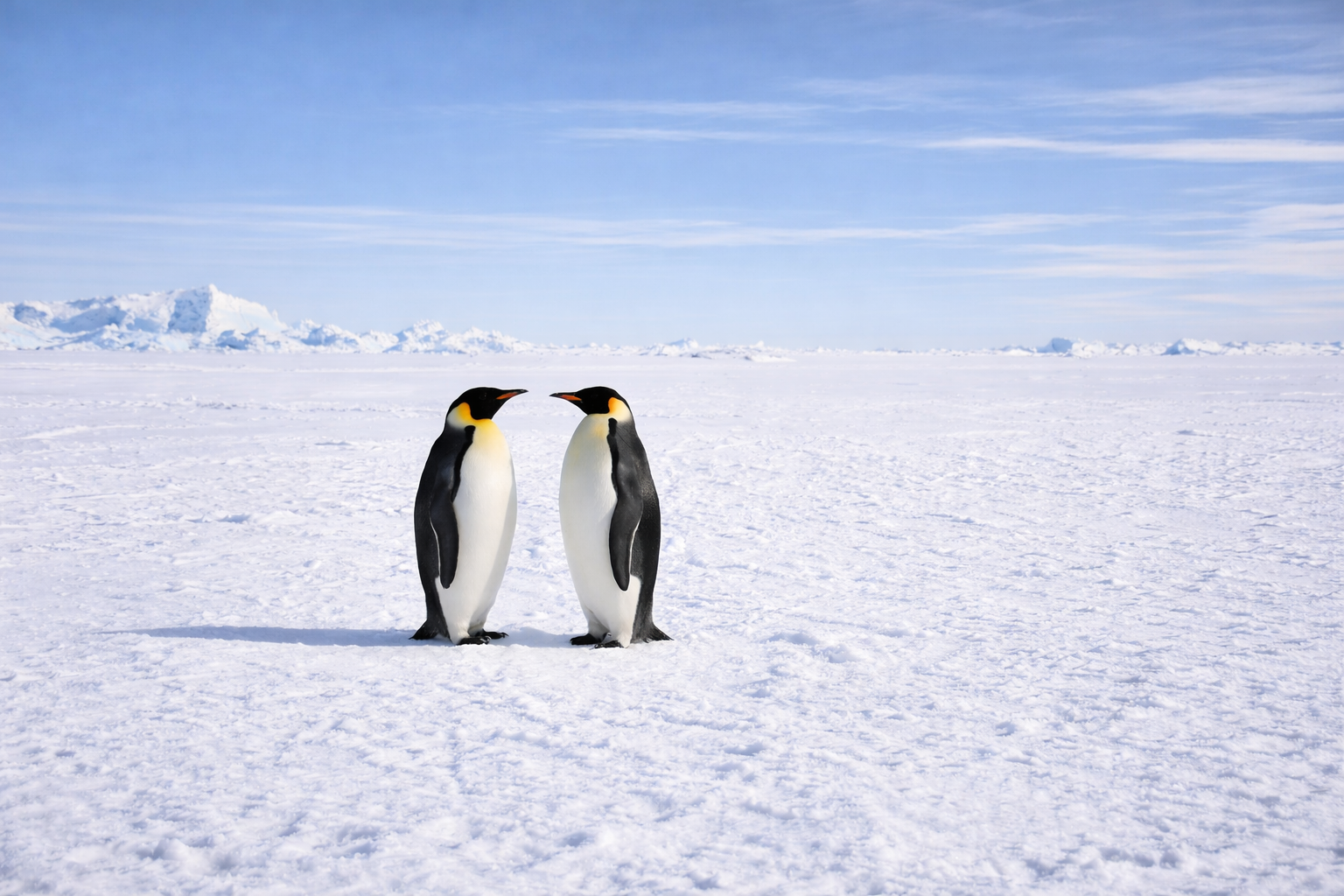
About Emperor Penguin
The tallest and heaviest of all living penguin species, emperor penguins breed during the Antarctic winter in temperatures as low as -60°C. They can dive deeper than any other bird — over 500m — and hold their breath for more than 20 minutes. Encountering them underwater while diving is extraordinarily rare and unforgettable.
Quick Facts
- Habitat: Emperor Penguins, *Aptenodytes forsteri*, are **endemic to the Antarctic continent**, thriving in its brutally cold, ice-bound marine environment. These majestic birds are found predominantly along the **coastlines of Antarctica**, particularly around the Ross Sea, Weddell Sea, and Wilkes Land regions. They are highly adapted to life in the **Southern Ocean**, where they spend the majority of their lives at sea or on fast ice. **Breeding colonies** are established on stable sea ice close to the coast, providing access to open water for foraging. While they are not typically seen in tropical or temperate waters, their range can extend to the very edge of the Antarctic Convergence. Divers exploring the **Antarctic Peninsula** and surrounding islands during the austral summer may encounter them swimming or porpoising near the surface. Their existence is intrinsically linked to the presence of **stable sea ice**, which is crucial for their reproductive cycle and access to feeding grounds.
- Diet: Emperor Penguins are **carnivorous predators**, primarily feeding on a diet of fish, crustaceans, and cephalopods. Their main food sources are **Antarctic silverfish** (*Pleuragramma antarctica*), various species of squid, and krill. These birds are **highly skilled underwater hunters**, capable of deep and prolonged dives to pursue their prey. They use their powerful flippers for propulsion, reaching impressive speeds and depths to catch fast-moving fish and squid. **Krill swarms**, though smaller individually, provide a significant caloric intake when encountered in large numbers. Emperor Penguins employ a **chase-and-catch strategy** underwater, utilizing their keen eyesight and streamlined bodies to capture prey. Their diet is rich in protein and fat, essential for maintaining their body temperature in the frigid Antarctic waters and sustaining their lengthy breeding fasts.
- Best season: The **austral summer**, generally from **November to March**, offers the best opportunities for divers to observe Emperor Penguins, particularly in the waters surrounding the **Antarctic Peninsula** and the adjacent islands. While the penguins spend the austral winter (March to October) breeding inland on the sea ice, they are much **more active in coastal waters** during the summer months, foraging extensively for food. During **November and December**, adults are still frequently seen at sea after incubating their eggs. The months of **January and February** are particularly good for seeing both adults and **developing chicks** near the breeding colonies, and adult penguins are more commonly observed swimming or feeding close to shore. By **March**, the sea ice begins to break up, and penguins are often seen in larger numbers as they prepare for their migration patterns. Diver encounters are primarily around the edges of the **pack ice** and in accessible bays.
Fun Facts
Males fast for up to 120 days during egg incubation,They can dive to over 500 metres — the deepest dive of any bird,Emperor penguin colonies can number over 10,000 breeding pairs,They are the only penguin species that breeds during the Antarctic winter
Diving Tips
Encountering Emperor Penguins underwater is an **extremely rare privilege** for divers, primarily limited to very specific expeditions in the Antarctic. If you are fortunate enough to be in waters where they might be present, remember that these are **wild, protected animals**. Always maintain a **respectful distance**, ideally staying at least 30 meters (approximately 100 feet) away, both on the surface and underwater, to avoid causing any disturbance or stress. If a penguin approaches you, **remain calm and still**, allowing the animal to control the interaction. **Never attempt to touch, feed, or chase** the penguins. Observers should also avoid loud noises or sudden movements. Pay attention to cues like **porpoising near the surface** or sudden changes in their swim direction, which can indicate their presence or hunting behavior. These birds are **exceptionally powerful swimmers and divers**, so be mindful of your own spatial awareness. Documenting their behavior with **underwater photography or videography** should be done quietly and without the use of flash, which can be disorienting. Adhere strictly to all **IAATO regulations** and instructions from your expedition leader, as their guidelines are designed for both diver safety and the protection of Antarctic wildlife. **Responsible wildlife viewing** is paramount in these fragile ecosystems.