About Errera Channel
Errera Channel offers a truly unique diving experience within the Antarctic Peninsula, presenting a rare opportunity to explore a world largely unseen by humans. This dive site is characterized by its dramatic ice formations, carved by glacial activity and currents, which create an otherworldly underwater landscape. Visibility here is often exceptional, with diffused sunlight penetrating the ice to reveal a kaleidoscope of colors and life in the frigid waters. The channel is particularly renowned for its rich biodiversity, supported by abundant krill, the foundation of the Antarctic food web. Divers can expect to encounter various invertebrates, including soft corals, sponges, sea anemones, and unique Antarctic species like sea spiders and nudibranchs. The geology of the area, shaped by ancient volcanic activity and glacial forces, adds another layer of intrigue to the underwater topography. Errera Channel is also situated near a significant Gentoo penguin rookery, meaning divers often share their underwater space with these curious birds, along with seals and other charismatic Antarctic wildlife. The diving here is an integral part of a broader expedition, emphasizing wilderness and wildlife observation, where each dive contributes to an unrepeatable adventure in one of the planet's most remote environments. The practical dive experience involves zodiac entries, with exploration typically focusing on depths between 10 and 20 meters, allowing ample time to appreciate the intricate details of this icy realm.
Highlights
Iceberg gardensGentoo penguin encountersDiverse invertebrate lifeVolcanic rock formationsEthereal light penetrationCurious seal interactions
Season calendar
Best months to dive here
Jan
Feb
Mar
Apr
May
Jun
Jul
Aug
Sep
Oct
Nov
Dec
Excellent
Good
Dive site facts: Errera Channel
- Depth
- 10–20 m
- Typical dive
- 10–20 m, 30–60 min
- Current
- Mild
- Visibility
- 15–25 m
- Water temperature
- -2°C to 2°C (28–36°F)
- Entry
- Zodiac / negative entry
- Level
- Advanced — drysuit mandatory, ice-certified, 30+ cold-water dives below 4°C
- Dive type
- Ice, wall, macro, wildlife
- Night dive
- Not applicable (midnight sun in season)
- Region / port
- Antarctic Peninsula
- Coordinates
- -64.8667, -62.8167
Conditions & Currents
Currents in Errera Channel are generally mild, but localized conditions can vary due to ice formations and tidal influences. Divers should be prepared for potential gentle drifts, necessitating careful attention to the dive briefing for entry and exit strategies. Visibility typically ranges from 15 to 25 meters, though it can fluctuate, particularly near glacial melt or in unsettled conditions. Water temperatures consistently hover between -2°C and 2°C, making drysuit diving with specialized cold-water regulators mandatory. All dives are conducted from zodiacs, requiring comfortable and efficient negative entries to navigate the ice and currents. Dive guides will always act as spotters from the boat, emphasizing the importance of staying oriented to safe exit points, as shifting ice can alter conditions.
Marine life & sighting chances

Gentoo penguin
December-February · common
Crabeater seal
November-December · occasional
Leopard seal
February-March · occasional
Humpback whale
November-March · rare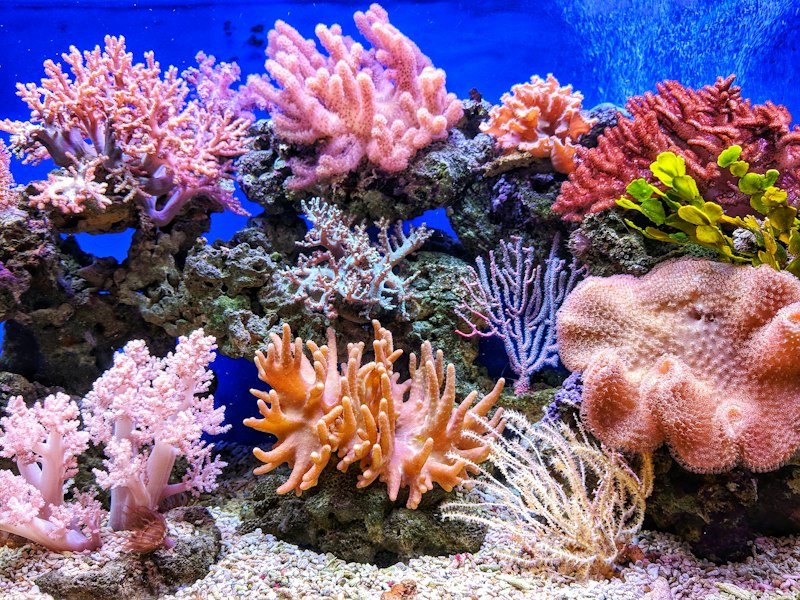
Soft coral
All year · common
Sea anemone
All year · common
Nudibranch
All year · occasional
Sea spider
All year · occasional
Starfish
All year · common
Sea urchin
All year · common
Jellyfish
All year · common
Kelp
All year · commonDive profile & how the dive runs
Dives in Errera Channel typically begin with a zodiac launch, followed by a negative entry to quickly descend and avoid surface ice. Divers usually follow the ice-sculpted underwater terrain, often exploring walls and ledges between 10 and 20 meters. The route often involves navigating around kelp forests and volcanic rock formations, seeking out macro life and invertebrate clusters. Penguin and seal encounters are common, adding a dynamic element to the dive. Turn points are usually dictated by air consumption and bottom time, with a maximum dive time of 60 minutes. Safety stops are conducted in the shallower water, typically around 5 meters, often beneath the ice canopy, before ascending to the zodiac for exit. Dive guides remain on the surface for spotting and retrieval.
Underwater photography
Underwater photography in Errera Channel offers unique challenges and rewards. Wide-angle lenses are ideal for capturing the grandeur of ice formations, light shafts, and expansive kelp forests, especially with the excellent visibility. For macro subjects like nudibranchs, sea spiders, and intricate soft corals, a macro lens with powerful strobes is essential to bring out their vibrant colors against the icy backdrop. White balance can be tricky due to the diffused blue light, so shooting in RAW format is highly recommended for post-processing flexibility. Careful buoyancy control is paramount to avoid disturbing delicate marine life and stirring up sediment. Remember to protect your camera gear from the extreme cold, especially between dives, and ensure all seals and O-rings are perfectly maintained to prevent leaks in this unforgiving environment.
Combine with nearby dive sites
- Cuverville Island
Known for a large Gentoo penguin rookery, with seals and ice-sculpted terrain.
- Neko Harbour
Offers impressive glacial views and the chance to witness calving ice.
- Paradise Bay
A scenic bay with calving glaciers and abundant wildlife.
- Danco Island
A small island offering shore landings and wildlife viewing.
- Lemaire Channel
A stunning, narrow passage known for dramatic scenery and wildlife.
Getting there & logistics
All Antarctic diving expeditions, including those visiting Errera Channel, depart from Ushuaia, Argentina. Travelers typically fly into Ushuaia (USH) via major South American hubs like Buenos Aires or Santiago. The transfer from Ushuaia airport to the port is short and convenient. Expeditions are exclusively liveaboard-based, with no shore diving infrastructure. Trip lengths typically range from 11 to 16 days, including the 2-3 day crossing of the Drake Passage in each direction. It is advisable to build in a buffer night in Ushuaia after returning, in case of weather-related delays. There are no specific park fees for diving, as costs are bundled into the all-inclusive expedition packages. Errera Channel is usually integrated into itineraries exploring the Antarctic Peninsula and sometimes the South Shetland Islands, offering a diverse array of dive and land-based wildlife observation opportunities.
Safety & environment
Diving in Errera Channel, like all Antarctic diving, requires stringent safety protocols due to its remote and extreme environment. Recompression chambers are thousands of miles away; the nearest significant medical facilities are in Ushuaia. Evacuation in an emergency is complex and can take days, heavily reliant on weather conditions and vessel capabilities. Comprehensive dive insurance, including coverage for extreme cold-water diving and medical evacuation, is non-negotiable. Site-specific hazards include unpredictable ice movements, extreme cold potentially leading to equipment free-flows, and encounters with large marine mammals. Divers must possess advanced cold-water and drysuit experience, maintain excellent buoyancy, and strictly adhere to expedition briefings, including buddy procedures, depth limits (rarely exceeding 20 meters), and emergency protocols. All gear must be cold-water rated and meticulously maintained.
Who it suits — and who it doesn't
Suited for
- Advanced drysuit divers
- Photographers seeking unique subjects
- Expedition-minded adventurers
- Divers with excellent cold-water experience
- Wildlife enthusiasts
- Those comfortable with remote, challenging conditions
Less suited for
- Beginner divers
- Divers without drysuit experience
- Those prone to seasickness
- Warm-water-only divers
- Individuals with low tolerance for itinerary changes
- Anyone without comprehensive dive medical insurance
FAQ
Errera Channel FAQ
What kind of marine life can I expect to see while diving in Errera Channel?
Errera Channel boasts a rich diversity of Antarctic marine life. You can anticipate seeing various invertebrates such as colorful soft corals, sea anemones, nudibranchs, starfish, and sea urchins. Encounters with Gentoo penguins, crabeater seals, and occasionally leopard seals are also possible, especially during zodiac entries and exits, adding an exciting wildlife dimension to your dive.
What are the typical diving conditions like in Errera Channel?
Diving in Errera Channel involves challenging yet rewarding conditions. Water temperatures consistently range from -2°C to 2°C, necessitating a drysuit and specialized cold-water equipment. Visibility is generally excellent, often between 15 to 25 meters, offering clear views of the underwater landscape. Currents are usually mild, but local variations can occur, so attention to your dive guide's briefing is crucial for navigation and safety.
What specific dive experience is required for Errera Channel?
To dive in Errera Channel, you must be an experienced cold-water diver. This typically means holding an advanced certification, having extensive drysuit experience (at least 30 dives below 4°C in the last two years), and often an ice diving certification. A thorough medical clearance is also mandatory, and you should be comfortable with zodiac entries and operating in remote, expeditionary environments.
How are dives conducted in Errera Channel?
Dives in Errera Channel are primarily conducted via zodiacs launched from the liveaboard vessel. Divers perform negative entries and typically explore depths between 10 and 20 meters, focusing on the fascinating ice formations, volcanic rock, and diverse invertebrate life. Dive guides remain on the surface as spotters, and divers are expected to manage their own navigation and air consumption, ensuring a safe and controlled ascent back to the zodiac.
Is underwater photography possible at Errera Channel, and what gear is recommended?
Yes, underwater photography at Errera Channel is highly rewarding, capturing a truly unique environment. Wide-angle lenses are excellent for capturing the majestic ice formations and light effects, while macro lenses are essential for the intricate invertebrate life. Due to the extreme cold and diffused light, powerful strobes are recommended, and robust housing protection for your camera is critical. Always ensure your gear is cold-water rated and meticulously maintained.
Why dive Errera Channel from a liveaboard?
Errera Channel is one of Antarctica's signature dive sites. A liveaboard sleeps you on the water and puts you in the water for three to four guided dives per day, including dawn and night dives that day-boat operators rarely offer. You skip the daily commute back to port and reach quieter, less-crowded sites in the same region on a single trip.
Below are the liveaboards that include Errera Channel on their Antarctica itineraries.
Liveaboards diving Errera Channel
These liveaboards may visit Errera Channel on selected itineraries — the exact dive sites depend on departure, weather and conditions.
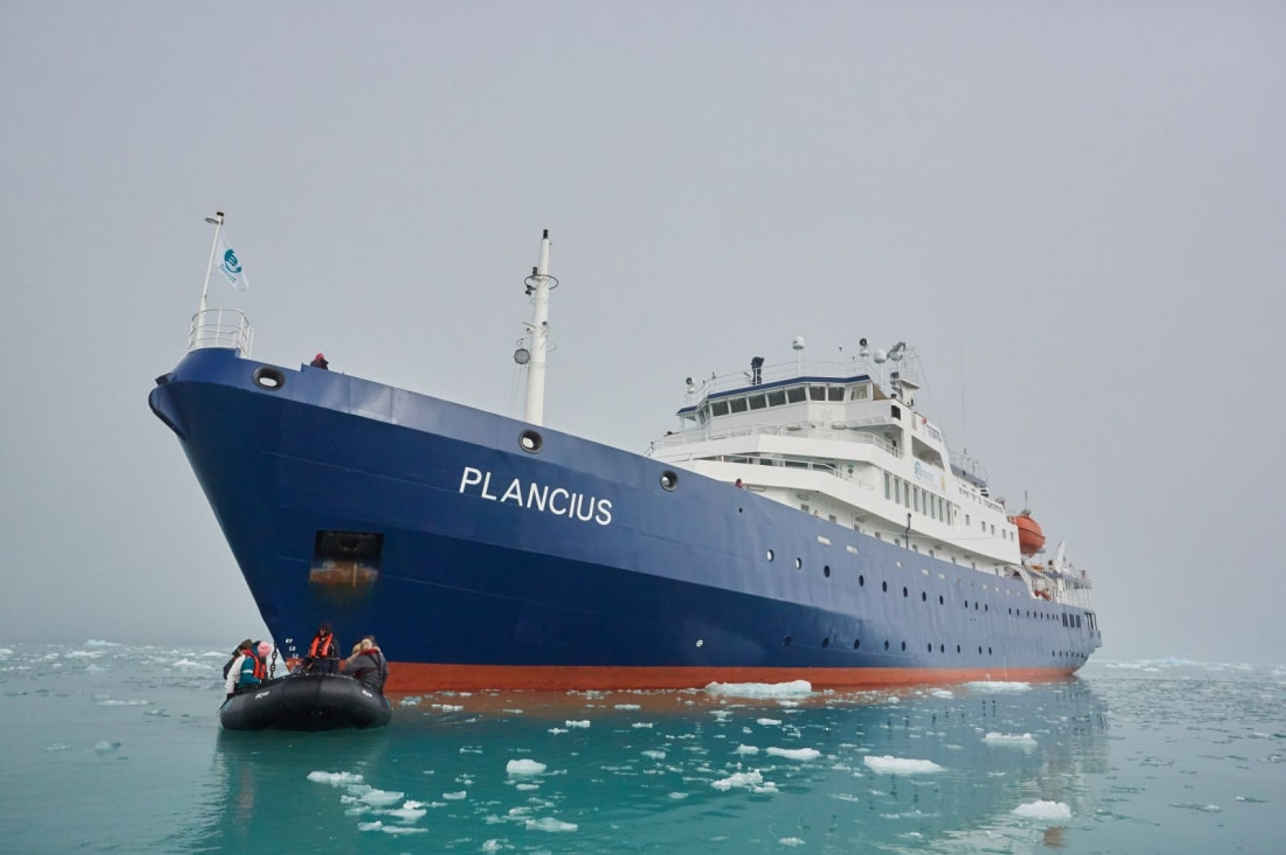
Plancius
Antarctica
108 guests89 m
$771/day
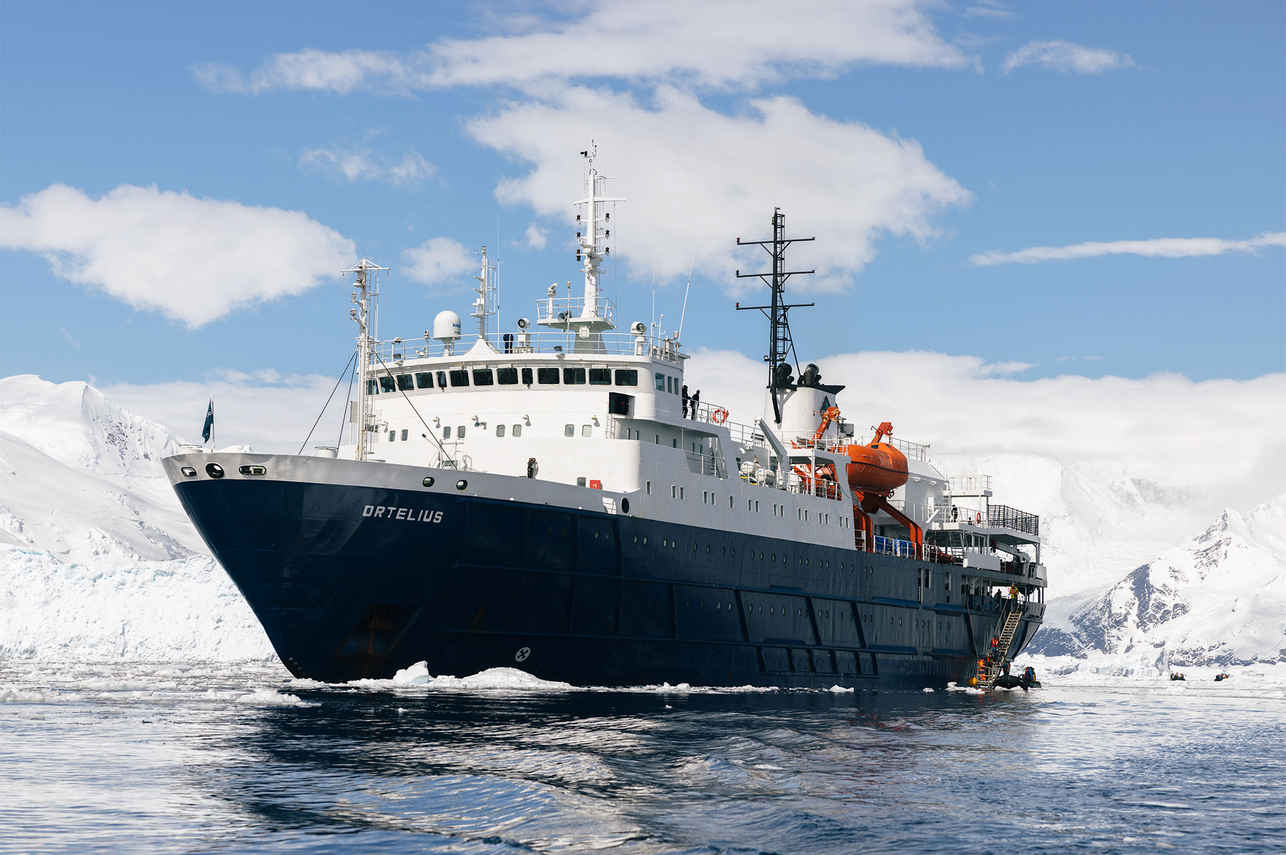
Ortelius
Antarctica
108 guests90.95 m
$661/day
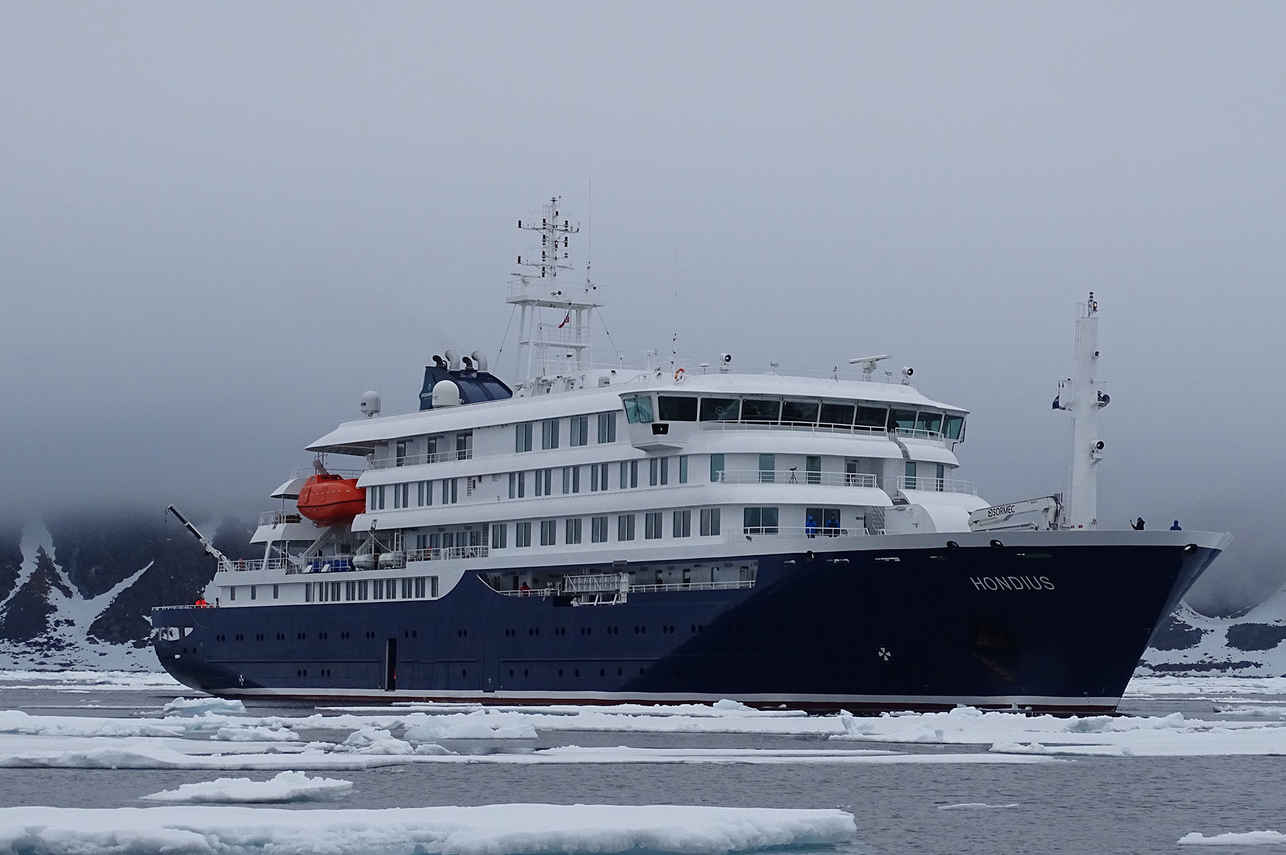
Hondius Antarctica Diving
Antarctica
170 guests107.6 m
$775/day
Dive sites similar to Errera Channel
Same character, same waters — six more sites divers love for the exact same reasons.Compare seasons, access and liveaboard routes — then pick the site that fits your trip best.
© Esri — Maxar, Earthstar, GIS
Argentine Islands - Vernadsky
Antarctica
Diving at the Argentine Islands, near the Vernadsky Research Base, offers an exclusive opportunity to explore the underwater world of the Antarctic Peninsula.
- Suitable for
- Advanced
- Current
- Strong
- Access
- Liveaboard only
- Depth
- 3–15 m
- Theme
- Ice / Reef
© Esri — Maxar, Earthstar, GIS
Lemaire Channel
Antarctica
Lemaire Channel, a narrow passage between the Antarctic mainland and Booth Island, presents a truly majestic and impressive dive experience.
- Suitable for
- Advanced
- Current
- Strong
- Access
- Liveaboard only
- Depth
- 5–30 m
- Theme
- Ice / Wall
© Esri — Maxar, Earthstar, GIS
Useful Island
Antarctica
Useful Island, situated in the Western Antarctic Peninsula, presents an extraordinary opportunity for intrepid divers to explore a shallow-water ecosystem brimming with biodiversity.
- Suitable for
- Advanced
- Current
- Strong
- Access
- Liveaboard only
- Depth
- 5–25 m
- Theme
- Ice / Wall
© Esri — Maxar, Earthstar, GIS
Wilhelmina Bay
Antarctica
Wilhelmina Bay, nestled in the Antarctic Peninsula, is renowned as a prime location for observing humpback whales and experiencing the continent's pristine marine environment.
- Suitable for
- Advanced
- Current
- Moderate
- Access
- Liveaboard only
- Depth
- 5–20 m
- Theme
- Ice / Wall
© Esri — Maxar, Earthstar, GIS
Enterprise Island - Wreck Gouvernøren
Antarctica
The wreck of the Gouvernøren, nestled at Enterprise Island, stands as Antarctica's most accessible and atmospheric shipwreck.
- Suitable for
- Advanced
- Current
- Mild
- Access
- Liveaboard only
- Depth
- 5–18 m
- Theme
- Ice / Wreck
© Esri — Maxar, Earthstar, GIS
Foyn Harbour
Antarctica
Foyn Harbour, situated off the coast of the Antarctic Peninsula, offers a truly unique underwater experience, primarily centered around the wreck of the 'Gouvernøren'.
- Suitable for
- Advanced
- Current
- Mild
- Access
- Liveaboard only
- Depth
- 5–15 m
- Theme
- Ice / Wreck