About North Solitary Island
North Solitary Island, located within the protected Solitary Islands Marine Park off the coast of New South Wales, Australia, represents a unique convergence of marine ecosystems. Here, the warm East Australian Current (EAC) carries tropical species south, where they mingle with cooler temperate inhabitants, creating an extraordinary biodiversity. The island is accessible from Coffs Harbour and Wooli, serving as a premier dive destination on Australia's east coast. Dive sites like Anemone Bay and Fish Soup offer distinct experiences. Anemone Bay, particularly sheltered from southerly swells, is world-renowned for its exceptionally dense fields of anemones, hosting thousands of clownfish. Depths here range from 5 meters in the shallower areas to over 27 meters on the outer edges, featuring boulder-strewn terrain, sand patches, and gutters. The unique meeting of currents supports a diverse array of hard and soft corals, providing habitat for both large pelagics and intricate macro life. Regular sightings include various shark species, rays, turtles, and an abundance of schooling fish. The presence of the EAC significantly influences water temperatures and visibility, offering conditions that can range from clear, warm tropical waters to cooler, nutrient-rich temperate flows. Diving North Solitary Island promises vibrant underwater landscapes and rich marine encounters suitable for various experience levels. The sites are typically accessed by boat, with dive profiles often involving drift dives or exploring specific bommies and reef structures. Conditions can vary, so local guidance is essential for maximizing the dive experience.
Highlights
World's densest anemone aggregationThousands of resident clownfishConvergence of tropical and temperate speciesDense schooling fish at Fish SoupSeasonal grey nurse shark aggregationAbundant turtle sightingsVibrant hard and soft coral gardens
Season calendar
Best months to dive here
Jan
Feb
Mar
Apr
May
Jun
Jul
Aug
Sep
Oct
Nov
Dec
Excellent
Good
Off-Season
Jun – Oct
Dry season with best visibility on the Great Barrier Reef. Minke whale season June–July. Ningaloo whale sharks March–July.
Apr – May & Nov
Comfortable temperatures, good visibility, fewer crowds. Giant cuttlefish aggregation in South Australia May–August.
Dec – Mar
Wet season in the tropics. Reduced visibility, jellyfish season. Warmer water attracts coral spawning.
Dive site facts: North Solitary Island
- Depth
- 5–27 m
- Current
- Mild to strong, depending on site and EAC
- Visibility
- 5–30 m
- Water temperature
- 19–26°C
- Entry
- Boat
- Level
- Open Water to Advanced
- Dive type
- Reef, drift, macro, wide angle
- Region / port
- Solitary Islands Marine Park, NSW
- Coordinates
- -29.927, 153.387
Conditions & Currents
North Solitary Island is significantly influenced by the East Australian Current (EAC), which can bring strong currents, particularly at exposed sites like Fish Soup. While Anemone Bay offers more sheltered conditions from southerly swells, currents can still vary from mild to moderate across the island. Divers should possess good buoyancy control and maintain continuous situational awareness, as current strengths and directions can shift. Visibility is highly dependent on local sea conditions and the EAC, potentially dropping after southerly swells or heavy rainfall, but can extend to 30 meters with a clean EAC push. Entry and exit are typically by boat, often requiring negative entries at current-swept sites. Boat traffic can also be a factor, so divers must be aware of their surroundings.
Marine life & sighting chances

Clownfish
common
Anemone
common
Grey Nurse Shark
seasonally · occasional
Wobbegong Shark
common
Green Sea Turtle
occasional
Hawksbill Turtle
occasional
Southern Eagle Ray
occasional
Australian Giant Cuttlefish
occasional
Blue Groper
common
Yellowtail Kingfish
common
Bigeye Trevally
common
Moray Eel
occasional
Spanish Dancer Nudibranch
occasional
Humpback Whale
May to November · occasionalDive profile & how the dive runs
A typical dive at Anemone Bay often starts from one of the moorings, such as the Shark Gutters (outer) mooring in the north-east, which is situated on the reef's edge. From here, divers can embark on a drift dive, following the reef without current, towards the mooring at the head of the bay. The dive begins at depths around 15 meters, descending to 27 meters on the outer edges. The route navigates through boulder fields and sand patches, observing the dense anemone carpets and their resident clownfish in shallower sections. The dive progresses along the reef, allowing ample time to explore overhangs and gutters where wobbegongs may be found. Safety stops are conducted in the shallower parts of the bay, typically between 5 and 10 meters, offering extended viewing of anemones and other macro life before surfacing at a designated mooring.
Underwater photography
North Solitary Island offers exceptional opportunities for both wide-angle and macro photography. For wide-angle shots, especially in Anemone Bay, a fisheye or wide-angle rectilinear lens is ideal to capture the vast anemone fields and schooling fish. External strobes are recommended to bring out the true colors of corals and marine life, particularly in deeper areas or when visibility is reduced. For macro enthusiasts, a dedicated macro lens will allow you to focus on the intricate details of nudibranchs, porcelain crabs within anemones, and other small invertebrates. Ensure good buoyancy control to avoid damaging delicate anemones and corals. Be mindful of your dive group, especially in areas with potential current, to avoid stirring up sediment that could impact visibility for others. A focus light can also be highly beneficial for macro subjects and exploring crevices.
Combine with nearby dive sites
- Fish Soup
Known for dense fish congregations in current-swept areas.
- South Solitary Island
Accessible from Coffs Harbour, featuring multiple dive sites including Manta Arch.
- Manta Arch
A dramatic archway at South Solitary Island famous for resident grey nurse sharks.
- Buchanan's Wall
A deep wall dive at South Solitary Island with endemic anemonefish and macro life.
Getting there & logistics
Access to North Solitary Island is primarily by boat from Coffs Harbour or Wooli, New South Wales. Coffs Harbour is centrally located between Sydney and Brisbane, making it reachable via major airports like Sydney (SYD) or Brisbane (BNE), followed by a domestic flight or drive. From Coffs Harbour, boat trips typically take 75 minutes, while from Wooli, it's about 20 minutes for the 7 nautical miles. Dive operators like Jetty Dive Centre in Coffs Harbour are primary providers. Trips usually involve day excursions, often combining multiple dives at different sites around North Solitary Island or other islands within the marine park. There are no specific individual park fees mentioned for divers, as these are generally covered by dive operator permits.
Safety & environment
Diving at North Solitary Island requires adherence to standard dive safety protocols and awareness of site-specific conditions. The nearest recompression chamber is likely located in a major regional center, necessitating adequate dive insurance covering potential evacuation and treatment. Due to the influence of the East Australian Current, divers must be prepared for varying current strengths; excellent buoyancy control and situational awareness are crucial. It is essential to dive with reputable operators who maintain surface watch, especially at sites prone to currents. Always follow your dive guide's instructions, particularly regarding entry and exit procedures. While generally safe, respecting marine life, especially protected species like grey nurse sharks, is paramount. Emergency evacuation from an offshore island location would typically involve boat transfer to the mainland, followed by road or air transport to medical facilities.
Who it suits — and who it doesn't
Suited for
- Divers interested in high marine biodiversity
- Underwater photographers seeking unique subjects
- Divers comfortable with potential currents
- Those looking for a blend of tropical and temperate species
- Open Water certified divers (for shallower sites) and Advanced divers
Less suited for
- Divers unwilling to navigate variable currents
- Those who prefer exclusively tropical, calm, current-free diving
- Individuals seeking shore diving opportunities only
- Divers with limited buoyancy control
FAQ
North Solitary Island FAQ
What kind of marine life can I expect at North Solitary Island?
North Solitary Island is a unique meeting point for tropical and temperate marine species. You can expect to see abundant fish life, including large schools, various shark species like grey nurse and wobbegongs, turtles, and rays. The area is also famous for its dense anemone fields populated by thousands of clownfish, and offers excellent macro opportunities.
How strong are the currents at North Solitary Island?
Currents at North Solitary Island can vary from mild to strong, primarily influenced by the East Australian Current. While some sites like Anemone Bay offer sheltered conditions, others, such as Fish Soup, are known for their current-swept environments. Divers should be prepared for potential shifts in current strength and direction, requiring good buoyancy control.
Is North Solitary Island suitable for beginner divers?
Yes, North Solitary Island offers sites suitable for all levels, including beginners. Anemone Bay, with its sheltered conditions and varied depths, is particularly beginner-friendly. However, some sites have greater depths and stronger currents, making them more appropriate for advanced open water divers with current experience.
What are the water temperatures like throughout the year?
Water temperatures at North Solitary Island range from approximately 19°C to 22°C in winter and 23°C to 26°C in summer. The influence of the East Australian Current brings warmer waters from the north, contributing to comfortable diving conditions for much of the year, though thermal protection is recommended, especially in cooler months.
How do I get to North Solitary Island?
North Solitary Island is accessed via boat charters from either Coffs Harbour or Wooli, New South Wales. Coffs Harbour is a larger departure point, located centrally between Sydney and Brisbane. Dive operators from these towns provide guided trips to the island, with travel times varying depending on the departure location and boat speed.
When is the best time to see grey nurse sharks at North Solitary Island?
Grey nurse sharks are known to aggregate seasonally in the deeper sections around North Solitary Island. While they are a protected species and their presence can be observed year-round at some Solitary Islands sites, their aggregation patterns can vary. Local dive operators can provide the most current information on sightings.
Why dive North Solitary Island from a liveaboard?
North Solitary Island is one of Australia's signature dive sites. A liveaboard sleeps you on the water and puts you in the water for three to four guided dives per day, including dawn and night dives that day-boat operators rarely offer. You skip the daily commute back to port and reach quieter, less-crowded sites in the same region on a single trip.
Below are the liveaboards that include North Solitary Island on their Australia itineraries.
Liveaboards diving North Solitary Island
These liveaboards may visit North Solitary Island on selected itineraries — the exact dive sites depend on departure, weather and conditions.
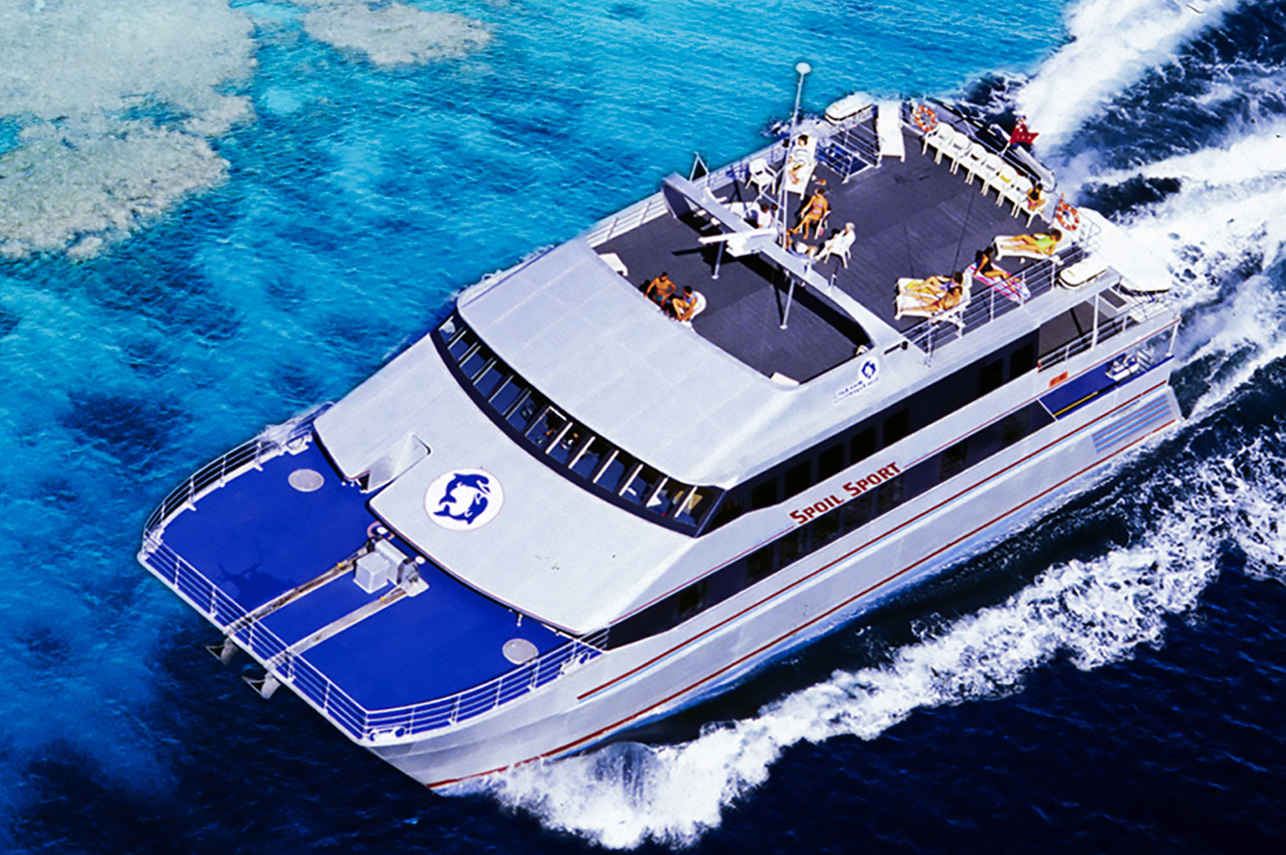
Spoilsport
Australia
28 guests30 m
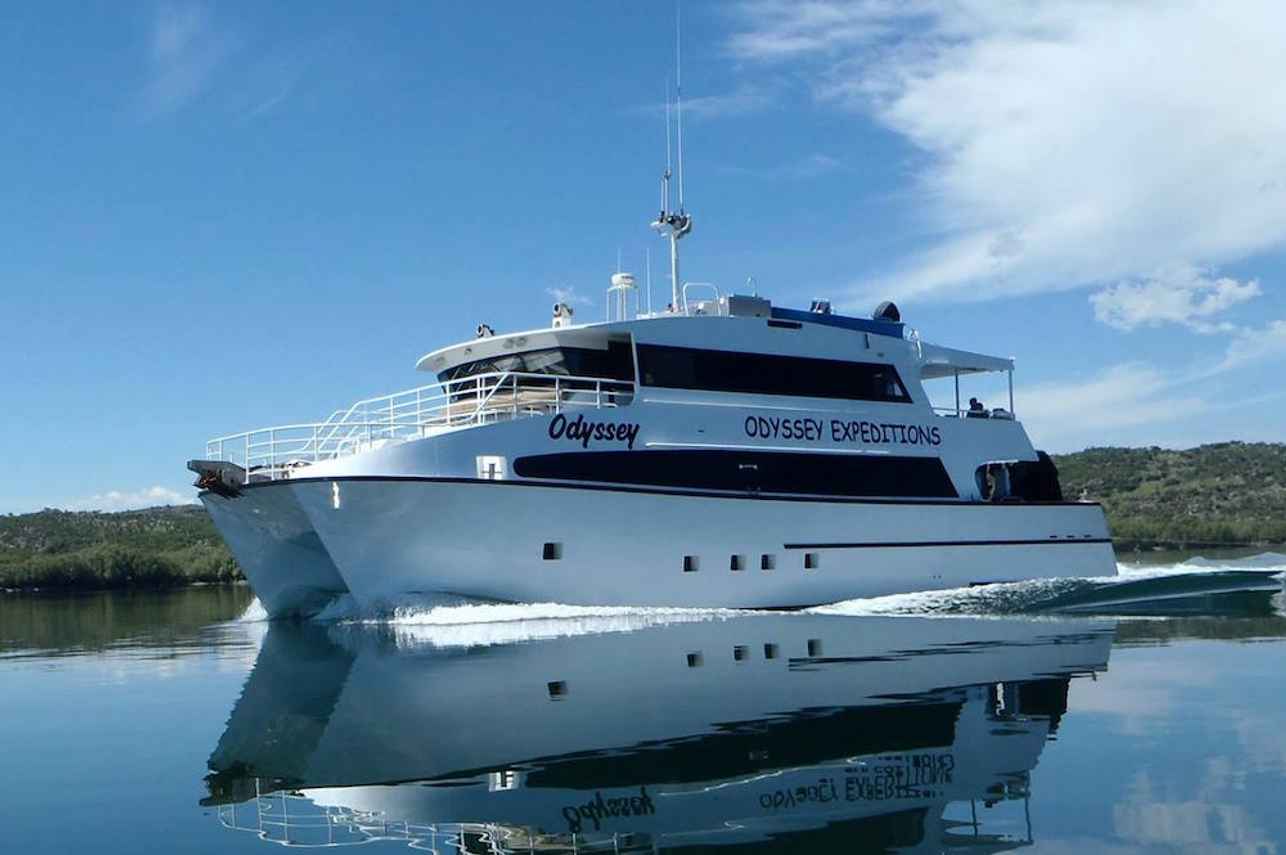
Odyssey Liveaboard
Australia
20 guests24 m
Dive sites similar to North Solitary Island
Same character, same waters — six more sites divers love for the exact same reasons.Compare seasons, access and liveaboard routes — then pick the site that fits your trip best.
© Esri — Maxar, Earthstar, GIS
Agincourt Reef
Australia
Agincourt Reef sits on the outer edge of the Great Barrier Reef, roughly 60–72 km off Port Douglas in Far North Queensland, at the southern end of the true ribbon reefs that run…
- Suitable for
- Beginner
- Current
- Moderate
- Access
- Dayboat
- Depth
- 2–20 m
- Theme
- Reef / Wall
Ahe Atoll, a remote and authentic destination in French Polynesia, offers a dive experience deeply intertwined with its local pearl farming community.
- Suitable for
- Advanced
- Current
- Strong
- Access
- Liveaboard or dayboat
- Depth
- 5–22 m
- Theme
- Channel / Drift
© Esri — Maxar, Earthstar, GIS
Alacrity Shoal
Fiji
Alacrity Shoal is a premier dive site in Fiji, renowned for its spectacular drift diving opportunities and rich marine biodiversity.
- Suitable for
- Advanced
- Current
- Strong
- Access
- Liveaboard or dayboat
- Depth
- 12–40 m
- Theme
- Drift / Seamount
Alibaba is a renowned drift dive located within the Garuae Pass in northern Fakarava, a UNESCO Biosphere Reserve in the Tuamotu Archipelago.
- Suitable for
- Intermediate
- Current
- Strong
- Access
- Liveaboard only
- Depth
- 5–30 m
- Theme
- Reef
© Esri — Maxar, Earthstar, GIS
Aliko Reef
Micronesia
Aliko Reef is a prominent dive site within Yap, Micronesia, characterized by a captivating underwater topography that blends a mini-wall with an expansive coral plateau.
- Suitable for
- Intermediate
- Current
- Mild
- Access
- Dayboat
- Depth
- 6–15 m
- Theme
- Reef / Wall
© Esri — Maxar, Earthstar, GIS
Amity Point
Australia
Amity Point is a popular shore diving destination located at the northwestern tip of North Stradbroke Island, within the protected waters of Moreton Bay.
- Suitable for
- Beginner
- Current
- Moderate
- Access
- Shore / dayboat
- Depth
- 5–15 m
- Theme
- Reef