About Manta Arch
Manta Arch is a premier dive site located near the northern tip of South Solitary Island, approximately 8-9 nautical miles offshore from Coffs Harbour, New South Wales, Australia. This area is nestled within the Solitary Islands Marine Park, a unique ecosystem where warm currents from the Great Barrier Reef converge with cooler southern waters, fostering exceptional biodiversity. The site features an impressive underwater archway surrounded by large boulders and ridges, peaking at 15 meters and descending into gutters that extend down to 30 meters. These natural formations create a haven for marine life, including extensive anemone fields and varied hard and soft corals that thrive in the nutrient-rich waters. While Grey Nurse Sharks are present year-round, their numbers significantly increase during the cooler months, often exceeding 40-60 individuals congregating here. Divers can also encounter schooling pelagic fish, Wobbegongs, and various rays, making for dynamic encounters. This unique blend of tropical and subtropical species provides a vibrant diving experience throughout the year. Diving Manta Arch offers a blend of exploration through its arch and gutters, as well as opportunities for observing large aggregations of sharks and pelagics. Conditions can vary, with currents sometimes strong, necessitating careful dive planning. The site is accessible by boat from Coffs Harbour, typically within 30-40 minutes.
Highlights
Dramatic underwater archwayGrey Nurse Shark sanctuarySchooling pelagic fishDeep gutters and bouldersTropical and subtropical speciesAnemone and Clownfish fields
Season calendar
Best months to dive here
Jan
Feb
Mar
Apr
May
Jun
Jul
Aug
Sep
Oct
Nov
Dec
Good
Dive site facts: Manta Arch
- Depth
- 12–31 m
- Typical dive
- 12–25 m, 50–60 min
- Current
- Moderate to strong
- Visibility
- 10–30 m
- Water temperature
- 18–24°C
- Entry
- Boat / drift
- Level
- Advanced recommended
- Dive type
- Reef, pelagic, shark
- Night dive
- Possible
- Region / port
- Coffs Harbour, NSW
- Coordinates
- 24.1160° S, 152.7180° E
Conditions & Currents
Manta Arch can be exposed to strong currents from the East Australian Current (EAC), especially when it flows from north to south around the island. These currents can make the initial part of the dive challenging, requiring careful entry and descent procedures. However, once divers are underwater and near Little Birdy Island or within the arch's sheltered areas, they can often find respite from the main flow. Stronger currents typically attract large pelagic fish, enhancing the dive experience. Visibility can range from 10 to 30 meters, often improving with the EAC bringing clearer water. Divers should be comfortable with potential water movement and adept at maintaining buoyancy; drift diving techniques are recommended here, and a surface watch is crucial for boat safety.
Marine life & sighting chances
Grey Nurse Shark
May–November (peak), year-round · commonLoggerhead Turtle
commonWobbegong
commonEagle Ray
occasionalBull Ray
commonClownfish
commonKingfish
commonMoray Eel
commonNudibranch
commonFrogfish
occasionalGiant Cuttlefish
Winter · occasionalShovelnose Ray
commonBlue Groper
commonTrevally
commonDive profile & how the dive runs
A typical dive at Manta Arch begins with a boat entry, often as a drift dive, utilizing the East Australian Current. Divers descend near the northern tip of South Solitary Island, targeting the main archway at depths peaking around 15 meters. The route often involves exploring the arch and surrounding boulder formations before following narrow gutters that gradually deepen to 30 meters. This area is ideal for observing Grey Nurse Sharks, which are frequently found sheltering here. From the deeper gutters, the dive often progresses towards a pile of boulders rising from 21 meters, a known aggregation point for schooling pelagic fish. The current assists in moving divers along the reef, ensuring a dynamic experience. The safety stop typically occurs during the drift, allowing divers to clear their deco obligations while continuing to ascend gradually before surfacing for boat pickup.
Underwater photography
Manta Arch offers superb opportunities for wide-angle photography, especially when capturing the dramatic archway, the congregation of Grey Nurse Sharks, or schools of pelagic fish. A wide-angle lens (e.g., 10-24mm for APS-C or 16-35mm for full-frame) is essential to encompass the expansive topography and large animal subjects. External strobes are highly recommended to bring out the vibrant colors of soft corals and anemones found throughout the site, particularly in deeper sections or within the arch's shadows. Given the potential for currents, maintaining excellent buoyancy control is crucial to avoid disturbing marine life or kicking up sediment. Approach marine life, especially the Grey Nurse Sharks, calmly and without sudden movements to ensure natural behavior and ethical interaction.
Combine with nearby dive sites
- Cleaner Station
- Grey Nurse Gutters
- Buchanan's Wall
- Fish Soup
- Anenome Bay
Getting there & logistics
Access to Manta Arch is typically via day boats departing from Coffs Harbour, New South Wales. Coffs Harbour is centrally located on the NSW north coast, roughly halfway between Sydney and Brisbane, and is accessible by regional flights or road. Dive trips to South Solitary Island, where Manta Arch is situated, usually take 30-40 minutes by boat, covering a distance of approximately 8-9 nautical miles offshore. Trips often combine Manta Arch with other nearby sites within the Solitary Islands Marine Park, such as Cleaner Station or Grey Nurse Gutters, providing a comprehensive diving experience over a single or multi-day itinerary. No specific marine park fees for divers are mentioned in the sources, but it's advisable to confirm with local operators.
Safety & environment
The nearest recompression chamber facilities for diving emergencies are located in major cities in Australia, requiring potential air evacuation from Coffs Harbour. Therefore, comprehensive dive insurance covering medical emergencies and evacuation is strongly recommended. Manta Arch can experience strong currents due to the East Australian Current, making advanced dive experience and proficiency in drift diving techniques crucial. Always dive with a reliable surface watch from your boat, especially in variable current conditions. Maintain strict buddy procedures and stay aware of your depth and air consumption, particularly when exploring the deeper gutters down to 30 meters. Respect marine life, especially the Grey Nurse Sharks, by observing them calmly and avoiding any actions that might startle them.
Who it suits — and who it doesn't
Suited for
- Experienced divers comfortable with currents
- Advanced Open Water certified divers
- Shark enthusiasts and big animal photographers
- Divers seeking a mix of tropical and subtropical marine life
- Photographers with wide-angle setups
Less suited for
- Beginner divers or those without current experience
- Divers prone to seasickness in choppy conditions
- Divers uncomfortable with deep sections (30m)
- Those who prefer static, current-free dives
FAQ
Manta Arch FAQ
What makes Manta Arch unique?
Manta Arch is renowned for its distinctive underwater archway and deep gutters, which serve as a critical habitat for an impressive number of Grey Nurse Sharks. It's a convergence point for both tropical and subtropical marine species, offering a diverse array of life not typically found together elsewhere.
When is the best time to see Grey Nurse Sharks at Manta Arch?
While Grey Nurse Sharks are present year-round, their numbers significantly increase during the cooler months, with peak sightings from May to November. During this period, you can expect to see large aggregations, often exceeding 40-60 individuals in a single dive.
How strong are the currents at Manta Arch?
Currents at Manta Arch can range from moderate to strong, influenced by the East Australian Current, particularly when flowing from north to south. Divers should be prepared for variable conditions and proficient in drift diving techniques, though sheltered areas exist once you are within the site's formations.
What is the typical depth range for diving Manta Arch?
Manta Arch features an impressive topography with depths ranging from 12 meters at its shallower sections to 31 meters within its deep arch and gutters. Most dives typically explore between 12 and 25 meters, but the deeper areas are accessible for advanced divers.
Is Manta Arch suitable for beginner divers?
Manta Arch is considered an advanced dive site due to its depth and potential for strong currents. While shallower sections exist, experience with currents and good buoyancy control are highly recommended for a safe and enjoyable dive. It is not generally suitable for novice divers.
Why dive Manta Arch from a liveaboard?
Manta Arch is one of Australia's signature dive sites. A liveaboard sleeps you on the water and puts you in the water for three to four guided dives per day, including dawn and night dives that day-boat operators rarely offer. You skip the daily commute back to port and reach quieter, less-crowded sites in the same region on a single trip.
Below are the liveaboards that include Manta Arch on their Australia itineraries.
Liveaboards diving Manta Arch
These liveaboards may visit Manta Arch on selected itineraries — the exact dive sites depend on departure, weather and conditions.
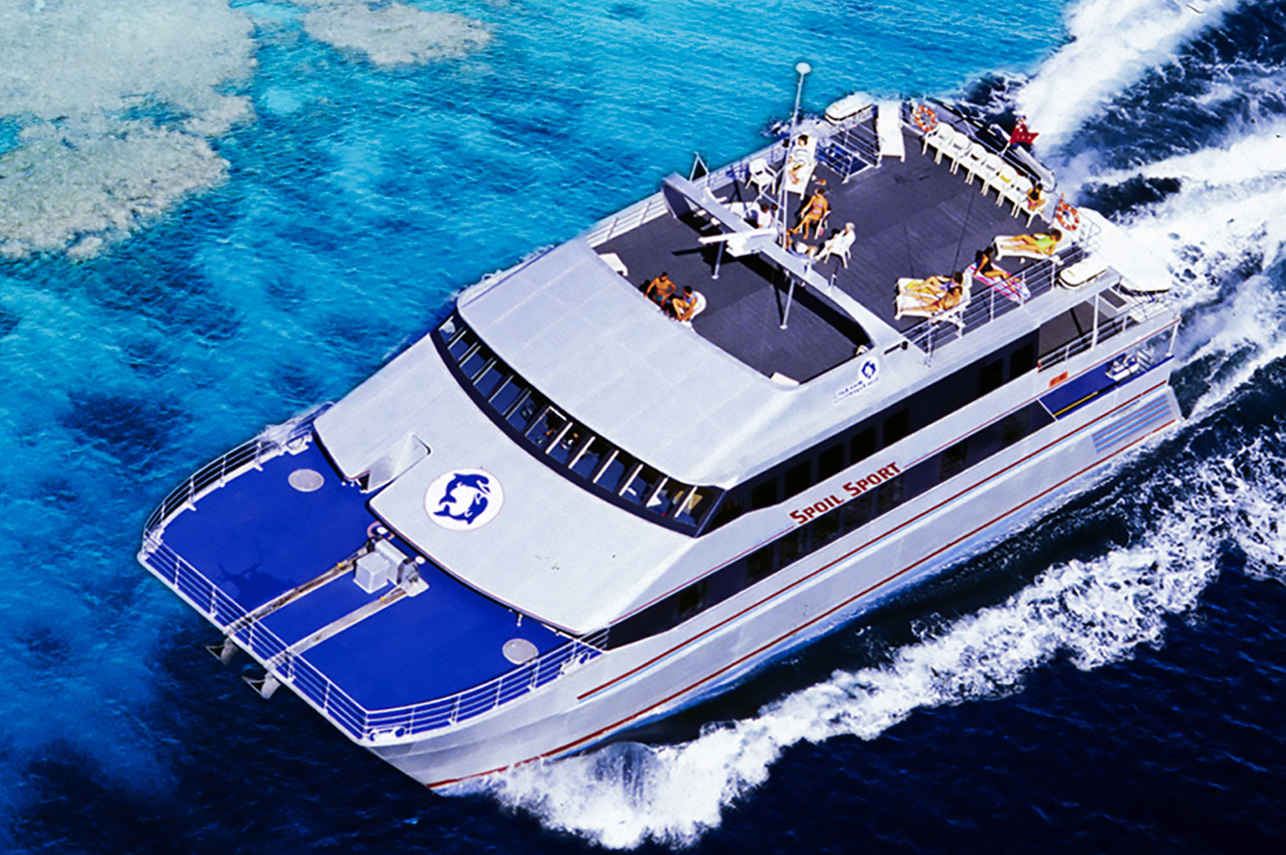
Spoilsport
Australia
28 guests30 m
$408/day
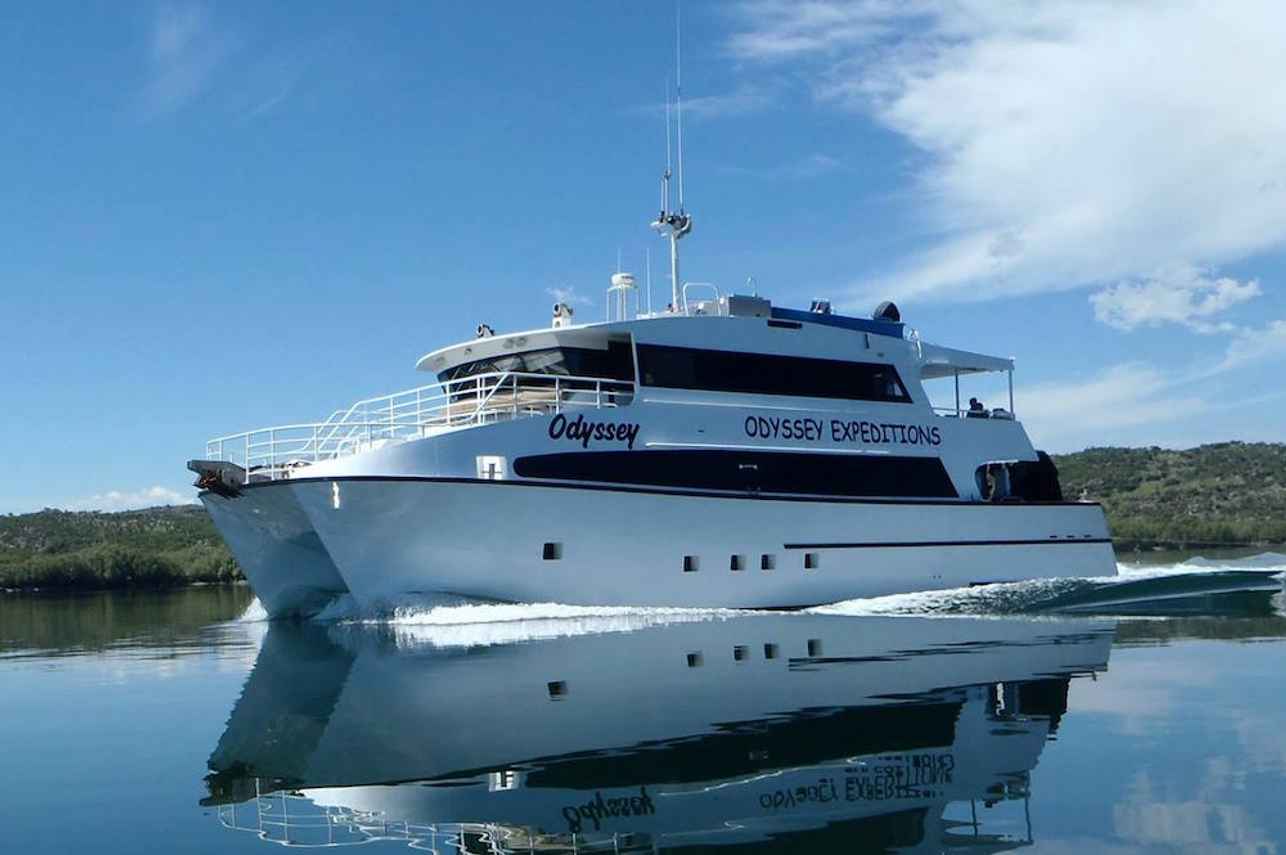
Odyssey Liveaboard
Australia
20 guests24 m
$392/day
Dive sites similar to Manta Arch
Same character, same waters — six more sites divers love for the exact same reasons.Compare seasons, access and liveaboard routes — then pick the site that fits your trip best.
© Esri — Maxar, Earthstar, GIS
Agincourt Reef
Australia
Agincourt Reef sits on the outer edge of the Great Barrier Reef, roughly 60–72 km off Port Douglas in Far North Queensland, at the southern end of the true ribbon reefs that run…
- Suitable for
- Beginner
- Current
- Moderate
- Access
- Dayboat
- Depth
- 2–20 m
- Theme
- Reef / Wall
© Esri — Maxar, Earthstar, GIS
Cocos Keeling - Canons
Australia
Cocos Keeling - Canons offers a distinctive dive experience within the Cocos (Keeling) Islands lagoon, making it Australia's most remote dive destination.
- Suitable for
- Beginner
- Current
- Mild
- Access
- Dayboat
- Depth
- 8–12 m
- Theme
- Reef
© Esri — Maxar, Earthstar, GIS
Raine Island
Australia
Raine Island is a pivotal dive site located in the Far Northern Great Barrier Reef, approximately 85 kilometers east-north-east of Cape Grenville and just over 4 nautical miles south of the island itself.
- Suitable for
- Advanced
- Current
- Strong
- Access
- Liveaboard only
- Depth
- 5–40 m
- Theme
- Reef / Wall
© Esri — Maxar, Earthstar, GIS
Bare Island East
Australia
Bare Island East is a highly regarded shore dive in Sydney, celebrated for its diverse and colourful sponge gardens.
- Suitable for
- Intermediate
- Current
- Mild
- Access
- Shore / dayboat
- Depth
- 2–11 m
- Theme
- Reef
© Esri — Maxar, Earthstar, GIS
Cocos Keeling - Broccoli Patch
Australia
Broccoli Patch is a premier dive site nestled within the Cocos (Keeling) Islands lagoon system, offering a gentle yet captivating underwater experience.
- Suitable for
- Beginner
- Current
- Mild
- Access
- Dayboat
- Depth
- 5–10 m
- Theme
- Reef
© Esri — Maxar, Earthstar, GIS
Milln Reef
Australia
Milln Reef, located approximately 60km offshore from Cairns within the Great Barrier Reef, stands out as a highly favored outer reef destination for both divers and snorkelers.
- Suitable for
- Intermediate
- Current
- Moderate
- Access
- Liveaboard or dayboat
- Depth
- 4–22 m
- Theme
- Reef