About Cuverville Island
Cuverville Island, nestled within the Errera Channel off the Antarctic Peninsula, presents an exceptional opportunity for polar diving. Renowned for its significant Gentoo penguin rookery, with over 4,000 breeding pairs, the island offers a unique juxtaposition of bustling avian life above and serene underwater exploration below. Divers encounter rocky underwater landscapes intricately shaped by both ice and currents, creating a dynamic environment. The underwater topography reveals diverse habitats, including kelp forests, delicate soft corals, and a variety of nudibranchs, providing rich photographic opportunities. Depths typically range from 10 to 20 meters, making it accessible for exploring the vibrant macro life that thrives in these cold waters. Visibility can be excellent, often reaching 15–25 meters, especially during the Antarctic summer months. The marine ecosystem is fueled by plankton blooms in mid-summer, attracting abundant krill and, consequently, a wide array of marine life, including various seals and penguins. Dives are typically conducted from Zodiacs, allowing access to sheltered bays where currents are minimal, ideal for acclimatization dives and detailed observation of the seabed. This site is an integral part of Antarctic liveaboard itineraries, often combined with land excursions to witness the spectacular wildlife on the island. Cuverville Island exemplifies the untamed beauty and unique challenges of Antarctic diving, offering an unforgettable experience for advanced cold-water divers.
Highlights
Gentoo penguin rookeryIce-sculpted underwater terrainVibrant kelp forestsDiverse nudibranchsSoft coral ecosystemsSeal and penguin encountersExcellent visibilitySheltered bay diving
Season calendar
Best months to dive here
Jan
Feb
Mar
Apr
May
Jun
Jul
Aug
Sep
Oct
Nov
Dec
Excellent
Good
Dive site facts: Cuverville Island
- Depth
- 10–20 m
- Typical dive
- 10–20 m, 40 min
- Current
- Mild to none in sheltered bays
- Visibility
- 15–25 m
- Water temperature
- -2°C to 2°C
- Entry
- Zodiac entry/exit
- Level
- Advanced, drysuit certified, cold-water experience
- Dive type
- Wall, ice, macro, wildlife
- Night dive
- Not applicable (24-hour daylight in summer)
- Region / port
- Antarctic Peninsula
- Coordinates
- -64.675, -62.62
Conditions & Currents
Diving at Cuverville Island typically occurs in relatively sheltered bays, where currents are minimal, particularly in the shallower areas. This makes it an ideal location for initial acclimatization dives, allowing divers to adjust to their equipment and the frigid water without the added challenge of strong water movement. While the Errera Channel can experience some currents, dive operators prioritize sites within the island's vicinity that offer calm conditions. Visibility generally ranges from 15 to 25 meters but can be affected by plankton blooms during mid-summer, which, while beneficial for marine life, may reduce clarity. Divers should be prepared for zodiac entries and exits, maintaining good buoyancy control in chilly waters that can range from -2°C to 2°C.
Marine life & sighting chances

Gentoo penguin
December-February · common
Leopard seal
February-March · occasional
Weddell seal
occasional
Crabeater seal
November-December · occasional
Kelp
common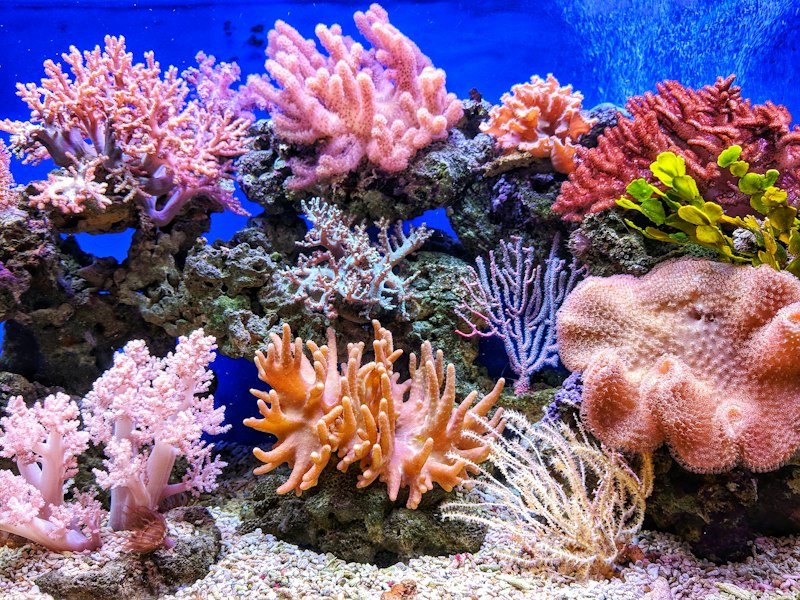
Soft coral
common
Nudibranch
common
Sea star
common
Giant isopod
occasional
Antarctic bloodless fish
occasional
Squat lobster
occasional
Peacock worm
occasionalDive profile & how the dive runs
Dives at Cuverville Island typically begin with a Zodiac entry into a sheltered bay, often near the rocky shore or a kelp forest. Initial dives might serve as a check-out to assess weighting and gear in sub-zero water, often limited to a 20-meter maximum depth for a duration of 40 minutes. You will descend along a rocky wall or slope, observing the ice-sculpted terrain and its resident macro life, including soft corals, nudibranchs, and various invertebrates. The route usually follows the contours of the island, allowing for exploration of crevices and small overhangs. Turnaround points are often dictated by air consumption or bottom time limits. The safety stop is conducted in the clear, shallow water near the Zodiac, where you can often observe curious penguins swimming by.
Underwater photography
Capturing the unique underwater world of Cuverville Island requires careful planning and specialized equipment. Given the potential for vibrant macro life like nudibranchs and sea stars on the walls and in kelp, a macro lens is highly recommended. However, wide-angle lenses can also yield stunning results, especially when photographing the dramatic ice formations and the occasional playful seals or penguins. Due to the limited light penetration, especially at deeper points, external strobes are essential to bring out the true colors of the marine invertebrates and illuminate subjects effectively. Buoyancy control is paramount to avoid disturbing the fragile environment and to maintain stable shots in cold water. Always prioritize environmental protection and wildlife welfare, maintaining respectful distances and never interfering with animals or their habitats.
Combine with nearby dive sites
- Neko Harbour
Neko Harbour, nestled on the Antarctic Peninsula, offers divers a truly immersive experience in a pristine polar environment.
- Danco Island
Danco Island, located in the Errera Channel off the Antarctic Peninsula, presents an unparalleled cold-water diving experience.
- Paradise Bay
Paradise Bay, located on the Antarctic Peninsula, offers divers a unique opportunity to explore a wilderness few will ever experience.
- Port Lockroy
Port Lockroy, located on Wiencke Island off the Antarctic Peninsula, offers an extraordinary cold-water diving experience amidst historical…
- Errera Channel
Cuverville Island is located within this channel.
Getting there & logistics
Access to Cuverville Island for diving is exclusively via liveaboard expeditions departing from Ushuaia, Argentina. Travelers typically fly into Ushuaia (USH) via Buenos Aires or other South American hubs. The journey across the Drake Passage from Ushuaia to the Antarctic Peninsula takes approximately 2.5 to 3 days each way. Expedition lengths vary, commonly ranging from 11 to 16 days in total, with the Drake Passage transit accounting for a significant portion of this time. There are no shore-based diving operations in Antarctica. Dive trips usually combine multiple dive sites along the Antarctic Peninsula and its offshore islands, alongside Zodiac explorations and land excursions for wildlife viewing. Permit fees and expedition costs are typically included in the all-inclusive liveaboard package, but divers should budget for flights to Ushuaia, pre/post-trip accommodation, and personal gear rentals.
Safety & environment
Diving in Antarctica, including Cuverville Island, presents unique challenges due to its extreme remoteness and frigid conditions. The nearest recompression chamber is thousands of miles away, making deep or aggressive diving highly inadvisable; maximum depths rarely exceed 20 meters. Divers must possess extensive cold-water and drysuit experience, holding appropriate certifications and having a recent log of dives below 4°C. Comprehensive medical clearance is mandatory. Evacuation in this environment is complex and time-consuming, underscoring the critical need for robust dive insurance that covers remote medical emergencies and repatriation. Site-specific hazards include shifting ice, potential for strong winds, and the unpredictability of wildlife interactions. Strict adherence to dive leader instructions, buddy system protocols, and maintaining excellent buoyancy control are paramount for safety.
Who it suits — and who it doesn't
Suited for
- Advanced drysuit divers
- Cold-water expedition enthusiasts
- Photographers seeking unique macro opportunities
- Wildlife lovers interested in polar marine life
- Divers with excellent buoyancy control
Less suited for
- Beginner divers
- Divers without drysuit experience
- Warm-water-only divers
- Those prone to seasickness (Drake Passage)
- Individuals expecting abundant deep dives
FAQ
Cuverville Island FAQ
What kind of marine life can I expect to see at Cuverville Island?
At Cuverville Island, you can expect to encounter a vibrant array of marine life. This includes a large colony of Gentoo penguins, which are often seen both above and below the water. Underwater, you'll find diverse invertebrates such as nudibranchs, sea stars, giant isopods, and various soft corals, all thriving on the ice-sculpted seabed and kelp forests.
What are the typical dive conditions at Cuverville Island?
Dive conditions at Cuverville Island are characterized by cold water temperatures, typically ranging from -2°C to 2°C. Visibility generally remains good, often between 15 to 25 meters. Dives are usually conducted in sheltered bays, meaning currents are mild to non-existent, providing a stable environment for exploration. All dives are done from Zodiacs.
Is Cuverville Island suitable for all levels of divers?
No, Cuverville Island is not suitable for all levels of divers. It requires advanced cold-water diving experience, including extensive drysuit proficiency and a recent log of dives in similarly frigid conditions. Dive operators typically mandate specific certifications and experience levels due to the challenging and remote nature of Antarctic diving.
How deep are the dives at Cuverville Island?
Dives at Cuverville Island typically do not exceed 20 meters. This shallow depth is common for Antarctic diving due to safety considerations related to the remote environment and the abundance of marine life and ice formations found in shallower waters. Most dives will be in the 10-20 meter range.
What equipment is essential for diving at Cuverville Island?
Essential equipment for diving at Cuverville Island includes a drysuit with thick undergarments, dry gloves, and two sets of freeze-protected regulators. You'll also need a quick-release BCD, depth gauge, compass, flashlight, and a mask with fins. A spare mask and regulator setup are highly recommended due to the extreme conditions.
Why dive Cuverville Island from a liveaboard?
Cuverville Island is one of Antarctica's signature dive sites. A liveaboard sleeps you on the water and puts you in the water for three to four guided dives per day, including dawn and night dives that day-boat operators rarely offer. You skip the daily commute back to port and reach quieter, less-crowded sites in the same region on a single trip.
Below are the liveaboards that include Cuverville Island on their Antarctica itineraries.
Liveaboards diving Cuverville Island
These liveaboards may visit Cuverville Island on selected itineraries — the exact dive sites depend on departure, weather and conditions.
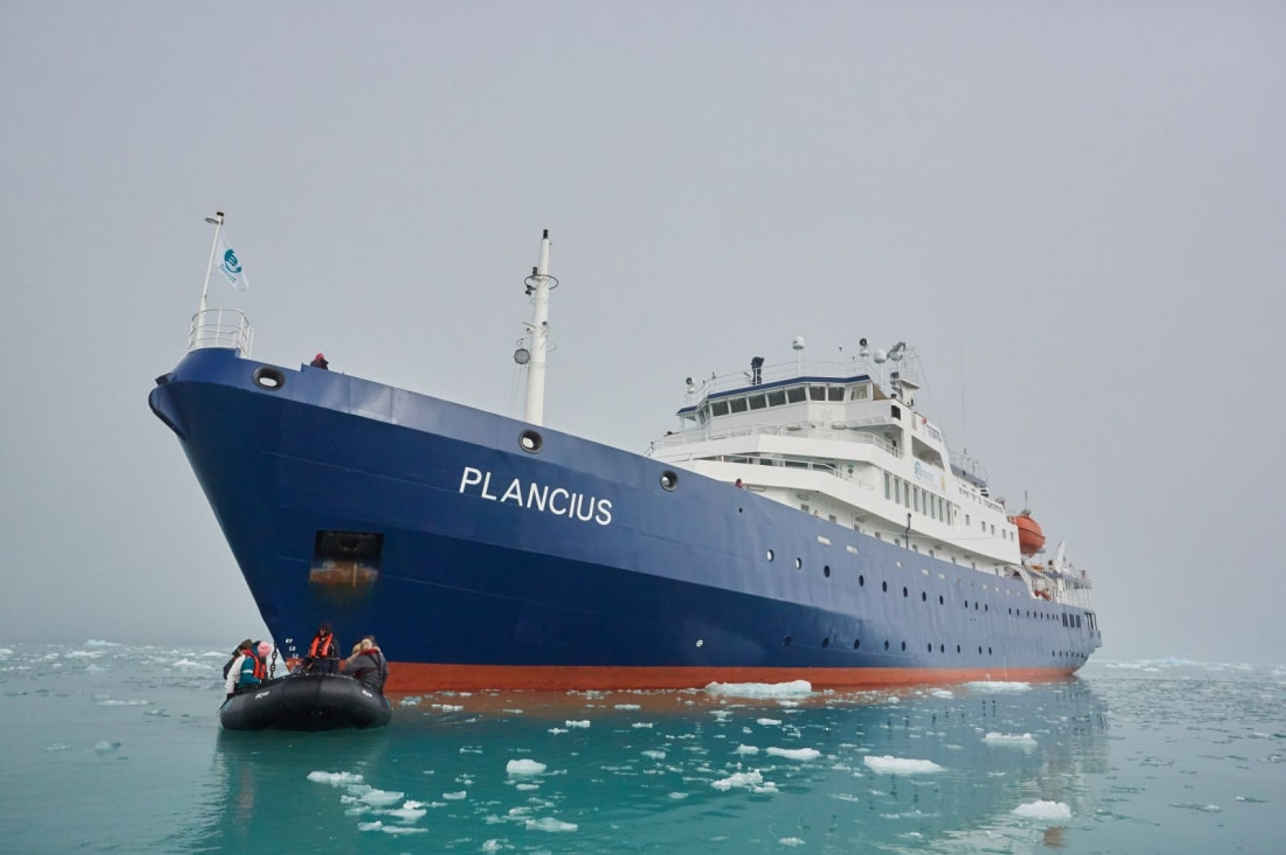
Plancius
Antarctica
108 guests89 m
$773/day
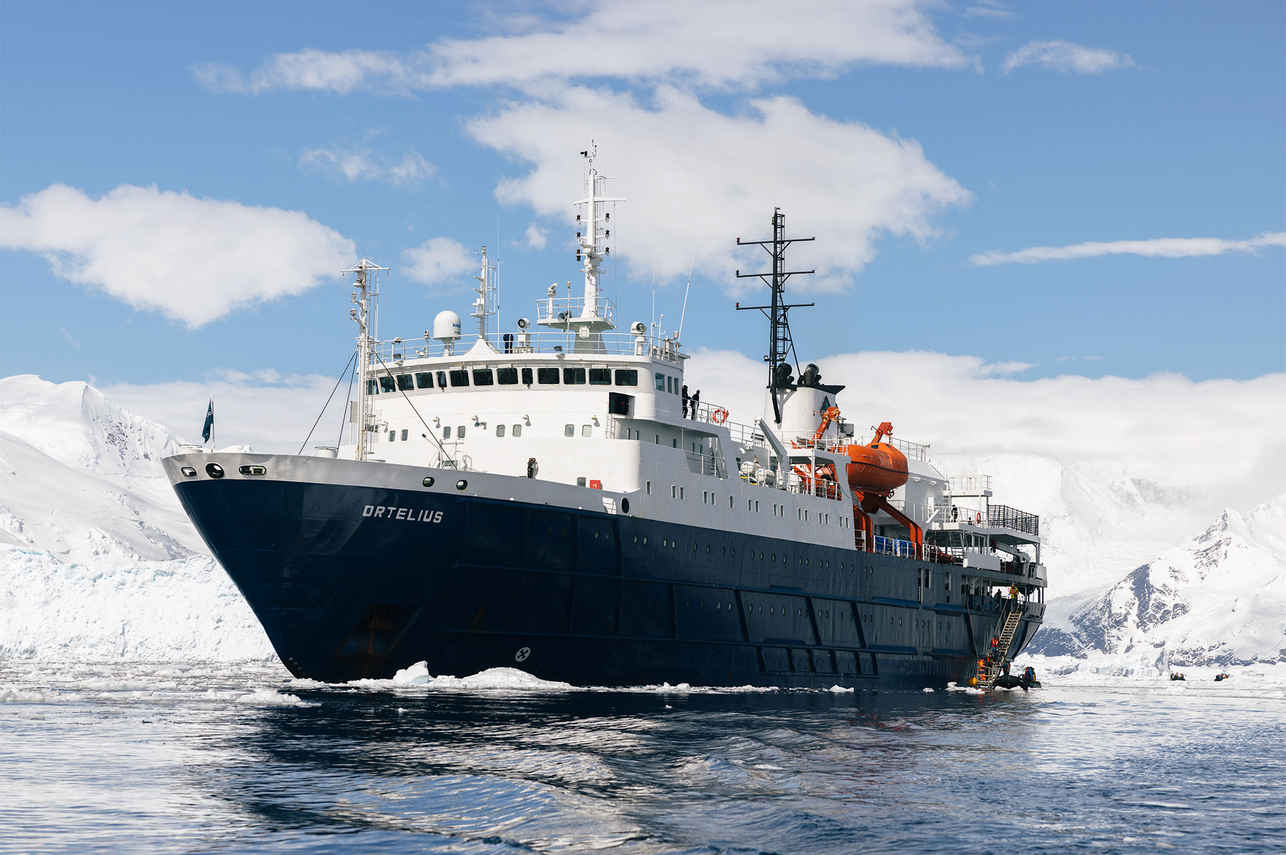
Ortelius
Antarctica
108 guests90.95 m
$662/day
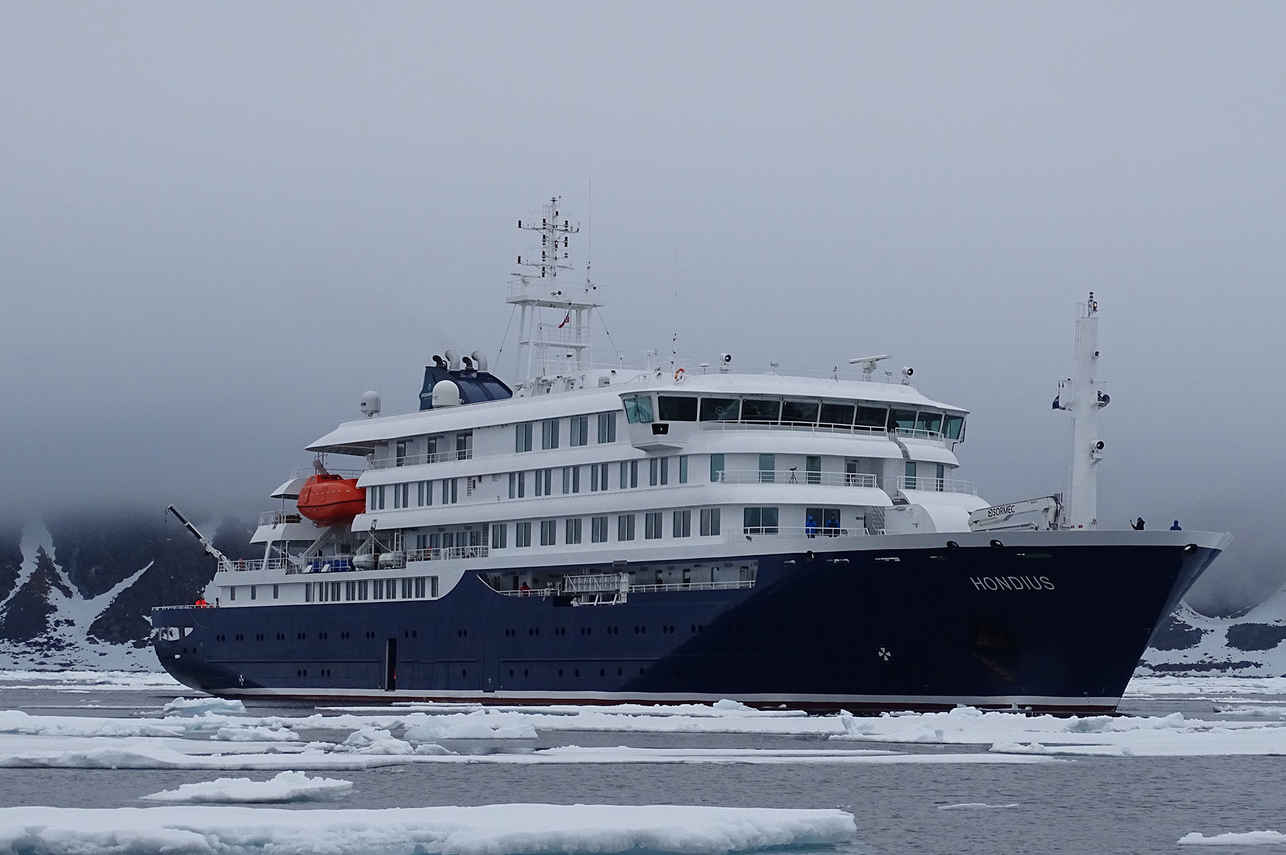
Hondius Antarctica Diving
Antarctica
170 guests107.6 m
$777/day
Dive sites similar to Cuverville Island
Same character, same waters — six more sites divers love for the exact same reasons.Compare seasons, access and liveaboard routes — then pick the site that fits your trip best.
© Esri — Maxar, Earthstar, GIS
Argentine Islands - Vernadsky
Antarctica
Diving at the Argentine Islands, near the Vernadsky Research Base, offers an exclusive opportunity to explore the underwater world of the Antarctic Peninsula.
- Suitable for
- Advanced
- Current
- Strong
- Access
- Liveaboard only
- Depth
- 3–15 m
- Theme
- Ice / Reef
© Esri — Maxar, Earthstar, GIS
Lemaire Channel
Antarctica
Lemaire Channel, a narrow passage between the Antarctic mainland and Booth Island, presents a truly majestic and impressive dive experience.
- Suitable for
- Advanced
- Current
- Strong
- Access
- Liveaboard only
- Depth
- 5–30 m
- Theme
- Ice / Wall
© Esri — Maxar, Earthstar, GIS
Useful Island
Antarctica
Useful Island, situated in the Western Antarctic Peninsula, presents an extraordinary opportunity for intrepid divers to explore a shallow-water ecosystem brimming with biodiversity.
- Suitable for
- Advanced
- Current
- Strong
- Access
- Liveaboard only
- Depth
- 5–25 m
- Theme
- Ice / Wall
© Esri — Maxar, Earthstar, GIS
Wilhelmina Bay
Antarctica
Wilhelmina Bay, nestled in the Antarctic Peninsula, is renowned as a prime location for observing humpback whales and experiencing the continent's pristine marine environment.
- Suitable for
- Advanced
- Current
- Moderate
- Access
- Liveaboard only
- Depth
- 5–20 m
- Theme
- Ice / Wall
© Esri — Maxar, Earthstar, GIS
under the iceberg scour
Antarctica
Diving in Antarctica offers a unique experience beneath its frigid waters, a stark contrast to typical warm-water destinations.
- Suitable for
- Advanced
- Current
- Moderate
- Access
- Liveaboard only
- Depth
- ≤ 70 m
- Theme
- Reef
© Esri — Maxar, Earthstar, GIS
Enterprise Island - Wreck Gouvernøren
Antarctica
The wreck of the Gouvernøren, nestled at Enterprise Island, stands as Antarctica's most accessible and atmospheric shipwreck.
- Suitable for
- Advanced
- Current
- Mild
- Access
- Liveaboard only
- Depth
- 5–18 m
- Theme
- Ice / Wreck