Lemon Shark
Negaprion brevirostris
About Lemon Shark
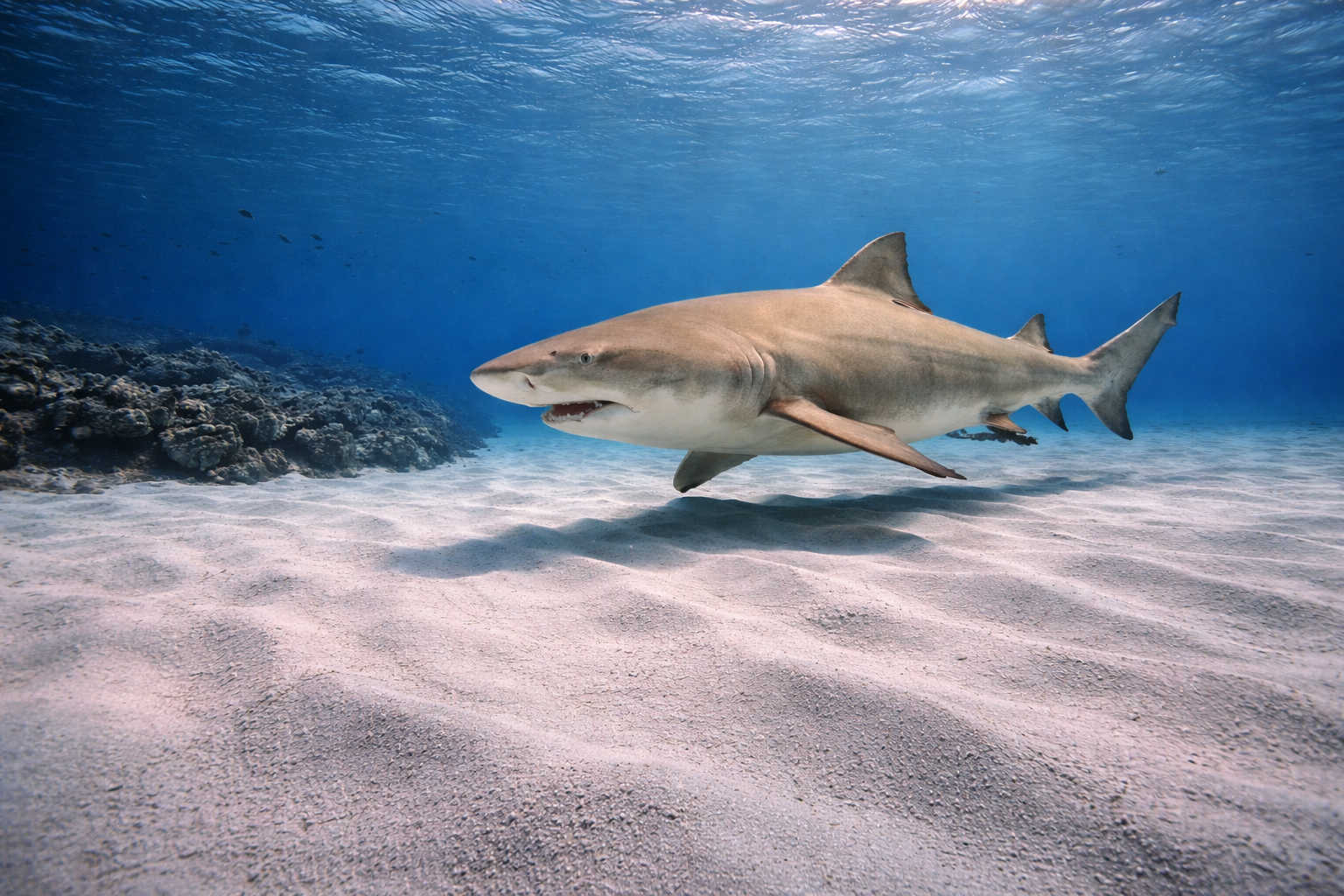
Named for their yellowish-brown skin, lemon sharks are social predators often found in shallow tropical waters. They are commonly spotted resting on sandy bottoms near reefs and are known for their curious, non-aggressive behavior toward divers. Lemon sharks play a vital role in maintaining healthy reef ecosystems.
Quick Facts
- Habitat: Lemon Sharks (Negaprion brevirostris) are **coastal, shallow-water dwelling sharks** found in tropical and subtropical waters of the Atlantic and Pacific Oceans. In the **Western Atlantic**, their range extends from New Jersey to southern Brazil, including the Caribbean Sea and the Gulf of Mexico. Notable dive destinations where they are frequently encountered include the **Bahamas**, particularly around Grand Bahama and Bimini, and the **Florida Keys** in the United States. In the **Eastern Atlantic**, they are found from Mauritania to the Ivory Coast. They also inhabit the **Eastern Pacific**, from Baja California to Ecuador. These sharks prefer **sandy bottoms, seagrass beds, mangrove estuaries**, and coral reefs, often found in depths less than 90 meters. Juveniles typically spend their early years in **nursery habitats** like mangroves and shallow bays, offering protection from larger predators, before venturing into deeper waters as they mature. Their affinity for shallower, warmer waters makes them a common sight for divers in such environments.
- Diet: Lemon Sharks are **opportunistic predators**, with their diet largely consisting of a variety of bony fishes. They commonly feed on marine species such as **catfish, mullets, jacks, croakers**, and mojarras, but will also consume stingrays and crustaceans like crabs and shrimp when available. Their hunting strategy involves patrolling near the bottom, utilizing their **keen sense of smell and electroreception** to detect prey hidden in sand or seagrasses. They are known for their **solitary hunting behavior**, often ambushing unsuspecting prey. While generally not considered a top-tier apex predator, they are an important part of their ecosystem's food web, controlling populations of smaller and mesopredator species. Their powerful jaws and numerous sharp teeth are well-suited for grasping and dismembering their prey.
- Best season: The best season to encounter Lemon Sharks varies by location, often aligning with warmer water temperatures or specific migratory patterns. In the **Bahamas**, particularly around sites like Tiger Beach and Bimini, Lemon Sharks are frequently seen **year-round**, but sightings are especially consistent during the **cooler dry season from November to May**. During these months, the waters are clearer and multiple shark species, including lemons, aggregate for various reasons. In the **Florida Keys**, their presence is also consistent, with peak sightings typically occurring from **late winter through spring (February to May)** as they move into shallower waters. For divers in these regions, planning trips during these windows maximizes the chances of a close encounter with these fascinating sharks. Always check with local dive operators for the **most current seasonal information and best viewing periods**.
Fun Facts
Lemon sharks can rest motionless on the seafloor by pumping water over their gills,They form social bonds and prefer company of familiar individuals,Bimini in the Bahamas hosts one of the most studied lemon shark populations,Young lemon sharks spend their first years in mangrove nurseries
Diving Tips
When diving with Lemon Sharks, maintaining a **calm and controlled demeanor** is paramount. These sharks are generally considered **docile and curious towards divers**, but like all sharks, they are wild animals and respect their space. Avoid sudden movements or aggressive swimming. Keep your hands close to your body and refrain from trying to touch or feed them, as this can alter their natural behavior and pose a safety risk. Look for Lemon Sharks often cruising over **sandy areas, near seagrass beds, or along the edges of mangrove channels**. They are often found relatively close to the bottom. Their **yellowish-brown coloration** provides excellent camouflage against these backdrops. When observing, maintain a **safe and respectful distance**, typically at least a few meters. If they approach, remain still and observe, allowing them to pass. Divers should be aware of any **local regulations or guidelines** concerning shark interactions at specific dive sites, as some areas may have strict rules on photography, approaching, or baiting. Always dive with a reputable operator who prioritizes **ethical and responsible shark interactions**. Remember, we are guests in their underwater world, and our goal is to observe without disturbing. A **polarized mask** can sometimes help spot them in bright, shallow water conditions due to reduced glare.