About Boca de Piedra
Boca de Piedra, nestled within the pristine Jardines de la Reina marine park off Cuba's southern coast, offers an extraordinary dive experience centered around American saltwater crocodiles. This site is distinct for allowing divers a rare and cautious interaction with these ancient reptiles, often found near the liveaboard moorings in the mangroves. Jardines de la Reina itself is a vast archipelago stretching 150 km, renowned for its exceptionally healthy coral reefs and diverse marine life. The area is characterized by vertical slopes, coral mounds, canyons, and caves, with Boca de Piedra being a prime example of its unique biodiversity and protected status since 1996. Beyond the crocodiles, the surrounding reefs teem with colorful soft corals, sponges, and sea fans. Large populations of snappers, groupers, barracudas, and various shark species including Caribbean reef, silky, nurse, and occasional hammerheads are commonly sighted. The warm, clear waters and thriving ecosystem reflect what Caribbean reefs were like decades ago. This site is typically accessed via liveaboard, as its remote location in the Jardines de la Reina is uninhabited and heavily protected. Divers can expect consistent warm water temperatures and excellent visibility, making it suitable for capturing unique underwater photography and observing a vibrant, healthy marine environment.
Highlights
American saltwater crocodilesPristine Jardines de la Reina marine parkExceptional coral reef healthAbundant shark populationsDiverse sponge and coral formationsUnique wildlife encounters
Season calendar
Best months to dive here
Jan
Feb
Mar
Apr
May
Jun
Jul
Aug
Sep
Oct
Nov
Dec
Excellent
Good
Dive site facts: Boca de Piedra
- Current
- Mild to medium
- Visibility
- 40+ m
- Water temperature
- 25–29°C (77–84°F)
- Entry
- Tender
- Level
- All levels
- Dive type
- Crocodile encounter, coral reef, shark diving
- Night dive
- Possible (check liveaboard policy)
- Region / port
- Jardines de la Reina, Cuba
- Coordinates
- 20.9100° N, 78.9300° W
Conditions & Currents
Dive sites in Jardines de la Reina, including Boca de Piedra, are generally well-protected from strong winds and sea currents. Divers can expect little to sometimes medium currents, which contribute to the area being suitable for all experience levels. Visibility is consistently excellent, frequently going over 40 meters, due to warm and clear waters. Water temperatures range from 25°C to 29°C. Entry is typically from a dive tender, with operations managed by liveaboards. Divers should anticipate a calm environment conducive to observation, especially when interacting with the resident crocodiles, requiring careful buoyancy control and adherence to guide instructions.
Marine life & sighting chances


Caribbean Reef Shark
common
Silky Shark
occasional
Nurse Shark
occasional
Lemon Shark
occasional
Blacktip Shark
occasional
Whale Shark
July to November · rare
Hammerhead Shark
rare
Goliath Grouper
common
Tarpon
occasional
Green Moray Eel
occasional
Hawksbill Sea Turtle
occasional
Barracuda
occasional
Eagle Ray
occasionalDive profile & how the dive runs
Diving at Boca de Piedra typically involves a tender transfer from the main liveaboard, which often moors stably within the mangroves. Upon arrival, divers conduct a back-roll entry into the warm, clear waters. The dive profile is often guided by the behavior of the resident American saltwater crocodiles, which may be observed near the surface or resting on the sandy bottom. Divers will maintain a respectful distance, often observing from a shallow depth of 3-5 meters. The focus is on observation and photography, with careful buoyancy control paramount to avoid disturbing the environment or the animals. The dive may also explore the adjacent coral structures, which house a variety of reef fish and invertebrates. Safety stops are typically performed at 5 meters for three minutes, often near the tender for easy re-entry, ensuring a relaxed and memorable experience.
Underwater photography
Boca de Piedra offers exceptional opportunities for wide-angle photography, especially for capturing American saltwater crocodiles in their natural habitat. A wide-angle lens (e.g., 10-17mm or fisheye) is essential for close-up shots of the crocs and to encompass the vibrant reef ecosystems. Due to the clear water and often shallow depths for croc encounters, natural light can be sufficient, but strobes are recommended to bring out the color in the corals and provide fill light for subjects. Patience and careful positioning are key when photographing crocodiles; approach slowly and avoid sudden movements. Ethical conduct, maintaining a safe distance, and listening to dive guide instructions are paramount to ensure both diver safety and the animals' well-being. Focus also on the abundant reef life, including various shark species, groupers, and colorful sponges.
Combine with nearby dive sites
- Five Seas
Shallow site with a small American boat wreck, adorned with corals and home to diverse reef fish.
- Montana Rusa
Montaña Rusa is an advanced dive site located within Coiba National Park, Panama, aptly named for its undulating underwater landscape.
- Avalon
Avalon refers to the liveaboard operations that provide exclusive access to Cuba's Jardines de la Reina (Gardens of the Queen) marine park.
- Neptuno Wreck
Reef and two wrecks: an ancient galleon and a fishing boat, rich in lobsters and crabs.
- Black Coral I
Exciting site with abundant black coral, gorgonians, goliath groupers, and a resident reef shark population.
Getting there & logistics
Access to Boca de Piedra is exclusively via liveaboard, typically embarking from the port of Jucaro, Cuba. International flights usually arrive at José Martí International Airport (HAV) in Havana, requiring an overnight stay before a approximately 5-hour bus transfer to Jucaro. Alternatively, flying into Camaguey airport (CMW) can reduce the bus transfer to 3-4 hours. Liveaboard trips to Jardines de la Reina commonly last 7 nights, offering a comprehensive diving itinerary across the marine park. There are no permits or fees listed beyond the liveaboard package cost. Due to the remote and protected nature of the park, liveaboards remain the sole practical means of reaching this pristine destination, with some operating as floating hotels that utilize tenders for daily dives.
Safety & environment
Diving at Boca de Piedra, particularly with American saltwater crocodiles, requires strict adherence to dive guide instructions and maintaining a respectful distance. While interactions are guided, sudden movements or aggressive behavior from divers could alter the animals' natural conduct. The nearest recompression chamber would likely be in Havana, emphasizing the importance of conservative dive profiles and proper insurance coverage, including emergency evacuation. Liveaboards operating in Jardines de la Reina ensure trained staff and communication systems are in place for emergencies, though evacuation from this remote marine park would be complex and time-consuming. Divers should carry comprehensive travel insurance covering dive accidents and medical emergencies, and ensure their fitness for diving in remote areas. No specific fees for emergency services are mentioned.
Who it suits — and who it doesn't
Suited for
- Experienced divers seeking unique wildlife encounters
- Underwater photographers targeting macro and wide-angle subjects
- Divers interested in pristine, healthy reef ecosystems
- Liveaboard enthusiasts valuing remote, off-grid experiences
- Shark enthusiasts keen on diverse species sightings
Less suited for
- Divers uncomfortable with encounters with large marine predators
- Budget travelers (due to liveaboard-only access)
- Those requiring constant internet or phone connectivity
- Divers who prefer shore-based diving or day trips
- Beginners without adequate buoyancy control for careful observation
FAQ
Boca de Piedra FAQ
Are crocodile encounters safe at Boca de Piedra?
Encounters with American saltwater crocodiles at Boca de Piedra are managed by experienced dive guides who prioritize diver safety and animal welfare. Divers are instructed to maintain a respectful distance and follow specific protocols, such as avoiding sudden movements. While it is a unique wildlife experience, it requires caution and adherence to expert guidance to ensure a safe interaction.
What kind of sharks can I expect to see at Boca de Piedra and Jardines de la Reina?
Jardines de la Reina is renowned for its abundant shark populations. Divers at Boca de Piedra and surrounding sites commonly encounter Caribbean reef sharks, silky sharks, and nurse sharks. There are also opportunities to see lemon sharks and blacktip sharks, with rare chances for hammerhead or even whale shark sightings, especially between July and November.
What are the typical water conditions for diving at this site?
Diving conditions at Boca de Piedra are generally excellent, with warm waters ranging from 25°C to 29°C (77°F to 84°F) year-round. Visibility is consistently superb, often exceeding 40 meters (130 feet). Currents are typically mild to medium, making the site accessible for divers of various experience levels, contributing to a comfortable and clear diving experience.
How do I get to Boca de Piedra, given its remote location?
Boca de Piedra is located within the remote Jardines de la Reina marine park and is only accessible via liveaboard. Travelers typically fly into Havana or Camaguey, then take a bus transfer to Jucaro port for liveaboard embarkation. Liveaboards act as floating hotels, ferrying divers to sites like Boca de Piedra using smaller tenders, as the park is uninhabited and heavily protected.
Is Jardines de la Reina a protected marine area?
Yes, Jardines de la Reina has been a protected national marine park since 1996. This designation, combined with its remote location and strict visitor limits, has resulted in an exceptionally healthy and thriving ecosystem. It is considered one of the most pristine and well-preserved coral reef systems in the Caribbean, showcasing what the region's marine life was like decades ago.
Why dive Boca de Piedra from a liveaboard?
Boca de Piedra is one of Cuba's signature dive sites. A liveaboard sleeps you on the water and puts you in the water for three to four guided dives per day, including dawn and night dives that day-boat operators rarely offer. You skip the daily commute back to port and reach quieter, less-crowded sites in the same region on a single trip.
Below are the liveaboards that include Boca de Piedra on their Cuba itineraries.
Liveaboards diving Boca de Piedra
These liveaboards may visit Boca de Piedra on selected itineraries — the exact dive sites depend on departure, weather and conditions.
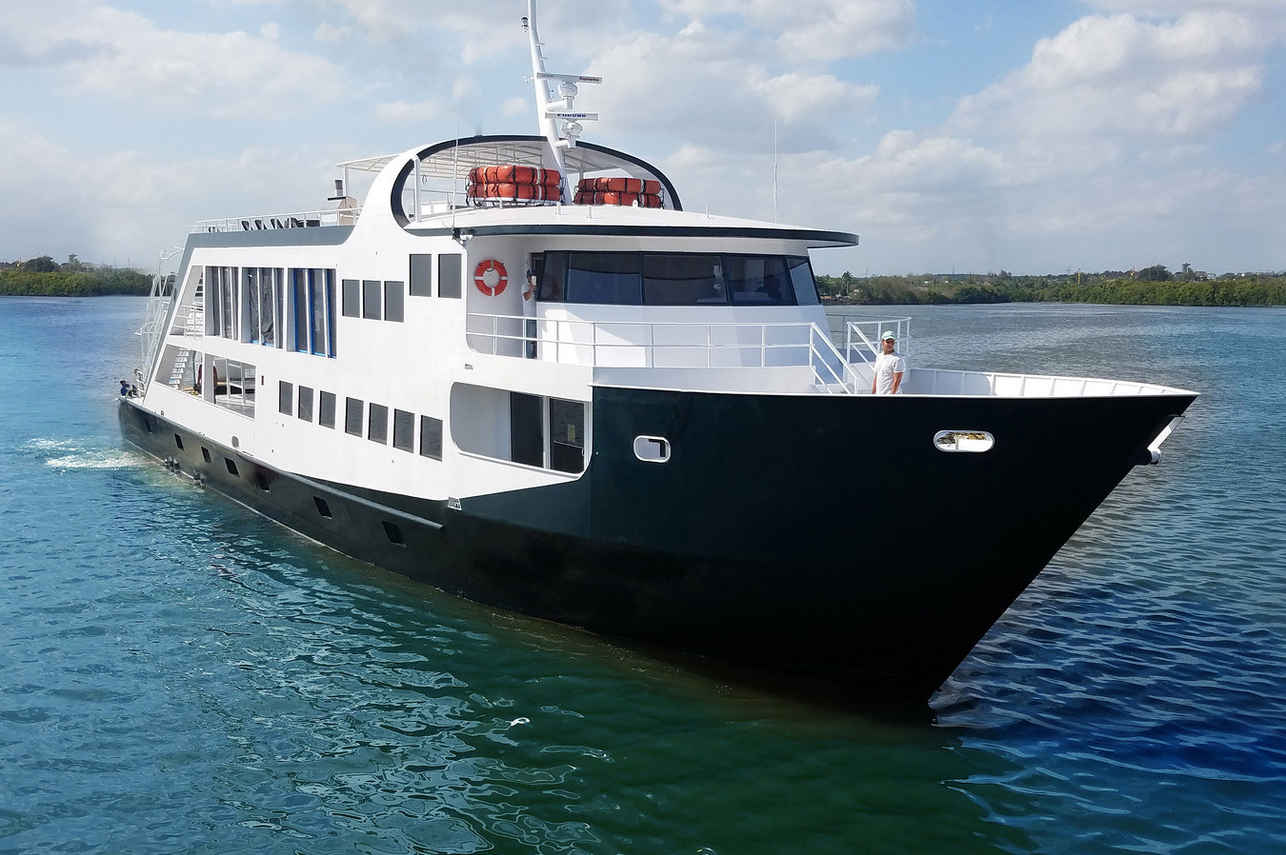
Jardines Avalon Fleet
Cuba
20 guests35.05 m
$494/day
Dive sites similar to Boca de Piedra
Same character, same waters — six more sites divers love for the exact same reasons.Compare seasons, access and liveaboard routes — then pick the site that fits your trip best.
© Esri — Maxar, Earthstar, GIS
El Almirante
Cuba
El Almirante is an advanced dive site located off the shores of Maria la Gorda, on Cuba's Guanahacabibes Peninsula.
- Suitable for
- Advanced
- Current
- Moderate
- Access
- Dayboat
- Depth
- 27–30 m
- Theme
- Wall / Reef
La Patana is a prominent dive site within the protected marine park of Jardines de la Reina, a vast archipelago stretching 150 kilometers off Cuba's southern coast.
- Suitable for
- Intermediate
- Current
- Mild
- Access
- Liveaboard only
- Depth
- 15–30 m
- Theme
- Reef / Wall
© Esri — Maxar, Earthstar, GIS
Arrecife Somero
Cuba
Arrecife Somero, located near Key Sigua within the UNESCO-recognized Zapata Swamp biosphere reserve, presents a unique reef crest forming a horseshoe shape.
- Suitable for
- Beginner
- Current
- Mild
- Access
- Liveaboard only
- Depth
- 2–5 m
- Theme
- Reef
© Esri — Maxar, Earthstar, GIS
Puente Escondido
Cuba
Puente Escondido is a notable dive site nestled within the Jardines de la Reina marine park, an expansive and highly protected area off Cuba's southern coast.
- Suitable for
- Beginner
- Current
- Mild
- Access
- Liveaboard only
- Depth
- ≤ 18 m
- Theme
- Reef
La Corona is a captivating dive site situated within the expansive 35-kilometer barrier reef off Playa Santa Lucía in Cuba's Camagüey province.
- Suitable for
- Beginner
- Current
- Mild
- Access
- Dayboat
- Depth
- 5–40 m
- Theme
- Reef / Wall
© Esri — Maxar, Earthstar, GIS
Cueva del Negro
Cuba
Cueva del Negro is a notable dive site located near Cayo Largo, an island off Cuba's southern coast, known for its extensive underwater features.
- Suitable for
- Intermediate
- Current
- No current
- Access
- Liveaboard or dayboat
- Depth
- 8–8 m
- Theme
- Reef