About Black Coral I
Black Coral I is a prominent dive site located within the Jardines de la Reina (Gardens of the Queen) National Park, a vast marine sanctuary off Cuba's southern coast. This area, named by Christopher Columbus, is celebrated for its exceptionally healthy coral reef system, often regarded as the Caribbean's most pristine. The site is characterized by an abundance of black coral colonies and beautiful gorgonian fans, forming intricate structures that harbor diverse marine life. While specific topographic details like canyons or tunnels are mentioned for other Jardines sites, Black Coral I is noted for these dense coral formations. Divers can expect consistent sightings of a resident population of Caribbean reef sharks, which freely approach and investigate. Large goliath groupers, some weighing up to 180 kg (400 lbs), are also a major draw, thriving alongside a rich variety of fish. Silky sharks are occasionally seen hunting near the surface, especially between July and November when whale sharks might also be present in the wider region. The dive offers warm waters, generally excellent visibility, and typically mild to sometimes medium currents, making it suitable for a range of diver experience levels. Access to this remote and protected location is exclusively via liveaboard, ensuring a preserved and uncrowded dive experience.
Highlights
Abundant black coral coloniesBeautiful gorgonian fansResident Caribbean reef sharksLarge goliath groupersHealthy reef ecosystemExcellent visibility
Season calendar
Best months to dive here
Jan
Feb
Mar
Apr
May
Jun
Jul
Aug
Sep
Oct
Nov
Dec
Excellent
Good
Dive site facts: Black Coral I
- Current
- Mild to medium
- Visibility
- Excellent, up to 30 m
- Water temperature
- 25–29°C (77–84°F)
- Entry
- Dive skiff / back-roll
- Level
- All levels
- Dive type
- Coral reef, shark action
- Region / port
- Jardines de la Reina, Cuba
- Coordinates
- 20.8933° N, 78.9300° W
Conditions & Currents
Diving conditions at Black Coral I generally feature little to mild currents, making it accessible for divers of varying experience levels. However, occasional medium currents can be encountered. Entry to the water is typically from a dive skiff, often via a back-roll, with divers handing weights up to crew upon exit before climbing a sturdy ladder. Visibility is consistently excellent, frequently reaching up to 30 meters (98 feet), and is primarily dependent on tidal conditions, with high tides offering the clearest views. Water temperatures remain warm throughout the year, ranging from 25°C to 29°C (77°F to 84°F), reducing the concern for thermoclines. Divers should account for potential variations in current, though these are typically manageable.
Marine life & sighting chances

Caribbean reef shark
common
Goliath grouper
common
Black coral
common
Gorgonian
common
Silky shark
July through November · occasional
Nurse shark
common
Lemon shark
common
Whale shark
July through November · rare
Snapper
common
Tiger grouper
common
Hammerhead shark
occasional
Tarpon
April/May for spawning · occasional
Turtle
commonDive profile & how the dive runs
Your dive at Black Coral I typically begins with a back-roll entry from a dive skiff. Once submerged, you'll encounter a rich tapestry of black coral colonies and vibrant gorgonians. The site's profile often involves navigating along coral formations, observing the resident Caribbean reef sharks and impressive goliath groupers that frequent the area. The dive master usually leads the route, sometimes staying near a low-profile wall, allowing for exploration of smaller reef inhabitants nestled within the corals. Dives are generally conducted with little to mild current, allowing for a relaxed pace. After approximately 50 minutes, you will make your ascent, conducting a safety stop at the top of the reef or in a shallower area before surfacing near the mooring for an easy ladder exit back onto the skiff.
Underwater photography
Black Coral I provides excellent opportunities for both wide-angle and macro photography due to its diverse marine life and healthy coral structures. For wide-angle shots, a fisheye or wide rectilinear lens is ideal to capture the expansive black coral colonies, impressive gorgonians, and the numerous sharks and large groupers. Given the often excellent visibility, natural light can be effective, but strobes are recommended to bring out the vibrant colors of the corals and fish. For macro subjects, such as small blennies or delicate coral polyps, a dedicated macro lens will be beneficial. Maintaining excellent buoyancy is crucial to avoid contact with the pristine corals and to position yourself for clear shots of moving subjects like sharks. Be patient when photographing sharks; allow them to approach naturally without chasing or provoking them. The dry season from October to May, with its exceptional visibility, is particularly good for underwater photography.
Combine with nearby dive sites
- Black Coral II
Another exciting site with black coral, gorgonians, goliath groupers, and reef sharks.
- Pipin
A wall dive featuring coral canyons and caves, often with jacks, turtles, eagle rays, and silky sharks.
- Farallon
Known for beautiful coral formations, tunnels, large groupers, and reef sharks.
- Five Seas
Features remnants of a shipwreck and abundant schooling fish, with frequent reef shark sightings.
Getting there & logistics
Access to Black Coral I, located within the remote Jardines de la Reina National Park, is exclusively through a liveaboard operation. International travelers typically fly into Jose Marti International Airport (HAV) in Havana, Cuba, or alternative airports like Jardines del Rey (CCC) or Santa Clara (SNU). From Havana, a pre-arranged five-hour bus transfer brings divers to Jucaro harbor. From there, a multi-hour boat crossing transports guests to the liveaboard, which then serves as your base for exploring the dive sites. Trips are commonly seven nights in duration, and due to strict government regulations protecting the marine park, diver numbers are limited, often around 1,000 divers per year. Permits and park fees are typically included in the liveaboard package, but it's essential to confirm this with your operator. Ensure you have the necessary Cuban visa and travel insurance, particularly medical evacuation coverage.
Safety & environment
Diving at Black Coral I requires adherence to standard safety protocols and travel preparations. The nearest recompression chamber is located in Havana, highlighting the importance of cautious diving practices and the remote nature of the Jardines de la Reina. In the event of a medical emergency requiring evacuation, the process would involve boat transfer to the mainland and then overland transport, which can be time-consuming. Therefore, comprehensive dive medical insurance, including emergency evacuation coverage, is mandatory. Specific hazards at this site are minimal due to generally mild currents and excellent visibility, but divers should always be aware of their surroundings, particularly with the frequent presence of sharks. Always dive within your training limits, follow your dive guide's instructions, and maintain neutral buoyancy to protect the delicate coral ecosystem.
Who it suits — and who it doesn't
Suited for
- Divers seeking pristine coral reefs
- Shark enthusiasts
- Underwater photographers
- Liveaboard adventurers
- Divers of all experience levels
- Those interested in marine conservation
Less suited for
- Budget-conscious divers (due to liveaboard requirement)
- Divers who prefer shore-based diving
- Travelers with limited time for transfers
- Individuals sensitive to remote locations
FAQ
Black Coral I FAQ
What kind of sharks can I expect to see at Black Coral I?
Black Coral I is renowned for its resident population of Caribbean reef sharks, which are commonly encountered during dives. You may also spot nurse sharks and lemon sharks. Occasionally, silky sharks are seen hunting near the surface, and if you're very lucky, especially between July and November, the larger whale shark might pass through the wider Jardines de la Reina area.
Is Black Coral I suitable for beginner divers?
Yes, Black Coral I is generally suitable for all levels of divers, including beginners, thanks to its predominantly mild currents and excellent visibility. The warm water and stunning marine life provide an enjoyable experience. However, since it's accessed via liveaboard in a remote area, some comfort with boat-based diving is beneficial.
How do I get to Black Coral I?
Black Coral I is located in the Jardines de la Reina, which is only accessible by liveaboard. You would typically fly into Havana or another Cuban airport, then take a pre-arranged bus transfer to Jucaro harbor, followed by a multi-hour boat journey to your liveaboard. This remote access helps preserve the pristine nature of the dive site.
What is the visibility like at Black Coral I?
Visibility at Black Coral I is consistently excellent, often reaching up to 30 meters (98 feet). It is primarily tide-dependent, with high tides offering the best clarity. This superb visibility greatly enhances the diving experience, allowing for clear views of the abundant coral formations and marine life.
Are there other dive sites similar to Black Coral I nearby?
Yes, within the Jardines de la Reina, there are several other notable dive sites that offer similar exciting experiences. Black Coral II is another site featuring black coral and sharks. Other popular sites like Pipin and Farallon are known for their healthy reefs, shark encounters, and unique underwater topography such as canyons and tunnels.
Why dive Black Coral I from a liveaboard?
Black Coral I is one of Cuba's signature dive sites. A liveaboard sleeps you on the water and puts you in the water for three to four guided dives per day, including dawn and night dives that day-boat operators rarely offer. You skip the daily commute back to port and reach quieter, less-crowded sites in the same region on a single trip.
Below are the liveaboards that include Black Coral I on their Cuba itineraries.
Liveaboards diving Black Coral I
These liveaboards may visit Black Coral I on selected itineraries — the exact dive sites depend on departure, weather and conditions.
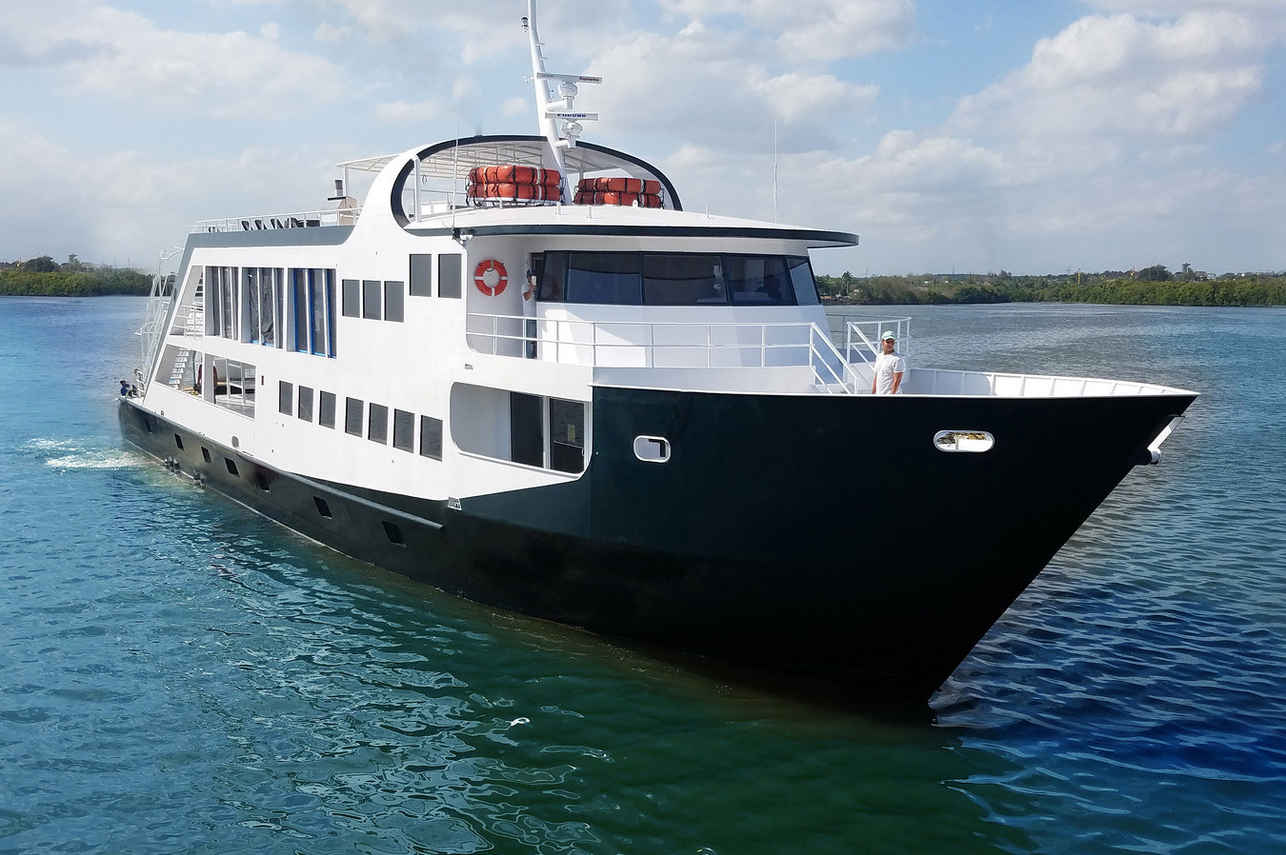
Jardines Avalon Fleet
Cuba
20 guests35.05 m
$494/day
Dive sites similar to Black Coral I
Same character, same waters — six more sites divers love for the exact same reasons.Compare seasons, access and liveaboard routes — then pick the site that fits your trip best.
© Esri — Maxar, Earthstar, GIS
El Almirante
Cuba
El Almirante is an advanced dive site located off the shores of Maria la Gorda, on Cuba's Guanahacabibes Peninsula.
- Suitable for
- Advanced
- Current
- Moderate
- Access
- Dayboat
- Depth
- 27–30 m
- Theme
- Wall / Reef
La Patana is a prominent dive site within the protected marine park of Jardines de la Reina, a vast archipelago stretching 150 kilometers off Cuba's southern coast.
- Suitable for
- Intermediate
- Current
- Mild
- Access
- Liveaboard only
- Depth
- 15–30 m
- Theme
- Reef / Wall
© Esri — Maxar, Earthstar, GIS
Arrecife Somero
Cuba
Arrecife Somero, located near Key Sigua within the UNESCO-recognized Zapata Swamp biosphere reserve, presents a unique reef crest forming a horseshoe shape.
- Suitable for
- Beginner
- Current
- Mild
- Access
- Liveaboard only
- Depth
- 2–5 m
- Theme
- Reef
© Esri — Maxar, Earthstar, GIS
Puente Escondido
Cuba
Puente Escondido is a notable dive site nestled within the Jardines de la Reina marine park, an expansive and highly protected area off Cuba's southern coast.
- Suitable for
- Beginner
- Current
- Mild
- Access
- Liveaboard only
- Depth
- ≤ 18 m
- Theme
- Reef
La Corona is a captivating dive site situated within the expansive 35-kilometer barrier reef off Playa Santa Lucía in Cuba's Camagüey province.
- Suitable for
- Beginner
- Current
- Mild
- Access
- Dayboat
- Depth
- 5–40 m
- Theme
- Reef / Wall
© Esri — Maxar, Earthstar, GIS
Cueva del Negro
Cuba
Cueva del Negro is a notable dive site located near Cayo Largo, an island off Cuba's southern coast, known for its extensive underwater features.
- Suitable for
- Intermediate
- Current
- No current
- Access
- Liveaboard or dayboat
- Depth
- 8–8 m
- Theme
- Reef