About Pipin
Pipin is a renowned dive site located within the highly protected Jardines de la Reina Marine Park, off Cuba's southern coast. This area is celebrated as one of the Caribbean's healthiest coral reef systems, benefiting from limited human impact and nutrient-rich cold-water upwellings. Pipin itself is characterized by its dramatic wall formations, intricate coral canyons, and mysterious caves, providing a diverse underwater topography for exploration. The site plunges to depths suitable for intermediate divers, ranging from 12 to 30 meters, with the main attractions often found deeper. This depth range allows for varied dive profiles, from shallower reef observations to deeper wall explorations. The pristine environment supports an impressive array of marine species, including numerous fish populations and a notable presence of sharks, making it a compelling destination for wildlife enthusiasts. Divers here can expect to encounter healthy coral reefs teeming with colorful soft corals, sponges, and sea fans. The abundant smaller fish life, such as jacks and tarpons, attracts larger predators like silky sharks and various reef sharks. Visibility is often exceptional, particularly during the dry season, enhancing the experience for underwater photographers and general observers alike. Access to Pipin is exclusively via liveaboard, underscoring its remote and protected status. The limited number of divers permitted annually ensures the preservation of this unique ecosystem. Diving here offers an opportunity to witness a truly thriving Caribbean reef, largely undisturbed by human activity, making each descent a remarkable encounter with nature.
Highlights
Wall diving with canyons and cavesHealthy coral reef systemAbundant shark encountersExceptional underwater visibilityDiverse marine life populationsPristine, protected environment
Season calendar
Best months to dive here
Jan
Feb
Mar
Apr
May
Jun
Jul
Aug
Sep
Oct
Nov
Dec
Good
Dive site facts: Pipin
- Depth
- 12–30 m
- Typical dive
- 15–24 m, 50–60 min
- Current
- Mild to moderate
- Visibility
- Up to 30 m
- Water temperature
- 25–29°C
- Entry
- Liveaboard / boat only
- Level
- Intermediate
- Dive type
- Wall, reef, marine park
- Region / port
- Jardines de la Reina
- Coordinates
- 20.81, -78.955
Conditions & Currents
Currents at Pipin are typically mild to sometimes moderate, making it accessible for intermediate divers. Entry is exclusively by boat, requiring careful planning with the dive operator for optimal drift or static dives. Divers should be prepared for potential variations depending on the season and local conditions.
Marine life & sighting chances

Silky shark
common
Caribbean reef shark
common
Jack
common
Sea turtle
common
Eagle ray
common
Tarpon
common
Goliath grouper
occasional
Nurse shark
occasional
Blacktip shark
occasional
Lemon shark
occasional
Hammerhead shark
rare
Elkhorn coral
common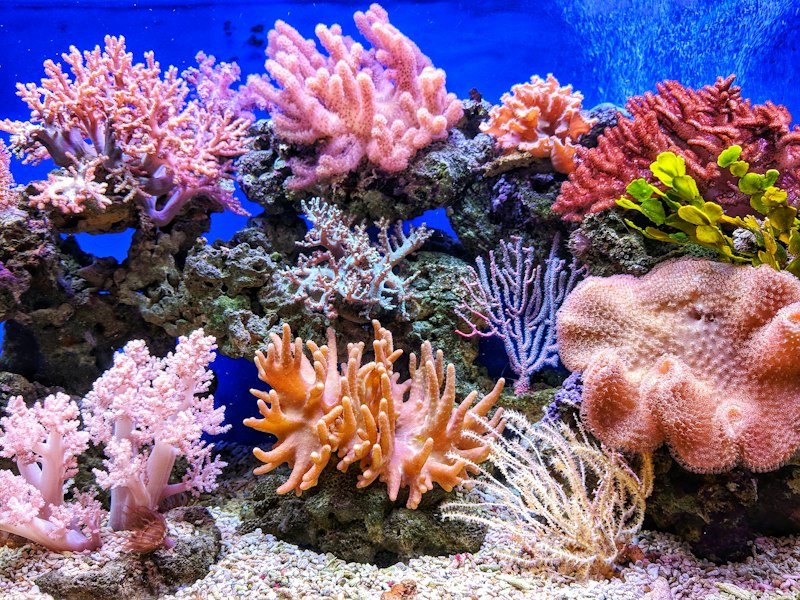
Soft coral
common
Gorgonian
commonDive profile & how the dive runs
Pipin is primarily a wall dive accessible only by boat. Your dive typically begins with a descent onto the wall, where you navigate through impressive coral canyons and explore various small caves and overhangs. The usual depth range for exploration is between 15 to 24 meters, though the site extends deeper to 30 meters for those wishing to explore further. Divers often follow the contours of the wall, observing the abundant marine life that inhabits the coral structures. Schools of jacks and tarpons are common, and encounters with turtles and eagle rays are frequent. Silky sharks are regularly sighted in the blue, particularly near the surface during the safety stop. The dive concludes with a gradual ascent along the shallower parts of the reef for a safety stop, often providing opportunities for observation of pelagic species in the open water.
Underwater photography
Pipin offers excellent opportunities for both wide-angle and macro photography due to its diverse topography and rich marine life. For capturing the expansive wall, coral canyons, and large pelagics like sharks and eagle rays, a wide-angle lens is essential. The generally excellent visibility, especially during the dry season, allows for clear shots of the stunning reef architecture and schooling fish. For macro enthusiasts, the healthy reef abounds with smaller critters, though specific data on these is limited; however, expect to find various crustaceans and smaller invertebrates. Good buoyancy control is crucial to avoid damaging the pristine coral formations, particularly when focusing on shots within the canyons or near the delicate reef structures. Due to the presence of sharks, be prepared for close encounters, and ensure your strobes are set to capture dynamic action shots.
Combine with nearby dive sites
Getting there & logistics
Access to Pipin is exclusively via liveaboard, as it is located about 100 km off Cuba's southern coast within the remote Jardines de la Reina Marine Park. Divers typically fly into Jose Marti International Airport (HAV) in Havana, or alternatively to Jardines del Rey (CCC), Santa Clara (SNU), or Camaguey (CMW) international airports. From these airports, ground transfers, usually arranged by the liveaboard operator, take you to Jucaro harbor, which can be a 3 to 5-hour drive depending on the airport. The liveaboard journey from Jucaro to Jardines de la Reina then takes approximately 4.5 hours. Trips typically last for 7 nights, combining various dive sites within the marine park. A permit is required to enter the protected area, and these are generally handled by the liveaboard operators. Fees are usually incorporated into the liveaboard package.
Safety & environment
Diving at Pipin, and throughout Jardines de la Reina, requires adherence to strict safety protocols due to its remote location. The nearest recompression chamber is several hours away on the mainland, highlighting the importance of cautious diving practices. Comprehensive dive insurance, including coverage for medical evacuation, is highly recommended. Site-specific hazards include potential moderate currents, although generally mild, and the need for excellent buoyancy control to navigate the wall and fragile coral structures without causing damage. Respect for marine life, especially sharks, is paramount; avoid sudden movements or attempts to touch animals. Liveaboard staff are highly trained, and daily briefings provide essential information for each dive. Divers should always follow their guide's instructions and be aware of their bottom time and decompression limits, given the maximum depth of 30 meters.
Who it suits — and who it doesn't
Suited for
- Intermediate to advanced divers
- Liveaboard enthusiasts
- Shark diving aficionados
- Underwater photographers
- Divers seeking pristine, remote reefs
Less suited for
- Beginner divers
- Shore-entry only divers
- Budget travelers (due to liveaboard requirement)
- Those prone to seasickness on long boat journeys
FAQ
Pipin FAQ
What kind of marine life can I expect to see at Pipin?
Pipin is teeming with diverse marine life characteristic of the Jardines de la Reina. You can expect frequent sightings of jacks, sea turtles, eagle rays, and tarpons. Shark encounters are common, with silky sharks often seen in the open water and various reef sharks patrolling the corals. The healthy reef also hosts vibrant soft corals, sponges, and gorgonians.
What are the typical dive conditions at Pipin?
Dive conditions at Pipin are generally favorable. Water temperatures range from 25°C to 29°C, and visibility is often excellent, reaching up to 30 meters, especially during the dry season. Currents are usually mild to moderate. The site features a wall, coral canyons, and caves, offering varied exploration opportunities.
How do I get to Pipin, and what is the typical trip duration?
Pipin is only accessible via liveaboard within the Jardines de la Reina Marine Park. You typically fly to a major Cuban airport (e.g., Havana, Jardines del Rey) then take a ground transfer to Jucaro harbor. From there, a multi-hour boat journey brings you to the park. Liveaboard trips usually last 7 nights, covering multiple dive sites in the region.
Is Pipin suitable for beginner divers?
Pipin is generally recommended for intermediate to advanced divers. While some sections are shallower, the site features wall diving with depths extending to 30 meters and can experience moderate currents. Solid buoyancy control and comfort at deeper depths are beneficial for fully enjoying the site's features.
What is unique about diving in Jardines de la Reina, where Pipin is located?
Jardines de la Reina is one of the healthiest and most pristine coral reef systems in the Caribbean, largely due to its protected status and limited visitor numbers. This leads to exceptional marine biodiversity, including thriving shark populations and robust coral formations, offering a unique opportunity to witness an almost untouched marine ecosystem.
When is the best time for underwater photography at Pipin?
The dry season, from October to May, offers the best conditions for underwater photography at Pipin due to exceptional visibility. This allows for clear wide-angle shots of the dramatic wall, canyons, and large pelagics. While specific macro subjects may vary, the overall health of the reef provides ample opportunities for diverse photographic compositions.
Why dive Pipin from a liveaboard?
Pipin is one of Cuba's signature dive sites. A liveaboard sleeps you on the water and puts you in the water for three to four guided dives per day, including dawn and night dives that day-boat operators rarely offer. You skip the daily commute back to port and reach quieter, less-crowded sites in the same region on a single trip.
Below are the liveaboards that include Pipin on their Cuba itineraries.
Liveaboards diving Pipin
These liveaboards may visit Pipin on selected itineraries — the exact dive sites depend on departure, weather and conditions.
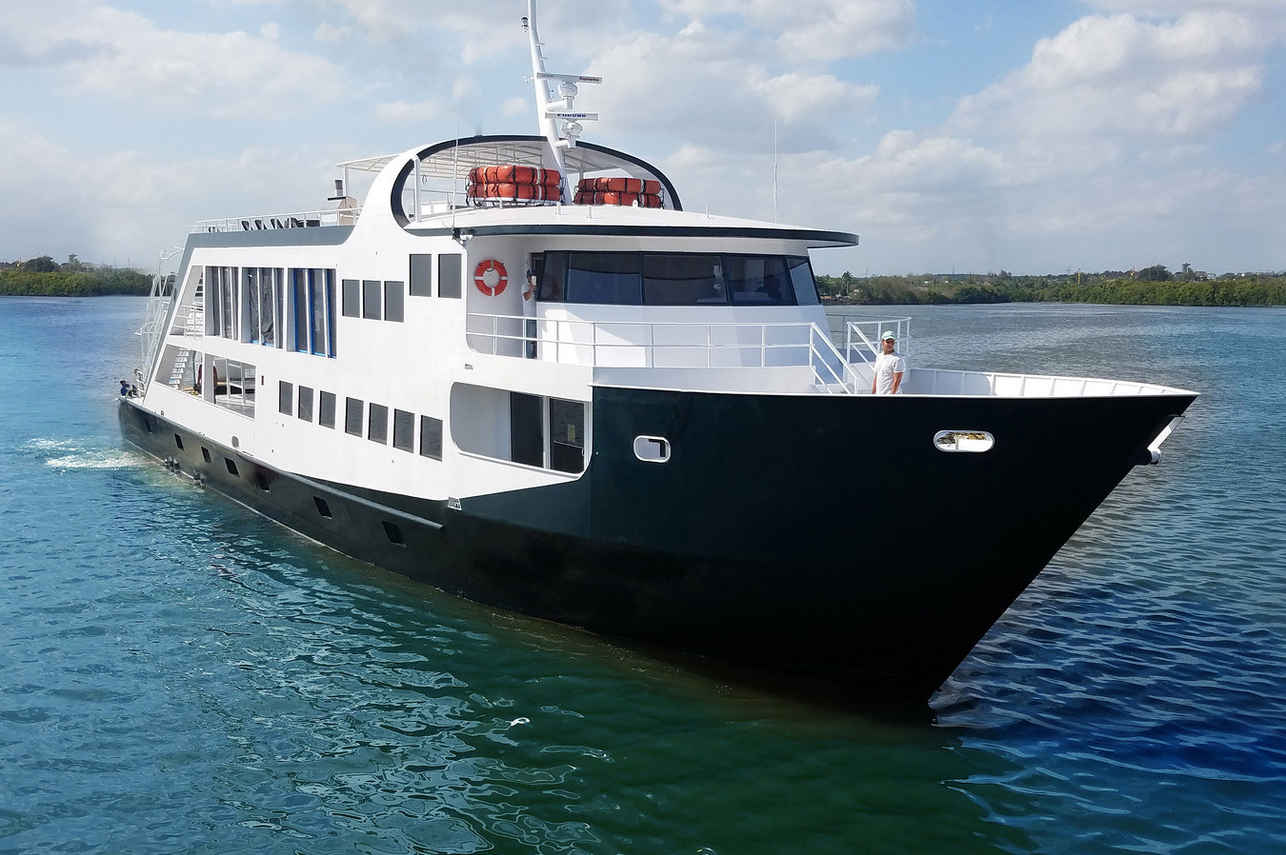
Jardines Avalon Fleet
Cuba
20 guests35.05 m
$494/day
Dive sites similar to Pipin
Same character, same waters — six more sites divers love for the exact same reasons.Compare seasons, access and liveaboard routes — then pick the site that fits your trip best.
© Esri — Maxar, Earthstar, GIS
El Almirante
Cuba
El Almirante is an advanced dive site located off the shores of Maria la Gorda, on Cuba's Guanahacabibes Peninsula.
- Suitable for
- Advanced
- Current
- Moderate
- Access
- Dayboat
- Depth
- 27–30 m
- Theme
- Wall / Reef
La Patana is a prominent dive site within the protected marine park of Jardines de la Reina, a vast archipelago stretching 150 kilometers off Cuba's southern coast.
- Suitable for
- Intermediate
- Current
- Mild
- Access
- Liveaboard only
- Depth
- 15–30 m
- Theme
- Reef / Wall
© Esri — Maxar, Earthstar, GIS
Arrecife Somero
Cuba
Arrecife Somero, located near Key Sigua within the UNESCO-recognized Zapata Swamp biosphere reserve, presents a unique reef crest forming a horseshoe shape.
- Suitable for
- Beginner
- Current
- Mild
- Access
- Liveaboard only
- Depth
- 2–5 m
- Theme
- Reef
© Esri — Maxar, Earthstar, GIS
Puente Escondido
Cuba
Puente Escondido is a notable dive site nestled within the Jardines de la Reina marine park, an expansive and highly protected area off Cuba's southern coast.
- Suitable for
- Beginner
- Current
- Mild
- Access
- Liveaboard only
- Depth
- ≤ 18 m
- Theme
- Reef
© Esri — Maxar, Earthstar, GIS
Black Coral Wall
Cuba
Black Coral I and II are prominent dive sites within Cuba's renowned Jardines de la Reina marine reserve, an area celebrated for its healthy reefs and crystal-clear waters.
- Suitable for
- Advanced
- Current
- Mild
- Access
- Liveaboard or dayboat
- Depth
- 15–40 m
- Theme
- Wall