About Compass Cay
Compass Cay in the Exuma Cays, Bahamas, is celebrated for its distinctive shallow reef environment and the unique opportunity it provides to interact with docile nurse sharks. Located within the Exuma Cays Land and Sea Park, this site embodies the region's commitment to marine conservation and biodiversity. The Exumas themselves are an archipelago stretching over 125 miles, known for their stunning beauty and rich ecosystems, ranging from shallow banks to deeper sound areas. The topography at Compass Cay is characterized by a shallow reef, typically at snorkeling depth, making it highly accessible. While the immediate area is shallow, the broader Exuma region offers a mix of dive sites, including walls that start as shallow as 12 meters, shallow reefs teeming with fish life, and various blue holes and cave systems. This diversity ensures that while Compass Cay is beginner-friendly, more advanced diving opportunities exist nearby. Marine life in the Exumas is abundant and varied, including nurse sharks, eagle rays, sea turtles, stingrays, and a wide array of reef fish like parrotfish and grouper. The nurse sharks at Compass Cay are a consistent highlight, offering year-round encounters. The warmer months can bring increased macro life and reef scenes, while cooler periods might attract more pelagic species to the wider Exuma area. Diving at Compass Cay is generally relaxed, characterized by mild currents within its protected shallow waters. It's often included in liveaboard itineraries exploring the Exuma Cays, providing a memorable and interactive experience for divers and snorkelers of all levels. The ease of access and the unique shark encounter make it a popular stop for those exploring the Exumas.
Highlights
Docile nurse shark interactionShallow reef environmentExuma Cays Land & Sea ParkBeginner-friendly depthsAbundant reef fishLiveaboard accessible
Season calendar
Best months to dive here
Jan
Feb
Mar
Apr
May
Jun
Jul
Aug
Sep
Oct
Nov
Dec
Excellent
Good
Off-Season
Nov – May (Peak)
Tiger sharks at Tiger Beach, hammerheads off Cat Island, best visibility up to 40m, calm seas.
Jun & Oct (Shoulder)
Reef sharks, nurse sharks, dolphins. Slightly rougher seas but still diveable.
Jul – Sep (Hurricane)
Many operators pause. If open, expect reduced visibility and unpredictable weather.
Dive site facts: Compass Cay
- Depth
- 5 m
- Typical dive
- 3-5 m, 30-60 min
- Current
- Mild
- Visibility
- 35 m
- Water temperature
- 22-30°C
- Entry
- Boat / Tender
- Level
- Beginner / Snorkeler
- Dive type
- Shark encounter, shallow reef
- Night dive
- Not typical
- Region / port
- Exuma Cays
- Coordinates
- 24.2667, -76.5167
Conditions & Currents
Currents at Compass Cay are generally mild, particularly within the protected shallow reef areas where nurse shark interactions occur. This makes it an ideal location for less experienced divers and snorkelers. In the broader Exuma Cays, however, some dive sites, especially wall dives or those on the Exuma Sound side, can experience moderate currents, sometimes requiring drift diving techniques. Visibility in the Exumas is consistently excellent, often reaching 35 meters, though it can be reduced slightly after heavy rainfall, especially in nearshore environments. Water temperatures remain warm throughout the year, ranging from 22-30°C, minimizing the risk of thermoclines in shallower areas. Entry and exit are typically straightforward, often from a tender or direct boat access, given the site's shallow nature.
Marine life & sighting chances

Nurse shark
Year-round · common
Eagle ray
occasional
Sea turtle
occasional
Stingray
occasional
Reef fish
Year-round · common
Parrotfish
Year-round · common
Grouper
Year-round · common
Caribbean reef shark
occasionalDive profile & how the dive runs
Diving at Compass Cay is typically a shallow experience, often starting with a boat entry directly into the sandy areas where the nurse sharks congregate. The depth here rarely exceeds 5 meters, making it ideal for extended bottom times and easy interaction. Divers and snorkelers can spend considerable time observing and gently interacting with the docile nurse sharks. The dive typically involves a leisurely exploration of the immediate sandy and reef patches, following the sharks and observing other shallow reef inhabitants. There isn't a defined 'turn point' or complex navigation due to the shallow, open nature of the site. Safety stops are often conducted naturally as divers gradually ascend or remain near the surface, given the minimal depth. This profile makes it accessible and enjoyable for all experience levels.
Underwater photography
Compass Cay is a prime location for wide-angle photography, especially focusing on the nurse shark interactions. Given the shallow depths of 3-5 meters, natural light is abundant, but an external strobe or video light can enhance colors and reduce backscatter, particularly if shooting upwards. A fisheye or wide-angle lens is ideal for capturing the sharks and their environment. For closer portraits of individual sharks or other reef life, a macro lens might be useful but less versatile for the main attraction. Buoyancy control is paramount to avoid disturbing the sandy bottom and to maintain a respectful distance from the sharks. Patience and observing shark behavior will yield the best shots, capturing their natural movements in this unique setting.
Combine with nearby dive sites
- Thunderball Grotto
A famous cave system with swim-throughs and abundant reef fish, known from James Bond films.
- Exuma Cays Land & Sea Park
A protected marine reserve offering diverse reef and wall diving within the larger Exuma region.
- The Washing Machine
A unique drift dive experience known for its swirling currents followed by a leisurely reef drift.
- Turtle Rocks
An area known for frequent turtle sightings and healthy reef systems.
- Atlantis Road
A submerged coral ridge sometimes mistaken for the lost city, offering interesting topography.
Getting there & logistics
Access to Compass Cay in the Exuma Cays primarily involves flying into Lynden Pindling International Airport (NAS) in Nassau, or George Town International Airport (GGT) on Exuma. From these hubs, visitors typically take commuter flights, ferries, or join liveaboard trips that navigate the Exuma Cays. Liveaboards are a popular option, offering week-long itineraries that cover multiple dive sites, including Compass Cay, along with non-diving activities like visiting the swimming pigs at Big Major Cay. Resort-based options usually involve day trips from various islands within the Exumas. Marine park fees, often around $25, may apply for diving within the Exuma Cays Land and Sea Park. Planning travel during the dry season (November to May) is recommended for the most comfortable conditions.
Safety & environment
For diving in the Exumas, including Compass Cay, it is crucial to carry comprehensive dive insurance that covers emergency medical treatment and evacuation. The nearest recompression chamber is approximately 70 kilometers away, likely in Nassau. In case of a diving emergency, evacuation from the remote cays can be complex and time-consuming, highlighting the importance of proper planning and safety protocols. While Compass Cay is a very shallow and docile site, general dive safety practices, such as maintaining good buoyancy control and avoiding direct contact with marine life, are essential. Always dive within your certified limits and follow your dive guide's instructions. Be aware of boat traffic in popular areas, especially at the surface.
Who it suits, and who it doesn't
Suited for
- Beginner divers and snorkelers
- Families with children
- Underwater photographers seeking marine interactions
- Those interested in unique animal encounters
- Liveaboard guests exploring the Exumas
Less suited for
- Technical divers seeking deep profiles
- Divers looking for challenging currents or drift dives
- Those prioritizing pristine, untouched coral reefs
- Divers who prefer solitary dive experiences
- Individuals with a strong fear of sharks
FAQ
Compass Cay FAQ
What kind of sharks are found at Compass Cay?
Compass Cay is famous for its population of docile nurse sharks. These bottom-dwelling sharks are generally harmless to humans and are the primary reason many divers and snorkelers visit this unique location. They are accustomed to human presence, making interactions a common and celebrated experience.
Is Compass Cay suitable for beginners?
Yes, Compass Cay is highly suitable for beginners, snorkelers, and even non-divers. The site is very shallow, typically 3-5 meters deep, with mild currents, allowing for a relaxed and safe experience. It's an excellent place to get comfortable with marine life in a protected environment.
Can you swim with the nurse sharks at Compass Cay?
Yes, swimming with the nurse sharks at Compass Cay is a main attraction. The sharks are known to be very gentle and are accustomed to human interaction. While you can swim alongside them, always remember to respect their natural environment and avoid any actions that might disturb them.
What is the best time of year to visit Compass Cay?
The best time to visit Compass Cay and the Exumas generally is during the dry season, from November to May. During these months, the weather is stable, water temperatures are comfortable (22-27°C), and visibility is excellent. Nurse sharks are present year-round, so you can always expect to see them.
Are there other dive sites near Compass Cay?
Yes, Compass Cay is part of the larger Exuma Cays Land & Sea Park, which boasts numerous other dive and snorkel sites. Nearby attractions include Thunderball Grotto, known for its caves and reef fish, and The Washing Machine, a unique drift dive. The Exumas offer a diverse range of diving, from shallow reefs to deeper walls.
Why dive Compass Cay from a liveaboard?
Compass Cay is one of Bahamas's signature dive sites. A liveaboard sleeps you on the water and puts you in the water for three to four guided dives per day, including dawn and night dives that day-boat operators rarely offer. You skip the daily commute back to port and reach quieter, less-crowded sites in the same region on a single trip.
Below are the liveaboards that include Compass Cay on their Bahamas itineraries.
Liveaboards diving Compass Cay
These liveaboards may visit Compass Cay on selected itineraries, the exact dive sites depend on departure, weather and conditions.
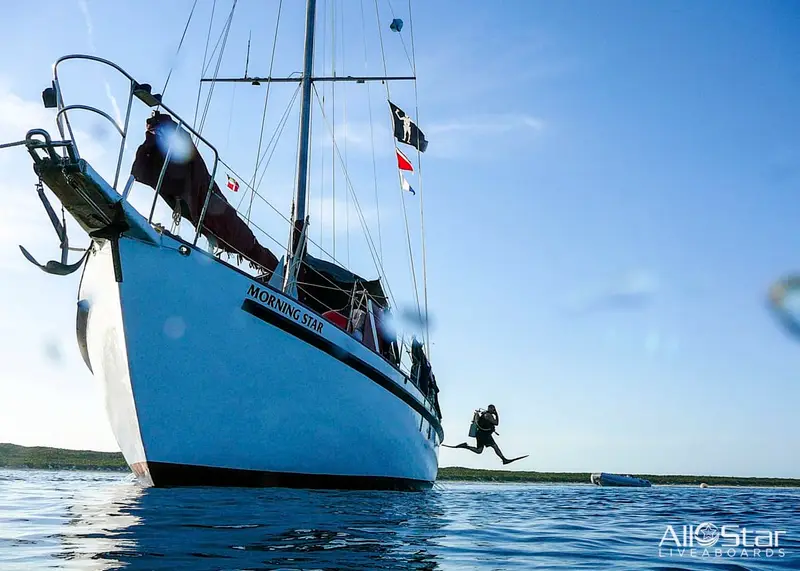
All Star Blackbeards Morning Star
Bahamas
24 guests20 m
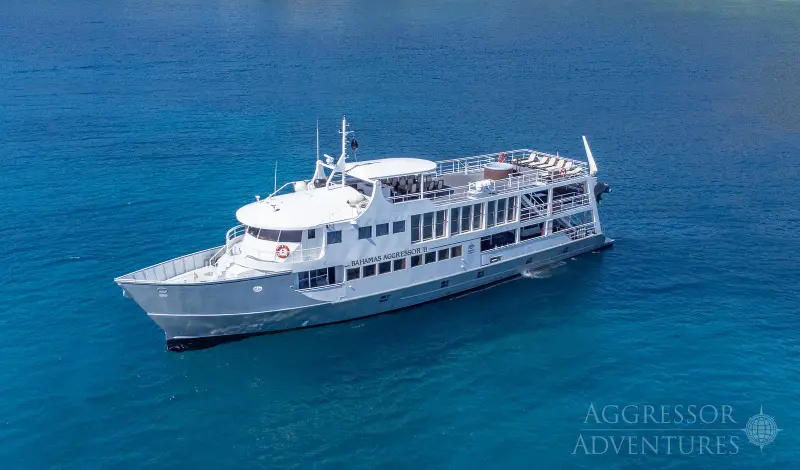
Bahamas Aggressor II
Bahamas
20 guests34 m
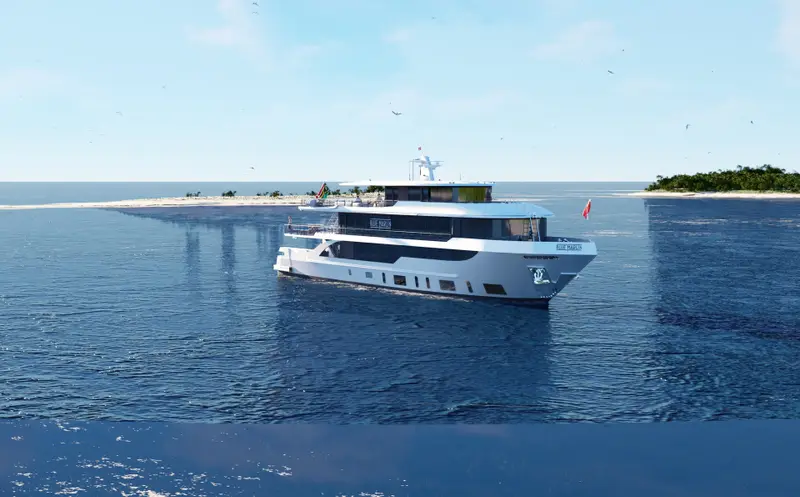
Blue Marlin
Bahamas
26 guests42 m
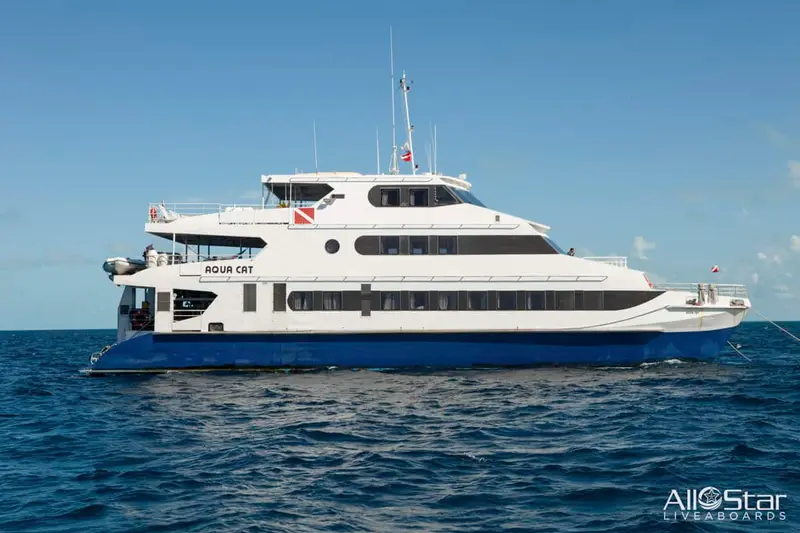
All Star Aqua Cat
Bahamas
30 guests31 m
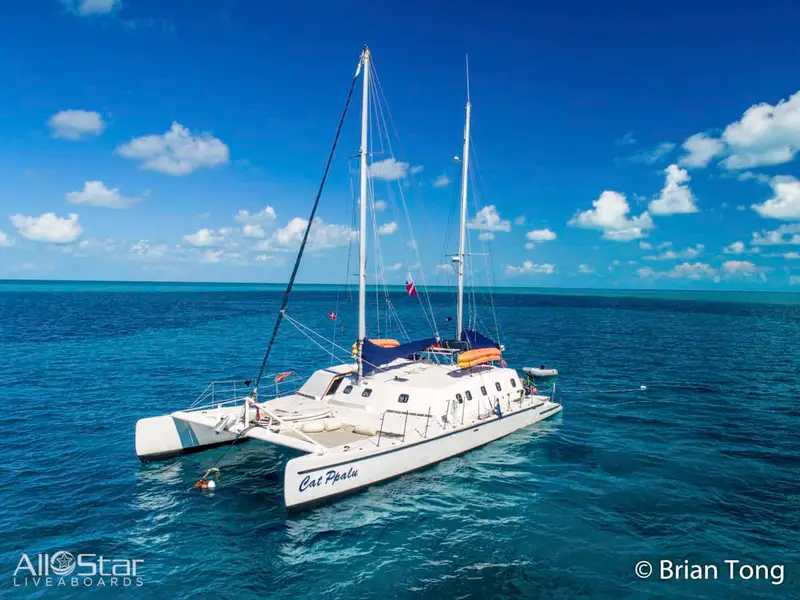
All Star Cat Ppalu
Bahamas
12 guests20 m
Dive sites similar to Compass Cay
Same character, same waters, six more sites divers love for the exact same reasons.Compare seasons, access and liveaboard routes, then pick the site that fits your trip best.
© EsriMaxar, Earthstar, GIS
3 Fathom Wall
Cayman Islands
3 Fathom Wall is an exciting and fish-filled dive site located in the Cayman Islands, specifically at the intersection of the renowned Bloody Bay Wall.
- Suitable for
- Intermediate
- Current
- Mild
- Access
- Liveaboard only
- Depth
- ≤ 3000 m
- Theme
- Reef
While specific details for a dive site named "3 Riff" are not present in the provided sources, general diving conditions and characteristics for the Dominican Republic…
- Suitable for
- Advanced
- Current
- Mild
- Access
- Dayboat
- Depth
- 30–55 m
- Theme
- Reef
The dive site known as 3 Rocks is located off the coast of Sosúa in Puerto Plata, Dominican Republic, offering an accessible and lively underwater experience.
- Suitable for
- Beginner
- Current
- Mild
- Access
- Dayboat
- Depth
- 2–8 m
- Theme
- Reef
4 Amigos is a notable dive site located in the Bay Islands of Honduras, an area renowned for its extensive Mesoamerican Barrier Reef System, which is the world's second-longest.
- Suitable for
- Intermediate
- Current
- Moderate
- Access
- Liveaboard or dayboat
- Depth
- 9–40 m
- Theme
- Reef
© EsriMaxar, Earthstar, GIS
6 Toed Cat
Mexico
The dive site known as "6 Toed Cat" is not a recognized dive location in Mexico; rather, it refers to the polydactyl felines, many with six toes, that inhabit the Ernest Hemingway Home and Museum in Key West, Florida.
- Suitable for
- Beginner
- Current
- Mild
- Access
- Liveaboard or dayboat
- Depth
- —
- Theme
- Reef
© EsriMaxar, Earthstar, GIS
Aaron's Backyard
Honduras
Aaron's Backyard is a noted dive site within the Roatan Marine Park in Honduras, part of the extensive Mesoamerican Barrier Reef System.
- Suitable for
- Intermediate
- Current
- Moderate
- Access
- Liveaboard or dayboat
- Depth
- 9–40 m
- Theme
- Reef