About Guadalupe Island
Guadalupe Island, a remote volcanic outpost situated approximately 240 kilometers off the Pacific coast of Baja California, was renowned as the world's premier destination for great white shark encounters. This island served as a critical habitat where over 300 individually identified great white sharks gathered annually. Its appeal stemmed from the consistent shark sightings and the remarkably clear blue waters, with visibility often reaching 30 to 45 meters, far surpassing other great white shark destinations globally. The nutrient-rich California Current supports a thriving ecosystem, attracting various prey species that sustain the sharks, particularly Guadalupe fur seals and elephant seals which breed here. Dive experiences at Guadalupe were exclusively cage-based, focusing on observing great whites in their natural environment. Two types of cages were typically employed: surface cages, which floated at the stern of liveaboard vessels, and submersible cages, lowered to depths of up to 9 meters for certified divers. Both types utilized surface-supplied air (hookah systems), eliminating the need for traditional scuba gear or fins within the cages. Divers could spend extended periods observing the sharks, which were attracted to the boats using lures and chum, ensuring frequent and close interactions. The diving season historically ran from July to November, with juvenile male sharks dominating the early part of the season, followed by the arrival of larger female sharks in October and November. These massive females, some over 5 meters long, were a particular highlight for many divers. The encounters were not merely about observation but also about witnessing natural behaviors, with sharks sometimes striking lures or breaching the surface. However, in January 2023, the Mexican government made a permanent decision to close Guadalupe Island to all tourism and commercial activities, including shark cage diving. This closure was enacted under a renewed biosphere r
Highlights
Unparalleled great white shark encountersExceptional water clarity, 30-45m visibilitySurface and submersible cage divingAnnual migration of over 300 sharksRemote, liveaboard-only experience
Season calendar
Best months to dive here
Jan
Feb
Mar
Apr
May
Jun
Jul
Aug
Sep
Oct
Nov
Dec
Excellent
Good
Dive site facts: Guadalupe Island
- Depth
- 0-9 m (cages)
- Typical dive
- Surface to 9 m, 2-hour shifts
- Current
- None (at cage sites)
- Visibility
- 30-45 m
- Water temperature
- 19-22 °C
- Entry
- Cage entry from liveaboard
- Level
- Beginner to Advanced (no certification for surface cage)
- Dive type
- Great white shark cage diving
- Night dive
- Not applicable
- Region / port
- Baja California, Pacific Mexico
- Coordinates
- 29.0333, -118.2833
Conditions & Currents
At Guadalupe Island, currents were generally negligible around the anchored liveaboard vessels and cage locations. Cages were stationary, allowing for stable observation conditions. The diving environment was primarily blue water, with no significant topographical features to influence strong currents.
Marine life & sighting chances

Great white shark
July-November · common
Guadalupe fur seal
occasional
Northern elephant seal
occasional
California sea lion
occasional
Yellowfin tuna
occasional
Mako shark
rare
Blue shark
rareDive profile & how the dive runs
Dive experiences at Guadalupe Island primarily involved cage diving, where divers entered either surface or submersible cages directly from a liveaboard vessel. Surface cages were positioned at the stern of the boat, floating at the waterline, with divers breathing surface-supplied air (hookah). No traditional scuba equipment or fins were used in these cages, and no certification was required. Submersible cages, for certified divers, were lowered to a depth of 9 meters. Divers in these deeper cages also used hookah systems and regulators to observe great white sharks at eye level as they naturally patrolled the area. The cages served as observation platforms, so there was no swimming or specific route. Turn points were determined by observation time or shark activity, and safety stops were not applicable in the traditional sense due to the controlled cage environment and surface-supplied air. Encounters lasted for scheduled shifts, typically two hours, with multiple sessions offered daily.
Underwater photography
Guadalupe Island offered prime opportunities for great white shark photography due to its exceptional visibility and frequent encounters. For surface cage photographers, a wide-angle lens (e.g., 10-17mm or similar fisheye) was ideal for capturing the entire shark and its imposing presence. Strobes were beneficial, even in clear water, to bring out color and detail on the sharks and to combat any backscatter from particulate matter. Given the close proximity and predictable behavior of sharks around the cages, rapid-fire shooting was often possible. For those in submersible cages at 9 meters, similar wide-angle setups were recommended, as sharks often approached very close. Maintain good buoyancy control within the cage to avoid contact with the cage structure or other divers. Remember to keep all camera equipment, including lenses and ports, safely within the confines of the cage for both diver and shark safety, as per regulations. Observing proper etiquette, such as avoiding sudden movements, contributed to more natural interactions.
Combine with nearby dive sites
- Roca Partida
Known for hammerhead schools and manta rays, accessible via liveaboard as part of a Revillagigedo itinerary.
- San Benedicto - El Cañón
Offers encounters with Galapagos and silky sharks, also part of Revillagigedo itineraries.
- Socorro - Cabo Pearce
Features opportunities for whale shark and dolphin sightings in the Revillagigedo Archipelago.
- Socorro Island - The Boiler
Famous for interactions with giant Pacific manta rays.
Getting there & logistics
Access to Guadalupe Island for shark cage diving was exclusively via liveaboard vessels. Trips typically lasted 5 to 7 days, with most operators departing from Ensenada, Mexico, or San Diego, USA. The journey to the island involved a 240 km (150 mile) open ocean crossing, which could be smooth or rough, making seasickness medication advisable. Once at the island, operations were conducted in calm, sheltered bays on the lee side. Permits were required for all activities within the protected marine park. While Guadalupe is currently closed to tourism, historical itineraries often combined it with other Pacific destinations like the Revillagigedo Archipelago for a broader big animal diving experience. Travelers would typically fly into international airports like San Diego (SAN) or Tijuana (TIJ) and transfer to the departure port.
Safety & environment
Safety at Guadalupe Island was paramount, with all diving conducted within custom-designed cages using surface-supplied air (hookah systems). Trained instructors, guides, and safety divers were present in all cages to assist clients and ensure the well-being of both divers and sharks. Each cage was equipped with backup scuba tanks in the event of a hookah system malfunction. Mexican park regulations strictly mandated that divers remain inside the cages, keeping all limbs and equipment within the barriers. Strict no-touching policies were enforced for sharks and other marine life. Divers were advised to wear a 7mm wetsuit, hood, boots, and gloves due to water temperatures of 19-22°C. A weight harness of 40-50 lbs was commonly used. Although incidents were rare, the nearest recompression chamber would have been on the mainland in Mexico, requiring a lengthy evacuation by sea or air. Comprehensive dive insurance, including evacuation coverage, was therefore highly recommended for all participants. Avoidance of sun lotion and other contaminants was also a rule to protect the pristine waters.
Who it suits — and who it doesn't
Suited for
- Great white shark enthusiasts
- Underwater photographers seeking clear water
- Divers comfortable with cage diving
- Liveaboard adventurers
- Those seeking adrenaline-filled wildlife encounters
Less suited for
- Divers seeking traditional reef diving
- Individuals prone to seasickness on open ocean crossings
- Those uncomfortable in confined spaces (cages)
- Travelers expecting free-swimming with sharks
- Divers seeking night diving experiences
FAQ
Guadalupe Island FAQ
Is Guadalupe Island still open for shark diving?
No, as of January 2023, the Mexican government has permanently closed Guadalupe Island to all tourism, including great white shark cage diving. This decision was made to protect the sharks and their environment, citing concerns over altered behavior and potential injuries from past commercial activities.
What made Guadalupe Island a popular shark diving destination?
Guadalupe Island was celebrated for its consistent great white shark sightings and exceptionally clear waters, with visibility often exceeding 30 meters. The island's remote location and the annual aggregation of over 300 identified sharks made it a premier spot for observing these apex predators in a cage-diving setting.
What was the typical dive experience like at Guadalupe Island?
The experience was strictly cage-based, with divers entering either surface or submersible cages from liveaboard boats. Divers used surface-supplied air (hookah systems) and spent time observing great white sharks attracted by lures. No traditional scuba gear or free-swimming was permitted, focusing solely on observation from within the secure cages.
Did you need a scuba certification for cage diving at Guadalupe Island?
For surface cages, no scuba certification was required, as divers breathed surface-supplied air. For submersible cages, which descended to about 9 meters, a minimum Open Water certification was generally needed. All participants were accompanied by experienced guides for safety and guidance.
What alternatives are there for shark diving in Mexico now that Guadalupe is closed?
With Guadalupe Island closed, divers can explore other excellent shark diving opportunities in Mexico. Popular alternatives include Socorro Island, known for various shark species like hammerheads and silky sharks, and the Sea of Cortez, offering encounters with scalloped hammerheads and seasonal whale sharks. These destinations are also typically accessed via liveaboard.
Why dive Guadalupe Island from a liveaboard?
Guadalupe Island is one of Mexico's signature dive sites. A liveaboard sleeps you on the water and puts you in the water for three to four guided dives per day, including dawn and night dives that day-boat operators rarely offer. You skip the daily commute back to port and reach quieter, less-crowded sites in the same region on a single trip.
Below are the liveaboards that include Guadalupe Island on their Mexico itineraries.
Liveaboards diving Guadalupe Island
These liveaboards may visit Guadalupe Island on selected itineraries — the exact dive sites depend on departure, weather and conditions.
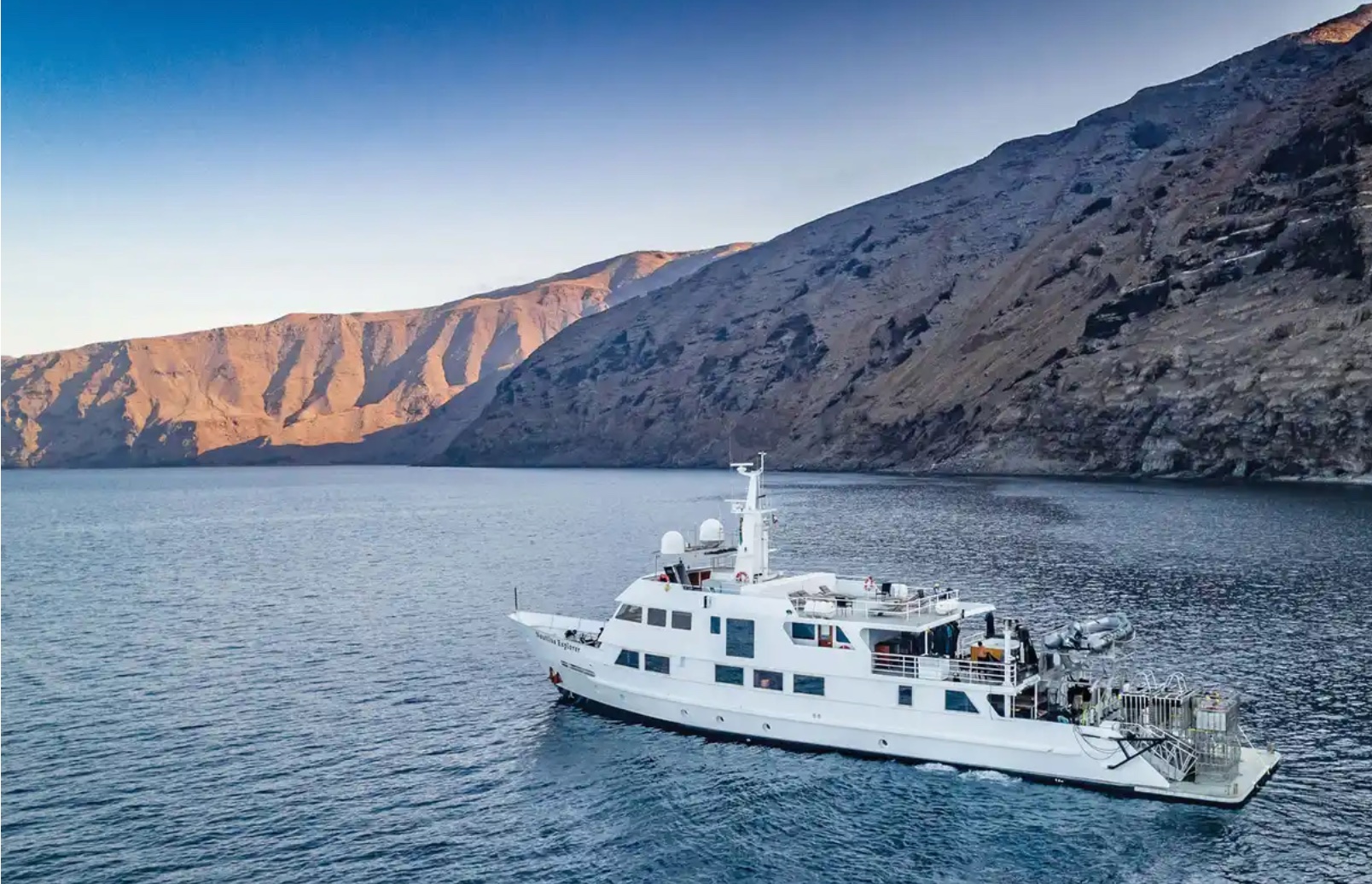
Nautilus Explorer
Mexico
25 guests44.8 m
$330/day
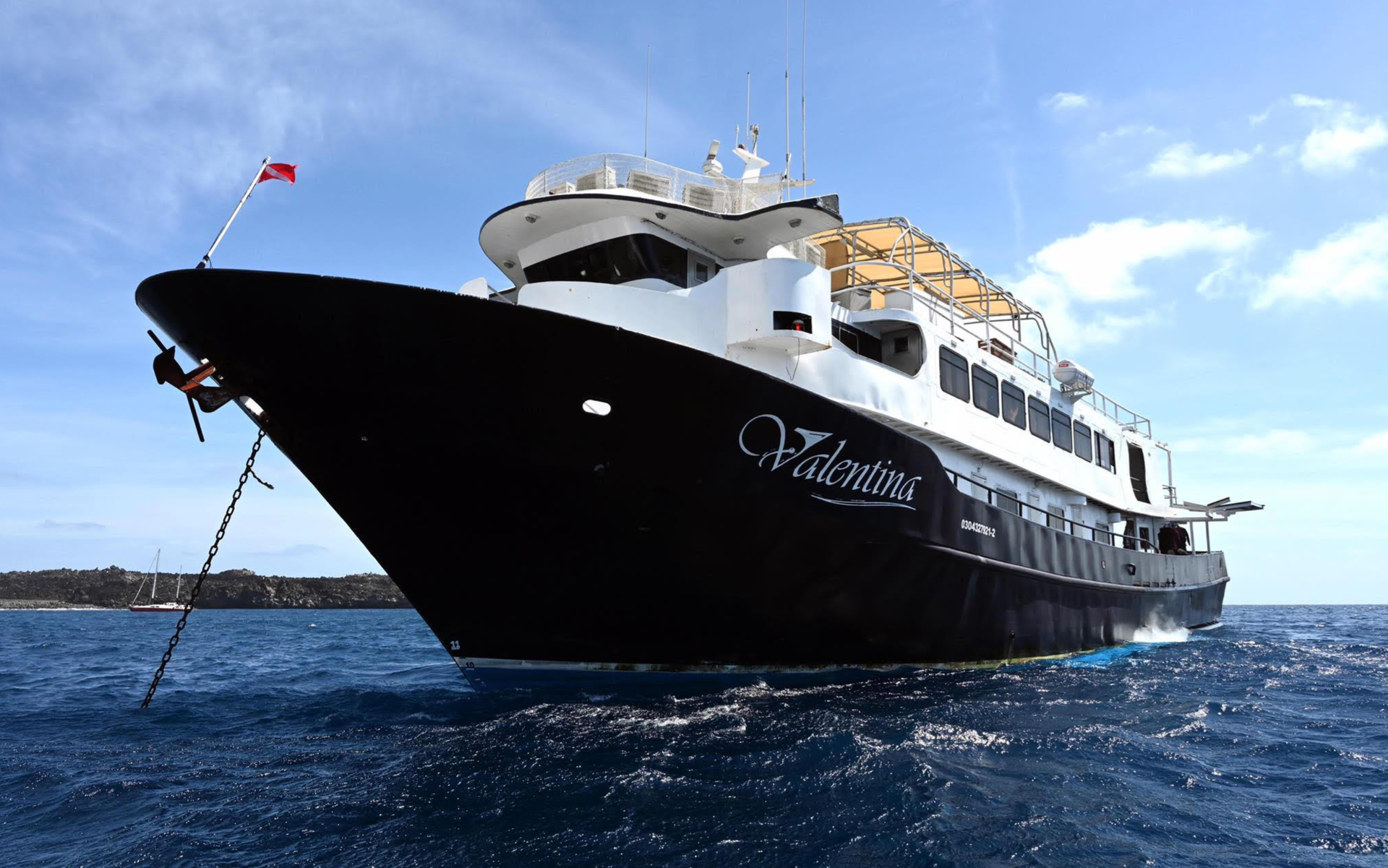
Valentina
Mexico
20 guests38.1 m
$430/day
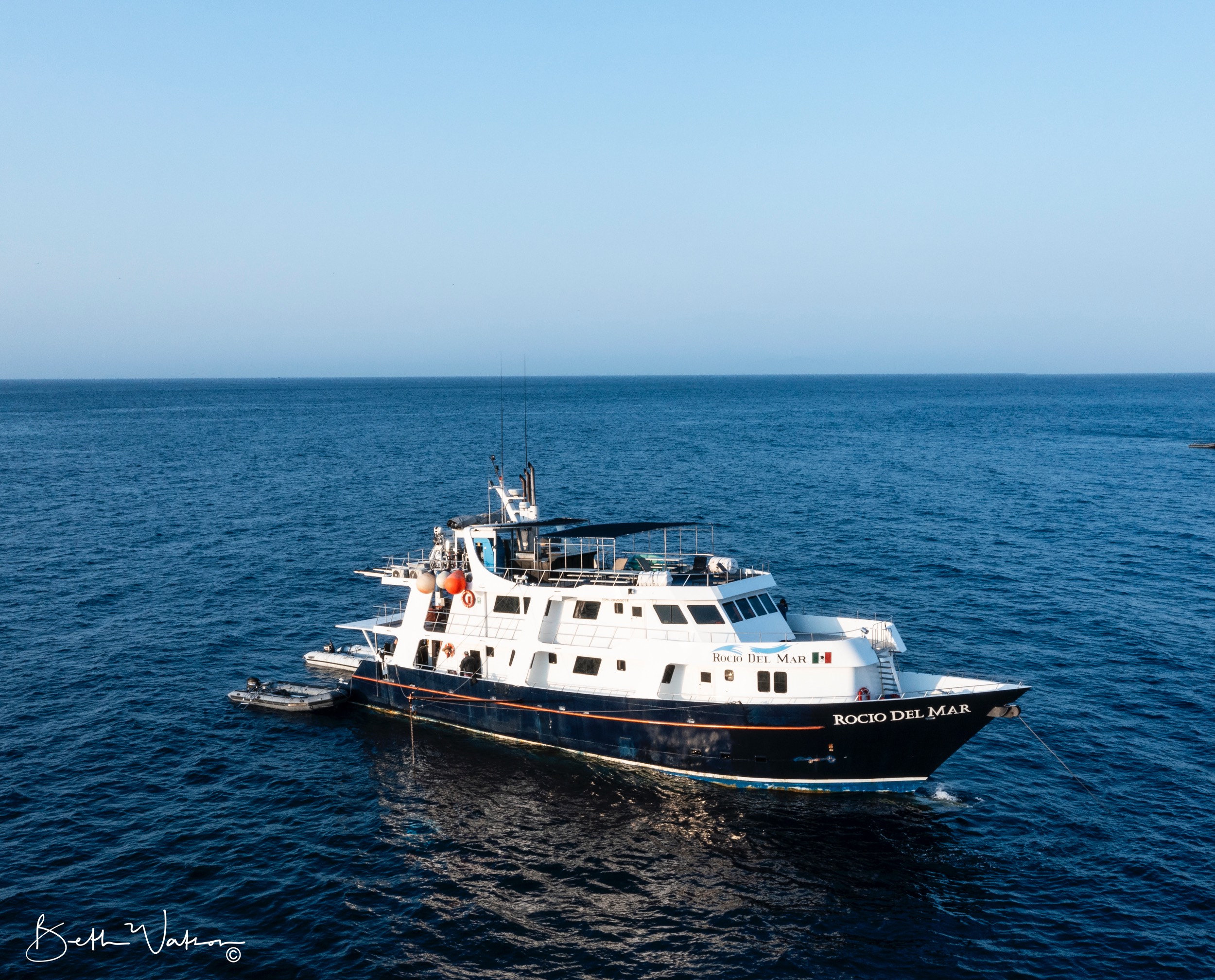
Rocio del Mar
Mexico
20 guests33.5 m
$392/day
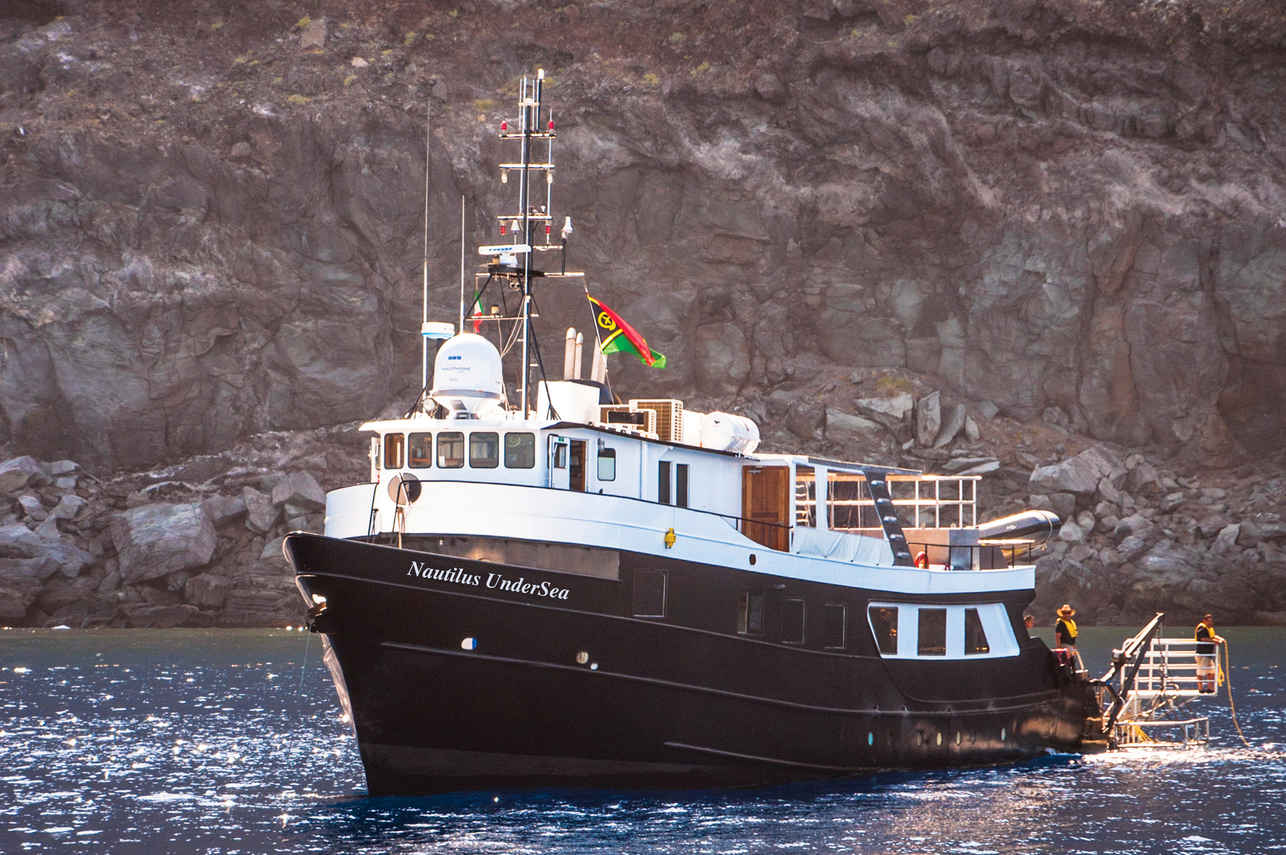
Nautilus Under Sea
Mexico
19 guests32 m
$323/day
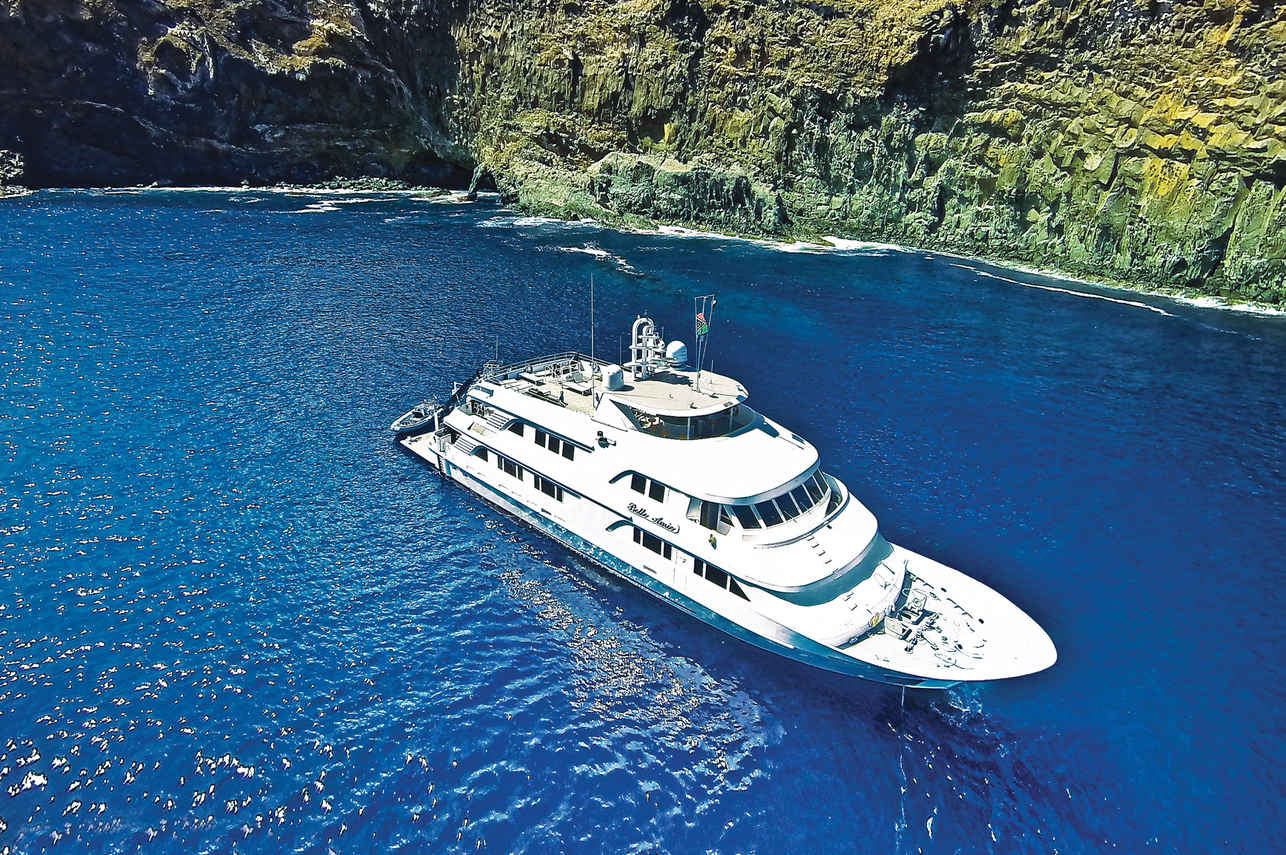
Nautilus Belle Amie
Mexico
32 guests44.8 m
$323/day
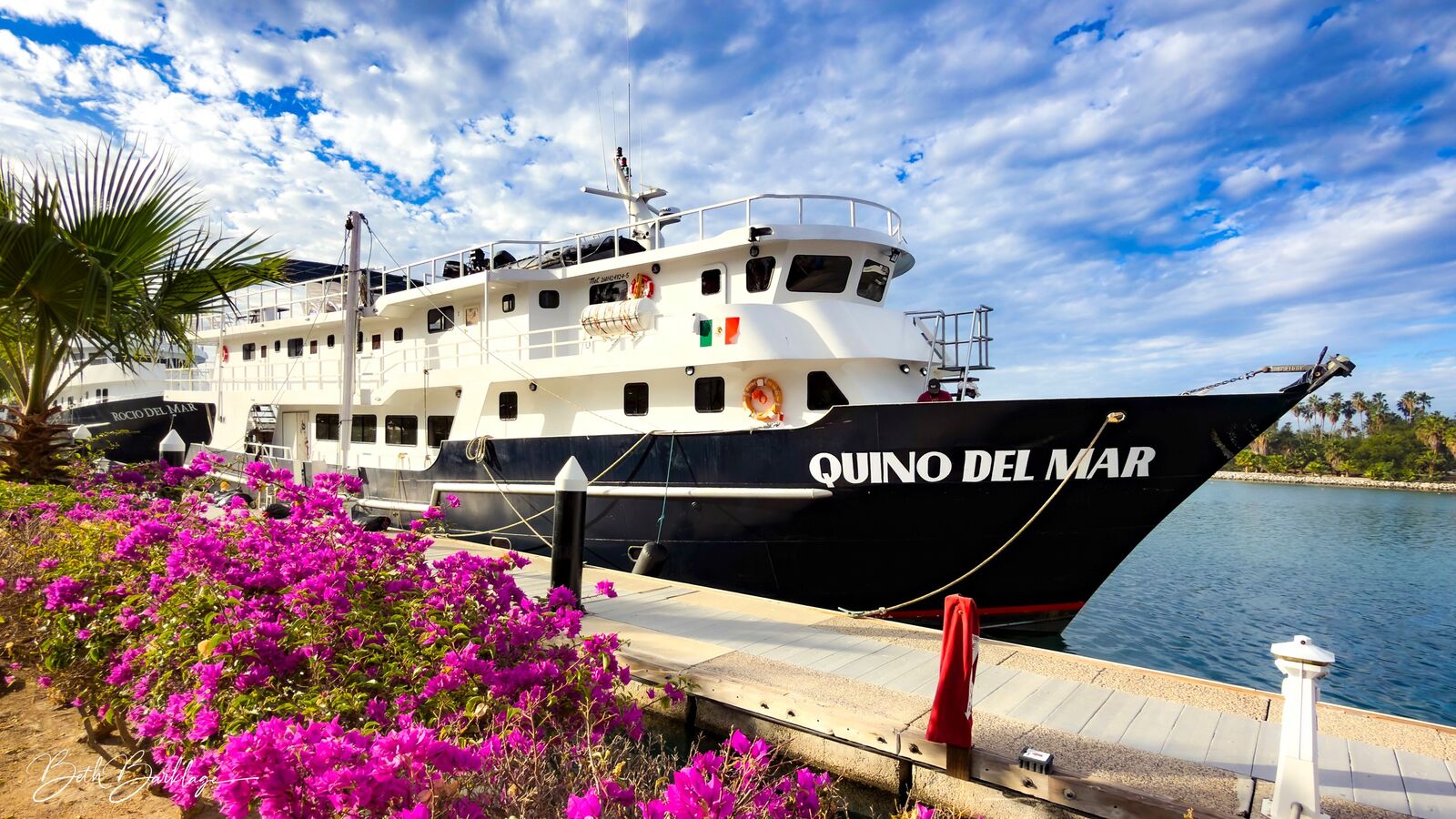
Quino del Mar
Mexico
20 guests36 m
$392/day
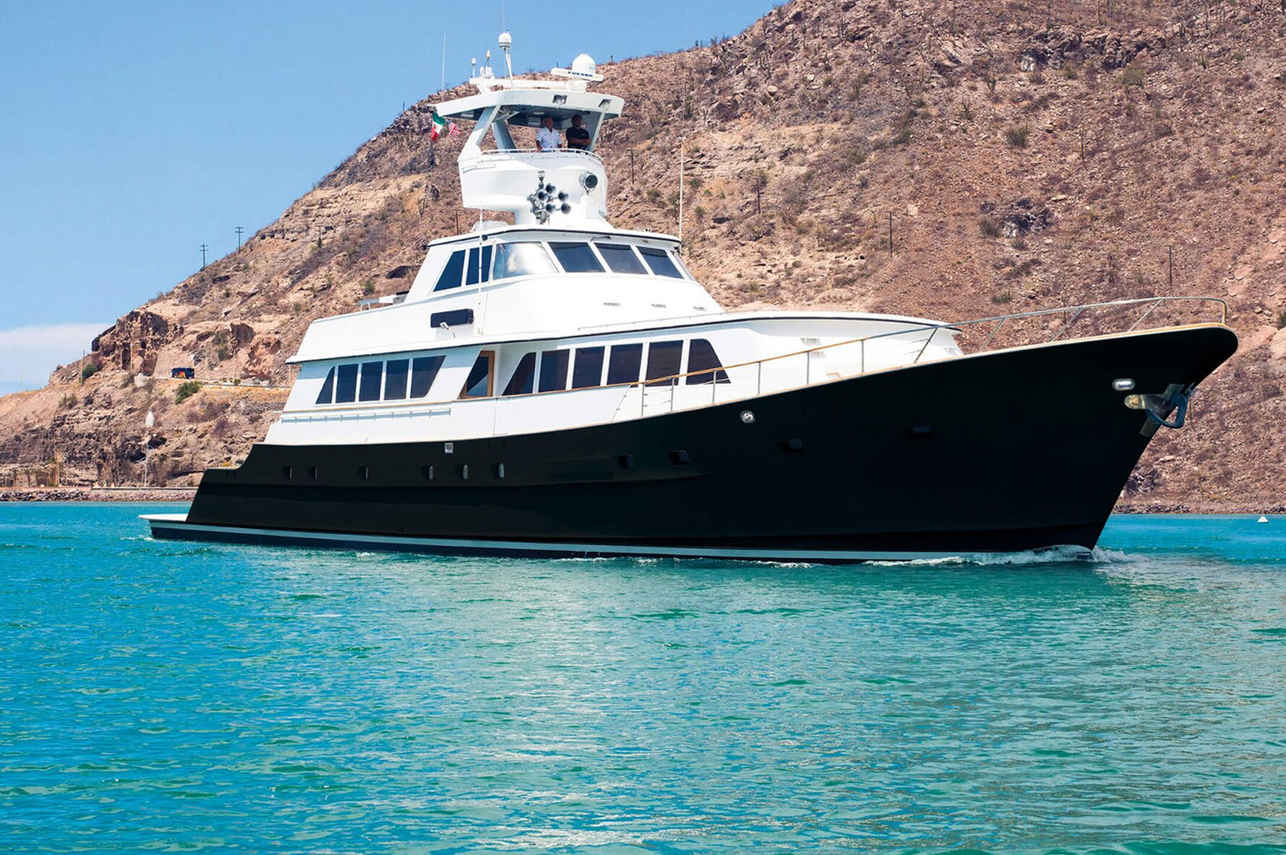
Nautilus Gallant Lady
Mexico
12 guests35.36 m
$332/day
Dive sites similar to Guadalupe Island
Same character, same waters — six more sites divers love for the exact same reasons.Compare seasons, access and liveaboard routes — then pick the site that fits your trip best.
© Esri — Maxar, Earthstar, GIS
Elizabeth Bay
Galápagos
Elizabeth Bay, located on the eastern coast of Isabela Island, presents a wide and sheltered marine environment rich in biodiversity.
- Suitable for
- Beginner
- Current
- No current
- Access
- Liveaboard only
- Depth
- 3–20 m
- Theme
- —
© Esri — Maxar, Earthstar, GIS
Floreana - Devil's Crown
Galápagos
Devil's Crown, located off Floreana Island in the Galápagos, is renowned as one of the archipelago's premier diving and snorkeling destinations.
- Suitable for
- Beginner
- Current
- Strong
- Access
- Liveaboard only
- Depth
- 3–15 m
- Theme
- Reef
© Esri — Maxar, Earthstar, GIS
Bajo Negro
Costa Rica
Bajo Negro, or Black Rock, is a captivating dive site located within the Bat Islands in Santa Rosa National Park, off Costa Rica's Pacific coast.
- Suitable for
- Advanced
- Current
- Strong
- Access
- Shore / dayboat
- Depth
- 20–30 m
- Theme
- Pinnacle / Seamount
© Esri — Maxar, Earthstar, GIS
Dos Sombreros
Costa Rica
Dos Sombreros is a renowned dive site located offshore from Playa Flamingo, forming part of the Catalina Islands chain in Costa Rica's North Pacific region.
- Suitable for
- Intermediate
- Current
- Moderate
- Access
- Dayboat
- Depth
- 12–25 m
- Theme
- Pinnacle
© Esri — Maxar, Earthstar, GIS
Pelican Rock
Mexico
Pelican Rock is a renowned dive site located within the Cabo San Lucas Marine Park in Baja California Sur, Mexico, just a few minutes by boat from the marina.
- Suitable for
- Beginner
- Current
- Mild
- Access
- Liveaboard or dayboat
- Depth
- 5–40 m
- Theme
- Wall
© Esri — Maxar, Earthstar, GIS
Isla Montserrat
Mexico
Isla Montserrat is one of the five major islands within the Bahía de Loreto National Park, offering a diverse range of diving opportunities.
- Suitable for
- Intermediate
- Current
- Mild
- Access
- Liveaboard only
- Depth
- —
- Theme
- Reef / Wall