About Isla Montserrat
Isla Montserrat is one of the five major islands within the Bahía de Loreto National Park, offering a diverse range of diving opportunities. Formed by ancient volcanic activity, its underwater terrain features rugged formations, steep walls, and extensive reef systems that foster vibrant marine habitats. While specific named sites within Isla Montserrat are not detailed, the island's general characteristics suggest a wealth of exploration possibilities for divers. The volcanic origins provide dramatic backdrops and unique geological features, including ledges and potential swim-throughs. The surrounding waters are rich in biodiversity, attracting numerous reef fish, invertebrates, and larger pelagic species. Divers can anticipate encountering various common English species during their explorations around the island. The pristine nature of the national park ensures a healthy ecosystem, with good visibility often prevalent, especially from late spring to fall. This island offers a comprehensive experience for divers looking to immerse themselves in the rich, volcanic underwater landscapes and abundant marine life of Loreto.
Highlights
UNESCO World Heritage SitePart of Bahía de Loreto National ParkRocky formationsDiverse marine ecosystemsSuitable for all diver levelsPristine underwater conditions
Season calendar
Best months to dive here
Jan
Feb
Mar
Apr
May
Jun
Jul
Aug
Sep
Oct
Nov
Dec
Excellent
Good
Nov – Apr (Peak)
Socorro season open (Nov–May) for giant mantas and hammerheads. Cozumel bull sharks Dec–Mar. Cenotes excellent year-round. Best overall conditions.
May – Oct (Transition & Sea of Cortez)
Socorro closing, Cozumel still good. Whale sharks arrive at Isla Mujeres Jun–Sep. From August, the Sea of Cortez comes alive: Midriff Islands offer massive sea lion colonies and schooling mobulas. September and October bring world-class diving around La Paz and Cabo Pulmo with whale sharks, hammerheads, and bull sharks on the Explore Baja route.
Dive site facts: Isla Montserrat
- Current
- Variable, can be strong (drift possible)
- Visibility
- 9-30 m
- Water temperature
- 21-30°C
- Entry
- Boat
- Level
- All levels (current experience helpful for drift)
- Dive type
- Reef, wall, drift, pelagic
- Region / port
- Loreto, Baja California Sur
- Coordinates
- 26.0667, -111.25
Conditions & Currents
Currents around Isla Montserrat vary, but strong currents can be encountered, particularly during October and November, making these months ideal for drift diving experiences. While general conditions are often calm, divers should be prepared for varying current strengths, especially at deeper sites or specific times of year. Visibility is generally good, improving significantly from late summer into autumn, often reaching 24-30 meters. However, plankton concentration, which can create distinct layers and masses, can reduce visibility to 9-12 meters during June. Water temperatures can fluctuate, with thermoclines sometimes present around 13-15 meters in spring and early summer, where a plunge from 23°C surface temperatures to 15°C below is possible, requiring appropriate thermal protection.
Marine life & sighting chances

Eagle rays
occasional
Nudibranchs
common
Sea lions
common
Green sea turtles
occasionalAngel sharks
Summer and Fall · occasional
Guitarfish
Summer and Fall · occasional
Torpedo rays
Summer and Fall · occasional
Electric rays
Summer and Fall · occasional
Mobula rays
Spring, Summer, Autumn · common
Humpback whales
December-April · occasional
Whale sharks
Summer, Winter · occasional
Hammerhead sharks
Winter · occasionalDive profile & how the dive runs
Dives at Isla Montserrat typically begin with a boat drop, allowing for exploration of the island's diverse topography, which includes rocky formations and walls. Depending on the site, you might follow a reef slope or drift along a wall. Depth progression varies but can include shallow, luminescent areas to deeper sections. Routes are usually guided to maximize encounters with schooling fish, nudibranchs, and other macro life, as well as potential pelagic sightings. Turn points are determined by air consumption and bottom time, ensuring a safe return to shallower waters. Safety stops are conducted in the clear, protected shallows, often around 5 meters, before surfacing to the dive boat.
Underwater photography
Isla Montserrat offers varied photographic opportunities, from wide-angle shots of rocky formations and schooling fish to macro subjects like nudibranchs. For wide-angle, a fisheye or wide-angle lens is excellent for capturing the expansive underwater landscapes and potentially pelagic encounters. Summer months with high visibility provide optimal natural light, reducing the need for strobes at shallower depths. For macro photography, a dedicated macro lens will highlight the smaller, often vibrant, invertebrates. Patience and good buoyancy control are essential to avoid disturbing the delicate marine life. Consider bringing strong video lights for any deeper sections or to enhance colors, especially when capturing shy species.
Combine with nearby dive sites
- Isla Coronados
Ancient dormant volcano, sea lion rookery
- Isla del Carmen
Largest island, pinnacles, walls, seamounts
- Isla Danzante
Reef sites, wall dive, nudibranchs
- El Bajo
Underwater mountain, large pelagic species
- La Lobera
Sea lion colony
Getting there & logistics
Diving Isla Montserrat is typically arranged through local dive operators in Loreto, Baja California Sur. Loreto is serviced by Loreto International Airport (MMLT). Trips to the dive sites are usually day trips by boat, and itineraries often combine dives at Isla Montserrat with other islands within Bahía de Loreto National Park. There are no specific permits mentioned for individual divers, as access is usually managed through licensed operators within the protected park area. Ensure all fees for park entry, if applicable, are included in your dive package. Loreto itself is a historic and charming town with hotels and restaurants within walking distance of departure points.
Safety & environment
While diving in Bahía de Loreto National Park is generally safe, divers should always carry appropriate dive insurance that covers emergency medical treatment and evacuation. The nearest recompression chamber would likely be in La Paz, which requires significant travel time from Loreto. Evacuation in a serious emergency could involve air transport, underscoring the importance of comprehensive insurance. Site-specific hazards can include strong currents, particularly during certain months, so divers should be proficient in current diving techniques. Always follow your guide's instructions, maintain proper buoyancy, and avoid touching marine life to ensure both personal safety and the preservation of the protected ecosystem.
Who it suits, and who it doesn't
Suited for
- Divers seeking rich biodiversity
- Underwater photographers
- Divers interested in pelagic encounters
- Divers comfortable with boat entries
- Divers who appreciate protected marine environments
Less suited for
- Shore divers (boat access only)
- Divers who prefer tropical reef topography exclusively
- Divers sensitive to varying current conditions
- Those who dislike cooler water temperatures in winter
FAQ
Isla Montserrat FAQ
What kind of marine life can I expect to see at Isla Montserrat?
Isla Montserrat is home to diverse marine life. You can commonly encounter playful sea lions, various species of nudibranchs, and schools of tropical fish. Depending on the season, occasional sightings include eagle rays, green sea turtles, and even pelagic species like mobula rays, whale sharks, and sometimes humpback whales during their migration.
What are the typical diving conditions around Isla Montserrat?
Diving conditions vary with the season. Water temperatures range from 18-21°C in winter to 26-30°C in summer. Visibility is generally good, often exceeding 25 meters during the summer and autumn, but can drop to 9-12 meters in June due to plankton blooms. Currents can be mild to strong, especially in October and November, allowing for drift dives.
When is the best time to visit Isla Montserrat for diving?
The peak diving season for Isla Montserrat runs from May through November, offering the warmest water and best visibility. Summer months, particularly June to August, provide the clearest waters. However, October and November are excellent for drift dives due to stronger currents, and winter months (January-March) offer the best visibility and chances to see whale sharks.
Is Isla Montserrat suitable for beginner divers?
Yes, Isla Montserrat offers dive sites appropriate for divers of all experience levels. While some areas may have stronger currents suitable for advanced divers, there are also shallower and calmer spots perfect for beginners or those seeking an easier dive. Local dive operators can guide you to sites appropriate for your certification and comfort level.
How do I get to Isla Montserrat for diving?
To dive Isla Montserrat, you will typically depart from Loreto, Baja California Sur. Loreto has an international airport, making it accessible. Dive excursions are conducted via day boats from Loreto, often as part of an itinerary that explores several islands within the Bahía de Loreto National Park.
Why dive Isla Montserrat from a liveaboard?
Isla Montserrat is one of Mexico's signature dive sites. A liveaboard sleeps you on the water and puts you in the water for three to four guided dives per day, including dawn and night dives that day-boat operators rarely offer. You skip the daily commute back to port and reach quieter, less-crowded sites in the same region on a single trip.
Below are the liveaboards that include Isla Montserrat on their Mexico itineraries.
Liveaboards diving Isla Montserrat
These liveaboards may visit Isla Montserrat on selected itineraries, the exact dive sites depend on departure, weather and conditions.
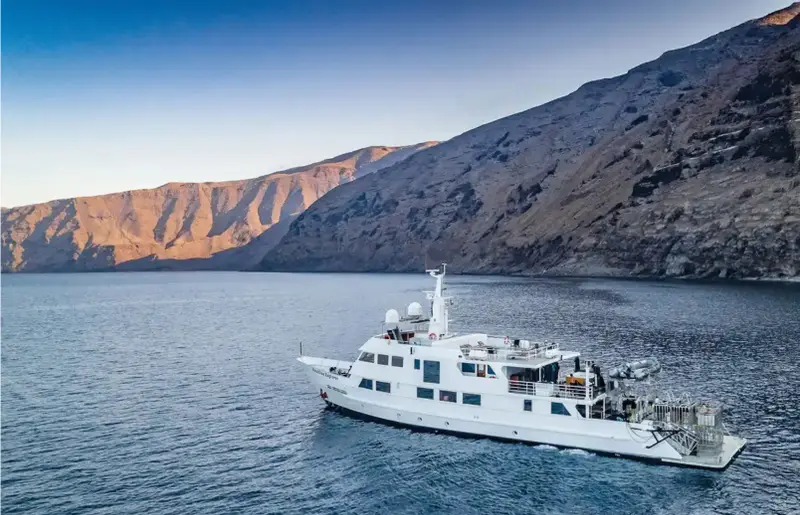
Nautilus Explorer
Mexico
25 guests45 m
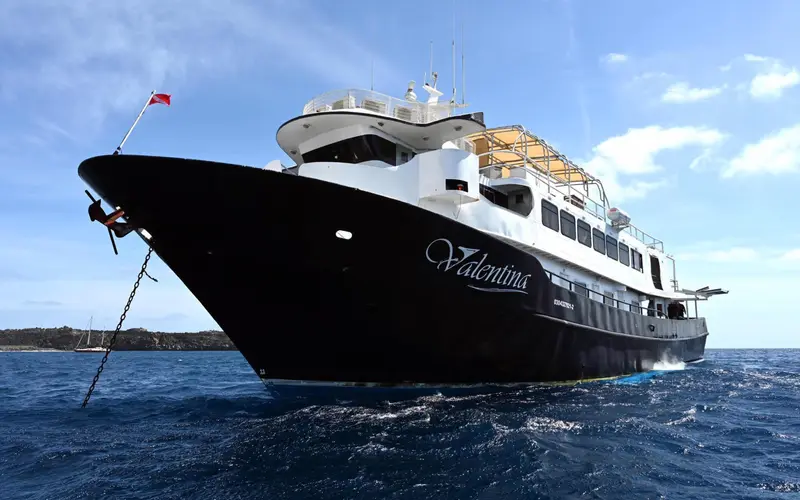
Valentina
Mexico
20 guests38 m
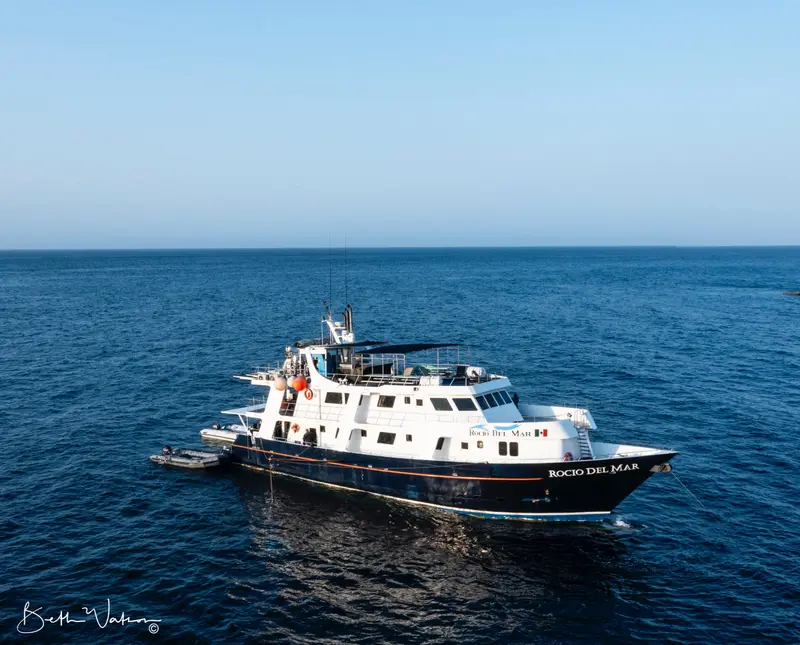
Rocio del Mar
Mexico
20 guests34 m
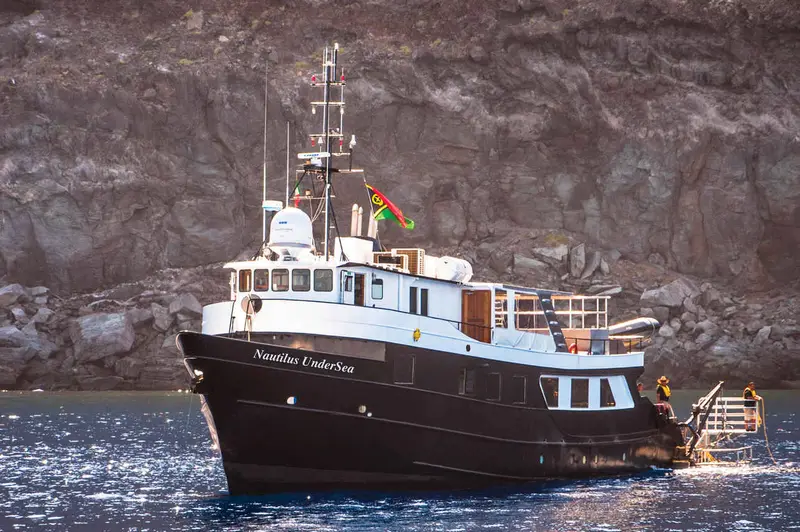
Nautilus Under Sea
Mexico
19 guests32 m
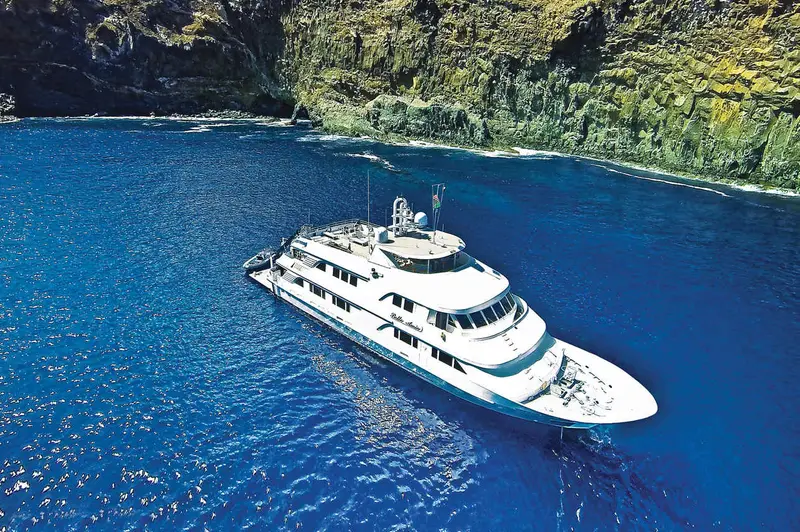
Nautilus Belle Amie
Mexico
32 guests45 m
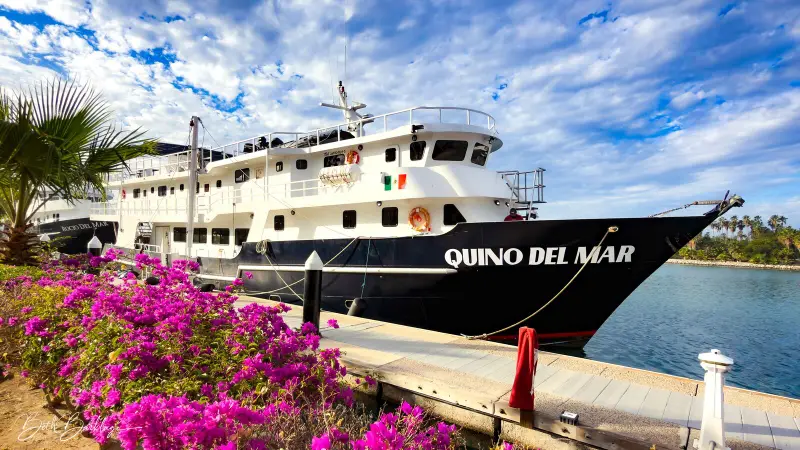
Quino del Mar
Mexico
20 guests36 m
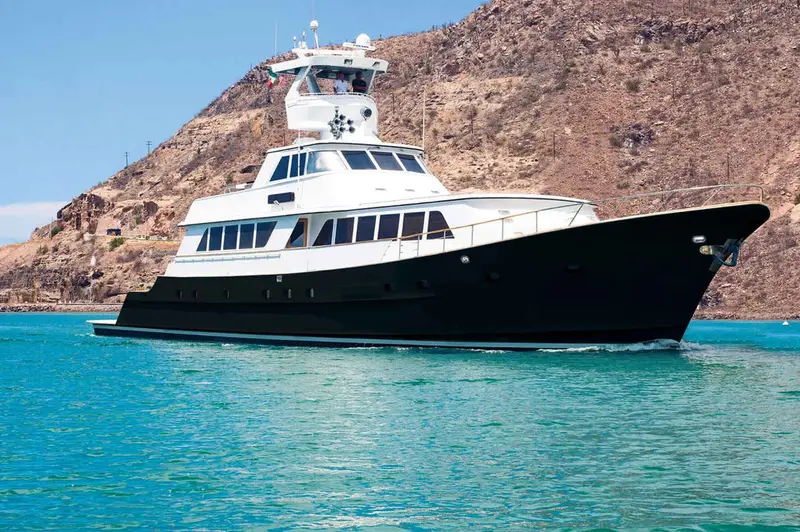
Nautilus Gallant Lady
Mexico
12 guests35 m
Dive sites similar to Isla Montserrat
Same character, same waters, six more sites divers love for the exact same reasons.Compare seasons, access and liveaboard routes, then pick the site that fits your trip best.
© EsriMaxar, Earthstar, GIS
Agustín Melgar shipwreck
Mexico
The Agustín Melgar, also known as the C-54, is a 56-meter (185-foot) former minesweeper that rests on a sandy bottom at 24 meters (80 feet) south of Puerto Escondido within the Loreto Bay National Park.
- Suitable for
- Intermediate
- Current
- Mild
- Access
- Liveaboard only
- Depth
- 12–24 m
- Theme
- Wreck
Arco Iris, or "Rainbow" in Spanish, is a prominent dive site located near Brumel Island (Penahuaste), approximately 8km north of Playa Potrero in Costa Rica.
- Suitable for
- Beginner
- Current
- Moderate
- Access
- Dayboat
- Depth
- 9–30 m
- Theme
- Reef
© EsriMaxar, Earthstar, GIS
Bahía de La Paz
Mexico
Bahía de La Paz serves as the capital of Baja California Sur and the primary gateway to the Sea of Cortez, a region famously dubbed the "world's aquarium" by Jacques Cousteau due to its exceptional biodiversity.
- Suitable for
- Advanced
- Current
- Mild
- Access
- Dayboat
- Depth
- 17–27 m
- Theme
- Big animals / Reef
© EsriMaxar, Earthstar, GIS
Bahía de los Ángeles
Mexico
Bahía de los Ángeles, nestled in the northern Sea of Cortez, is a remarkable dive destination primarily known for its seasonal aggregations of whale sharks.
- Suitable for
- Intermediate
- Current
- Moderate
- Access
- Liveaboard only
- Depth
- 3–15 m
- Theme
- Reef
© EsriMaxar, Earthstar, GIS
Bajo Alcyone
Costa Rica
Bajo Alcyone, a submerged seamount near Cocos Island, stands as a world-renowned dive site.
- Suitable for
- Advanced
- Current
- Strong
- Access
- Liveaboard only
- Depth
- 25–40 m
- Theme
- Drift / Seamount
© EsriMaxar, Earthstar, GIS
Bajo de la Ballena
Mexico
El Bajo, often referred to as Bajo de la Ballena, is a prominent seamount situated approximately eight miles northeast of La Paz, Mexico.
- Suitable for
- Advanced
- Current
- Strong
- Access
- Liveaboard or dayboat
- Depth
- 18–35 m
- Theme
- Pinnacle