About Elefante
Elefante is a prominent dive site within the volcanic Catalinas Islands, located off Costa Rica's northern Pacific coast in Guanacaste. Named for a distinctive rock formation that resembles an elephant's trunk when viewed from specific angles, this site is also known locally as "El Diente" (The Tooth). Its unique underwater topography features arches and tunnels that create an engaging environment for exploration, making it a favorite among experienced divers seeking a challenge. Diving at Elefante typically explores depths up to 23 meters (75 feet), where divers can navigate through its intricate rock structures. The site's location within the highly biodiverse Catalinas Islands benefits from large continental shelf effects and changing currents that bring nutrient-rich waters. While considered suitable for advanced divers due to potential currents and the complexity of its features, the vibrant marine ecosystem makes the effort worthwhile. Throughout the year, divers at Elefante can encounter various marine species that thrive in and around its formations. Lobsters, stingrays, and reef sharks frequently utilize the site's arches and tunnels for shelter. The abundant reef fish life further contributes to the dynamic underwater scenery. Conditions can vary, with cooler water temperatures and choppier surface conditions observed during the dry season, contrasting with warmer, calmer waters during the rainy season. Reaching Elefante usually involves a boat ride of approximately 35 minutes from departure points like Flamingo. Divers should anticipate non-anchored descents and ascents, and be prepared for potential surge and currents, which are characteristic of many sites in the Catalinas. Good buoyancy control is essential to safely navigate the site's features and enjoy the rich marine encounters.
Highlights
Elephant trunk rock formationUnderwater arches and tunnelsLobsters, rays, reef sharksVolcanic rock topographyCatalinas Islands marine lifeAdvanced dive site
Season calendar
Best months to dive here
Jan
Feb
Mar
Apr
May
Jun
Jul
Aug
Sep
Oct
Nov
Dec
Good
Dive site facts: Elefante
- Depth
- Up to 23 m
- Current
- Moderate to strong
- Water temperature
- 13–30°C (55–86°F)
- Entry
- Boat / non-anchored
- Level
- Advanced
- Dive type
- Reef, big_animals, shark
- Region / port
- Guanacaste, Pacific Coast
- Coordinates
- 7.8164° N, 86.1232° W
Conditions & Currents
Currents at Elefante can be strong, aligning with its classification as a site enjoyed by advanced divers. While specific current details for Elefante are not extensively documented, the Catalinas Islands generally experience variable conditions, and sites like Sur Shallow are known for strong currents. Surge can also be present and, at times, considerable, necessitating good buoyancy control and preparedness from divers. Entry and exit are typically non-anchored, requiring efficient free descent and ascent techniques. Visibility can fluctuate but is generally good, as there are no major rivers to introduce silt in the immediate area. Water temperature varies significantly throughout the year, with thermoclines being common at deeper sites, especially during the dry season, which can attract diverse marine life but also impact thermal comfort.
Marine life & sighting chances
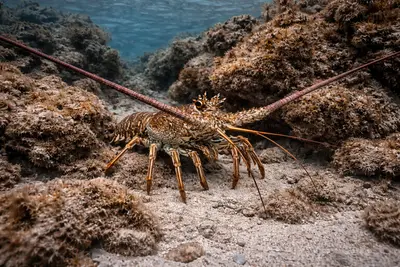
Lobsters
common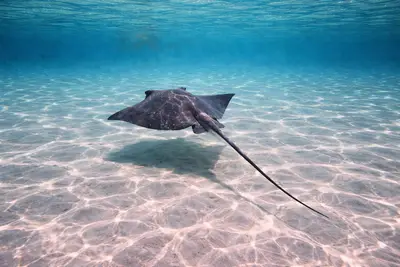
Stingrays
common
Reef sharks
common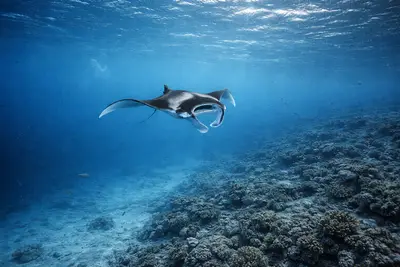
Giant manta rays
January-March, November-May · occasional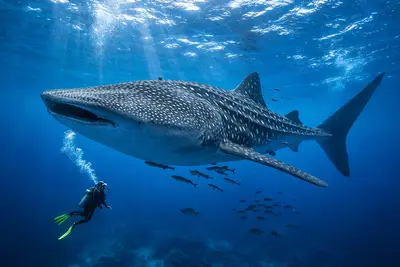
Whale sharks
Year-round · rare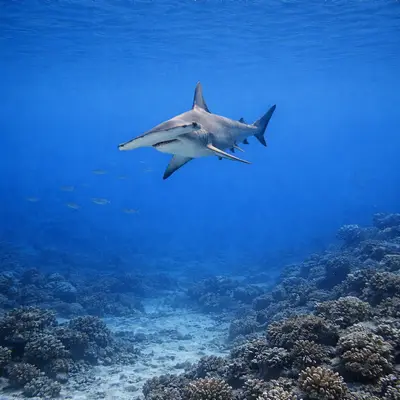
Hammerhead sharks
Year-round · rare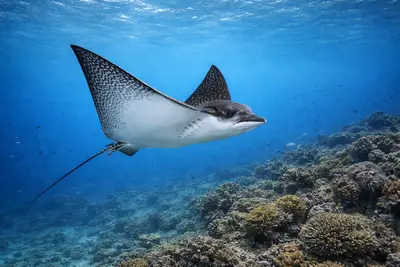
Eagle rays
Year-round · occasional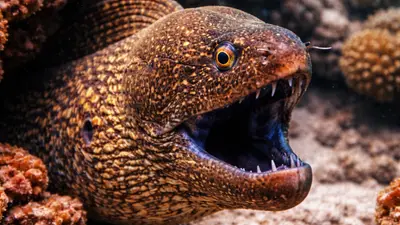
Moray eels
Year-round · commonSea turtles
Year-round · occasionalTropical fish
Year-round · common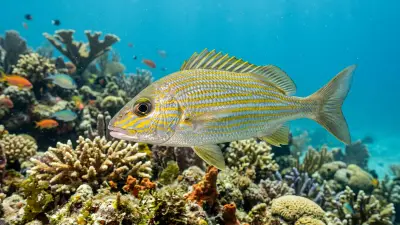
Schools of grunts
Year-round · common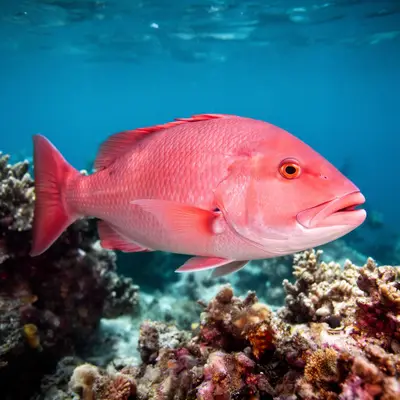
Schools of snappers
Year-round · common
Dolphins
Year-round · occasionalDive profile & how the dive runs
Dives at Elefante typically begin with a non-anchored entry, requiring divers to descend quickly to the primary rock formation. The route involves exploring the site's distinctive underwater arches and tunnels, which are found at depths reaching up to 23 meters (75 feet). Divers often navigate these formations, looking into crevices for lobsters and moray eels, and observing stingrays and reef sharks that frequent the area. The dive progresses along the varied volcanic terrain, maintaining good buoyancy to manage potential surge and currents. The turn point is determined by air consumption and depth limits, with the ascent initiated from a suitable, clear area. Safety stops are conducted as free ascents, requiring precise buoyancy control due to the absence of fixed lines. Throughout the dive, awareness of surroundings and marine life, particularly larger pelagics, is crucial.
Underwater photography
Capturing the unique elephant trunk formation and its arches at Elefante benefits from wide-angle lenses to encompass the expansive topography and schools of fish. For macro subjects like lobsters, nudibranchs, or moray eels hiding in crevices, a macro lens is essential. External strobes are recommended to bring out the vibrant colors and details in the deeper sections and within the arches, compensating for the variable natural light. Divers should practice excellent buoyancy control, especially when navigating the tunnels and dealing with currents, to avoid disturbing the environment or stirring up silt. When photographing marine life, maintain a respectful distance and avoid harassing animals, ensuring natural behavior can be observed and captured.
Combine with nearby dive sites
- El Clasico
Known as "Shark Alley" or "The Wall" with a maximum depth of 24 meters, ideal for large species and manta rays.
- Pailas
Features caves and crevices at a maximum depth of 21 meters, attracting lobsters, moray eels, and stingrays.
- Sur Shallow
An advanced dive site with strong currents around small rocks and channels, reaching 18 meters, good for turtles and reef sharks.
- Sombrero
Named for its hat-shaped rock, offering both a shallow (20m) and a technical deeper (25m) dive with rich marine life.
- Cuatro Piedras
Distinctive rock formations with a sandy bottom at 21 meters, a key spot for manta rays and reef fish, diveable without strong currents.
Getting there & logistics
Elefante is part of the Catalinas Islands, accessible by day boat tours departing from various points along Costa Rica's northern Pacific coast, primarily in the Guanacaste Province. Flamingo is a common departure point, with boat rides to the islands typically lasting around 35 minutes to Elefante. Divers flying into Costa Rica will likely arrive at Daniel Oduber Quirós International Airport (LIR) in Liberia, Guanacaste. Trips often consist of two-tank dives, with dive operators providing transportation, equipment, and certified guides. While no specific national park fees are mentioned for the Catalinas, divers should confirm with their chosen dive center regarding any local conservation or marine park charges. The site is usually combined with other Catalinas Islands dives to form a full day excursion.
Safety & environment
Diving at Elefante requires an advanced certification due to potential strong currents, surge, and non-anchored descents. Divers should have recent experience with drift dives and good buoyancy control. The nearest recompression chamber is important to confirm with local operators, as emergency medical evacuation from this offshore location to suitable facilities in major cities like San José can be time-consuming. Comprehensive dive insurance, covering medical emergencies and evacuation, is highly recommended. Always follow your dive guide's instructions, maintain close proximity to your buddy, and monitor air consumption carefully, especially given the dynamic conditions. Ensure all equipment is well-maintained and suitable for challenging dives. Inform your divemaster of any pre-existing medical conditions or discomfort with strong currents or surge.
Who it suits — and who it doesn't
Suited for
- Advanced divers with current experience
- Photographers seeking unique rock formations and marine life
- Divers comfortable with non-anchored entries and exits
- Those looking for pelagic encounters
- Divers seeking challenging underwater topography
Less suited for
- Beginner divers or those without advanced certification
- Divers uncomfortable with strong currents and surge
- Individuals prone to seasickness on choppy boat rides
- Divers with limited buoyancy control
- Those who prefer calm, anchored dive conditions
FAQ
Elefante FAQ
What makes Elefante a unique dive site?
Elefante is renowned for its distinct rock formation that resembles an elephant's trunk, inspiring its name. The underwater landscape features engaging arches and tunnels that divers can explore, creating a visually interesting and challenging environment unique among the Catalinas Islands.
What kind of marine life can I expect to see at Elefante?
At Elefante, you can frequently spot lobsters, stingrays, and various reef sharks utilizing the arches and tunnels for shelter. The site also attracts abundant tropical fish. Additionally, like other Catalinas sites, there's an occasional chance to encounter larger pelagics such as giant manta rays, eagle rays, and sometimes even dolphins or whales, especially during specific seasons.
Is Elefante suitable for all diving levels?
No, Elefante is generally considered suitable for advanced divers. This is due to its maximum depth of 23 meters (75 feet), the presence of potential strong currents and surge, and the need for proficient buoyancy control during non-anchored entries and ascents, particularly when navigating its complex underwater structures.
What is the best time of year to dive Elefante?
The Catalinas Islands, including Elefante, are best dived from November to May for typically calmer surface conditions and extended visibility. However, the rainy season from June to November can bring nutrient-rich upwellings, increasing the chances of encountering larger pelagic species. Water temperatures fluctuate significantly, with cooler temperatures in January-March.
How do I get to Elefante, and how long does it take?
Elefante is part of the Catalinas Islands, located off the Pacific coast of Guanacaste. Dive tours typically depart from towns like Flamingo. The boat ride to the site takes approximately 35 minutes, making it an accessible day trip from coastal dive centers.
Why dive Elefante from a liveaboard?
Elefante is one of Costa Rica's signature dive sites. A liveaboard sleeps you on the water and puts you in the water for three to four guided dives per day, including dawn and night dives that day-boat operators rarely offer. You skip the daily commute back to port and reach quieter, less-crowded sites in the same region on a single trip.
Below are the liveaboards that include Elefante on their Costa Rica itineraries.
Liveaboards diving Elefante
These liveaboards may visit Elefante on selected itineraries — the exact dive sites depend on departure, weather and conditions.
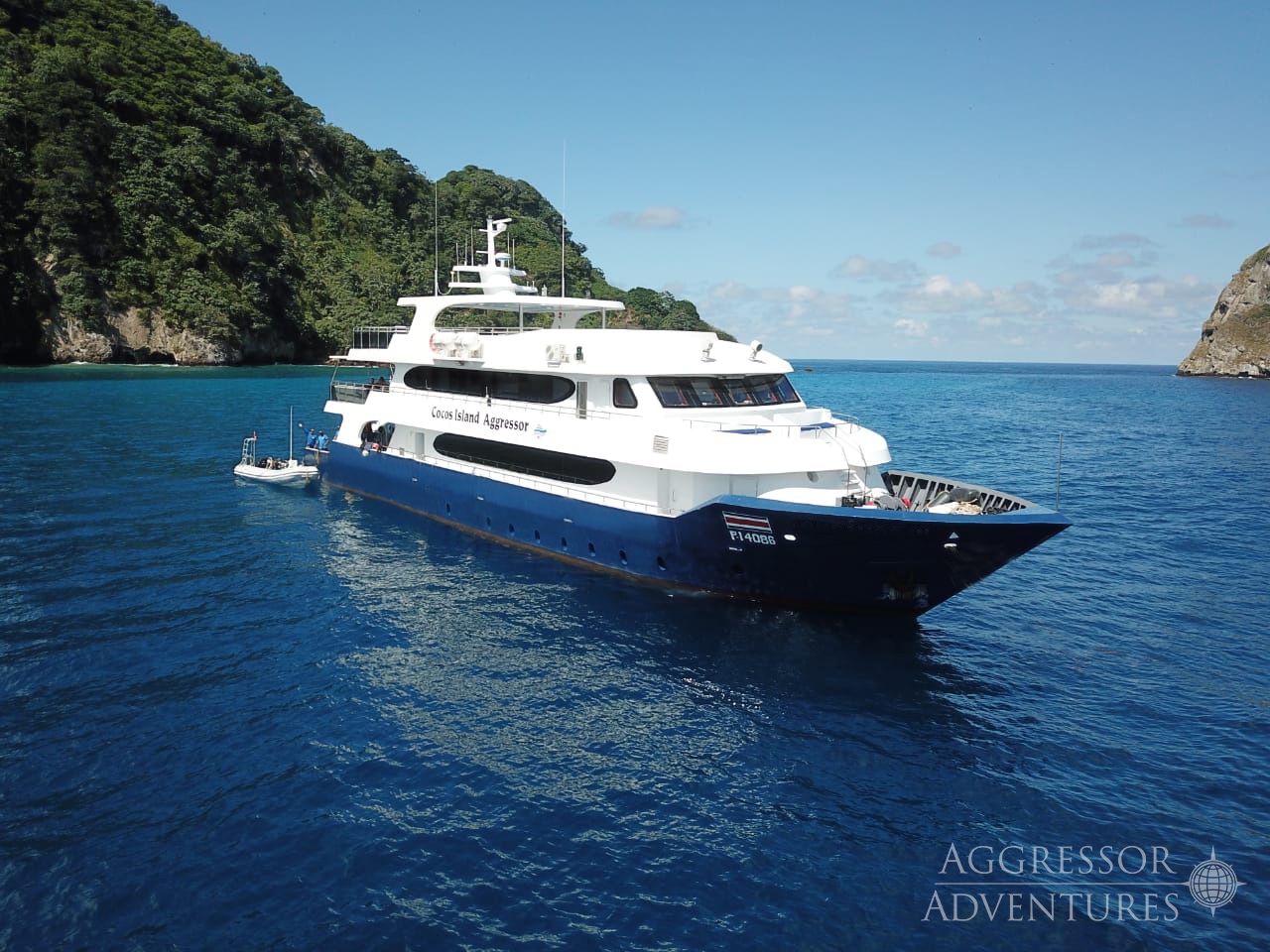
Cocos Aggressor
Costa Rica
22 guests37.8 m
$477/day
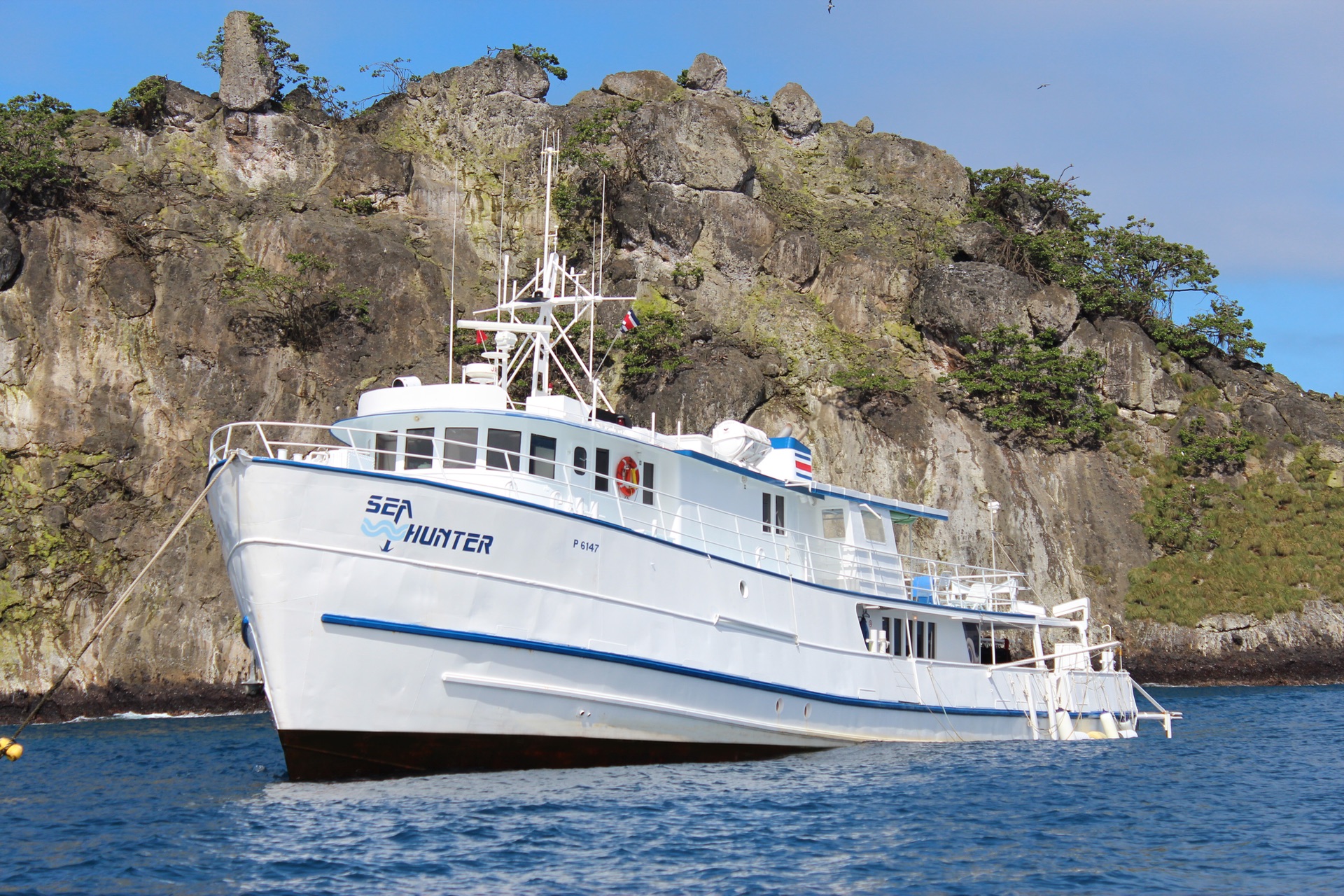
Sea Hunter
Costa Rica
20 guests
$690/day
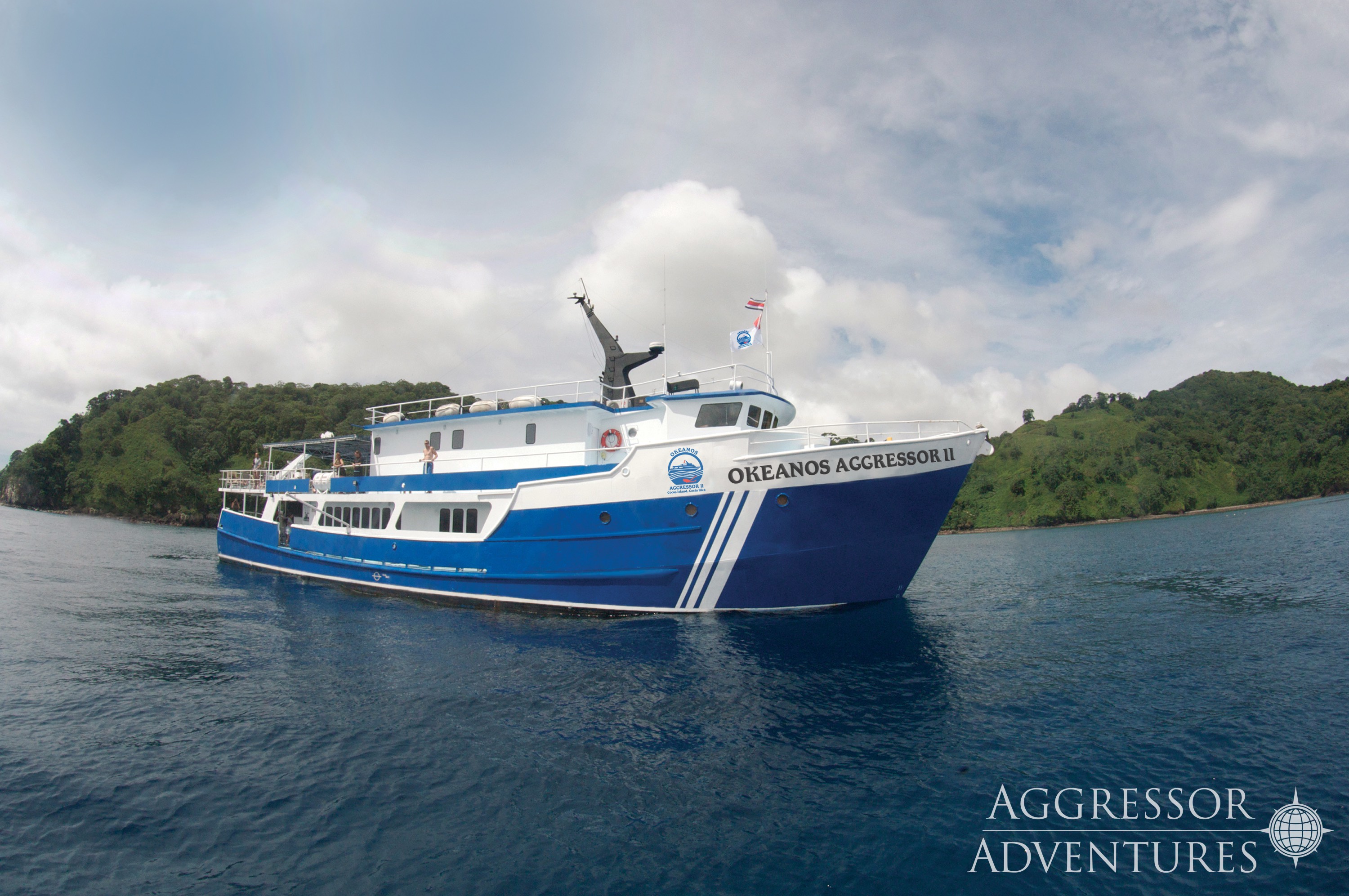
Okeanos Aggressor II
Costa Rica
24 guests36.6 m
$582/day
Dive sites similar to Elefante
Same character, same waters — six more sites divers love for the exact same reasons.Compare seasons, access and liveaboard routes — then pick the site that fits your trip best.
© Esri — Maxar, Earthstar, GIS
Brumel Deep
Costa Rica
Brumel Deep, a prominent dive site just a 20-minute boat ride from Flamingo Marina, offers a protected environment, making it an excellent choice when stronger winds affect the main Catalina Islands.
- Suitable for
- Intermediate
- Current
- Mild
- Access
- Dayboat
- Depth
- ≤ 30 m
- Theme
- Reef
© Esri — Maxar, Earthstar, GIS
Los Sombreros
Costa Rica
Los Sombreros, named for its two small islets resembling Mexican hats, offers a boat dive experience in the Catalina Islands suitable for mixed-experience groups.
- Suitable for
- Intermediate
- Current
- Moderate
- Access
- Dayboat
- Depth
- 8–25 m
- Theme
- Reef / Drift
Arco Iris, or "Rainbow" in Spanish, is a prominent dive site located near Brumel Island (Penahuaste), approximately 8km north of Playa Potrero in Costa Rica.
- Suitable for
- Beginner
- Current
- Moderate
- Access
- Dayboat
- Depth
- 9–30 m
- Theme
- Reef
Virador is a highly regarded dive site located in the Gulf of Papagayo, off Costa Rica's Pacific coast.
- Suitable for
- Intermediate
- Current
- Moderate
- Access
- Dayboat
- Depth
- 8–30 m
- Theme
- Reef
© Esri — Maxar, Earthstar, GIS
Punta Gorda
Costa Rica
Punta Gorda, a prominent rocky outcrop in Costa Rica's Gulf of Papagayo, is celebrated as one of the area's most colorful and diverse dive sites.
- Suitable for
- Intermediate
- Current
- Moderate
- Access
- Dayboat
- Depth
- 10–21 m
- Theme
- Reef