About Koh Tao — White Rock
White Rock, also known as Hin Kao, is one of Koh Tao's most expansive and frequented dive sites, located just 2 kilometers off the island's west coast. Its name derives from a shallow white rock formation visible near the surface, acting as a navigational marker. This site is celebrated for its rich biodiversity and serves as an excellent location for divers of all experience levels, from introductory dives to advanced explorations. The underwater topography consists of two significant granite pinnacles and numerous boulders, which are extensively covered in both hard and soft corals. A notable feature is a beautiful, dense coral garden situated between the two main pinnacles, along with sandy patches and a small hidden cave, creating a varied and intriguing landscape. Depths range from a shallow 1 meter to a maximum of 22-26 meters, with an average depth around 12 meters, making it accessible for Open Water certified divers. Marine life at White Rock is abundant and diverse, offering sightings of blue-spotted ribbontail rays, green sea turtles, and various moray eels. Schools of yellowtail barracuda are a common sight, alongside numerous reef fish such as angelfish, bannerfish, and butterflyfish. Seasonal whale shark sightings also occur, adding to the excitement. The site is particularly active at night, with giant barracuda, cuttlefish, and pufferfish emerging, making it Koh Tao's most celebrated night diving location. White Rock boasts generally calm conditions with mild to no current for much of the year, and visibility typically ranges from 10 to 20 meters, occasionally reaching up to 30 meters. Its sheltered position on the west coast ensures accessibility in almost all weather, providing a reliable and rewarding diving experience for underwater photography, navigation training, and simply enjoying the vibrant underwater world.
Highlights
Two massive granite pinnaclesSpectacular night diving experiencesDense coral gardenHidden cave with moray eelsYellowtail barracuda schoolsBlue-spotted ribbontail rays
Season calendar
Best months to dive here
Jan
Feb
Mar
Apr
May
Jun
Jul
Aug
Sep
Oct
Nov
Dec
Excellent
Good
Off-Season
Nov – Apr (Peak)
Best visibility 25–30m, calm Andaman Sea. Similan & Surin Islands open. Whale sharks and manta rays at Richelieu Rock.
May (Transition)
Similan season opening/closing. Variable conditions, occasional rain. Still good diving at coastal sites.
Jun – Oct (Monsoon)
SW Monsoon brings rough seas. Similan Islands CLOSED. Gulf coast (Koh Tao) still diveable Jun–Sep.
Dive site facts: Koh Tao — White Rock
- Depth
- 1–26 m
- Typical dive
- 12–22 m, 50–60 min
- Current
- Mild to none
- Visibility
- 10–20 m, up to 30 m
- Water temperature
- 27–30°C
- Entry
- Boat
- Level
- All levels (Open Water Diver minimum)
- Dive type
- Reef, pinnacle, night, macro, coral garden
- Night dive
- Possible
- Region / port
- Koh Tao, Thailand
- Coordinates
- 10.095, 99.835
Conditions & Currents
White Rock generally experiences mild to negligible currents throughout most of the year, making it an excellent site for divers of all levels, including beginners. Its sheltered location on the west coast provides protection from strong weather, ensuring relatively calm conditions for nearly all dives. Visibility typically ranges from 10 to 20 meters, though it can extend up to 30 meters during optimal periods, particularly from July to September. During the northeast monsoon from November to December, runoff from heavy rainfall can temporarily reduce visibility. Water temperatures remain consistently warm, between 27-30°C, meaning thermoclines are rarely a concern. Entry is typically by boat, with clear navigation along a north-south axis making the dive straightforward.
Marine life & sighting chances


Green Sea Turtle
common
White-eyed Moray Eel
common
Yellowtail Barracuda
common
Titan Triggerfish
Breeding season · common
Banded Sea Krait
occasional
Blue-ringed Angelfish
commonSix-banded Angelfish
common
Bannerfish
common
Beaked Coralfish
common
Butterflyfish
common
Whale Shark
March-May, June-September · occasional
Polka-dot Nudibranch
occasional
Malabar Grouper
occasionalDive profile & how the dive runs
Dives at White Rock typically begin at the southern pinnacle, which descends to a maximum depth of 22 meters. From there, you explore the main rock formations, looking into crevices for moray eels and under ledges for blue-spotted ribbontail rays. A large school of yellowtail barracuda often congregates around the southern buoy line. As you gradually ascend and move northward, you'll encounter a vibrant coral garden situated between the two main pinnacles, at an average depth of 9-12 meters. This area is rich with reef fish and often features a small, accessible hidden cave. The dive progresses along the north-south axis, allowing for a gradual ascent towards the shallower northern end, where the surface-breaking white rock can be seen. Safety stops are comfortably conducted in the shallow coral garden or along the rock formations at around 5 meters.
Underwater photography
White Rock offers excellent opportunities for both wide-angle and macro photography. For wide-angle shots, capture the expansive coral gardens, the impressive granite pinnacles, and schooling barracuda. The clear visibility, often reaching 10-20 meters, is ideal for showing the scale of the site. For macro enthusiasts, bring a suitable lens to focus on the numerous nudibranchs, cleaner shrimps, and moray eels found in crevices and under ledges. Night dives provide a unique photographic challenge and reward; use a strong focus light and consider strobes to bring out the vibrant true colors of corals and nocturnal creatures, which appear muted in natural light at depth. Buoyancy control is paramount to avoid disturbing the delicate corals and to capture sharp images in the mild currents.
Combine with nearby dive sites
- Koh Tao — Japanese Garden
Japanese Garden is Koh Tao's premier shallow reef dive site, located in a sheltered bay on the eastern side of Koh Nang Yuan island.
- Koh Tao — Twins
Often paired with White Rock for a varied day of diving.
- Koh Tao — Green Rock
Green Rock, situated off the west coast of Koh Tao near Koh Nang Yuan, is a unique dive site characterized by a striking cluster of granite…
- HTMS Sattakut Wreck
The HTMS Sattakut Wreck is a 48-meter long, decommissioned U.S.
- Chumphon Pinnacle
Chumphon Pinnacle is a renowned deep dive site situated approximately 12 kilometers northwest of Koh Tao in the Gulf of Thailand.
- Sail Rock
A longer trip, but popular with Koh Tao dive centers.
Getting there & logistics
Koh Tao is part of the Chumphon Archipelago in the Gulf of Thailand, accessible via ferries from Chumphon, Surat Thani, Koh Samui, and Koh Phangan. The main gateway is Mae Haad Pier. High-speed catamarans like Lomprayah offer quick transfers, for example, under an hour from Koh Samui. Longer six-hour sleeper ferries are available from Chumphon. Dive trips to White Rock typically depart from Mae Haad and involve short boat rides, usually around 20 minutes, making it a very accessible site. Day trips from Koh Tao usually include two dives, and White Rock is frequently combined with other nearby sites like Twins or Japanese Garden to offer a diverse itinerary. No specific permits are mentioned for diving at White Rock itself.
Safety & environment
While White Rock is known for its calm conditions, diver safety remains paramount. The nearest recompression chamber is located in Koh Samui, necessitating boat transfers in case of an emergency, which can take several hours depending on sea conditions and ferry schedules. Therefore, comprehensive dive insurance covering medical emergencies and evacuation is strongly advised for all divers. Site-specific hazards include encountering territorial titan triggerfish during their breeding season, though they become docile at night. Always maintain excellent buoyancy control to avoid contact with the fragile coral and marine life. Follow your dive guide's instructions, especially regarding the hidden cave, and never touch marine creatures. Night diving requires extra attention to your torch, buddy, and navigation, though the site's straightforward layout aids orientation.
Who it suits, and who it doesn't
Suited for
- Beginner divers and Open Water training
- Divers seeking calm, shallow conditions
- Night diving enthusiasts
- Underwater photographers (macro and wide-angle)
- Divers interested in diverse reef fish and macro life
- Anyone seeking a relaxed, unhurried dive
Less suited for
- Divers exclusively seeking large pelagic encounters (though whale sharks are occasional)
- Technical divers looking for extreme depths or complex profiles
- Divers who prefer strong currents and drift dives
- Those who dislike busy dive sites during peak season
FAQ
Koh Tao — White Rock FAQ
What makes White Rock a good night dive site?
White Rock is considered Koh Tao's premier night dive site due to its easily navigable granite pinnacles and coral gardens, coupled with mild currents and warm water. At night, the reef transforms, revealing nocturnal creatures like giant barracuda, cuttlefish, and sleeping parrotfish. The opportunity to witness bioluminescence on certain nights adds to its magical appeal.
What marine life can I expect to see at White Rock?
You can anticipate a wide array of marine life at White Rock, including blue-spotted ribbontail rays, green sea turtles, and various moray eels. Schools of yellowtail barracuda are common, alongside colorful reef fish such as angelfish, bannerfish, and butterflyfish. Occasionally, divers are lucky enough to spot whale sharks passing through the area.
Is White Rock suitable for beginner divers?
Yes, White Rock is exceptionally well-suited for beginner divers, including those undertaking their first Try Scuba experiences or Open Water training dives. Its shallow depths, ranging from 1 to 22 meters, and generally mild to no currents provide a safe and comfortable environment. The site's rich marine life and clear navigation make it an ideal learning location.
What is the visibility like at White Rock?
Visibility at White Rock typically ranges from 10 to 20 meters, often extending up to 30 meters during the peak diving season from March to May. While conditions are generally clear, visibility can occasionally drop to 5-10 meters during the monsoon season, particularly from October to December, due to increased rainfall and surface chop.
Are there any unique features to explore at White Rock?
Beyond its vibrant coral gardens and granite pinnacles, White Rock features a small, accessible hidden cave tucked into the rocks. This cave often shelters moray eels and cleaner shrimps, offering an exciting discovery for divers. The site's north-south axis also makes navigation straightforward, allowing for easy exploration of its diverse underwater landscape.
Why dive Koh Tao — White Rock from a liveaboard?
Koh Tao — White Rock is one of Thailand's signature dive sites. A liveaboard sleeps you on the water and puts you in the water for three to four guided dives per day, including dawn and night dives that day-boat operators rarely offer. You skip the daily commute back to port and reach quieter, less-crowded sites in the same region on a single trip.
Below are the liveaboards that include Koh Tao — White Rock on their Thailand itineraries.
Liveaboards diving Koh Tao — White Rock
These liveaboards may visit Koh Tao — White Rock on selected itineraries, the exact dive sites depend on departure, weather and conditions.
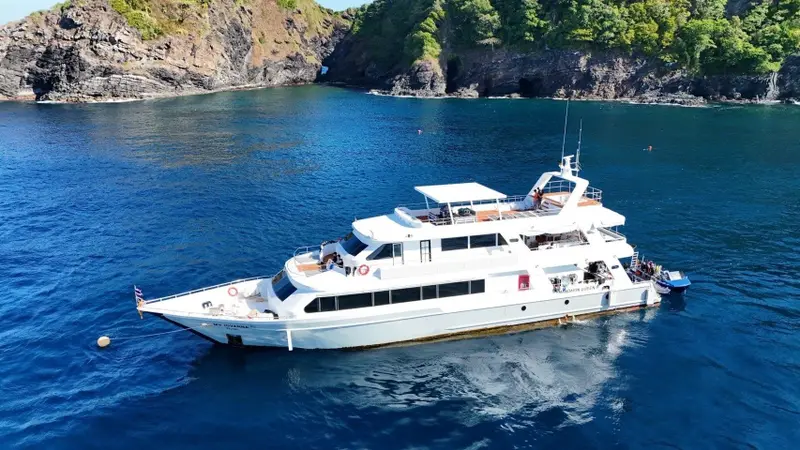
Mandarin Queen 9
Thailand
26 guests38 m
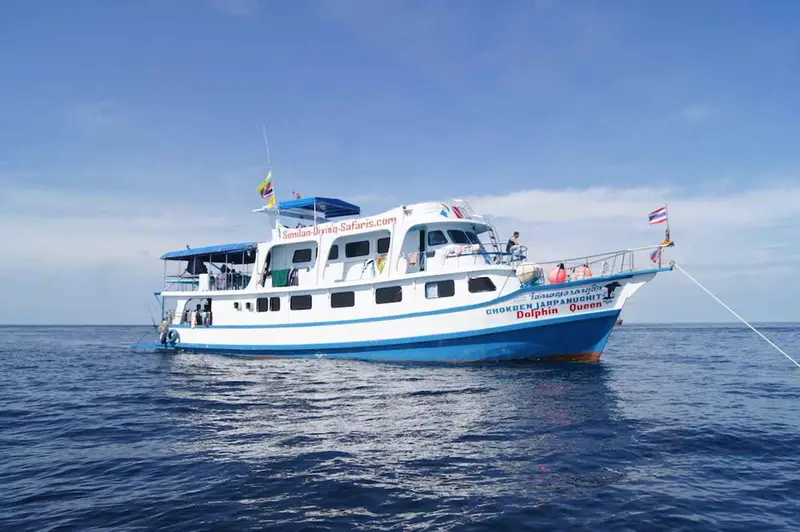
Dolphin Queen
Thailand
20 guests24 m
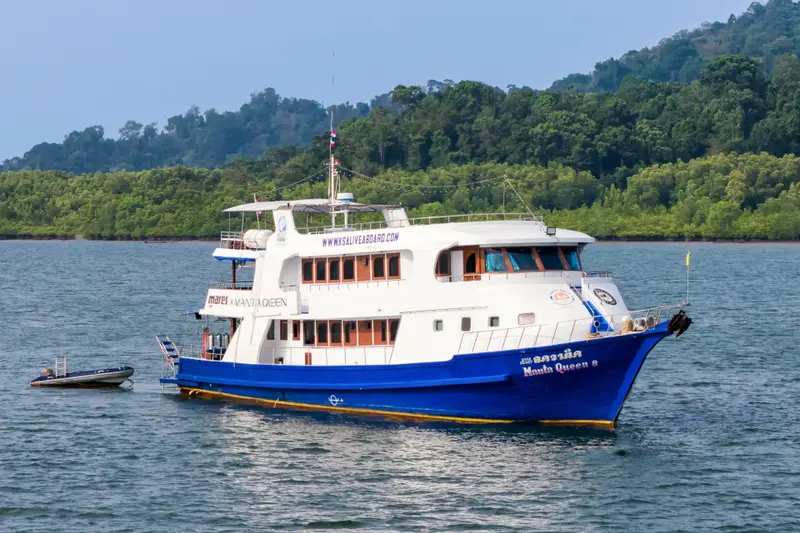
Manta Queen 8
Thailand
24 guests
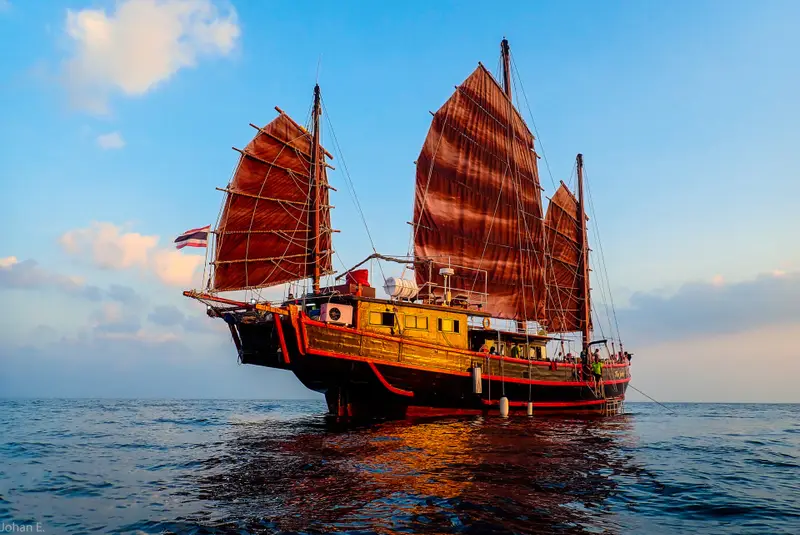
The Junk
Thailand
18 guests33 m
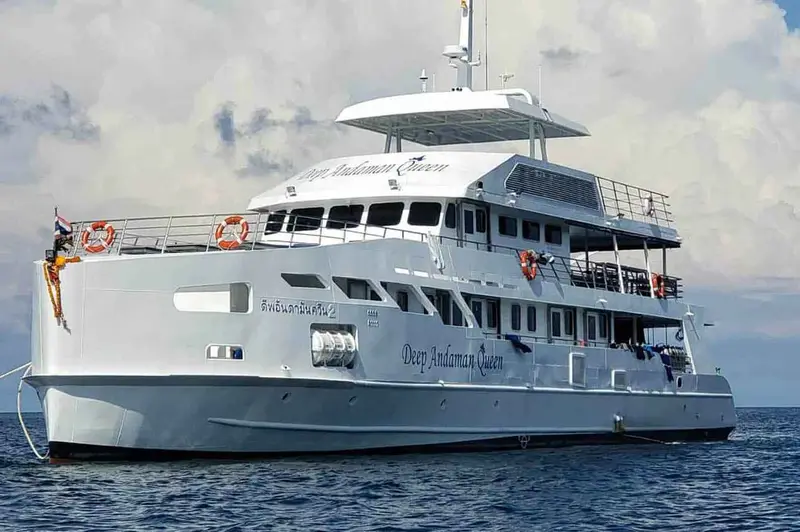
Deep Andaman Queen
Thailand
23 guests31 m
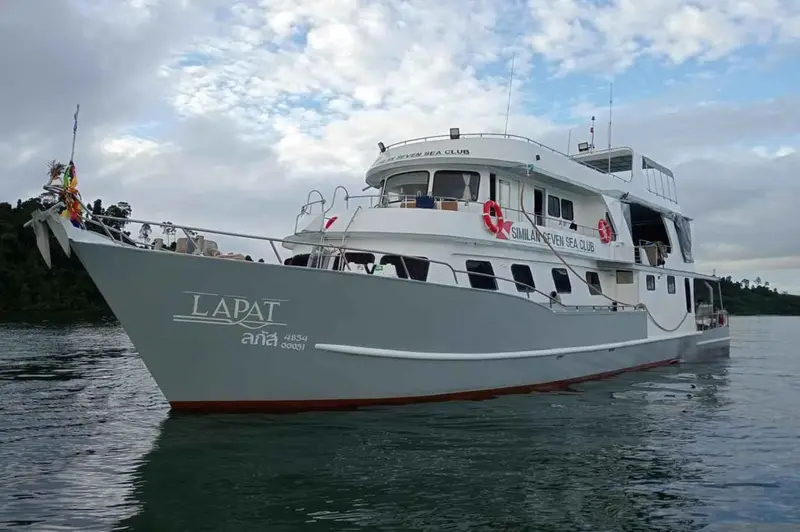
Lapat
Thailand
16 guests24 m
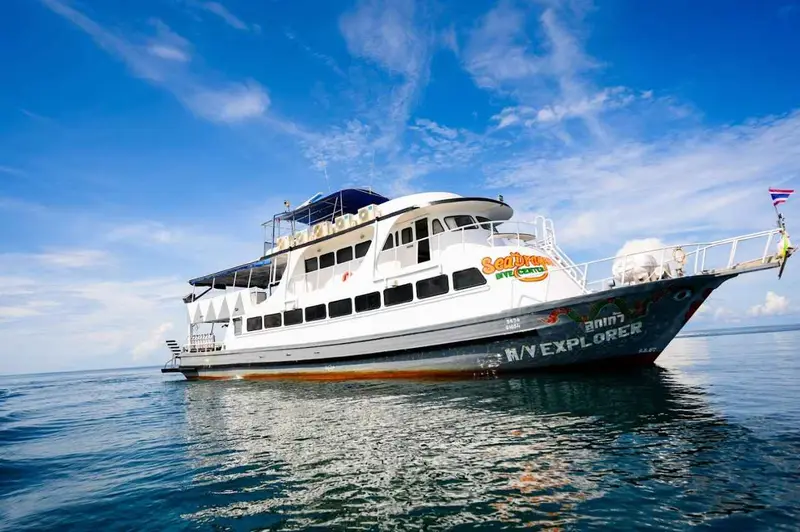
Explorer
Thailand
16 guests25 m
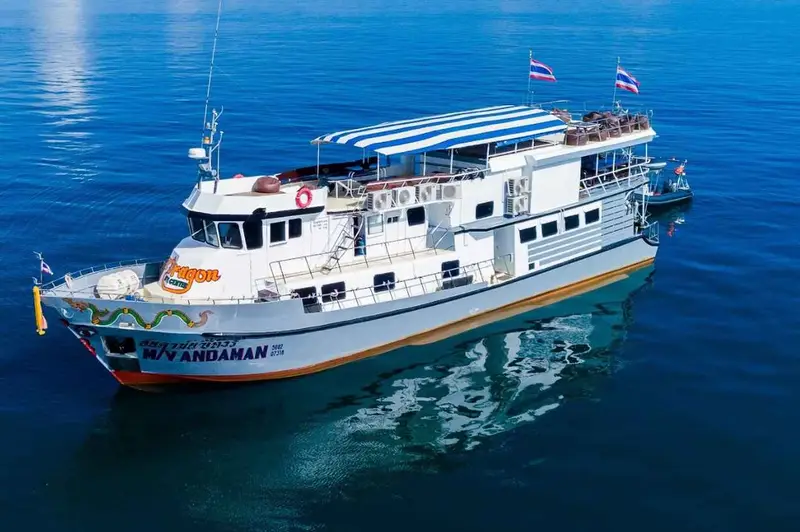
Andaman
Thailand
20 guests26 m
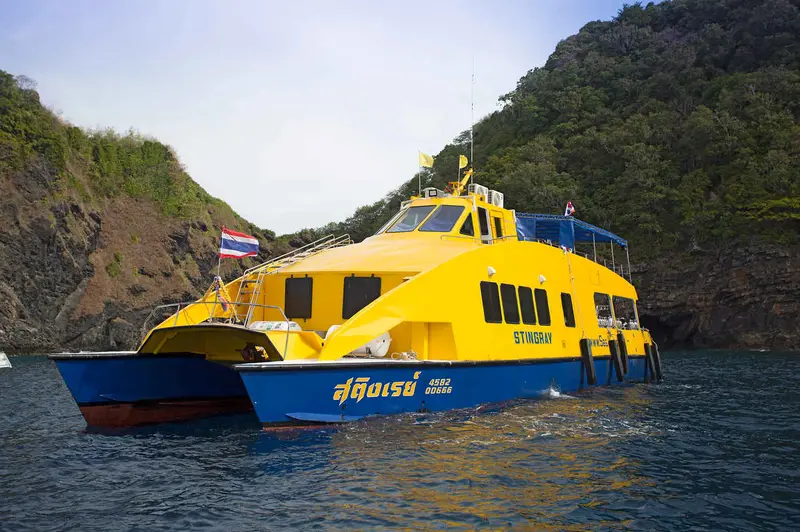
Stingray
Thailand
8 guests24 m
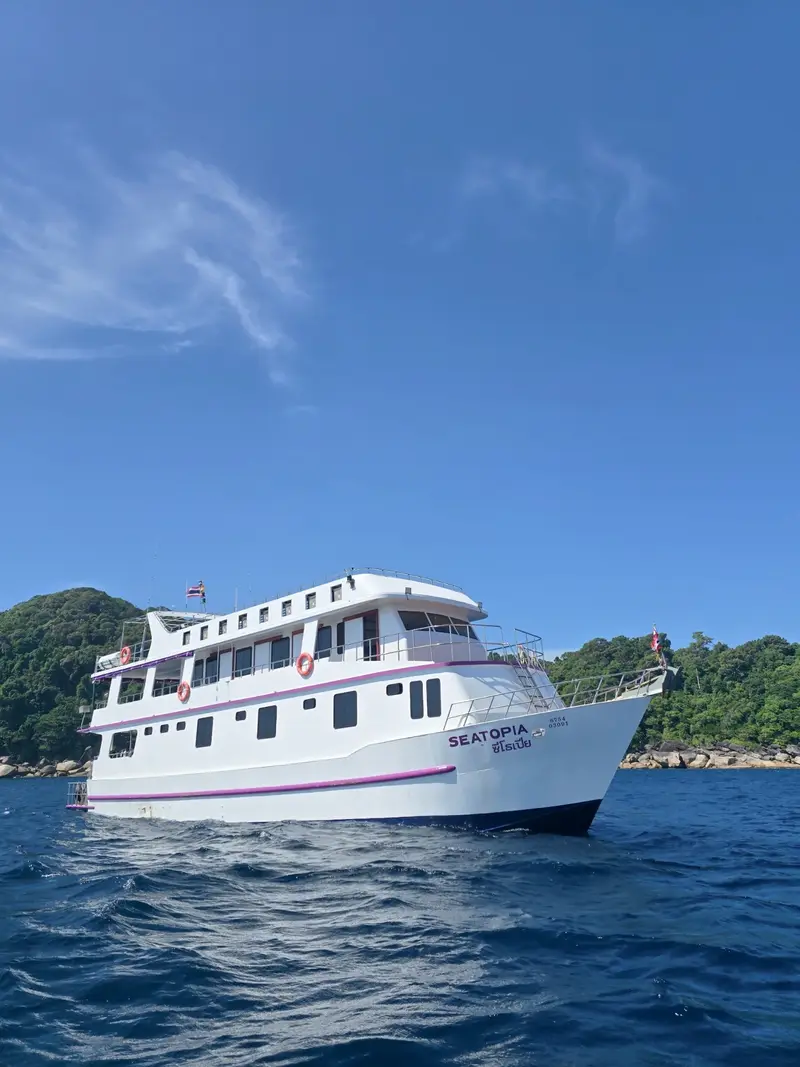
Seatopia
Thailand
24 guests24 m
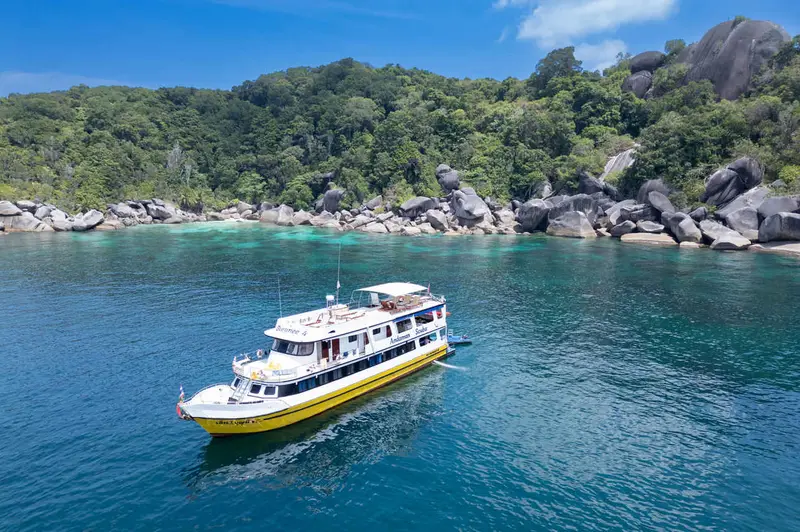
Bunmee 4
Thailand
20 guests29 m
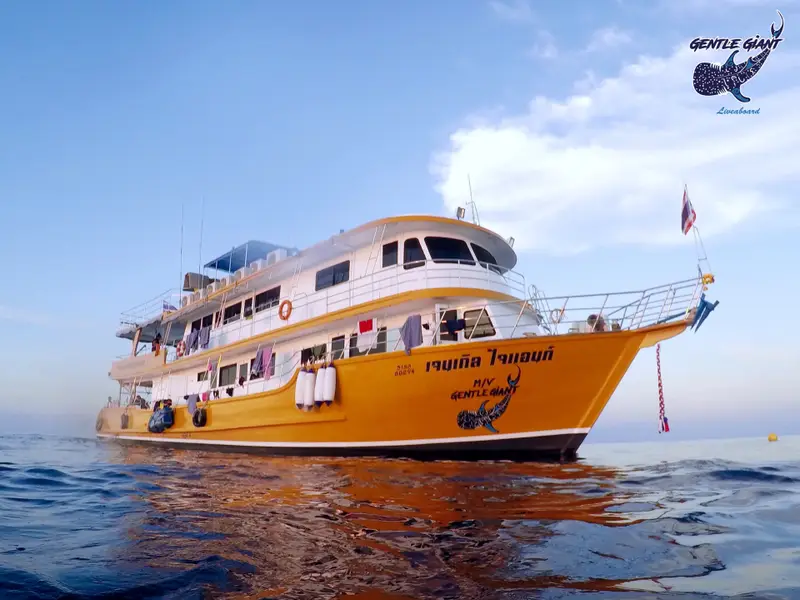
Gentle Giant
Thailand
20 guests27 m
Dive sites similar to Koh Tao — White Rock
Same character, same waters, six more sites divers love for the exact same reasons.Compare seasons, access and liveaboard routes, then pick the site that fits your trip best.
© EsriMaxar, Earthstar, GIS
Anemone Reef
Thailand
Anemone Reef, locally known as "Hin Jom" or "submerged rock," is a significant limestone pinnacle entirely hidden beneath the Andaman Sea's surface.
- Suitable for
- Intermediate
- Current
- Ripping
- Access
- Liveaboard or dayboat
- Depth
- 5–26 m
- Theme
- Pinnacle / Wall
© EsriMaxar, Earthstar, GIS
Ang Thong, Wao Island
Thailand
Wao Island, nestled within the picturesque Ang Thong National Marine Park, is a captivating dive site characterized by its dramatic limestone formations and intricate underwater landscape.
- Suitable for
- Beginner
- Current
- Strong
- Access
- Liveaboard or dayboat
- Depth
- 3–20 m
- Theme
- Cave & cavern / Reef
© EsriMaxar, Earthstar, GIS
Beacon Reef
Thailand
Beacon Reef, sometimes referred to as Beacon Bay or Beacon Point, is a cherished dive site within Thailand's Similan Islands National Park.
- Suitable for
- Beginner
- Current
- Moderate
- Access
- Liveaboard or dayboat
- Depth
- 5–25 m
- Theme
- Reef / Wreck
© EsriMaxar, Earthstar, GIS
Breakfast Bend
Thailand
Breakfast Bend, also known as Three Trees, is a highly regarded dive site located along the eastern side of Similan Island No. 9, Koh Bangu.
- Suitable for
- Beginner
- Current
- Strong
- Access
- Liveaboard or dayboat
- Depth
- 5–25 m
- Theme
- Reef
© EsriMaxar, Earthstar, GIS
Christmas Point
Thailand
Christmas Point, located on Similan Island number 9 (Koh Ba-Ngu), stands out as one of the Similan Islands' most iconic dive sites.
- Suitable for
- Intermediate
- Current
- Strong
- Access
- Liveaboard or dayboat
- Depth
- 2–40 m
- Theme
- Pinnacle
© EsriMaxar, Earthstar, GIS
Chumphon Pinnacle
Thailand
Chumphon Pinnacle is a renowned deep dive site situated approximately 12 kilometers northwest of Koh Tao in the Gulf of Thailand.
- Suitable for
- Intermediate
- Current
- Strong
- Access
- Liveaboard or dayboat
- Depth
- 12–36 m
- Theme
- Pinnacle