About Kuramathi Reef
Kuramathi Reef is an expansive dive site situated on the western side of the Alif Alif Atoll, easily accessible by boat just beyond a sandbank. This unique location features four distinct zones: Ori Faru, Three Palms, Bodu Gaa, and Kuramathi Caves. Its topography is characterized by spectacular coral formations, broad underwater overhangs, and two main swim-through caverns, making it a compelling destination for various diving levels. Depth profiles range from a vibrant shallow reef top to deeper cave systems, with one cavern at 18 to 20 meters and another extending from 28 to 30 meters. These varied environments support an exceptionally rich marine ecosystem. While the caves and overhangs are a primary draw, the surrounding reef bursts with life, hosting families of rays, diverse shark species, and intricate macro life. Visibility here is generally excellent, typically ranging from 15 to 30 meters, allowing clear views of the intricate structures and marine inhabitants. Currents can vary from moderate to strong, particularly near the deeper sections and cave entrances, attracting a rich array of pelagic life. Divers need strong buoyancy control for navigating the overhead environments and should be prepared for drift diving conditions, making it an engaging experience for those seeking adventure and diverse encounters.
Highlights
Broad underwater overhangsTwo distinct swim-through cavesSpectacular coral formationsAbundant shark and ray sightingsRich macro life varietyShallow reef top explorationMulti-zone reef system
Season calendar
Best months to dive here
Jan
Feb
Mar
Apr
May
Jun
Jul
Aug
Sep
Oct
Nov
Dec
Excellent
Good
Dive site facts: Kuramathi Reef
- Depth
- 18–30 m
- Current
- Moderate to strong
- Visibility
- 15–30 m
- Water temperature
- 27–30°C
- Entry
- Boat
- Level
- Advanced recommended, buoyancy control crucial
- Dive type
- Cave, overhang, reef
- Night dive
- Possible
- Region / port
- North Ari Atoll
- Coordinates
- 4.2300° N, 72.9900° E
Conditions & Currents
Currents at Kuramathi Reef are dynamic, ranging from moderate to strong, especially pronounced in deeper sections and around the entrances to the swim-through caverns. These currents are a vital force, enriching the ecosystem and attracting numerous pelagic species. Divers should be proficient in buoyancy control and prepared for drift diving techniques, particularly when entering or exiting overhead environments. Visibility typically spans 15 to 30 meters but can experience fluctuations due to plankton blooms, which coincidentally enhance feeding opportunities for larger marine life. Entry is exclusively by boat, with dive guides providing comprehensive briefings on the day's specific current patterns and the optimal approach for the dive. Awareness of current direction and strength is key to a safe and enjoyable dive experience here.
Marine life & sighting chances
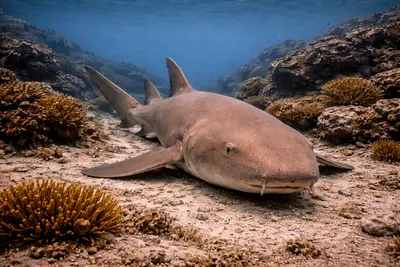
Nurse Shark
Year-round · common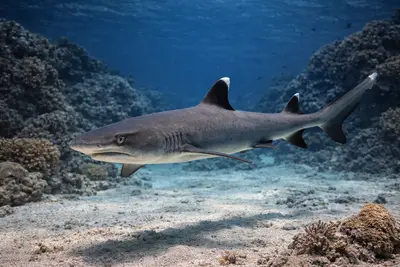
Whitetip Reef Shark
Year-round · common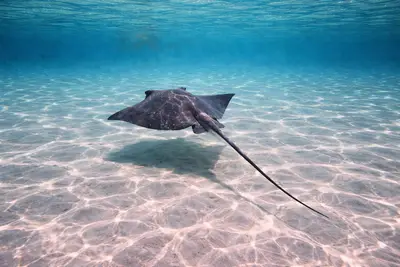
Stingray
Year-round · common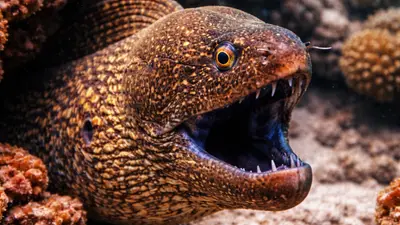
Moray Eel
Year-round · common
Grey Reef Shark
Year-round · occasional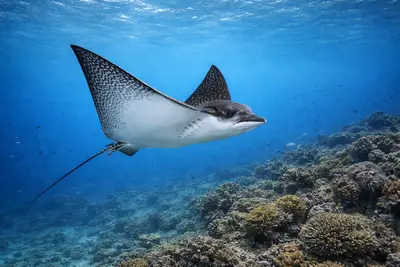
Eagle Ray
Year-round · occasional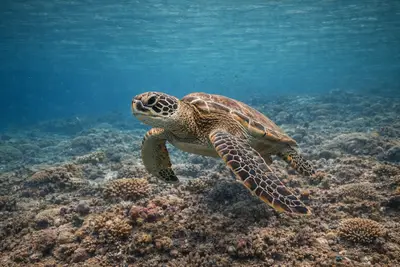
Turtle
Year-round · occasional
Barracuda
Year-round · occasional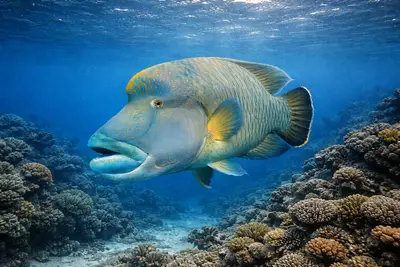
Napoleon Wrasse
Year-round · occasional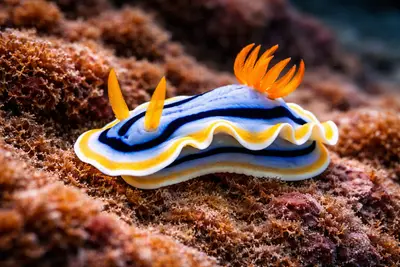
Nudibranch
Year-round · occasionalDive profile & how the dive runs
Dives at Kuramathi Reef commence with a boat entry, typically downstream from a sandbank, ensuring a smooth drift. Upon descending, divers first encounter the broad overhangs and a vibrant shallow reef top. The dive usually progresses to explore one of the two main swim-through caverns: an upper cave situated between 18 to 20 meters, or a deeper one found around 28 to 30 meters. Navigating these overhead environments demands excellent buoyancy control and meticulous air management. The route involves observing the diverse marine life sheltering within the caves and along the reef walls. The turn point is determined by individual air consumption and dive computer limits. Safety stops are then conducted in the shallower sections of the reef, offering additional opportunities to explore the healthy coral gardens and observe reef fish before surfacing for boat pick-up.
Underwater photography
Kuramathi Caves offers exceptional opportunities for underwater photography, particularly for wide-angle shots that capture the dramatic scale of its swim-throughs and expansive overhangs. A wide-angle lens is ideal for showcasing the impressive formations and the schools of fish that inhabit them. For capturing the smaller inhabitants, macro enthusiasts will find subjects like nudibranchs and moray eels on the reef walls and within the overhangs, necessitating a macro lens. The use of strobes is crucial to introduce light into the darker areas of the caves and to bring out the vibrant colors of the corals and reef life, ensuring well-exposed and vivid images against the natural light of the open water.
Combine with nearby dive sites
- Madivaru Corner
Madivaru Corner, located in the Rasdhoo Atoll, also known as North Ari Atoll (Alif Alif Atoll), stands out as a premier dive destination in…
- Manta Point
Manta Point is a world-renowned dive site located off the southern shore of Nusa Penida, famous as a cleaning station for oceanic manta…
- Rasdhoo Channel
- Madivaru Reef
Madivaru Corner, located in the Rasdhoo Atoll, also known as North Ari Atoll (Alif Alif Atoll), stands out as a premier dive destination in…
- Maaya Thila
Maaya Thila, a protected Marine Reserve located in the North Ari Atoll of the Maldives, is a prominent pinnacle dive site.
Getting there & logistics
Access to Kuramathi Reef typically involves flying into Velana International Airport (MLE) near Malé, the capital of the Maldives. From there, a speedboat transfer of approximately 70 minutes transports divers to Rasdhoo, the capital of Alif Alif Atoll. Many dive operators in Rasdhoo offer day trips to Kuramathi Reef, which is just a short boat ride past a sandbank. Diving typically involves two morning dives, starting around 8:00 AM, with afternoon or night dives available as extras. There are no specific park fees mentioned for this site, but permits are required for entry into the Maldives, along with a valid passport. It is advisable to book accommodations and dive packages in advance, especially during peak season, to secure spots with preferred operators.
Safety & environment
For diving at Kuramathi Reef, comprehensive dive insurance, including medical evacuation coverage, is mandatory due to the remote nature of the Maldives. The nearest recompression chamber is located in Bandos Island, necessitating immediate and well-coordinated evacuation procedures in case of a dive emergency. Divers must adhere to the Maldivian diving regulations, which include a maximum depth limit of 30 meters, the prohibition of gloves, and mandatory use of a dive computer and surface marker buoy. Given the potential for moderate to strong currents and overhead environments, excellent buoyancy control and careful air management are critical. Always follow your guide's instructions, especially regarding entry, exit, and navigation within the caverns, to ensure a safe and enjoyable dive.
Who it suits — and who it doesn't
Suited for
- Advanced divers comfortable with currents
- Divers seeking cave and overhang exploration
- Photographers interested in wide-angle and macro opportunities
- Enthusiasts of pelagic encounters and diverse reef life
- Divers with excellent buoyancy control
Less suited for
- Beginner divers without current experience
- Divers uncomfortable in overhead environments
- Those with poor buoyancy control
- Divers prone to ear equalization issues at depth
- Individuals not carrying appropriate dive insurance
FAQ
Kuramathi Reef FAQ
What kind of marine life can I expect to see at Kuramathi Reef?
Kuramathi Reef is rich with marine diversity. You can commonly encounter nurse sharks, whitetip reef sharks, stingrays, and moray eels. Occasional sightings include grey reef sharks, eagle rays, turtles, barracudas, Napoleon wrasse, and various nudibranchs. The varied topography supports both larger pelagic species and intricate macro life.
What are the typical diving conditions at Kuramathi Reef?
Diving conditions typically feature water temperatures between 27-30°C and visibility ranging from 15-30 meters. Currents can vary from moderate to strong, particularly in deeper areas and around the cave entrances, which makes it suitable for drift diving. The site is boat-accessible, and dive guides provide crucial briefings on daily conditions.
Are there any specific challenges for diving Kuramathi Reef?
The primary challenges at Kuramathi Reef include navigating potentially strong currents and managing buoyancy within the overhead environments of its caves and overhangs. Divers need strong buoyancy control and careful air management, especially when exploring the deeper swim-throughs. It is recommended for advanced divers or those with good current experience.
Can beginners dive at Kuramathi Reef?
While the site is generally recommended for advanced divers due to currents and overhead environments, shallower sections of the reef can be suitable for guided excursions. Beginners should have excellent buoyancy control and consider diving with an experienced guide in less challenging areas before attempting the deeper caves or stronger current zones.
What is the best time of year to visit Kuramathi Reef?
The best time to dive Kuramathi Reef is during the dry northeast monsoon season, from November to April. This period offers calm seas, minimal rainfall, and excellent visibility, often reaching up to 40 meters. This makes for ideal conditions to explore the reef's complex structures and abundant marine life.
How do liveaboards typically incorporate Kuramathi Reef into their itineraries?
Kuramathi Reef, located in the North Ari Atoll, is a popular stop for liveaboards exploring the central Maldives. It's often combined with other renowned sites in the Ari Atoll. Liveaboard itineraries allow divers to experience both day and potential night dives at this site, maximizing exposure to its diverse topography and marine encounters, particularly during favorable current conditions.
Why dive Kuramathi Reef from a liveaboard?
Kuramathi Reef is one of Maldives's signature dive sites. A liveaboard sleeps you on the water and puts you in the water for three to four guided dives per day, including dawn and night dives that day-boat operators rarely offer. You skip the daily commute back to port and reach quieter, less-crowded sites in the same region on a single trip.
Below are the liveaboards that include Kuramathi Reef on their Maldives itineraries.
Liveaboards diving Kuramathi Reef
These liveaboards may visit Kuramathi Reef on selected itineraries — the exact dive sites depend on departure, weather and conditions.
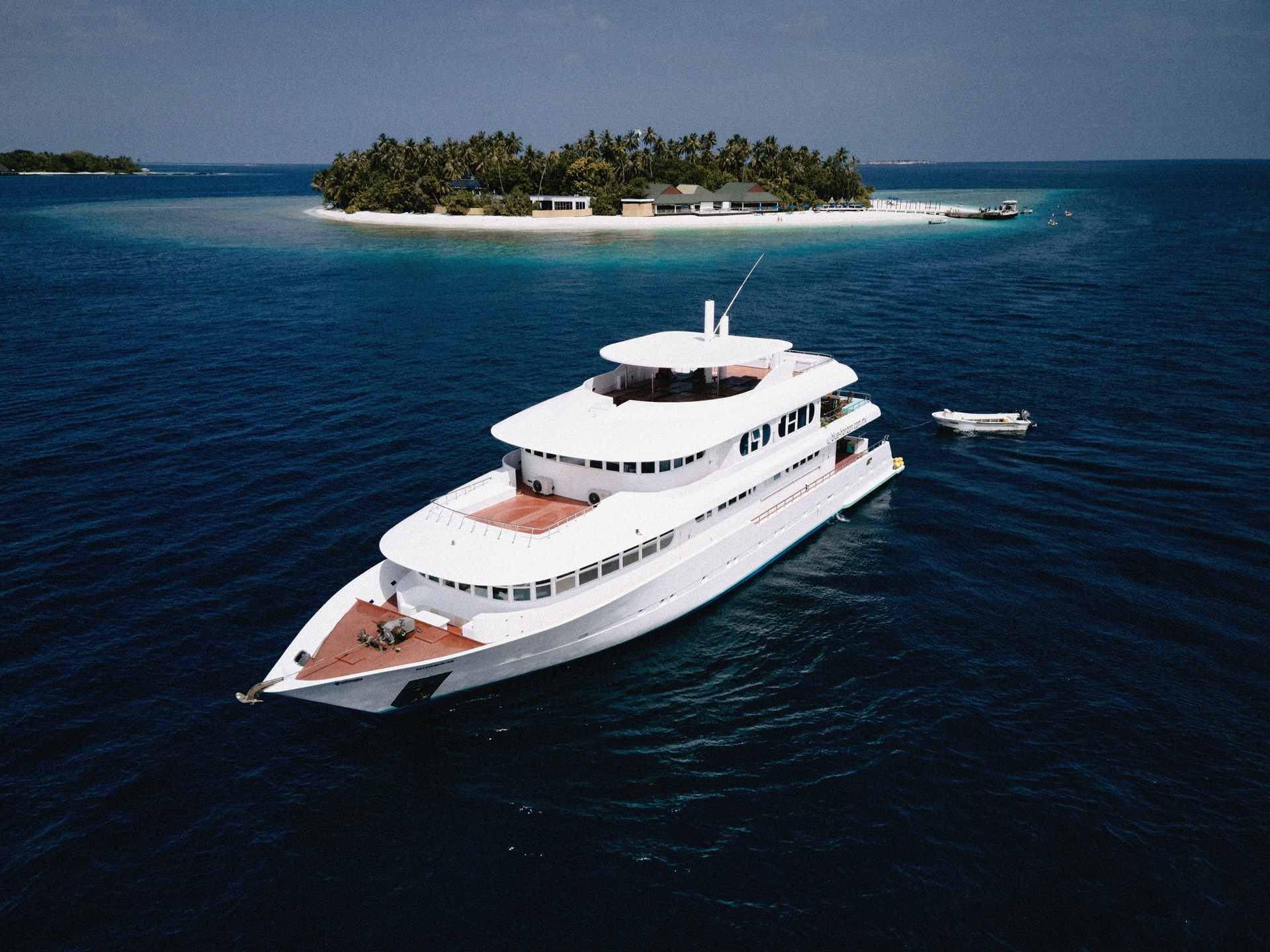
Horizon III
Maldives
25 guests
$204/day
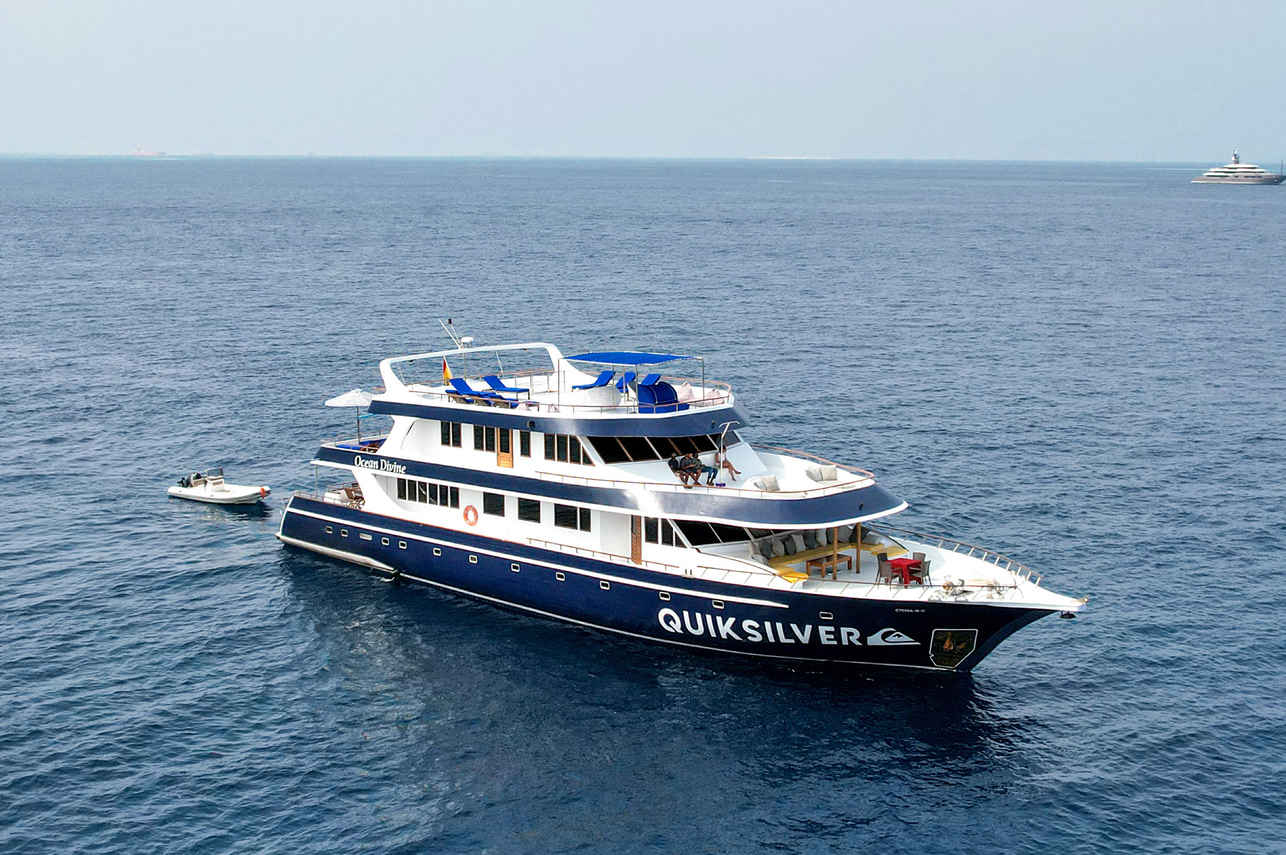
Ocean Divine
Maldives
16 guests33.528 m
$287/day
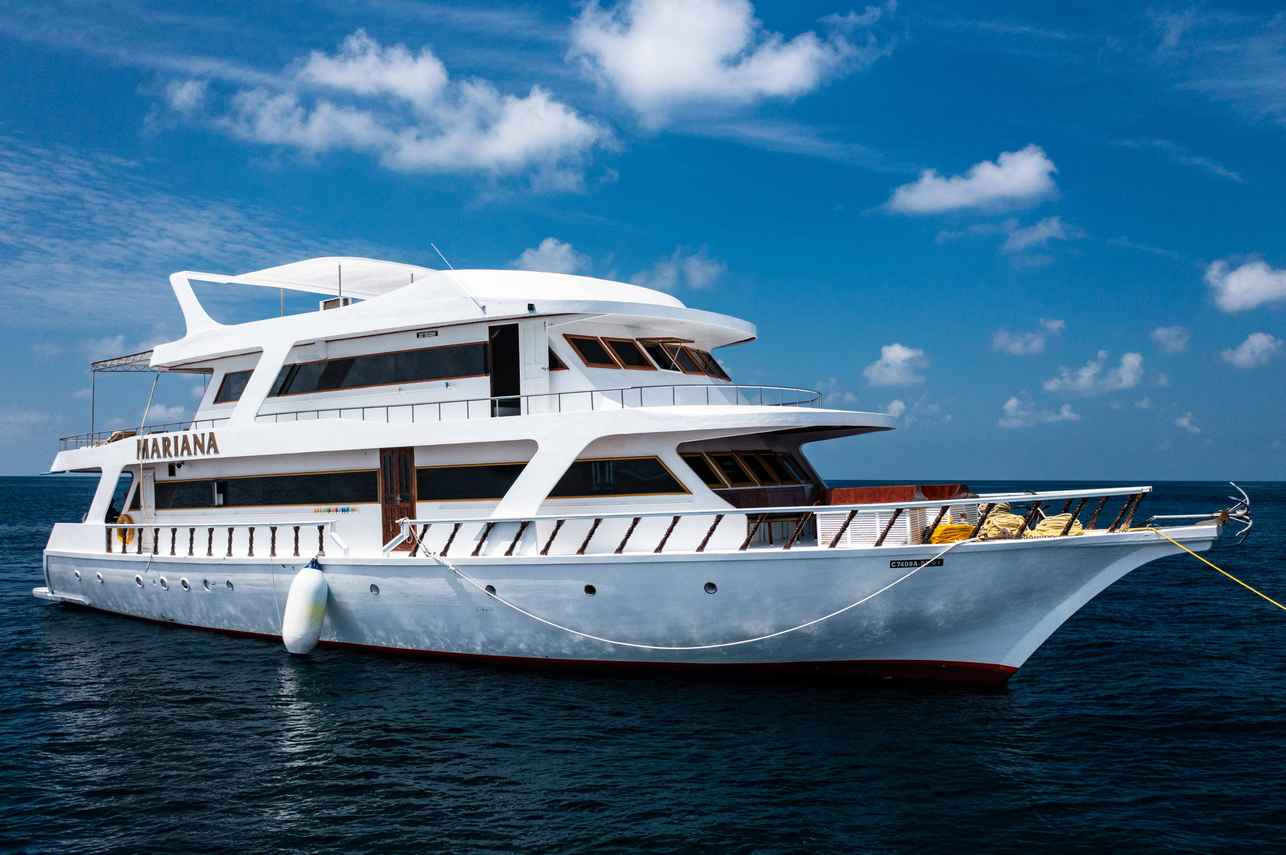
EcoPro Mariana
Maldives
16 guests30 m
$236/day
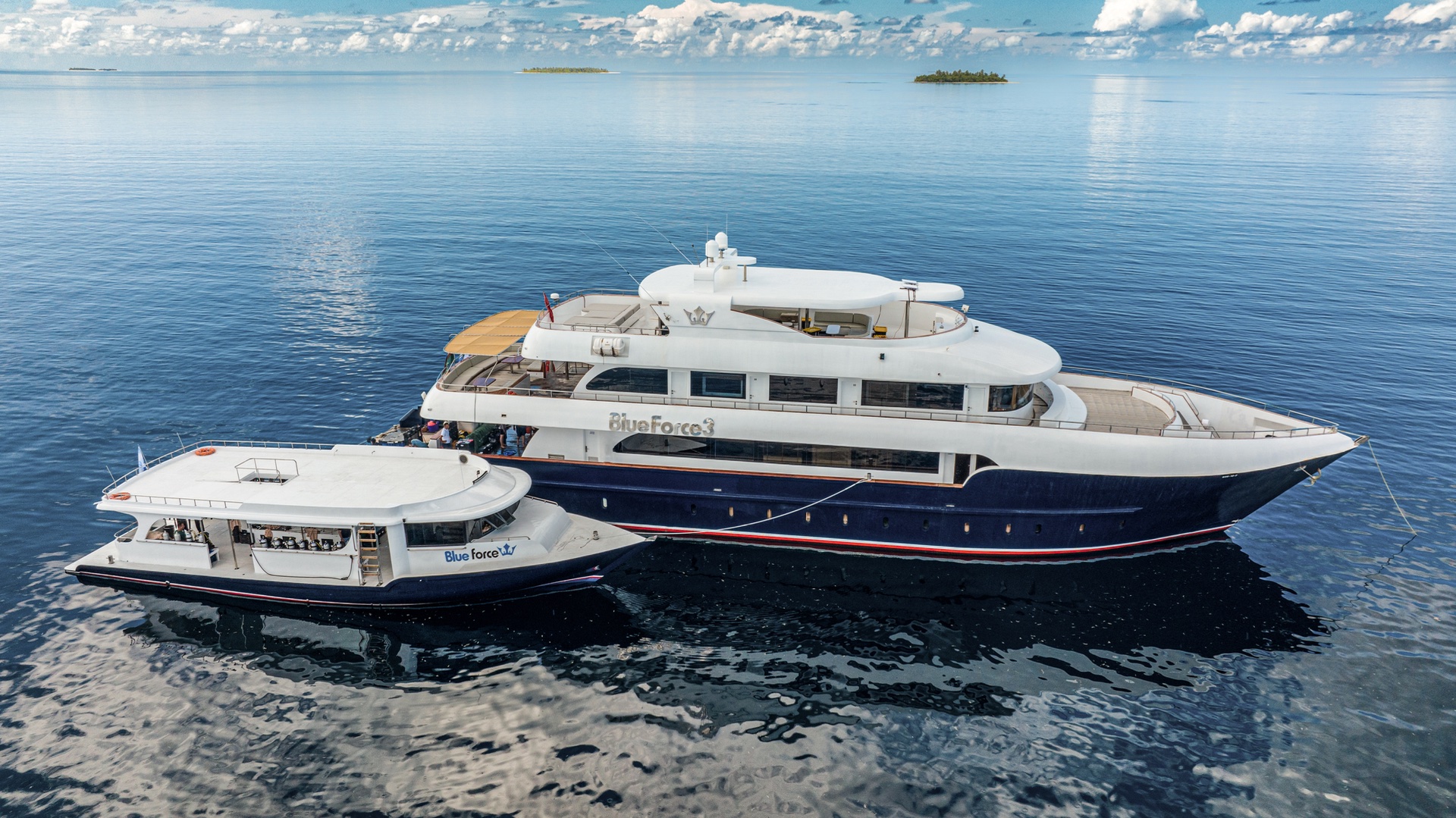
Maldives Blue Force 3
Maldives
26 guests42 m
$236/day
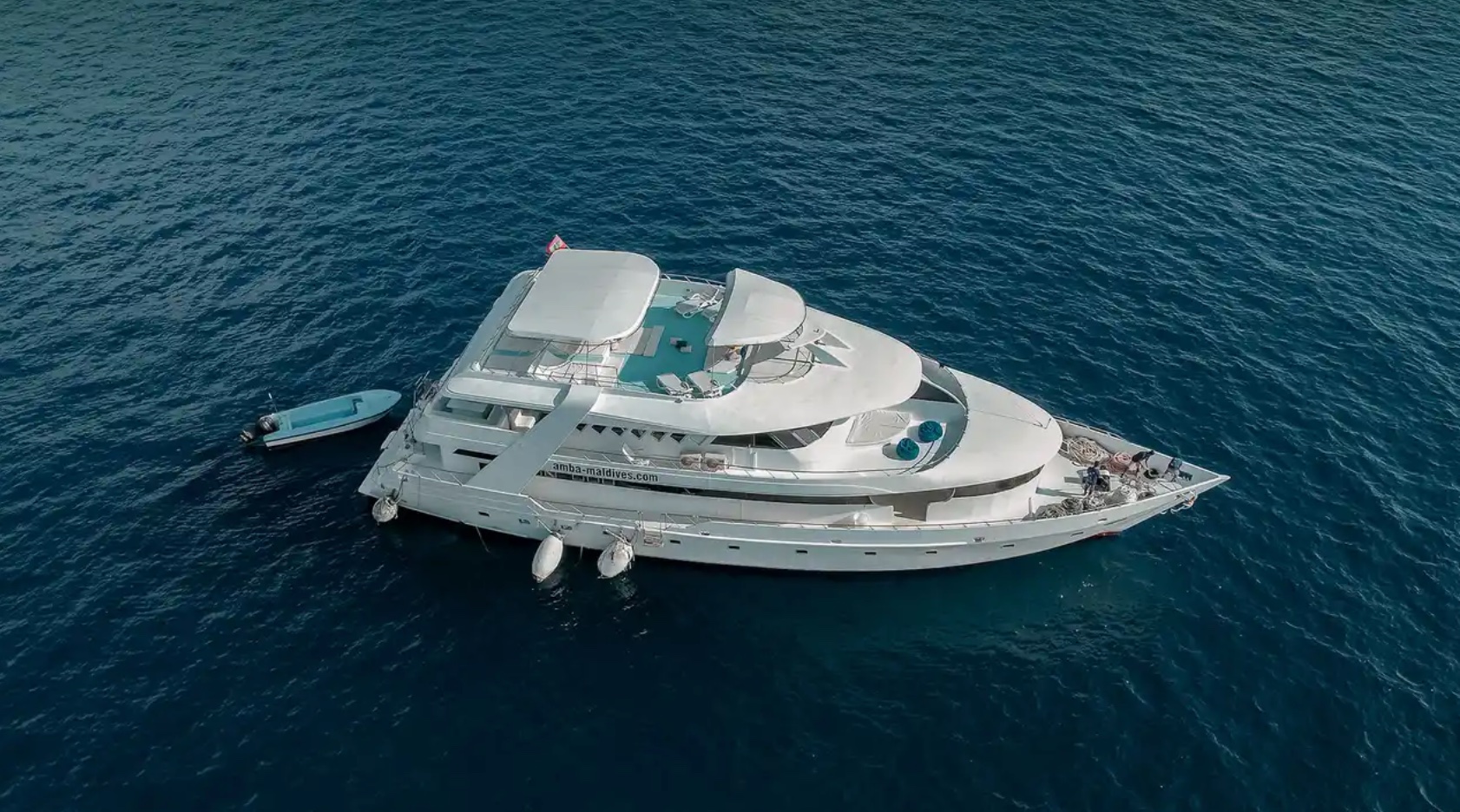
Amba
Maldives
20 guests
$178/day
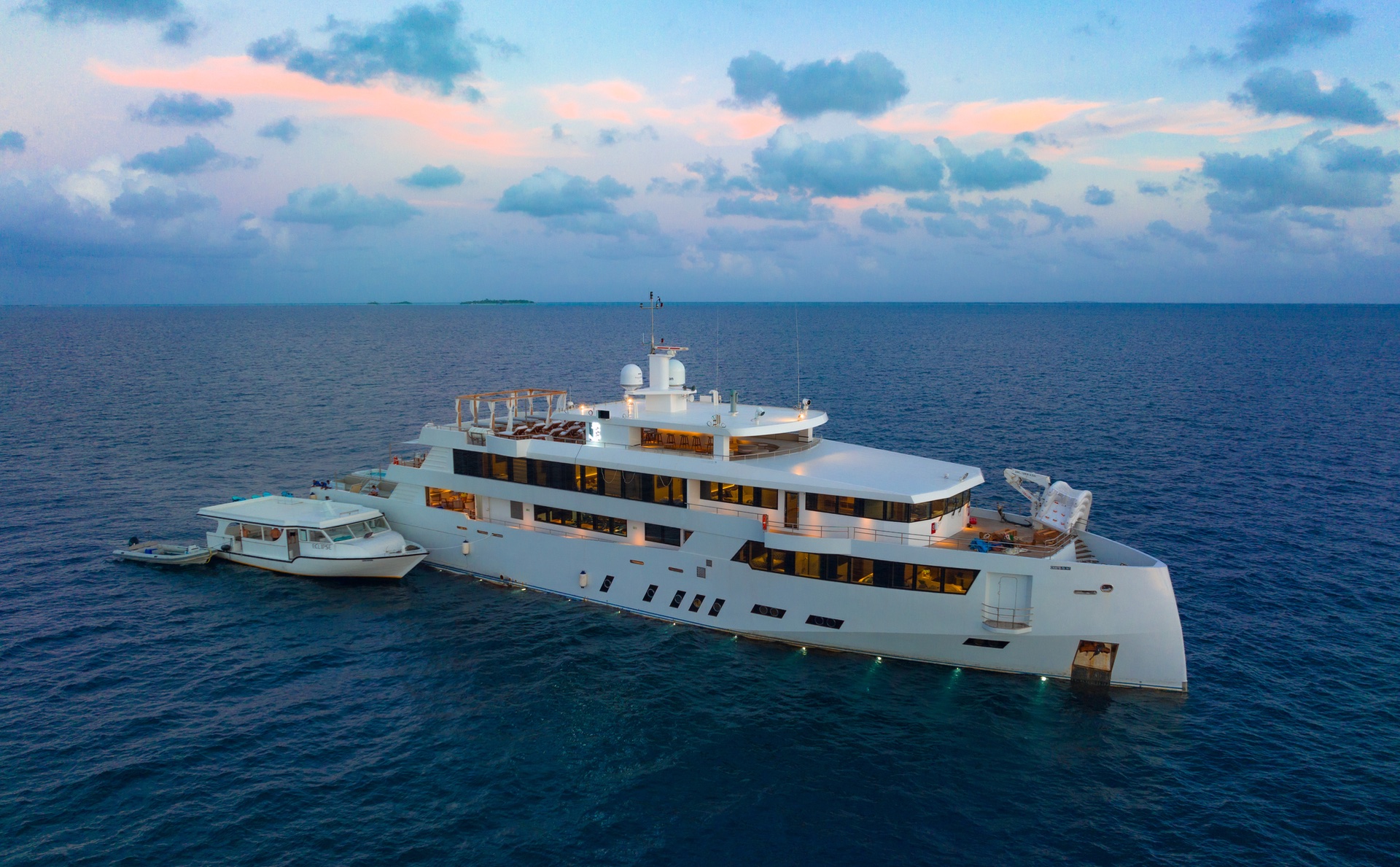
White Pearl
Maldives
26 guests
$387/day
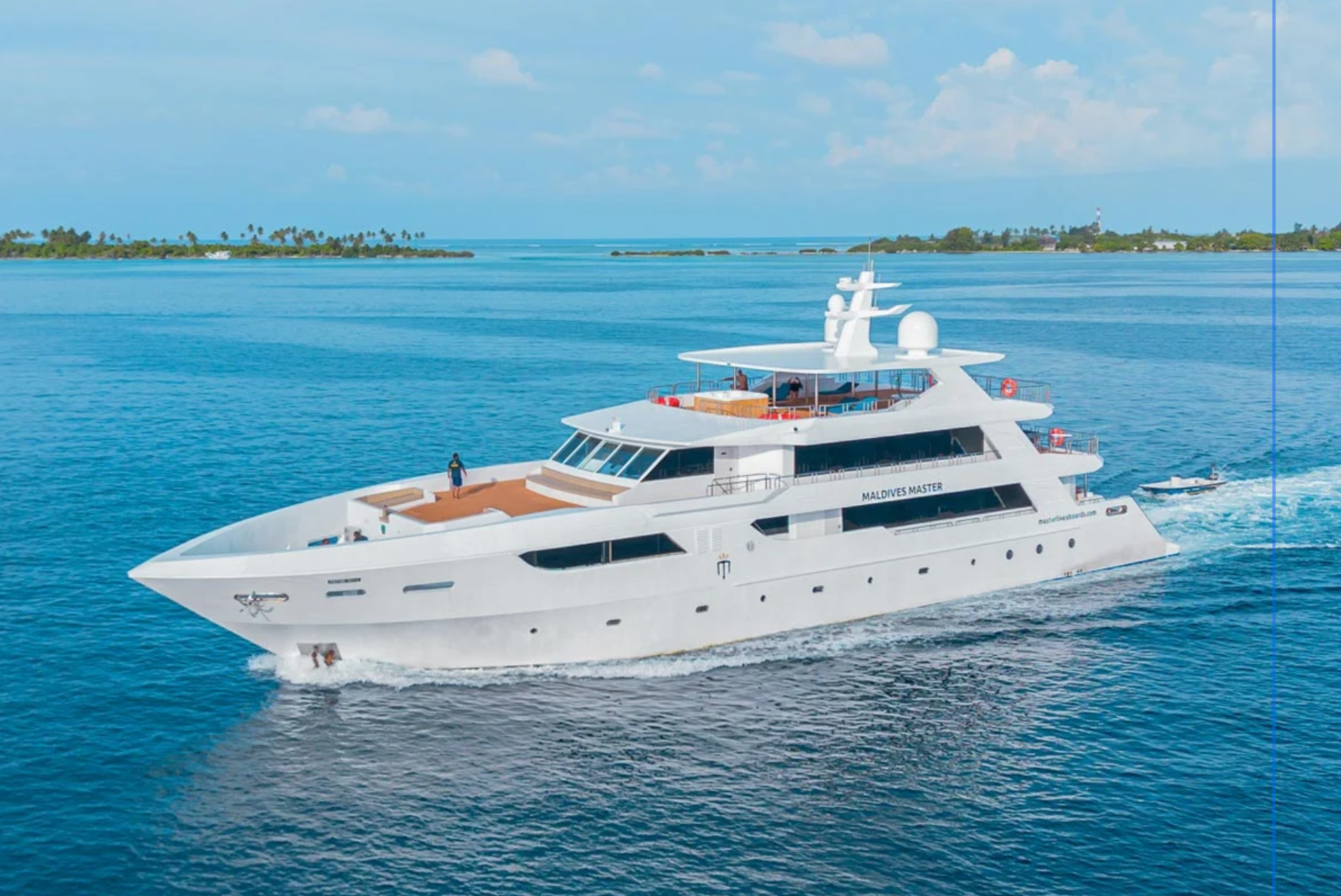
Maldives Master
Maldives
26 guests
$207/day
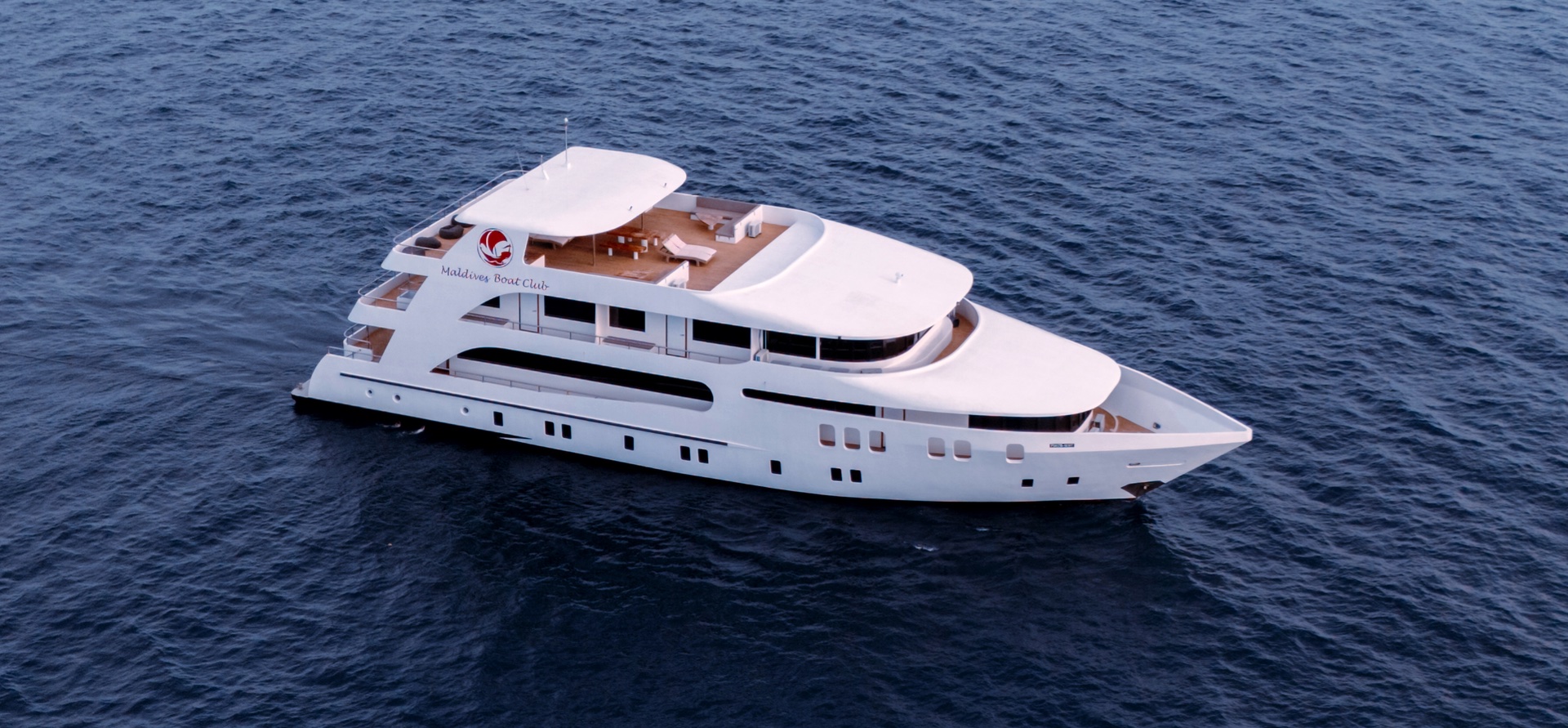
Adora
Maldives
22 guests
$287/day
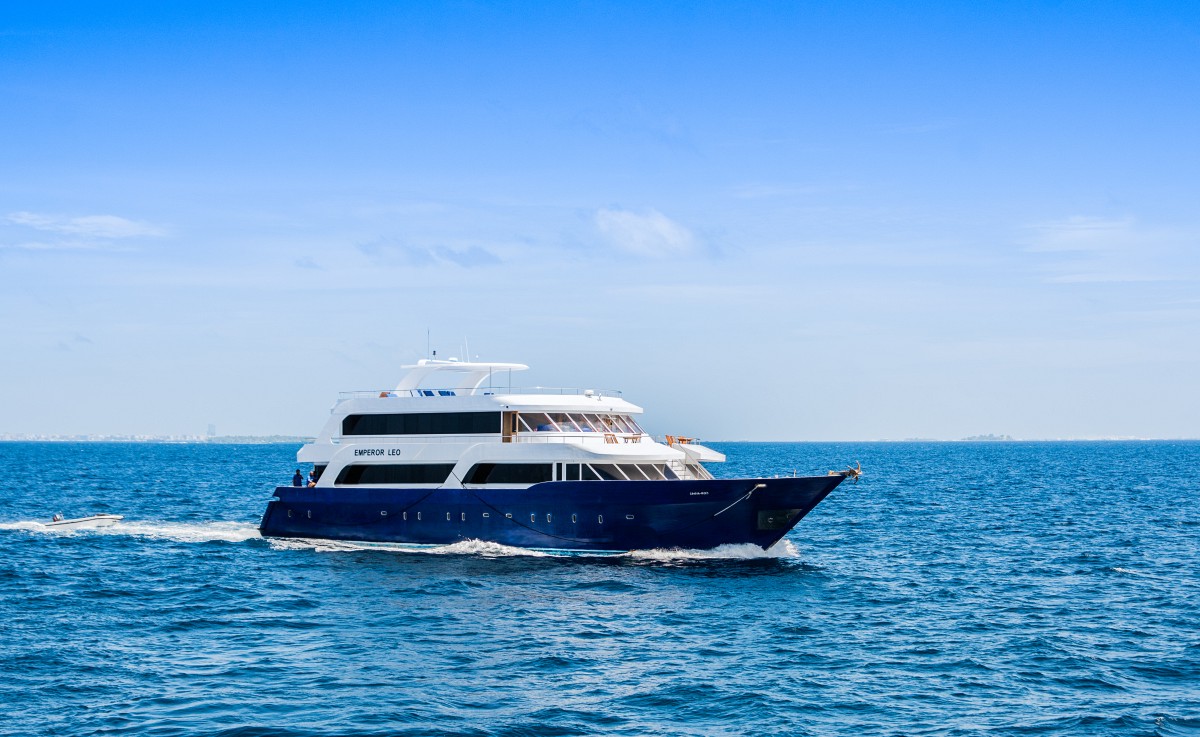
Emperor Leo
Maldives
24 guests35.1 m
$339/day
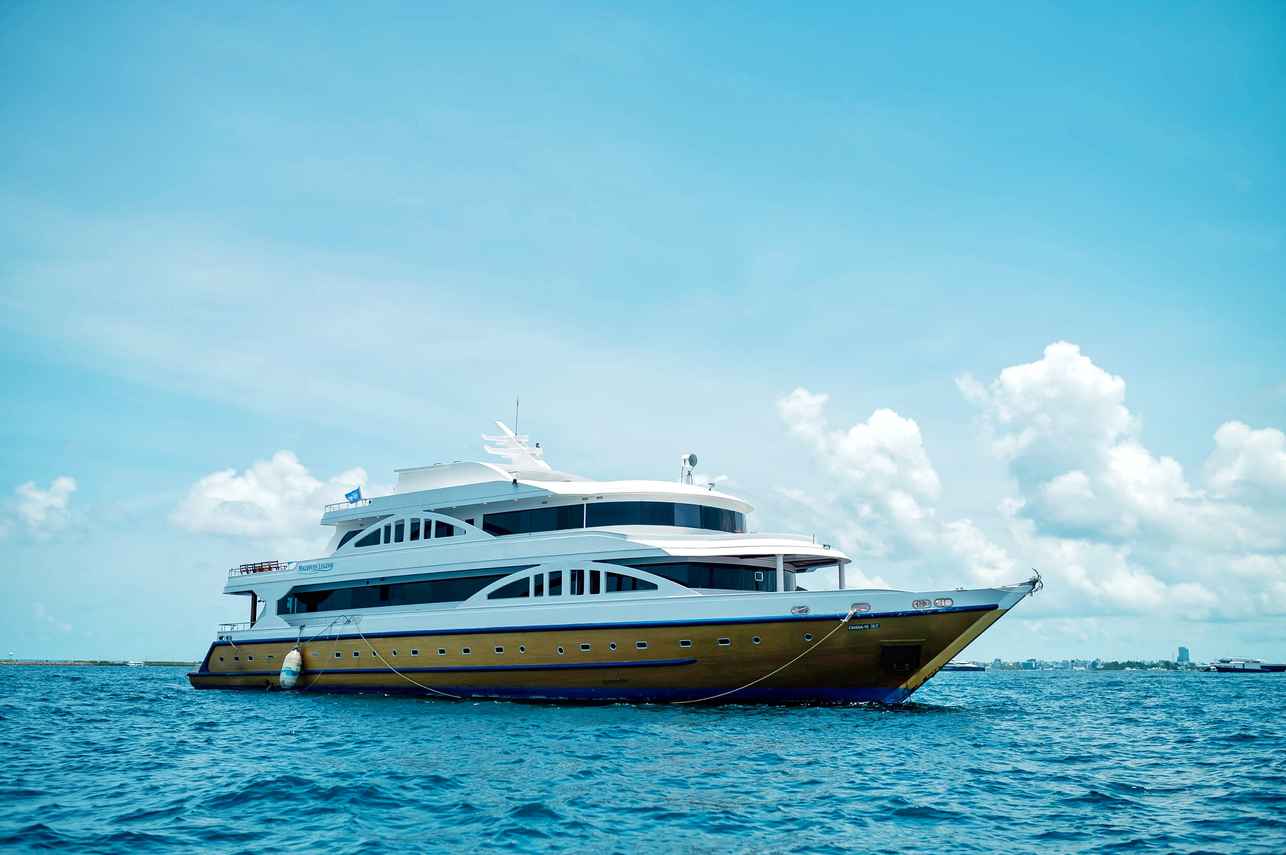
Maldives Legend Zen
Maldives
24 guests41 m
$316/day
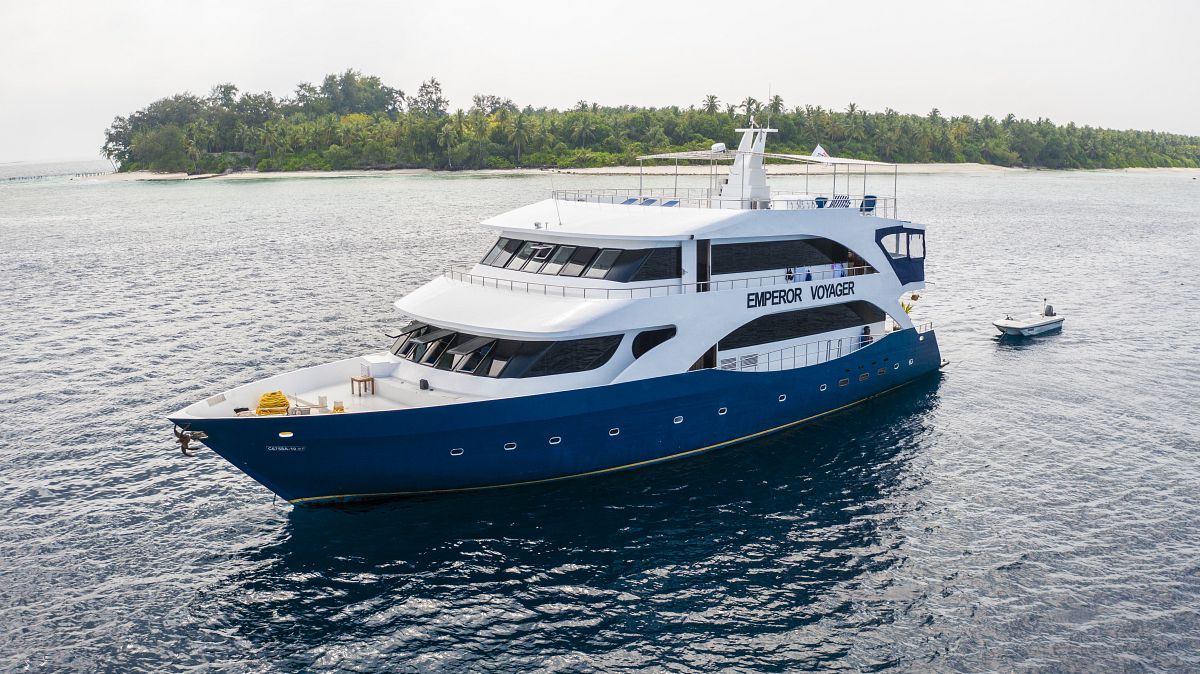
Emperor Voyager
Maldives
20 guests29.9 m
$332/day
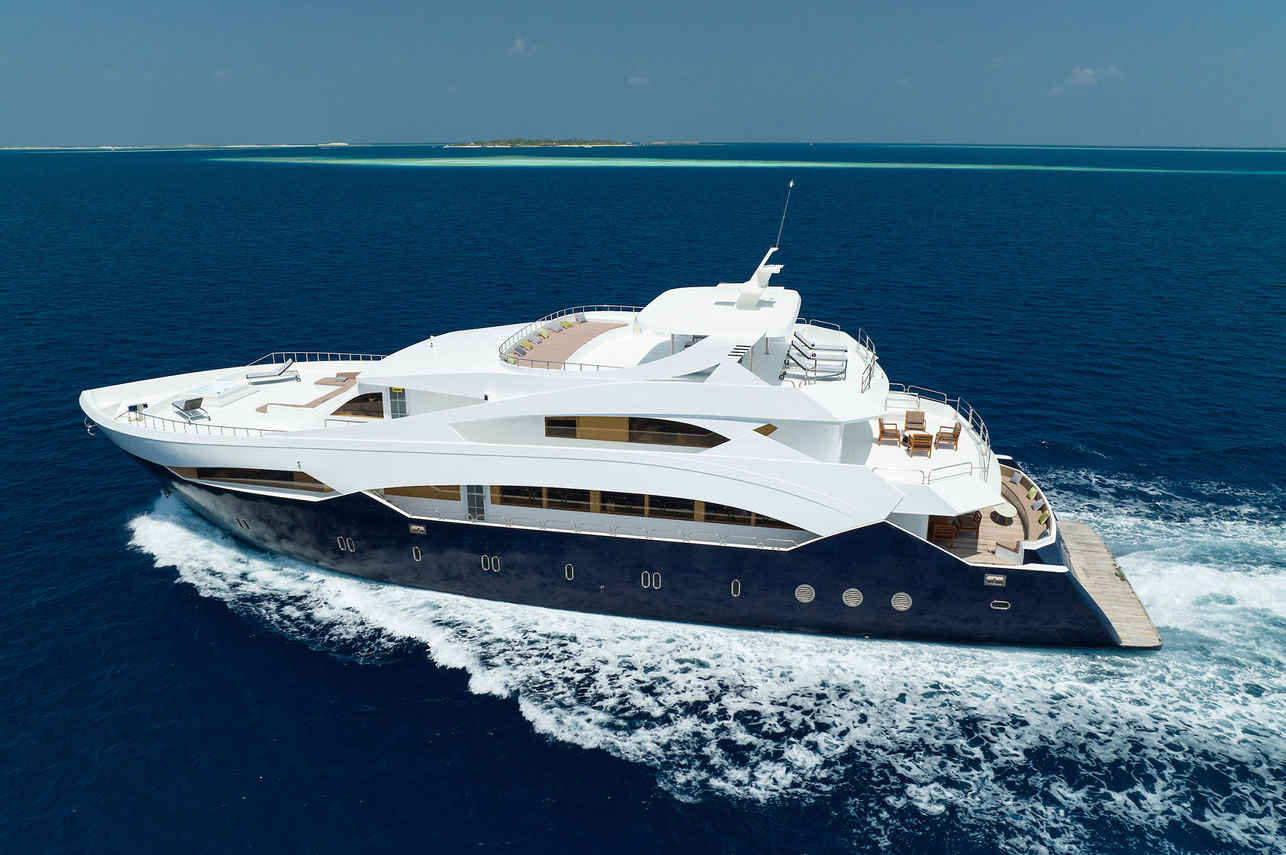
Felicity
Maldives
26 guests41 m
$229/day
Dive sites similar to Kuramathi Reef
Same character, same waters — six more sites divers love for the exact same reasons.Compare seasons, access and liveaboard routes — then pick the site that fits your trip best.
© Esri — Maxar, Earthstar, GIS
Kudimaa Wreck
Maldives
The Kudimaa Wreck is a compelling dive site in the Maldives, offering a fascinating artificial reef environment.
- Suitable for
- Advanced
- Current
- Moderate
- Access
- Liveaboard only
- Depth
- ≤ 30 m
- Theme
- Wreck / Reef
© Esri — Maxar, Earthstar, GIS
Fushi Kandu (Lhaviyani)
Maldives
Fushi Kandu, located in the Lhaviyani Atoll, is an exciting channel dive site in the Maldives, offering some of the most dynamic drift diving experiences in the Indian Ocean.
- Suitable for
- Advanced
- Current
- Strong
- Access
- Liveaboard or dayboat
- Depth
- 15–35 m
- Theme
- Channel / Drift
© Esri — Maxar, Earthstar, GIS
Gan Corner (Addu Atoll)
Maldives
Gan Corner, locally known as Gan Kandu, is a prominent channel dive site nestled in the southwestern part of Addu (Seenu) Atoll, situated conveniently near the islands of Gan and Feydhoo.
- Suitable for
- Advanced
- Current
- Strong
- Access
- Liveaboard or dayboat
- Depth
- 5–40 m
- Theme
- Channel / Drift
© Esri — Maxar, Earthstar, GIS
Hithadhoo Corner (Addu)
Maldives
Hithadhoo Corner, situated in Addu Atoll, offers a unique opportunity for exceptional diving and snorkeling.
- Suitable for
- Advanced
- Current
- Moderate
- Access
- Liveaboard or dayboat
- Depth
- 3–30 m
- Theme
- Channel / Drift
© Esri — Maxar, Earthstar, GIS
Guraidhoo Corner
Maldives
Guraidhoo Corner, situated at the southern tip of Guraidhoo Island, stands as a marine protected area often celebrated for its exceptional fish diversity and photographic opportunities within the Maldives.
- Suitable for
- Advanced
- Current
- Ripping
- Access
- Liveaboard or dayboat
- Depth
- 5–35 m
- Theme
- Channel / Drift
© Esri — Maxar, Earthstar, GIS
Filitheyo Reef (Faafu)
Maldives
Filitheyo Reef, situated in the Faafu Atoll, offers an unspoiled underwater paradise, unique as the only tourist island in the atoll.
- Suitable for
- Beginner
- Current
- Strong
- Access
- Liveaboard or dayboat
- Depth
- 1–30 m
- Theme
- Reef / Wall