About Gold Chain Reef
Gold Chain Reef is a celebrated dive site located off the coast of Roatan, Honduras, within the vast Mesoamerican Barrier Reef System, the world's second-largest coral reef. This site is distinguished by its rich biodiversity and healthy coral ecosystems, contributing to Roatan's reputation as a premier diving destination. The reef's topography ranges from shallow coral gardens to dramatic drop-offs that lead into deeper waters, providing diverse environments for marine inhabitants. The underwater landscape features impressive coral walls, colorful sponges, and a dense cover of both hard and soft corals, making it a visually stunning location. The reef structure supports a wide array of marine species, from small reef fish to larger pelagic visitors, depending on the season. Its protected location and the consistent warm temperatures of the Caribbean Sea contribute to an ideal environment for marine life to flourish throughout the year. Diving here offers a blend of tranquil reef exploration and opportunities to witness dynamic marine interactions. The site is accessible for various dive types, including drift diving, which allows divers to experience the reef's expanse with minimal effort, carried along by gentle currents. The crystal-clear waters and typically mild conditions enhance the diving experience, making it suitable for a range of skill levels while providing exceptional photographic opportunities.
Highlights
Vibrant coral formationsDiverse marine lifePart of Mesoamerican ReefGentle drift divingClear, warm watersDramatic drop-offs
Season calendar
Best months to dive here
Jan
Feb
Mar
Apr
May
Jun
Jul
Aug
Sep
Oct
Nov
Dec
Excellent
Good
Dive site facts: Gold Chain Reef
- Depth
- 5–30 m (approx)
- Current
- Gentle
- Visibility
- 18–36 m
- Water temperature
- 24–31°C
- Entry
- Boat / drift
- Level
- All levels
- Dive type
- Reef, wall, drift
- Night dive
- Possible
- Region / port
- Roatan, Honduras
- Coordinates
- 16.3409° N, 86.6029° W
Conditions & Currents
Currents at Gold Chain Reef are generally described as gentle, making it an ideal location for drift diving. Divers can expect the current to carry them effortlessly along the reef, which conserves air and allows for longer bottom times. While typically mild, divers should be aware that currents can vary and necessitate good buoyancy control to avoid contact with the reef. Entry is usually via a back-roll from a boat upstream, allowing the current to guide divers over the site. Exit involves surfacing with a deployed DSMB and waiting for boat pickup, as fighting the current back to the entry point is inefficient and discouraged. Visibility is consistently high, often exceeding 30 meters, and water temperatures remain warm, ensuring comfortable dives. Although specific thermocline information is not available, the stable Caribbean waters generally experience minimal temperature fluctuatio
Marine life & sighting chances

Parrotfish
Year-round · common
Angelfish
Year-round · common
Butterflyfish
Year-round · common
Moray eels
Year-round · common
Sea turtles
Year-round · occasional
Eagle rays
Year-round · occasional
Caribbean reef sharks
Year-round · occasional
Barracudas
Year-round · occasional
Groupers
Year-round · occasional
Seahorses
Year-round · occasional
Nudibranchs
Year-round · occasional
Whale sharks
March-April (peak) · rareDive profile & how the dive runs
Dives at Gold Chain Reef typically begin with a back-roll entry from a dive boat, positioned slightly upstream to allow the gentle current to guide the dive. Divers descend to explore the upper reef structure, which begins around 5-10 meters, characterized by abundant hard and soft corals. The dive progresses along the reef, following natural contours and coral gardens, gradually deepening towards the wall. Maximum depths often range around 25-30 meters for recreational divers, exploring the vibrant vertical drop-offs. The route is linear, relying on the current for propulsion, with divers primarily focusing on buoyancy control and observation. Turnaround is not based on air or time, but on the natural progression of the drift. The safety stop is conducted while slowly ascending, often deploying a DSMB to signal the boat, which picks up divers downstream.
Underwater photography
Gold Chain Reef offers superb opportunities for wide-angle photography due to its extensive coral formations and dramatic wall dives, especially with visibility consistently exceeding 30 meters. A wide-angle lens is recommended to capture the expansive reefscapes, including schools of fish and the vibrant sponges. For macro subjects like seahorses or nudibranchs, a macro lens will be beneficial. Utilize strobes to bring out the true colors of the corals and marine life, especially at deeper sections of the wall. Maintain excellent buoyancy control to avoid stirring up sediment or damaging the delicate reef, which is crucial for clear shots. Ethical considerations include avoiding harassment of marine life for a photo and not touching or altering the environment.
Combine with nearby dive sites
- Coco Sea Mount
Coco Sea Mount is a distinctive offshore dive site near Roatan, characterized by its isolation and exposed blue-water environment.
- Black Coral Wall
Black Coral I and II are prominent dive sites within Cuba's renowned Jardines de la Reina marine reserve, an area celebrated for its…
- Inside Outside
The Inside Outside dive site in Roatan, Honduras, earns its name from the abundant cracks and swim-throughs that characterize its unique…
- Anka’s Place
Anka’s Place is a dive site located on Roatan, one of the Bay Islands of Honduras, which forms part of the second largest barrier reef…
- Carib Point
Carib Point is a distinctive shallow fringing reef and hardbottom site located off Roatán's north shore, specifically in the Sandy Bay/West…
- Chimney’s
The "Chimney's" dive site, located in Roatan, Honduras, is renowned for its distinctive topography, characterized by interconnected…
Getting there & logistics
Access to Gold Chain Reef is typically via day boat trips originating from resorts and dive centers on Roatan. Roatan is serviced by direct flights from major US hubs like Atlanta and Houston, arriving at Juan Manuel Gálvez International Airport (RTB). Most dive packages include transfers from the airport to the resort. Dive trips usually last a few hours, often including two dives at different sites. Park fees may apply as Roatan's dive sites are often within the Roatan Marine Park. Divers frequently combine Gold Chain Reef with other nearby wall and reef dives, often as part of a multi-day dive package. No specific permits beyond standard dive certifications are usually required.
Safety & environment
For diving Gold Chain Reef, divers should carry personal safety equipment including a surface marker buoy (SMB) or delayed surface marker buoy (DSMB), and an audible signaling device like a whistle. Strong buoyancy control is crucial to prevent accidental contact with the delicate coral formations, especially during drift dives. Roatan has a recompression chamber, typically located in Coxen Hole or French Harbour, providing medical support for dive emergencies. Divers should ensure they have adequate dive insurance that covers recompression treatment and emergency evacuation. While currents are generally mild, divers should be comfortable with drift diving techniques and always dive with a guide or an experienced buddy, especially when navigating walls. It is important to stay hydrated and be aware of boat traffic when surfacing.
Who it suits — and who it doesn't
Suited for
- Divers seeking vibrant coral reefs
- Those who enjoy drift diving
- Underwater photographers
- Divers of all experience levels
- Divers interested in diverse marine life
Less suited for
- Divers unwilling to practice good buoyancy control
- Those who prefer static, non-current dives
- Divers who are not comfortable with boat entries/exits
- Individuals prone to seasickness in choppier conditions
FAQ
Gold Chain Reef FAQ
What kind of marine life can I expect to see at Gold Chain Reef?
Gold Chain Reef is teeming with Caribbean reef fish such as parrotfish, angelfish, and butterflyfish. You may also encounter larger species like moray eels, barracudas, and groupers. Occasional sightings of sea turtles, eagle rays, and even reef sharks are possible, contributing to a rich underwater experience.
Is Gold Chain Reef suitable for beginner divers?
Yes, Gold Chain Reef is generally suitable for divers of all levels, including beginners. The currents are typically gentle, making it a comfortable drift dive experience. However, good buoyancy control is always recommended to protect the reef and enhance your enjoyment of the dive.
When is the best time of year to dive Gold Chain Reef?
The dry season, from March to September, is often considered the best time to dive Gold Chain Reef due to excellent visibility and calm sea conditions. However, Roatan offers great diving year-round, with warm water temperatures and abundant marine life consistently present throughout the year.
What type of dive is Gold Chain Reef best known for?
Gold Chain Reef is best known for its vibrant reef and wall diving, often experienced as a drift dive. The site allows divers to effortlessly glide along impressive coral formations and dramatic drop-offs, showcasing the rich biodiversity and extensive coral ecosystems of the Mesoamerican Barrier Reef.
Do I need any special equipment for diving Gold Chain Reef?
While standard scuba gear is sufficient, it is highly recommended to carry a surface marker buoy (SMB) or delayed surface marker buoy (DSMB) for signaling the boat, especially during drift dives. Good quality fins for maneuvering and a wetsuit appropriate for 24-31°C water temperatures will also enhance your dive.
Why dive Gold Chain Reef from a liveaboard?
Gold Chain Reef is one of Honduras's signature dive sites. A liveaboard sleeps you on the water and puts you in the water for three to four guided dives per day, including dawn and night dives that day-boat operators rarely offer. You skip the daily commute back to port and reach quieter, less-crowded sites in the same region on a single trip.
Below are the liveaboards that include Gold Chain Reef on their Honduras itineraries.
Liveaboards diving Gold Chain Reef
These liveaboards may visit Gold Chain Reef on selected itineraries — the exact dive sites depend on departure, weather and conditions.
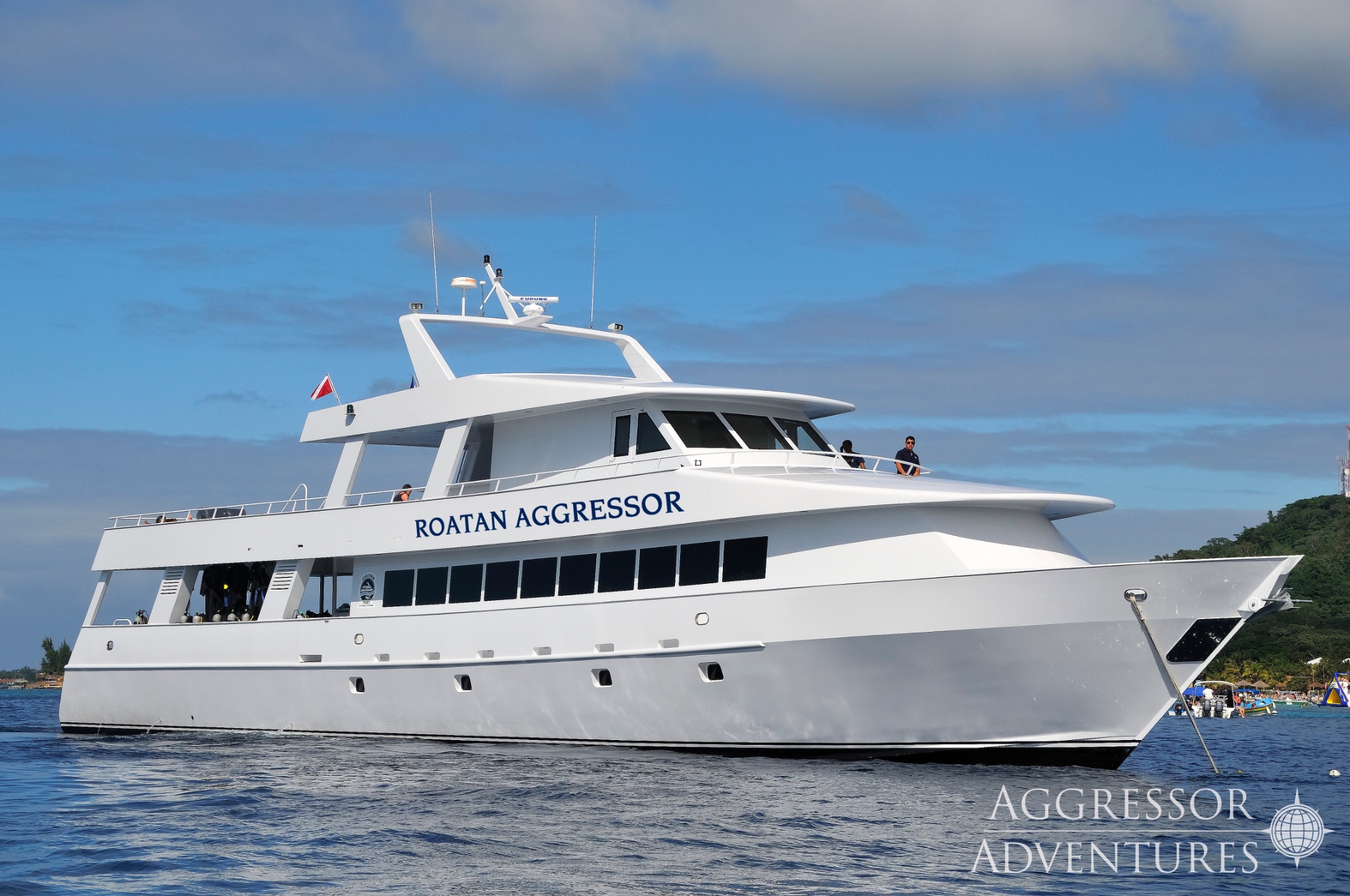
Roatan Aggressor
Honduras
18 guests31.1 m
$309/day
Dive sites similar to Gold Chain Reef
Same character, same waters — six more sites divers love for the exact same reasons.Compare seasons, access and liveaboard routes — then pick the site that fits your trip best.
© Esri — Maxar, Earthstar, GIS
Blackish Point
Honduras
Blackish Point is a captivating shore-drift wall dive located on the north side of Utila, offering a unique blend of volcanic rock formations, soft corals, and an intricate network of caves, overhangs, and crevices.
- Suitable for
- Intermediate
- Current
- Mild
- Access
- Shore / dayboat
- Depth
- 11–27 m
- Theme
- Cave & cavern / Drift
© Esri — Maxar, Earthstar, GIS
Black Coral Wall
Honduras
Black Coral Wall is a captivating dive site situated off the coast of Utila, Honduras, characterized by its extensive formations of black coral.
- Suitable for
- Intermediate
- Current
- Moderate
- Access
- Liveaboard only
- Depth
- ≤ 50 m
- Theme
- Wall
© Esri — Maxar, Earthstar, GIS
Jack Neil Bight
Honduras
Jack Neil Bight is a notable dive site located on the south side of Utila, Honduras, part of the Bay Islands archipelago, known for its calm conditions and diverse underwater scenery.
- Suitable for
- Beginner
- Current
- Mild
- Access
- Dayboat
- Depth
- 2–40 m
- Theme
- Reef / Wall
© Esri — Maxar, Earthstar, GIS
Green Out House Wall
Honduras
Green Out House Wall is a notable dive site in Roatan, recognized for its distinct wall topography and the potential for drift diving.
- Suitable for
- Intermediate
- Current
- Moderate
- Access
- Dayboat
- Depth
- ≤ 22 m
- Theme
- Wall / Drift
© Esri — Maxar, Earthstar, GIS
Jack Neal Point
Honduras
Jack Neal Point is a captivating dive site located off the western coast of Roatan, Honduras, nestled within the larger Mesoamerican Barrier Reef System, the second-largest barrier reef globally.
- Suitable for
- Beginner
- Current
- Mild
- Access
- Dayboat
- Depth
- 5–30 m
- Theme
- Reef / Wall
© Esri — Maxar, Earthstar, GIS
Spooky Channel
Honduras
Spooky Channel is a unique dive site located on the north side of Roatan, Honduras, just off Sandy Bay Beach near Lawson Rock.
- Suitable for
- Intermediate
- Current
- Mild
- Access
- Dayboat
- Depth
- 6–34 m
- Theme
- Reef / Wall