About Blackish Point
Blackish Point is a captivating shore-drift wall dive located on the north side of Utila, offering a unique blend of volcanic rock formations, soft corals, and an intricate network of caves, overhangs, and crevices. This site caters to divers who appreciate a relaxed pace, allowing ample time to meticulously scan the reef structure, discover hidden macro life, and enjoy a gentle drift. It stands out as one of Utila's less crowded north-side locations, making it ideal for those who prioritize exploring topography, shadows, and critter hunting over high-speed encounters. The dive site features a reef top at approximately 11 meters, transitioning into a main wall that descends to around 18 meters. Beyond this, a second reef section slopes further, reaching depths of up to 27 meters. While historically known for abundant Black Groupers, which are now less common, the site still hosts a vibrant array of marine species. Its moderate depths and mild currents make it accessible and rewarding for a wide range of diver experience levels. Blackish Point is best enjoyed by patient divers with excellent buoyancy control, especially when navigating the various overhead environments. The conditions, including mild currents and occasional lower visibility, encourage a slower, more deliberate exploration of the wall and its intricate features. This site truly shines for those seeking a tranquil and detailed underwater experience.
Highlights
North-side shore-drift wallCaves and overhangsVolcanic rock formationsAbundant macro lifeGentle drift divingVibrant soft coralsRelaxed exploration
Season calendar
Best months to dive here
Jan
Feb
Mar
Apr
May
Jun
Jul
Aug
Sep
Oct
Nov
Dec
Excellent
Good
Dive site facts: Blackish Point
- Depth
- 11–27 m
- Current
- Mild
- Visibility
- 18 m
- Entry
- Shore / Boat
- Level
- Beginner / Intermediate
- Dive type
- Wall, drift, macro, cave/overhang
- Region / port
- Utila, Bay Islands, Honduras
- Coordinates
- 16.087, -86.878
Conditions & Currents
Blackish Point is characterized by mild currents, making it suitable for a relaxed drift dive along the wall. Divers can expect a gentle, consistent flow that aids in covering the site's extensive features without strenuous finning. Entry is generally simple, often via shore, though boat access from Roatán is also common. Buoyancy control is crucial, particularly when exploring the numerous caves and overhangs, as low visibility can occasionally occur. This site rewards slow reef scanning and careful macro hunting, making it less about fighting currents and more about controlled exploration.
Marine life & sighting chances

Hawksbill Turtle
common
Lionfish
common
Moray Eel
common
Nudibranch
common
Parrotfish
common
Stingrays
occasional
Spotted Drum
common
Spiny Lobster
commonMidnight Parrotfish
commonDive profile & how the dive runs
Diving at Blackish Point typically begins with a shore entry, transitioning into a gentle drift along the north-side wall. The reef top sits at about 11 meters, gradually descending as you follow the wall. Divers explore a series of volcanic rock formations, overhangs, and crevices, often discovering various macro life tucked within. The main wall reaches around 18 meters before a second reef section slopes further to 27 meters. The dive encourages a slow, methodical pace to appreciate the intricate structure and search for critters. The turn point is flexible, determined by air consumption and current, usually leading to a gradual ascent along the shallower reef, with the safety stop conducted in the 5-meter range amidst the reef top.
Underwater photography
Blackish Point is a macro photographer's dream, with its intricate volcanic structures, caves, and crevices providing countless hidden subjects. A macro lens is highly recommended to capture nudibranchs, small crustaceans, and juvenile fish. For wider reef scenes and the wall topography, a wide-angle lens can be effective, especially when natural light is abundant. Due to potential lower visibility and overhead environments, good lighting—either natural ambient light or a powerful strobe—is crucial. Excellent buoyancy control is paramount to avoid disturbing delicate corals and to maneuver safely within the tight overhangs and caves without stirring up sediment.
Combine with nearby dive sites
Getting there & logistics
Blackish Point is located on Utila, one of Honduras' Bay Islands. Divers typically fly into Juan Manuel Gálvez International Airport (RTB) on Roatán, then take a ferry or smaller plane to Utila. Alternatively, you can fly into La Ceiba on the mainland and take a ferry directly to Utila. Most trips to Blackish Point are organized by local dive shops in Utila, often as part of a multi-dive day trip, with boat travel lasting around 45 minutes from main diving hubs. No special permits are required for diving here.
Safety & environment
Safety at Blackish Point requires diligent buoyancy control, especially when navigating the overhead environments of caves and overhangs. Divers should be mindful of occasional low visibility, which can make spatial awareness challenging. A dive computer is essential for monitoring depth and bottom time. The nearest recompression chamber is located on Roatán, necessitating a potentially lengthy evacuation from Utila in case of a serious dive emergency. Therefore, comprehensive dive insurance covering emergency medical treatment and evacuation is strongly recommended for all divers visiting this region.
Who it suits — and who it doesn't
Suited for
- Macro photographers
- Divers seeking relaxed drift dives
- Intermediate divers with good buoyancy control
- Critter hunting enthusiasts
- Divers who enjoy exploring intricate reef topography
Less suited for
- Divers seeking strong current adrenaline dives
- Those without good buoyancy control
- Divers with claustrophobia (due to caves/overhangs)
- Snorkelers (due to depth profile)
- Freedivers (overhead environments are better suited for scuba)
FAQ
Blackish Point FAQ
What is the typical visibility at Blackish Point?
The typical visibility at Blackish Point averages around 18 meters. While conditions can be excellent, occasional lower visibility may occur, especially during the rainy season when sediments can be stirred up. Divers should always be prepared for varying clarity.
Are there strong currents at Blackish Point?
Blackish Point is known for its mild currents, making it an excellent site for a relaxed drift dive. This gentle flow allows divers to leisurely explore the wall and its features without having to fight against strong water movement, enhancing the overall dive experience.
What kind of marine life can I expect to see here?
You can anticipate seeing a variety of marine life at Blackish Point, including Hawksbill turtles, moray eels, lionfish, and numerous nudibranchs. The site is also home to parrotfish, spotted drums, spiny lobsters, and occasionally stingrays, making it a rich environment for critter enthusiasts.
Is Blackish Point suitable for beginner divers?
Blackish Point is considered suitable for beginner to intermediate divers due to its manageable depths and mild currents. However, good buoyancy control is essential, particularly when exploring the caves and overhangs and navigating areas where visibility might be reduced. It’s a great site for those ready to advance their skills.
What are the main topographical features of Blackish Point?
The main topographical features of Blackish Point include a shore-drift wall, characterized by volcanic rock formations. Divers will discover a series of caves, overhangs, and crevices that provide shelter for various marine species. The site offers a dynamic underwater landscape for exploration.
Why dive Blackish Point from a liveaboard?
Blackish Point is one of Honduras's signature dive sites. A liveaboard sleeps you on the water and puts you in the water for three to four guided dives per day, including dawn and night dives that day-boat operators rarely offer. You skip the daily commute back to port and reach quieter, less-crowded sites in the same region on a single trip.
Below are the liveaboards that include Blackish Point on their Honduras itineraries.
Liveaboards diving Blackish Point
These liveaboards may visit Blackish Point on selected itineraries — the exact dive sites depend on departure, weather and conditions.
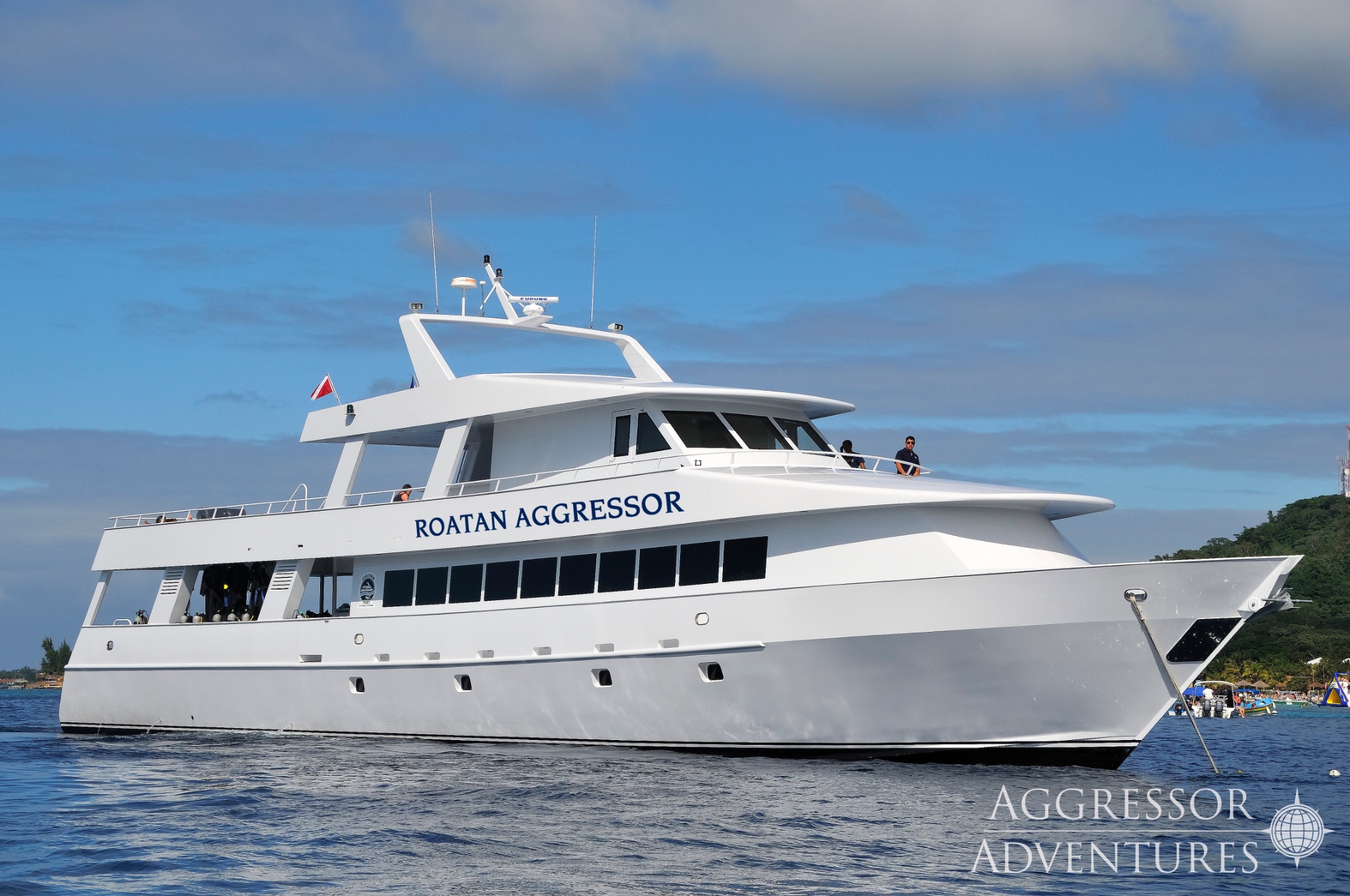
Roatan Aggressor
Honduras
18 guests31.1 m
$309/day
Dive sites similar to Blackish Point
Same character, same waters — six more sites divers love for the exact same reasons.Compare seasons, access and liveaboard routes — then pick the site that fits your trip best.
© Esri — Maxar, Earthstar, GIS
Black Coral Wall
Honduras
Black Coral Wall is a captivating dive site situated off the coast of Utila, Honduras, characterized by its extensive formations of black coral.
- Suitable for
- Intermediate
- Current
- Moderate
- Access
- Liveaboard only
- Depth
- ≤ 50 m
- Theme
- Wall
© Esri — Maxar, Earthstar, GIS
Gold Chain Reef
Honduras
Gold Chain Reef is a celebrated dive site located off the coast of Roatan, Honduras, within the vast Mesoamerican Barrier Reef System, the world's second-largest coral reef.
- Suitable for
- Intermediate
- Current
- Mild
- Access
- Liveaboard only
- Depth
- 3–9 m
- Theme
- Wall
© Esri — Maxar, Earthstar, GIS
Carib Point
Honduras
Carib Point is a distinctive shallow fringing reef and hardbottom site located off Roatán's north shore, specifically in the Sandy Bay/West End area.
- Suitable for
- Intermediate
- Current
- Mild
- Access
- Liveaboard only
- Depth
- 9–12 m
- Theme
- Drift
© Esri — Maxar, Earthstar, GIS
Jack Neil Bight
Honduras
Jack Neil Bight is a notable dive site located on the south side of Utila, Honduras, part of the Bay Islands archipelago, known for its calm conditions and diverse underwater scenery.
- Suitable for
- Beginner
- Current
- Mild
- Access
- Dayboat
- Depth
- 2–40 m
- Theme
- Reef / Wall
© Esri — Maxar, Earthstar, GIS
Green Out House Wall
Honduras
Green Out House Wall is a notable dive site in Roatan, recognized for its distinct wall topography and the potential for drift diving.
- Suitable for
- Intermediate
- Current
- Moderate
- Access
- Dayboat
- Depth
- ≤ 22 m
- Theme
- Wall / Drift
© Esri — Maxar, Earthstar, GIS
Jack Neal Point
Honduras
Jack Neal Point is a captivating dive site located off the western coast of Roatan, Honduras, nestled within the larger Mesoamerican Barrier Reef System, the second-largest barrier reef globally.
- Suitable for
- Beginner
- Current
- Mild
- Access
- Dayboat
- Depth
- 5–30 m
- Theme
- Reef / Wall