About Duppy Waters
Duppy Waters is a prominent dive site located in the Bay Islands of Honduras, specifically on the north side of Utila. It forms part of the expansive Mesoamerican Barrier Reef, the second-largest barrier reef system globally. This site is particularly celebrated for its exceptional marine life density and stunning coral formations, offering a versatile underwater experience suitable for intermediate divers. The topography of Duppy Waters features a shallow reef top that dramatically drops into a sheer wall, providing diverse depth profiles. The wall itself is richly coated with colossal barrel sponges, some reaching over 1.8 meters (6 feet) in height. Divers can explore these formations, spotting various tropical fish and larger pelagic species attracted by the nutrient-rich currents. The dive site benefits from consistent warm water temperatures ranging from 24 to 30 °C (75 to 86 °F) year-round, with visibility often extending between 15 to 30 meters (50 to 100 feet). While currents are generally mild, they contribute to the site's vibrant ecosystem, attracting schooling fish and pelagic life. The best conditions for diving are typically from March to September, coinciding with the dry season, which offers optimal visibility. Accessibility to Duppy Waters is exclusively by boat, with entry usually being a simple backward roll or giant stride. Divers can expect an average dive time of 50 minutes, navigating along the wall and exploring the rich reef ecosystem. The site is part of the Turtle Harbour Marine Reserve, indicating a commitment to conservation that helps maintain its thriving marine environment.
Highlights
Sheer wall diveGiant barrel spongesHigh marine life densityEagle ray sightingsNurse shark encountersPart of Turtle Harbour Marine ReserveCoral-covered walls
Season calendar
Best months to dive here
Jan
Feb
Mar
Apr
May
Jun
Jul
Aug
Sep
Oct
Nov
Dec
Excellent
Dive site facts: Duppy Waters
- Depth
- 15–30 m
- Typical dive
- 15–30 m, 50 min
- Current
- Mild
- Visibility
- 15–30 m
- Water temperature
- 24–30 °C
- Entry
- Boat
- Level
- Intermediate
- Dive type
- Wall, reef, marine life
- Night dive
- Possible
- Region / port
- Utila, Bay Islands, Honduras
- Coordinates
- 16.1, -86.952
Conditions & Currents
Currents at Duppy Waters are typically mild, making it accessible for intermediate divers. However, these gentle currents are sufficient to carry nutrients, attracting a rich diversity of marine life, including pelagic species. Surge is usually absent, providing stable conditions along the wall. Visibility generally ranges from 15 to 30 meters, often exceeding 30 meters during the dry season (February to June). Water temperatures remain warm throughout the year, between 24-30°C. Divers should be mindful of their buoyancy, especially when exploring the dramatic wall structures and observing the abundant marine life. Entry is exclusively by boat, typically a simple backward roll, and the dive profile often involves drifting along the wall with the mild current.
Marine life & sighting chances

Eagle Ray
Year-round · occasional
Nurse Shark
Year-round · occasional
Schools of tropical fish
Year-round · common
Green Moray Eel
Year-round · occasional
Hawksbill Turtle
Year-round · occasional
Spadefish
Year-round · common
Cubera Snapper
Year-round · occasional
Grouper
Year-round · occasional
Jack
Year-round · common
Conch
Year-round · common
Upside-down jellyfish
Year-round · common
Bigeye Scad
Year-round · commonDive profile & how the dive runs
Your dive at Duppy Waters typically begins with a boat entry, often a giant stride, positioning you directly over the shallow reef top. From here, you'll descend to approximately 15 meters, where the reef transitions into a dramatic wall. The main part of the dive involves traversing along this sheer wall, which plunges to depths of 30 meters or more. You'll observe massive barrel sponges and look for cruising eagle rays in the blue water. Resident nurse sharks are often found tucked into crevices. The dive continues along the wall, often with a mild current assisting your drift. Your turn point is usually determined by gas consumption or no-decompression limits, after which you'll gradually ascend back towards the shallower reef top for your safety stop, enjoying the vibrant coral gardens and abundant fish life before surfacing near the boat.
Underwater photography
Duppy Waters provides excellent photographic opportunities for both wide-angle and macro enthusiasts. For the dramatic wall and extensive barrel sponges, a wide-angle lens is ideal to capture the scale and vibrant soft coral growth. Keep an eye out for eagle rays and nurse sharks in the blue, requiring quick adjustments for fast-moving subjects. For macro photography, the reef is rich with small marine life; patience will reward you with nudibranchs and other critters. Good buoyancy control is crucial to avoid damaging the delicate coral and stirring up sediment. Utilize natural light in the shallower areas, and consider strobes for bringing out the true colors of corals and fish in deeper sections of the wall.
Combine with nearby dive sites
- Black Hills
A seamount dive known for pelagic encounters and schooling fish, suitable for advanced divers due to currents.
- West End Wall
A well-known wall dive off Roatán with diverse marine life and dramatic topography.
- Mary's Place
Famous for its volcanic cracks and intricate swim-through channels on Roatán.
- Blackish Point
A mild-current wall dive with caves, overhangs, and macro life, ideal for careful reef scanning.
- Blue Channel
A shallow, protected site near West End, famed for large schools of bigeye scad and rays on incoming tides.
Getting there & logistics
To reach Duppy Waters, you'll typically fly into Roatán (RTB) or take a ferry from La Ceiba on Honduras's mainland. From Roatán, inter-island ferries or flights connect you to Utila, where Duppy Waters is located on the north side. Dive operators in Utila will arrange boat transfers to the site. Dive trips usually involve daily excursions from shore-based operations in Utila, with typical dive times around 50 minutes. No specific permits are required for diving Duppy Waters. Utila is renowned for its affordable diving, often included in dive packages that combine multiple daily boat dives with accommodation. The site is frequently paired with other wall or pelagic dives on Utila's north and south sides.
Safety & environment
While Duppy Waters is generally a safe dive for intermediate divers, it's essential to maintain good buoyancy control due to its wall topography and abundant marine life. Nearest recompression chambers are located in Roatán, requiring an evacuation plan for any serious dive-related injuries, typically by boat and then potentially by air. Dive insurance covering emergency medical treatment and evacuation is highly recommended. Always dive with a reputable operator, follow your dive guide's instructions, and stay within your certified limits. Although currents are generally mild, conditions can occasionally change, so be prepared for potential drift. No overhead environments are noted as a primary feature, but always be aware of your surroundings.
Who it suits — and who it doesn't
Suited for
- Intermediate divers seeking vibrant marine life
- Photographers interested in wide-angle and macro subjects
- Divers who enjoy wall diving and dramatic topography
- Those looking for nurse shark and eagle ray encounters
- Divers who prefer mild current dives
Less suited for
- Absolute beginner divers (due to depth and wall environment)
- Divers uncomfortable with boat entries
- Those exclusively seeking wreck dives
- Snorkelers (due to wall profile and depth)
- Individuals sensitive to boat travel
FAQ
Duppy Waters FAQ
What kind of marine life can I expect to see at Duppy Waters?
Duppy Waters is renowned for its high marine life density. You can frequently spot schools of tropical fish, alongside occasional sightings of eagle rays and resident nurse sharks. Green moray eels, hawksbill turtles, and various schooling fish like jacks and spadefish are also common inhabitants of this vibrant reef.
What are the typical diving conditions at Duppy Waters?
Conditions at Duppy Waters are generally favorable, with mild currents and no significant surge. Visibility typically ranges from 15 to 30 meters, often exceeding 30 meters during the drier months. Water temperatures are consistently warm, hovering between 24 and 30 °C year-round, making for comfortable dives.
Is Duppy Waters suitable for all diving levels?
Duppy Waters is best suited for intermediate divers due to its depth profile and wall environment. While currents are usually mild, the site's features are more enjoyable and manageable for those with some prior diving experience. Absolute beginners might find other, shallower Utila sites more appropriate.
When is the best time of year to dive Duppy Waters?
The prime diving season for Duppy Waters, and Utila in general, is from March to September. This period aligns with the dry season, offering the clearest visibility and most settled weather conditions, which are ideal for exploring the site's rich marine ecosystem.
How do I get to Duppy Waters?
Access to Duppy Waters is exclusively by boat, typically arranged through dive operators based in Utila. Most dive centers offer daily excursions to this site, which is located on the island's north side within the Turtle Harbour Marine Reserve. You will need to reach Utila first, often via Roatán.
Why dive Duppy Waters from a liveaboard?
Duppy Waters is one of Honduras's signature dive sites. A liveaboard sleeps you on the water and puts you in the water for three to four guided dives per day, including dawn and night dives that day-boat operators rarely offer. You skip the daily commute back to port and reach quieter, less-crowded sites in the same region on a single trip.
Below are the liveaboards that include Duppy Waters on their Honduras itineraries.
Liveaboards diving Duppy Waters
These liveaboards may visit Duppy Waters on selected itineraries — the exact dive sites depend on departure, weather and conditions.
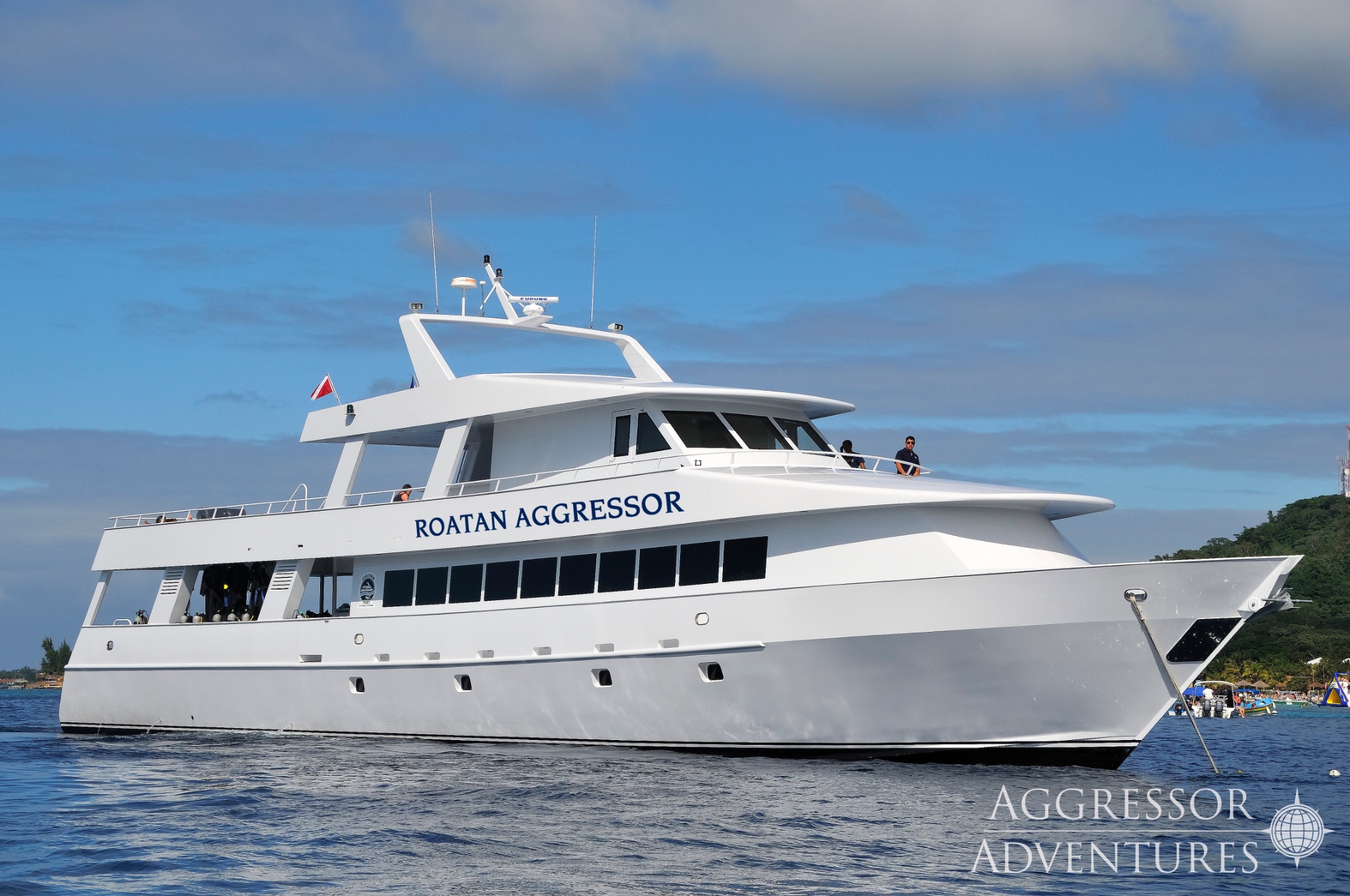
Roatan Aggressor
Honduras
18 guests31.1 m
$309/day
Dive sites similar to Duppy Waters
Same character, same waters — six more sites divers love for the exact same reasons.Compare seasons, access and liveaboard routes — then pick the site that fits your trip best.
© Esri — Maxar, Earthstar, GIS
Blackish Point
Honduras
Blackish Point is a captivating shore-drift wall dive located on the north side of Utila, offering a unique blend of volcanic rock formations, soft corals, and an intricate network of caves, overhangs, and crevices.
- Suitable for
- Intermediate
- Current
- Mild
- Access
- Shore / dayboat
- Depth
- 11–27 m
- Theme
- Cave & cavern / Drift
© Esri — Maxar, Earthstar, GIS
Black Coral Wall
Honduras
Black Coral Wall is a captivating dive site situated off the coast of Utila, Honduras, characterized by its extensive formations of black coral.
- Suitable for
- Intermediate
- Current
- Moderate
- Access
- Liveaboard only
- Depth
- ≤ 50 m
- Theme
- Wall
© Esri — Maxar, Earthstar, GIS
Gold Chain Reef
Honduras
Gold Chain Reef is a celebrated dive site located off the coast of Roatan, Honduras, within the vast Mesoamerican Barrier Reef System, the world's second-largest coral reef.
- Suitable for
- Intermediate
- Current
- Mild
- Access
- Liveaboard only
- Depth
- 3–9 m
- Theme
- Wall
© Esri — Maxar, Earthstar, GIS
Jack Neil Bight
Honduras
Jack Neil Bight is a notable dive site located on the south side of Utila, Honduras, part of the Bay Islands archipelago, known for its calm conditions and diverse underwater scenery.
- Suitable for
- Beginner
- Current
- Mild
- Access
- Dayboat
- Depth
- 2–40 m
- Theme
- Reef / Wall
© Esri — Maxar, Earthstar, GIS
Green Out House Wall
Honduras
Green Out House Wall is a notable dive site in Roatan, recognized for its distinct wall topography and the potential for drift diving.
- Suitable for
- Intermediate
- Current
- Moderate
- Access
- Dayboat
- Depth
- ≤ 22 m
- Theme
- Wall / Drift
© Esri — Maxar, Earthstar, GIS
Jack Neal Point
Honduras
Jack Neal Point is a captivating dive site located off the western coast of Roatan, Honduras, nestled within the larger Mesoamerican Barrier Reef System, the second-largest barrier reef globally.
- Suitable for
- Beginner
- Current
- Mild
- Access
- Dayboat
- Depth
- 5–30 m
- Theme
- Reef / Wall