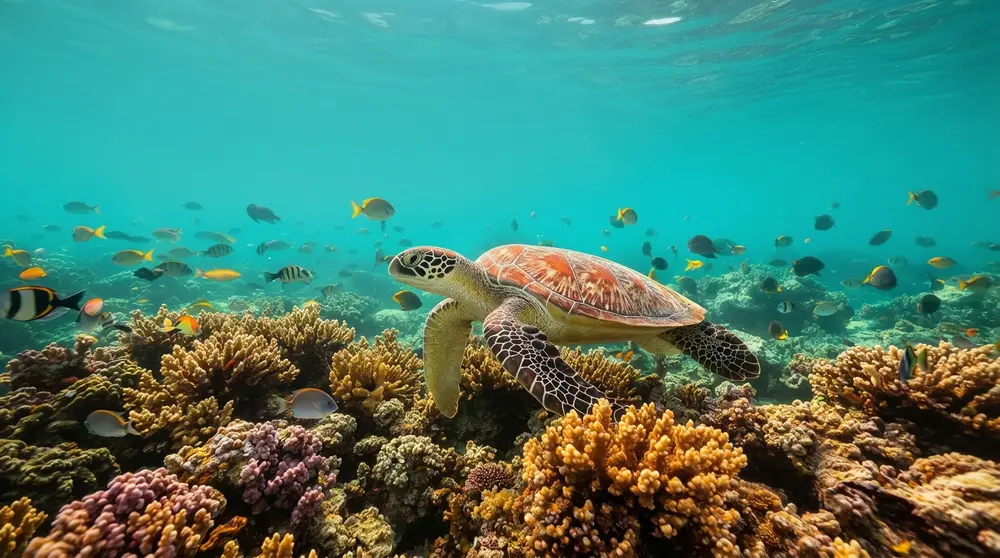
The Atlantic spadefish (Chaetodipterus faber) is a marine ray-finned fish belonging to the family Ephippidae, representing the sole native species of spadefish in the western Atlantic Ocean. Characterised by a deep, laterally compressed, disk-shaped body and a blunt snout, this fish features striking silver coloration marked by four to six dark vertical bars on each side. The prominent first bar runs directly through the eye, whereas the final bar crosses the caudal peduncle. As individual fish mature, these dark bands often gradually fade or become obscure, leaving larger adults with a solid silver, grey, white, or blackish appearance.
Anatomically, the species possesses nine dorsal spines, 21 to 24 soft dorsal rays, three anal spines, and 17 to 19 anal rays. The opercle terminates in an obtuse point above the base of the pectoral fins, and both the head and fins are entirely covered in small ctenoid scales. The second dorsal and anal fins feature elongated anterior rays that form sweeping trailing lobes, giving the fish an angelfish-like silhouette, though true angelfish differ by having only a single continuous dorsal fin. The margin of the caudal fin is noticeably concave. Commonly weighing between 1.4 and 4.5 kg, large individuals can reach weights of 9.1 kg and overall lengths up to 1 metre.
Behaviour & reproduction
- Size
- Unknown
- Weight
- 1.4-4.5 kg
- Lifespan
- 9-14 years
- Status
- Not Evaluated
Inhabiting waters from New England down through the Caribbean to southern Brazil, Atlantic spadefish are highly social animals. Adults regularly assemble in large, coordinated schools that can number up to 500 individuals. Scuba divers value encounters with these fish because of their calm, inquisitive nature and dramatic schooling formations around shipwrecks, reefs, and pilings.