About Blue Channel
Blue Channel is a distinctive dive site located off Roatán's north side, near Sandy Bay Beach and Lawson Rock. Known for its cathedral-like topography and unique play of light and shadow, this site presents an ancient waterfall landscape now submerged, offering dramatic depth changes and a labyrinth of swim-throughs. The visibility here is notably influenced by tidal currents, which can vary significantly, contributing to its reputation as a challenging yet rewarding dive. The dive begins on a shallow plateau adorned with soft corals and a variety of reef fish, leading into intricate swim-throughs before opening into a sandbowl. Beyond this, sheer reef walls form the main channel, plunging to considerable depths and creating an eerie, atmospheric experience. The site is a haven for diverse marine life, from elusive bottom dwellers camouflaged in crevices to larger pelagic species patrolling the walls. While Blue Channel offers an exceptional experience, especially for those seeking unique topography and drift diving, conditions can be variable. It is considered an advanced dive due to potential strong currents and requires careful navigation through its complex structures. Boat diving with an experienced guide is highly recommended for optimal safety and enjoyment, allowing for flexible entry and exit points tailored to prevailing conditions. Its unique features, including dramatic overhangs and walls, make it a memorable site for divers who appreciate challenging conditions and a rich underwater landscape. Despite debates over its spot among Roatán's top ten, Blue Channel remains a famous and frequently visited location.
Highlights
Cathedral-like reef topographyDramatic channel swim-throughsStrong current drift diveElusive Large Eye ToadfishSpotted Scorpion FishVibrant soft coral plateauSchools of Creole WrasseOccasional Spotted Eagle Rays
Season calendar
Best months to dive here
Jan
Feb
Mar
Apr
May
Jun
Jul
Aug
Sep
Oct
Nov
Dec
Excellent
Dive site facts: Blue Channel
- Depth
- 6–34 m
- Typical dive
- 15–30 m, 45–60 min
- Current
- Moderate to strong
- Visibility
- 18–30 m
- Water temperature
- 27–31°C
- Entry
- Boat drop-off
- Level
- Advanced
- Dive type
- Drift, reef, wall, swim-throughs
- Night dive
- Possible
- Region / port
- Roatán, Honduras
- Coordinates
- 16.3185, -86.592
Conditions & Currents
Blue Channel is renowned for its variable and sometimes strong currents, which are highly subject to tidal influences. This makes it an advanced drift dive, where understanding the prevailing conditions before entry is paramount. Divers should be prepared for swift movement through the channel, requiring excellent buoyancy control and streamlining to navigate the reef formations and swim-throughs safely. Entry is typically via boat drop-off, allowing divers to be placed directly into the optimal starting point for the drift. Exit strategies also rely on boat pickup, with the surface support tracking the divers' progress along the channel. Visibility can fluctuate with current intensity, occasionally being reduced by stirred-up sediments, though it frequently remains good. Thermal layers are generally not a concern, as water temperatures are consistently warm.
Marine life & sighting chances

Large Eye Toadfish
occasional
Spotted Scorpion Fish
occasional
Black Grouper
common
Barracuda
common
Creole Wrasse
common
Spotted Eagle Ray
occasional
Green Sea Turtle
occasional
Hawksbill Turtle
occasional
Glassy Sweepers
common
Blue Tang
common
Parrotfish
common
Garden Eels
common
Nurse Shark
occasional
Sergeant Majors
commonDive profile & how the dive runs
The dive typically starts at a shallow plateau, around 6 meters, featuring vibrant soft corals and numerous reef fish. From there, you'll navigate a series of intricate swim-throughs and open-top channels that lead into a sandbowl, where depths can reach 15 meters. Moving deeper, the main channel emerges with dramatic reef walls, some rising to the surface, and Gothic cathedral-like overhangs. Depths in this section can extend to 27 meters. Divers then transition to a spectacular wall that plunges to about 34 meters, continuing into much deeper waters beyond recreational limits. Throughout the dive, maintaining good buoyancy is crucial, especially in the narrow passages. The safety stop is generally conducted as part of the drift in the shallower sections towards the end of the dive, before the boat retrieves divers.
Underwater photography
Blue Channel offers exceptional opportunities for wide-angle photography, especially within its dramatic swim-throughs and along the sheer reef walls. A fisheye or wide-angle lens will best capture the cathedral-like topography and schools of fish funneling through the channel. Given the dark overhangs and crevices, a powerful strobe or video light is essential to illuminate subjects like the Large Eye Toadfish and Glassy Sweepers, which often hide in shadowed areas. Practice excellent buoyancy control to avoid contact with the fragile coral and sand, particularly within the narrower swim-throughs. Be mindful of currents, as they can make framing shots challenging. Capturing the interplay of light and shadow within the channel adds a unique artistic element to your photos.
Combine with nearby dive sites
- Mary's Place
Known for its impressive vertical walls and crevices, ideal for dramatic underwater shots.
- West End Wall
Features stunning coral formations and a diverse array of marine life.
- Mandy's Eel Garden
A calmer site, shallower, known for its garden eels on a sandy bottom.
- El Aguila Wreck
A popular wreck dive sitting at approximately 34 meters, home to abundant marine life.
- Texas & Pablos
An advanced dive site with potentially strong currents and rich marine biodiversity, situated at the western tip of the island.
Getting there & logistics
Access to Blue Channel is primarily from dive operators located in Roatán, Honduras, often departing from areas like Sandy Bay or West End. The nearest international airport is Juan Manuel Gálvez International Airport (RTB) in Roatán. Dive trips typically involve short boat rides to the site. Many dive packages combine Blue Channel with other renowned Roatán sites within daily excursions or multi-day liveaboard itineraries. There are no specific park fees mentioned for this site, as it is part of the larger Roatán marine ecosystem managed by local conservation efforts. A typical dive lasts 45-60 minutes, depending on depth and air consumption. Due to the advanced nature and potential currents, diving with a local guide is highly recommended for safety and to optimize the experience.
Safety & environment
Diving Blue Channel requires careful attention to safety protocols due to potential strong currents and complex topography. All divers should possess an advanced certification and have prior experience with drift diving. Pay close attention to your dive briefing, especially regarding entry procedures, current direction, and exit points. Maintain excellent buoyancy control to avoid contact with the reef within the confined swim-throughs. Always dive with a reliable surface marker buoy (SMB) for quick deployment in case of separation. The nearest recompression chamber is located in Coxen Hole, Roatán. Dive insurance covering emergency evacuation and hyperbaric treatment is strongly recommended for all divers visiting Roatán. Ensure your dive operator is reputable and provides experienced guides familiar with local conditions.
Who it suits — and who it doesn't
Suited for
- Advanced divers with drift experience
- Underwater photographers seeking unique topography
- Divers interested in diverse reef and wall marine life
- Those who enjoy challenging, dynamic dive conditions
- Explorers of dramatic underwater geology
Less suited for
- Beginner divers or those without advanced certification
- Divers uncomfortable with strong currents
- Individuals prone to claustrophobia in swim-throughs
- Divers who prefer calm, stationary dives
- Photographers new to challenging light conditions
FAQ
Blue Channel FAQ
What makes Blue Channel an advanced dive site?
Blue Channel is considered an advanced dive due to its highly variable and often strong currents, coupled with complex swim-throughs and deep channel sections. Divers need excellent buoyancy control, streamlining skills, and experience with drift diving to safely navigate its unique topography. Local guides are essential to assess daily conditions and ensure a safe and enjoyable experience.
What kind of marine life can I expect to see at Blue Channel?
Blue Channel hosts a rich variety of marine life, from well-camouflaged creatures like the Large Eye Toadfish and Spotted Scorpion Fish hiding in crevices, to schools of Blue Tang, Parrotfish, and Creole Wrasse along the walls. You might also encounter Black Grouper, Barracuda, and occasionally larger pelagic species such as Spotted Eagle Rays and various sea turtles gliding along the reef.
Are there any specific geological features to look out for?
Absolutely, Blue Channel is famous for its dramatic geological formations. The site features cathedral-like reef topography, sheer reef walls, intricate swim-throughs, and deep overhangs that create a distinct 'spooky' atmosphere. These structures are remnants of an ancient waterfall system, now submerged, offering unique canyons and crevices to explore.
How do currents affect diving at Blue Channel?
Currents at Blue Channel are significantly influenced by tides and can range from mild to strong, making it primarily a drift dive. These currents can affect visibility by stirring up sediments, but they also bring in nutrient-rich waters that attract a wide array of marine life. Dive operators carefully plan entries and exits based on current conditions to ensure diver safety and maximize enjoyment.
Is Blue Channel suitable for underwater photography?
Yes, Blue Channel is an excellent site for underwater photography, particularly for capturing wide-angle shots of its dramatic topography and schooling fish. Photographers should be prepared for variable lighting within the swim-throughs and under overhangs, necessitating strong strobes or video lights. Good buoyancy and awareness of currents are crucial for stable shots and protecting the delicate marine environment.
Why dive Blue Channel from a liveaboard?
Blue Channel is one of Honduras's signature dive sites. A liveaboard sleeps you on the water and puts you in the water for three to four guided dives per day, including dawn and night dives that day-boat operators rarely offer. You skip the daily commute back to port and reach quieter, less-crowded sites in the same region on a single trip.
Below are the liveaboards that include Blue Channel on their Honduras itineraries.
Liveaboards diving Blue Channel
These liveaboards may visit Blue Channel on selected itineraries — the exact dive sites depend on departure, weather and conditions.
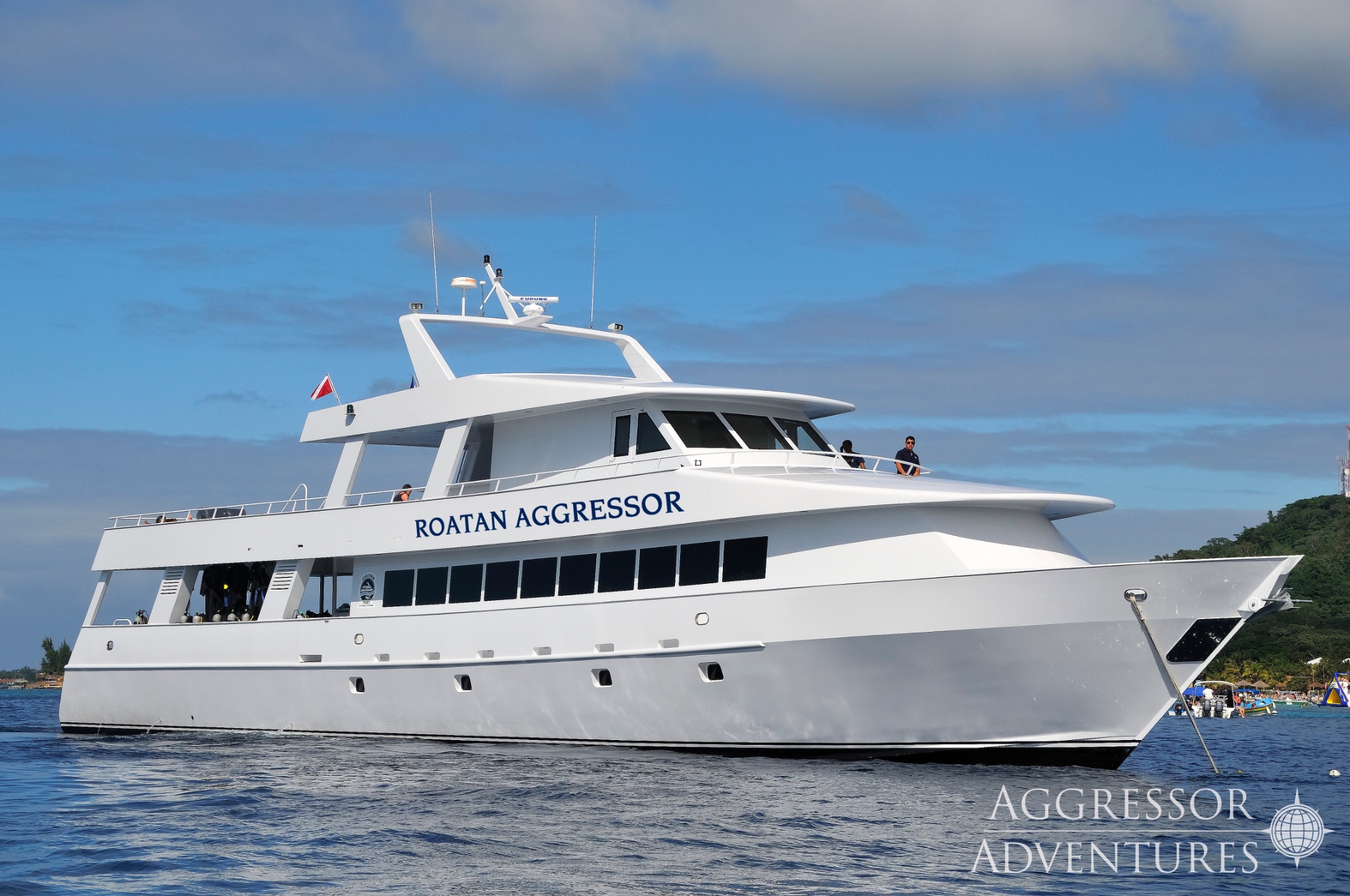
Roatan Aggressor
Honduras
18 guests31.1 m
$309/day
Dive sites similar to Blue Channel
Same character, same waters — six more sites divers love for the exact same reasons.Compare seasons, access and liveaboard routes — then pick the site that fits your trip best.
© Esri — Maxar, Earthstar, GIS
Blackish Point
Honduras
Blackish Point is a captivating shore-drift wall dive located on the north side of Utila, offering a unique blend of volcanic rock formations, soft corals, and an intricate network of caves, overhangs, and crevices.
- Suitable for
- Intermediate
- Current
- Mild
- Access
- Shore / dayboat
- Depth
- 11–27 m
- Theme
- Cave & cavern / Drift
© Esri — Maxar, Earthstar, GIS
Black Coral Wall
Honduras
Black Coral Wall is a captivating dive site situated off the coast of Utila, Honduras, characterized by its extensive formations of black coral.
- Suitable for
- Intermediate
- Current
- Moderate
- Access
- Liveaboard only
- Depth
- ≤ 50 m
- Theme
- Wall
© Esri — Maxar, Earthstar, GIS
Gold Chain Reef
Honduras
Gold Chain Reef is a celebrated dive site located off the coast of Roatan, Honduras, within the vast Mesoamerican Barrier Reef System, the world's second-largest coral reef.
- Suitable for
- Intermediate
- Current
- Mild
- Access
- Liveaboard only
- Depth
- 3–9 m
- Theme
- Wall
© Esri — Maxar, Earthstar, GIS
Carib Point
Honduras
Carib Point is a distinctive shallow fringing reef and hardbottom site located off Roatán's north shore, specifically in the Sandy Bay/West End area.
- Suitable for
- Intermediate
- Current
- Mild
- Access
- Liveaboard only
- Depth
- 9–12 m
- Theme
- Drift
© Esri — Maxar, Earthstar, GIS
Jack Neil Bight
Honduras
Jack Neil Bight is a notable dive site located on the south side of Utila, Honduras, part of the Bay Islands archipelago, known for its calm conditions and diverse underwater scenery.
- Suitable for
- Beginner
- Current
- Mild
- Access
- Dayboat
- Depth
- 2–40 m
- Theme
- Reef / Wall
© Esri — Maxar, Earthstar, GIS
Green Out House Wall
Honduras
Green Out House Wall is a notable dive site in Roatan, recognized for its distinct wall topography and the potential for drift diving.
- Suitable for
- Intermediate
- Current
- Moderate
- Access
- Dayboat
- Depth
- ≤ 22 m
- Theme
- Wall / Drift