About Inside Outside
The Inside Outside dive site in Roatan, Honduras, earns its name from the abundant cracks and swim-throughs that characterize its unique topography. As part of the Mesoamerican Barrier Reef System, this site is a prime example of the rich marine biodiversity found off the Bay Islands. Divers here explore a reef structure adorned with healthy hard and soft corals, alongside an array of colorful sponges. The dive progresses from a shallower upper reef section, typically between 35 to 45 feet, extending to a deeper outside wall that reaches 120 feet. This gradient allows for varied exploration within a single dive. The marine life at Inside Outside is notably diverse, featuring numerous small tropical fish and a healthy population of parrotfish. Small crabs are also frequently observed amongst the coral formations. Visibility at this site is consistently excellent, often ranging from 80 to 100 feet, making it ideal for appreciating the intricate details of the reef. This site is accessible via custom dive boats and offers a comprehensive experience for divers seeking both structural exploration and vibrant marine encounters. Its moderate depths and clear waters make it suitable for a range of certification levels, allowing for extended bottom times to fully appreciate its unique features.
Highlights
Cracks and swim-throughsDiverse hard and soft coralsAbundant small tropical fishExcellent visibilityVaried depth profile
Season calendar
Best months to dive here
Jan
Feb
Mar
Apr
May
Jun
Jul
Aug
Sep
Oct
Nov
Dec
Excellent
Good
Off-Season
Mar – May & Dec
Best visibility, calm seas, whale shark season begins
Jan – Feb
Good conditions with warm water and decent visibility
Jun – Nov
Rainy season with reduced visibility but second whale shark peak Sep-Dec
Dive site facts: Inside Outside
- Depth
- 35–120 ft
- Current
- Mild
- Visibility
- 80–100 ft
- Water temperature
- 24–29°C (75–84°F)
- Entry
- Boat
- Level
- Open Water Diver and above
- Dive type
- Reef, wall, swim-through
- Night dive
- Possible
- Region / port
- Roatan, Honduras
- Coordinates
- 16.3477° N, 86.5873° W
Conditions & Currents
Roatan's dive sites, including Inside Outside, typically experience gentle currents, allowing for comfortable exploration. While the Mesoamerican Barrier Reef System can have varying conditions, this particular site is known for relatively mild water movement, contributing to its generally excellent visibility. Entry is usually from a boat, with divers descending onto the reef. Visibility here is consistently strong, ranging from 80 to 100 feet. Water temperatures remain warm throughout the year, with highs of 25-29°C (78-84°F) from June to October and lows of 24-27°C (75-80°F) from January to April. These conditions make Inside Outside suitable for a broad range of divers, from those recently certified to more experienced individuals, without significant concerns for strong currents or challenging entry/exit procedures.
Marine life & sighting chances

Parrotfish
common
Small tropical fish
common
Small crabs
occasional
Hard corals
common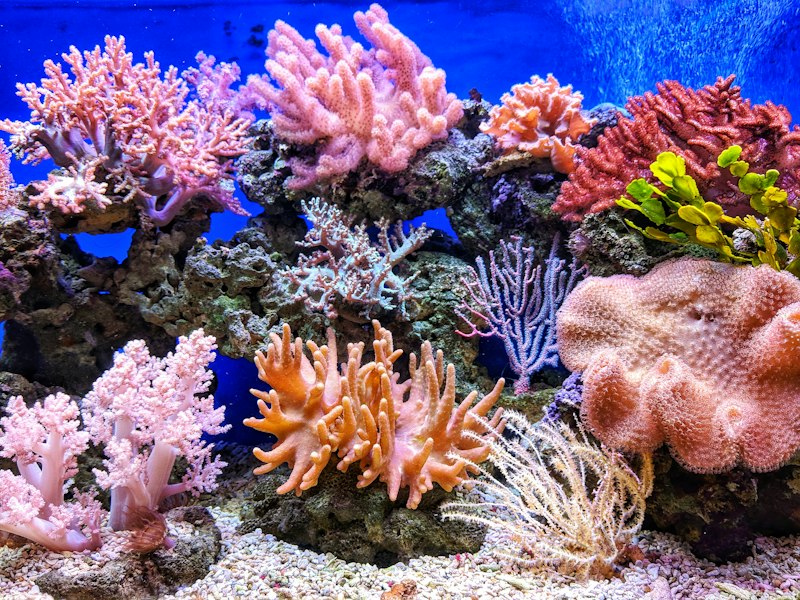
Soft corals
common
Sponges
common
Angelfish
occasional
Butterflyfish
occasionalDive profile & how the dive runs
A typical dive at Inside Outside begins at a permanent mooring on the reef shelf, where you descend to the upper part of the reef at depths between 35 to 45 feet. The dive then proceeds through the distinctive cracks and numerous swim-throughs that define the site, allowing divers to navigate between coral formations. Gradually, the dive route extends towards the outer wall, which drops to a maximum depth of 120 feet, offering a broader view of the reef structure and deeper marine life. Divers can explore along this wall before slowly ascending back towards the shallower reef. The safety stop is conducted at the usual 15 feet within the vibrant, shallower sections of the reef, providing an opportunity to observe more small tropical fish and corals before surfacing.
Underwater photography
Inside Outside presents excellent opportunities for wide-angle and macro photography due to its diverse topography and marine life. The numerous cracks and swim-throughs are ideal for wide-angle shots, capturing the dramatic reef architecture and the feeling of immersion. External strobes are recommended to illuminate the vibrant colors of hard and soft corals and sponges, especially within shaded crevices. For macro enthusiasts, the abundance of small tropical fish and small crabs offers countless subjects. Good buoyancy control is crucial to navigate the swim-throughs without disturbing the delicate coral ecosystems. Clear visibility, often 80-100 feet, ensures strong image quality, making this site rewarding for photographers of all levels.
Combine with nearby dive sites
- Calvin’s Crack
Calvin’s Crack is a renowned dive site located near the southern coast of Roatán, one of Honduras's Bay Islands.
- Carib Point
Carib Point is a distinctive shallow fringing reef and hardbottom site located off Roatán's north shore, specifically in the Sandy Bay/West…
- Mary's Place
Mary's Place is a legendary dive site situated on the southeast side of Roatán, Honduras, renowned for its dramatic topography.
- Menagerhea’s Reef
Menagerhea’s Reef is a renowned dive site located in Roatan, Honduras, part of the extensive Mesoamerican Barrier Reef System.
- Odyssey
The Odyssey is a significant artificial reef located off Roatan's northern coast in Honduras, deliberately sunk in 2002 after sustaining…
Getting there & logistics
Diving Inside Outside typically involves flying into Juan Manuel Gálvez International Airport (RTB) in Roatan. Resorts like Coco View, located on the protected south shore, provide custom dive boats for daily excursions to sites including Inside Outside. Travelers should ensure their passport is valid for at least six months beyond their return date, though U.S. citizens do not require a visa for short tourist trips. Small departure or tourism fees may apply. Most dive trips are multi-day packages offered by resorts, allowing divers to explore numerous sites. Roatan is part of the Mesoamerican Barrier Reef System, which can sometimes involve park fees or marine park regulations, so checking with your dive operator is advisable.
Safety & environment
For diving in Roatan, including Inside Outside, having comprehensive dive insurance, such as through DAN (Divers Alert Network), is highly recommended. This covers dive-specific emergencies, like recompression chamber treatment, which is not typically covered by standard health insurance. Trip-cancellation and travel-medical insurance are also crucial to protect your investment and cover any unforeseen medical events or travel disruptions. While the nearest recompression chamber is likely on Roatan, confirming its exact location and operational status with local dive operators is prudent. Site-specific hazards at Inside Outside are minimal, primarily requiring good buoyancy control within the swim-throughs to avoid contact with corals. Always dive with a reputable operator and follow their briefing guidelines for local conditions and emergency procedures.
Who it suits, and who it doesn't
Suited for
- Open Water certified divers comfortable with confined spaces
- Divers seeking vibrant reef ecosystems
- Underwater photographers targeting wide-angle or macro subjects
- Divers who enjoy exploring cracks and swim-throughs
- Divers looking for excellent visibility and mild currents
Less suited for
- Divers uncomfortable with overhead environments
- Individuals without adequate buoyancy control
- Divers strictly seeking pelagic encounters
FAQ
Inside Outside FAQ
What kind of marine life can I expect to see at Inside Outside?
At Inside Outside, you can anticipate encountering a rich variety of small tropical fish and numerous parrotfish. Keep an eye out for small crabs nestled among the corals. The site is also home to abundant hard and soft corals, along with various sponges, creating a colorful and active underwater environment.
What are the typical depths and visibility at Inside Outside?
Inside Outside offers a diverse depth profile, starting from 35 to 45 feet on the upper reef and extending down to 120 feet along the outer wall. Visibility is consistently excellent, typically ranging between 80 to 100 feet, providing clear views of the intricate reef system and its inhabitants.
Is Inside Outside suitable for beginner divers?
Yes, Inside Outside is generally suitable for Open Water certified divers and above, especially those comfortable with navigating cracks and swim-throughs. The currents are typically mild, and the excellent visibility contributes to a comfortable and enjoyable experience for those with good buoyancy control.
When is the best time of year to dive Inside Outside for optimal conditions?
The optimal time to dive Inside Outside is during Roatan's dry season, which runs from March through October. During these months, water temperatures are warmer, and visibility frequently exceeds 100 feet. This period offers the calmest seas and best conditions for exploring the site.
What makes Inside Outside a unique dive site?
Inside Outside is distinguished by its namesake feature: an extensive network of natural cracks and swim-throughs woven into the reef structure. This unique topography, combined with a healthy display of hard and soft corals and a profusion of small marine life, offers a dynamic and engaging dive experience unlike many other sites.
Why dive Inside Outside from a liveaboard?
Inside Outside is one of Honduras's signature dive sites. A liveaboard sleeps you on the water and puts you in the water for three to four guided dives per day, including dawn and night dives that day-boat operators rarely offer. You skip the daily commute back to port and reach quieter, less-crowded sites in the same region on a single trip.
Below are the liveaboards that include Inside Outside on their Honduras itineraries.
Liveaboards diving Inside Outside
These liveaboards may visit Inside Outside on selected itineraries, the exact dive sites depend on departure, weather and conditions.

Roatan Aggressor
Honduras
18 guests31 m
Dive sites similar to Inside Outside
Same character, same waters, six more sites divers love for the exact same reasons.Compare seasons, access and liveaboard routes, then pick the site that fits your trip best.
© EsriMaxar, Earthstar, GIS
3 Fathom Wall
Cayman Islands
3 Fathom Wall is an exciting and fish-filled dive site located in the Cayman Islands, specifically at the intersection of the renowned Bloody Bay Wall.
- Suitable for
- Intermediate
- Current
- Mild
- Access
- Liveaboard only
- Depth
- ≤ 3000 m
- Theme
- Reef
While specific details for a dive site named "3 Riff" are not present in the provided sources, general diving conditions and characteristics for the Dominican Republic…
- Suitable for
- Advanced
- Current
- Mild
- Access
- Dayboat
- Depth
- 30–55 m
- Theme
- Reef
The dive site known as 3 Rocks is located off the coast of Sosúa in Puerto Plata, Dominican Republic, offering an accessible and lively underwater experience.
- Suitable for
- Beginner
- Current
- Mild
- Access
- Dayboat
- Depth
- 2–8 m
- Theme
- Reef
4 Amigos is a notable dive site located in the Bay Islands of Honduras, an area renowned for its extensive Mesoamerican Barrier Reef System, which is the world's second-longest.
- Suitable for
- Intermediate
- Current
- Moderate
- Access
- Liveaboard or dayboat
- Depth
- 9–40 m
- Theme
- Reef
© EsriMaxar, Earthstar, GIS
6 Toed Cat
Mexico
The dive site known as "6 Toed Cat" is not a recognized dive location in Mexico; rather, it refers to the polydactyl felines, many with six toes, that inhabit the Ernest Hemingway Home and Museum in Key West, Florida.
- Suitable for
- Beginner
- Current
- Mild
- Access
- Liveaboard or dayboat
- Depth
- —
- Theme
- Reef
© EsriMaxar, Earthstar, GIS
Aaron's Backyard
Honduras
Aaron's Backyard is a noted dive site within the Roatan Marine Park in Honduras, part of the extensive Mesoamerican Barrier Reef System.
- Suitable for
- Intermediate
- Current
- Moderate
- Access
- Liveaboard or dayboat
- Depth
- 9–40 m
- Theme
- Reef