Giant Clam in its natural habitat — diving encounters and best destinations

Giant Clam

Unknown
Over 100 years
Not Evaluated

Want to dive with this animal?

Only destinations where this animal occurs.

The Giant Clam at a glance

Giant clams (Tridacna gigas) are the largest living bivalve molluscs on Earth, reaching impressive dimensions across tropical reef ecosystems. Adult specimens feature heavy calcium carbonate shells formed through biomineralisation, characterized by four or five prominent vertical folds that distinguish Tridacna gigas from similar species like Tridacna derasa. Uniquely among giant clam species, fully grown T. gigas are physically incapable of shutting their shell valves completely, leaving part of their fleshy mantle exposed to the water at all times.

Behaviour & reproduction

Size
Unknown
Weight
Up to 250–340 kg
Lifespan
Over 100 years
Status
Not Evaluated

Giant clams (Tridacna gigas) are sessile bivalves, typically found singly or in small groups on coral reefs, exhibiting minimal social behaviour beyond co-habitation. Their activity pattern is primarily diurnal, relying on sunlight for their symbiotic zooxanthellae to photosynthesise, providing the clam with nutrients. Reproduction in these hermaphroditic invertebrates is through broadcast spawning. Spawning events, often triggered by environmental cues like lunar cycles and pheromones released by other clams, occur asynchronously throughout warmer months, especially during summer, with a single individual releasing both sperm and eggs into the water column, though not simultaneously to prevent self-fertilisation. Fertilisation is external, producing free-swimming trochophore larvae that develop into veligers before settling onto a substrate. They undergo metamorphosis into a juvenile clam. Sexual maturity is typically reached around 7-10 years of age, by which time the clam can be substantial in size, and they can continue to reproduce for many decades.
Where to dive with the Giant Clam: 20 top spots

Diving Tips

Giant clams are sessile underwater subjects, but approaching them requires thoughtful etiquette to observe their natural behaviour. The mantle edge is lined with thousands of sensitive pinhole eyespots that react to changes in light and motion. Casting a shadow overhead signals potential danger, triggering the clam to pull back its mantle tissue or partially contract its heavy shell valves.

To view a clam with its mantle fully open, approach slowly from the side while keeping low over the reef. Ensure neither your body nor your underwater camera gear blocks direct sunlight from reaching the animal. If your shadow causes the clam to close partially, back away slightly and remain motionless for two to three minutes; the clam will slowly reopen once it senses the shadow has cleared.

Because giant clams reside in shallow reef zones down to 20 metres, encounters are easily accessible to divers of all skill levels. However, their fleshy mantles are soft and vulnerable to physical trauma. Divers must maintain precise buoyancy control, avoiding any physical contact with the shell or soft tissue, and never step on or touch these protected marine invertebrates.

Fun facts about the Giant Clam

  • Giant clams employ iridescent cells called iridocytes that direct sunlight into vertical columns of algae, yielding up to ~67% photon-to-electron efficiency.
  • Despite persistent myths depicting giant clams as man-eaters, their shell closing muscles move far too slowly to trap or harm human divers.
  • The mantle edge contains several hundred to thousands of tiny pinhole eyespots capable of sensing UV light, changes in brightness, and motion.
  • Adult Tridacna gigas are the only giant clam species physically incapable of closing their shells completely.

Best time to see the Giant Clam

Giant clams are permanently attached to their reef habitats and do not migrate, making sightings possible throughout the year across their tropical range. Dive locations across the Indo-Pacific, South Pacific, and Indian Oceans offer reliable opportunities to encounter giant clams from January through December, provided local underwater visibility remains clear.

In prime Pacific diving regions such as Palau, Tonga, and the outer Great Barrier Reef in Australia, giant clam encounters are consistently rated as excellent across all twelve months. Similarly, top Indonesian dive areas like Raja Ampat offer year-round sightings on shallow coral flats, lagoons, and sheltered fringing reefs.

When planning a dive itinerary to see giant clams, regional weather trends and sea conditions are the primary considerations. Rain and monsoon runoff can diminish water clarity on shallow reef flats, reducing ambient light. Scheduling dives during periods of calm, sunny conditions ensures optimal visibility and allows direct sunlight to highlight the vibrant, iridescent blues and greens of the clam's expanded mantle.

Where the Giant Clam lives

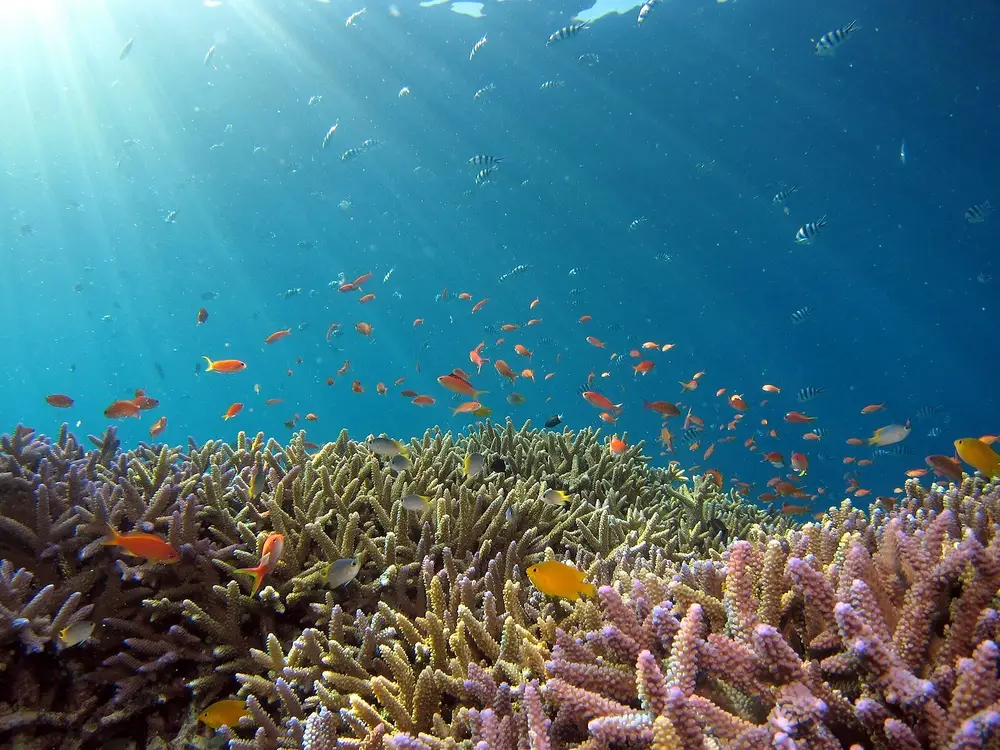
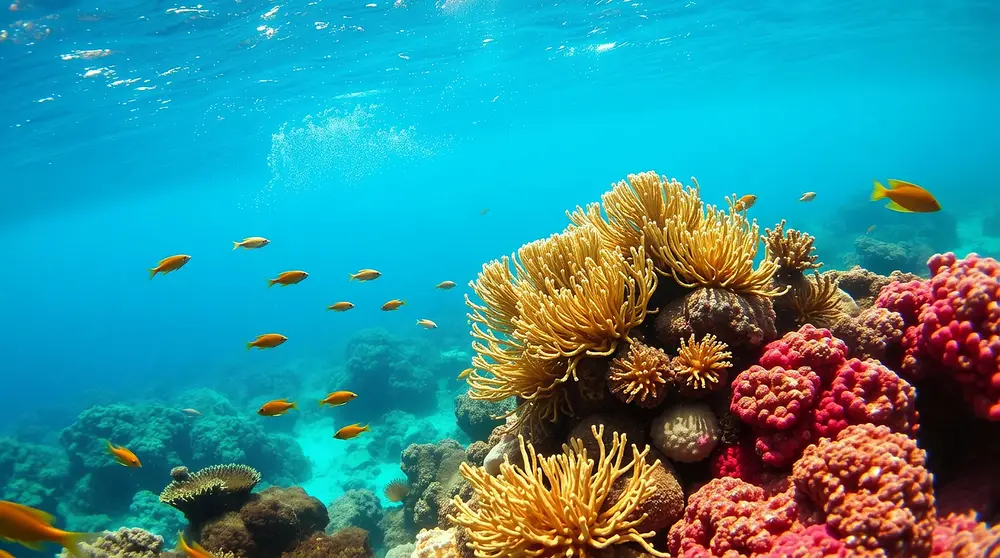
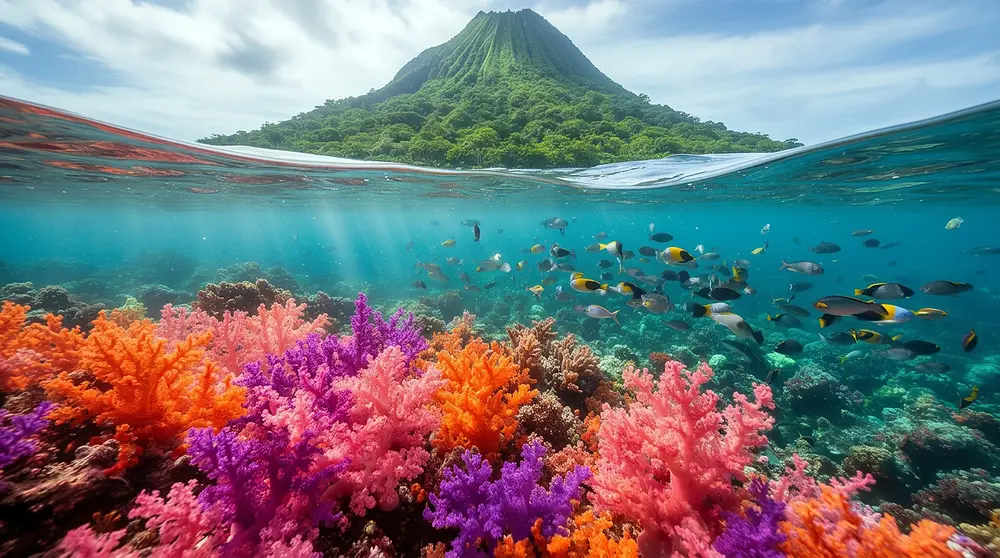
Giant clams inhabit shallow, clear tropical coral reefs across the Indo-Pacific, South Pacific, and Indian Oceans. Their geographic distribution includes waters off the Philippines, the South China Sea along Malaysia, and northern Australia's Great Barrier Reef. Because adult clams depend on light-driven algal photosynthesis for survival, they are restricted to shallow marine zones where sunlight easily penetrates the water column.

Their depth range spans from shallow surface waters down to a maximum of 20 metres (66 feet). Within this vertical zone, giant clams anchor themselves onto flat coral sand, broken coral rubble, shallow lagoons, and fringing reefs surrounding high or low-elevation islands.

Once a giant clam attaches to a substrate, it remains in that exact location for life. Although historically widespread across Indo-Pacific reefs, populations have suffered severe declines due to overharvesting for food, shells, and the aquarium trade. Today, the largest populations persist within protected marine sanctuaries, remote Pacific island groups, and intact outer reef ecosystems.

What the Giant Clam eats

Giant clams employ a dual feeding strategy consisting of photosynthetic autotrophy and active filter feeding. Between 65 and 70 percent of an adult clam's overall nutritional needs are supplied by single-celled symbiotic algae known as zooxanthellae, which live within specialized circulatory channels in the clam's mantle tissue.

During daylight hours, the clam opens its shell to expose its broad, colourful mantle to sunlight. The resident zooxanthellae photosynthesise, converting solar energy into sugars, proteins, and carbon compounds that nourish the clam. In exchange, the giant clam provides the algae with a safe habitat and essential metabolic nutrients, including carbon dioxide, nitrates, and phosphates.

Giant clams supplement their energy requirements by filter feeding on passing plankton and organic material suspended in the water column. Seawater is drawn into the mantle cavity through an inhalant siphon and filtered for nutrients. Filter feeding is especially important for young clams; tiny juveniles derive approximately 65 percent of their carbon from filter feeding, whereas larger adults derive only about 34 percent from planktonic prey.

Giant Clam: frequently asked questions

When is the best time to see Giant Clam?
Giant clams are permanently attached to their reef habitats and do not migrate, making sightings possible throughout the year across their tropical range. Dive locations across the Indo-Pacific, South Pacific, and Indian Oceans offer reliable opportunities to encounter giant clams from January through December, provide
How big does Giant Clam get?
Giant Clam: Unknown
Is Giant Clam dangerous for divers?
Giant clams are sessile underwater subjects, but approaching them requires thoughtful etiquette to observe their natural behaviour. The mantle edge is lined with thousands of sensitive pinhole eyespots that react to changes in light and motion. Casting a shadow overhead signals potential danger, triggering the clam to
What is the conservation status of Giant Clam?
Giant Clam: Not Evaluated
Plan your trip

Ready to dive with these animals?

Choose a destination or search every available vessel to find the liveaboard that matches the marine life you want to see.