About Vicente
Vicente is a remarkable dive site characterized by an expansive shield reef transitioning into a sheer wall, offering varied topography for divers. The shallow reef, extending from 3 to 10 meters, is adorned with healthy hard and soft corals, creating a vivid landscape. As you descend, the reef transforms into a deep wall, plunging beyond 40 meters into the blue. This site boasts a rich diversity of marine life, appealing to both macro enthusiasts and those seeking larger pelagic encounters. Expect to see a vibrant array of reef fish, as well as occasional sightings of turtles, jacks, emperors, and barracuda. The macro environment is particularly prolific, featuring nudibranchs, harlequin shrimp, and mantis shrimp among the corals. While diving is possible year-round, conditions can vary. Currents, especially on an outbound tide, can be significant, influencing the dive experience. Visibility generally remains good, enhancing photographic opportunities and overall enjoyment of the healthy coral ecosystems. Access to Vicente is typically managed by local dive operators, offering daily excursions. The site's diverse depths and marine inhabitants provide engaging dives for various skill levels, though awareness of potential strong currents is crucial for planning.
Highlights
Extensive shield reefDeep wall beyond 40mDiverse coral formationsMacro marine life paradiseSchooling fishPotential strong currents
Season calendar
Best months to dive here
Jan
Feb
Mar
Apr
May
Jun
Jul
Aug
Sep
Oct
Nov
Dec
Good
Dive site facts: Vicente
- Depth
- 3–40+ m
- Typical dive
- 10–25 m, 50–60 min
- Current
- Can be strong on outbound tide
- Visibility
- 35 m
- Water temperature
- 21–27°C
- Entry
- Boat from shore
- Level
- Intermediate to Advanced
- Dive type
- Reef, Wall, Macro
- Region / port
- Cuba, Jardines de la Reina
- Coordinates
- 20.83, -78.97
Conditions & Currents
At Vicente, currents can be a significant factor, particularly during an outbound tide, where they can become quite strong. Divers should anticipate drift conditions and plan their entry and exit accordingly, often involving negative entries or close boat support. While the shield reef offers some protection in shallower areas, the wall dive can expose divers to more pronounced water movement. Visibility tends to be good, typically around 35 meters, but strong currents can occasionally stir up sediment. Divers should be comfortable with currents and possess good buoyancy control to navigate this site safely, especially when exploring deeper sections of the wall.
Marine life & sighting chances

Barracuda
January to August, October · occasional
Wrasse
January to March, May, June, October, December · occasional
Moray Eel
January to March · occasional
Green Turtle
March, June, July · occasional
Octopus
January, August · occasional
Hawksbill Turtle
January, February · rare
Clownfish
All year · common
Angelfish
All year · common
Butterfly Fish
January to August, November, December · common
Lionfish
January to June, August, November, December · occasional
Bannerfish
January to March, May, July to December · common
Damselfish
January, February, May, June, July, October to December · common
Triggerfish
January to June, July to December · occasional
Parrotfish
January to March, May, September, November, December · commonDive profile & how the dive runs
Your dive at Vicente begins with a descent onto the extensive shield reef, typically around 3 to 10 meters deep. You'll navigate over vibrant hard and soft corals, observing smaller reef fish and macro subjects. From here, the dive transitions to the dramatic wall, which drops steeply beyond 40 meters. Depending on current conditions, you might perform a drift along the wall, exploring overhangs and crevices. The turnaround point is often determined by air consumption and no-decompression limits, allowing ample time to ascend gradually along the reef slope. Your safety stop will typically be conducted in the shallower sections of the shield reef, offering a final opportunity to observe the thriving coral gardens and fish life before surfacing.
Underwater photography
Vicente offers excellent opportunities for both wide-angle and macro photography. For the vibrant coral gardens on the shield reef and the dramatic wall formations, a wide-angle lens is ideal. Consider bringing strobes to bring out the true colors of the corals and sponges, which are particularly brilliant in the sunlit shallower areas. When strong currents are present, stability can be a challenge, so practicing good buoyancy control is essential to avoid disturbing the delicate ecosystem. For macro subjects like nudibranchs, harlequin shrimp, and mantis shrimp, a macro lens and focus light will be invaluable. Take your time to search for these smaller creatures hidden among the corals and in cracks.
Combine with nearby dive sites
- Pipin
Known for dramatic wall formations and abundant shark encounters within Jardines de la Reina.
- Farallón
A stunning wall dive featuring overhangs, swim-throughs, and large schools of tarpon and snappers.
- Black Coral Wall
Features impressive black coral colonies, giant gorgonian fans, and frequent reef shark sightings.
- Cayo Anclitas
Shallow coral gardens, ideal for night diving, with octopus, lobster, and nurse sharks.
Getting there & logistics
Access to Vicente typically involves liveaboard trips operating within the Jardines de la Reina National Park. These liveaboards usually depart from Jucaro, following a scenic transfer from Havana. International travelers generally fly into José Martí International Airport (HAV) in Havana. Trip durations are commonly 7 nights, combining various dive sites in the region. Strict conservation policies in Jardines de la Reina limit visitor numbers, ensuring the pristine condition of the dive sites. Park fees are usually included in liveaboard packages, but it's essential to confirm. Divers should also be aware of Cuba's specific currency regulations, requiring the acquisition of Cuban Convertible Pesos (CUC) locally, with Euros, Canadian Dollars, or Pounds recommended for exchange.
Safety & environment
Diving at Vicente requires adherence to standard safety protocols due to potential strong currents. Always dive within your training limits and stay close to your dive guide, especially during drift dives. Ensure you have appropriate exposure protection, as water temperatures can fluctuate. The nearest recompression chambers are located in Havana, Matanzas, Isla de la Juventud, and Santiago de Cuba, offering specialized subaquatic medical care. Emergency procedures for evacuation are in place, but comprehensive dive insurance covering medical emergencies and evacuation is highly recommended. Always carry your certification card and follow all park regulations to help preserve this protected marine environment.
Who it suits — and who it doesn't
Suited for
- Intermediate to advanced divers
- Macro photography enthusiasts
- Divers seeking healthy coral reefs
- Those comfortable with currents
- Liveaboard adventurers
Less suited for
- Beginner divers without current experience
- Divers unwilling to dive from liveaboards
- Individuals with limited buoyancy control
- Those sensitive to cooler water temperatures
FAQ
Vicente FAQ
What kind of marine life can I expect to see at Vicente?
Vicente boasts a diverse array of marine life. You can anticipate encountering various reef fish like angelfish and parrotfish, as well as schooling barracuda, jacks, and emperors. Macro enthusiasts will be delighted by nudibranchs, harlequin shrimp, and mantis shrimp. Turtles are also occasionally spotted here.
Are there strong currents at Vicente?
Yes, Vicente can experience strong currents, particularly during an outbound tide. Divers should be prepared for drift conditions and possess good current diving skills. Your dive guide will assess the conditions and plan the dive route accordingly to ensure safety and an enjoyable experience.
What is the typical depth range for diving Vicente?
The dive at Vicente starts on a shield reef at approximately 3 to 10 meters, which then drops off to a wall that extends beyond 40 meters. Most recreational dives focus on the reef and the upper sections of the wall, typically staying between 10 to 25 meters, but deeper exploration is possible for appropriately certified divers.
When is the best time of year to dive Vicente?
Diving at Vicente is possible year-round. However, the period from September to December often brings warmer water temperatures and coincides with the high season for tourism in the region. Visibility is generally excellent throughout the year, but always check local conditions before planning your trip.
How do I access Vicente for diving?
Vicente is located within the Jardines de la Reina National Park, and access is primarily through liveaboard operations. These liveaboards typically depart from Jucaro, which is reached by a transfer from Havana. This ensures a focused diving experience within the protected marine sanctuary.
Is Vicente suitable for beginner divers?
Due to the potential for strong currents and the depth of the wall, Vicente is generally recommended for intermediate to advanced divers. Beginners without experience in currents or those with limited buoyancy control may find the conditions challenging. It's always best to discuss your experience level with your dive operator.
Why dive Vicente from a liveaboard?
Vicente is one of Cuba's signature dive sites. A liveaboard sleeps you on the water and puts you in the water for three to four guided dives per day, including dawn and night dives that day-boat operators rarely offer. You skip the daily commute back to port and reach quieter, less-crowded sites in the same region on a single trip.
Below are the liveaboards that include Vicente on their Cuba itineraries.
Liveaboards diving Vicente
These liveaboards may visit Vicente on selected itineraries — the exact dive sites depend on departure, weather and conditions.
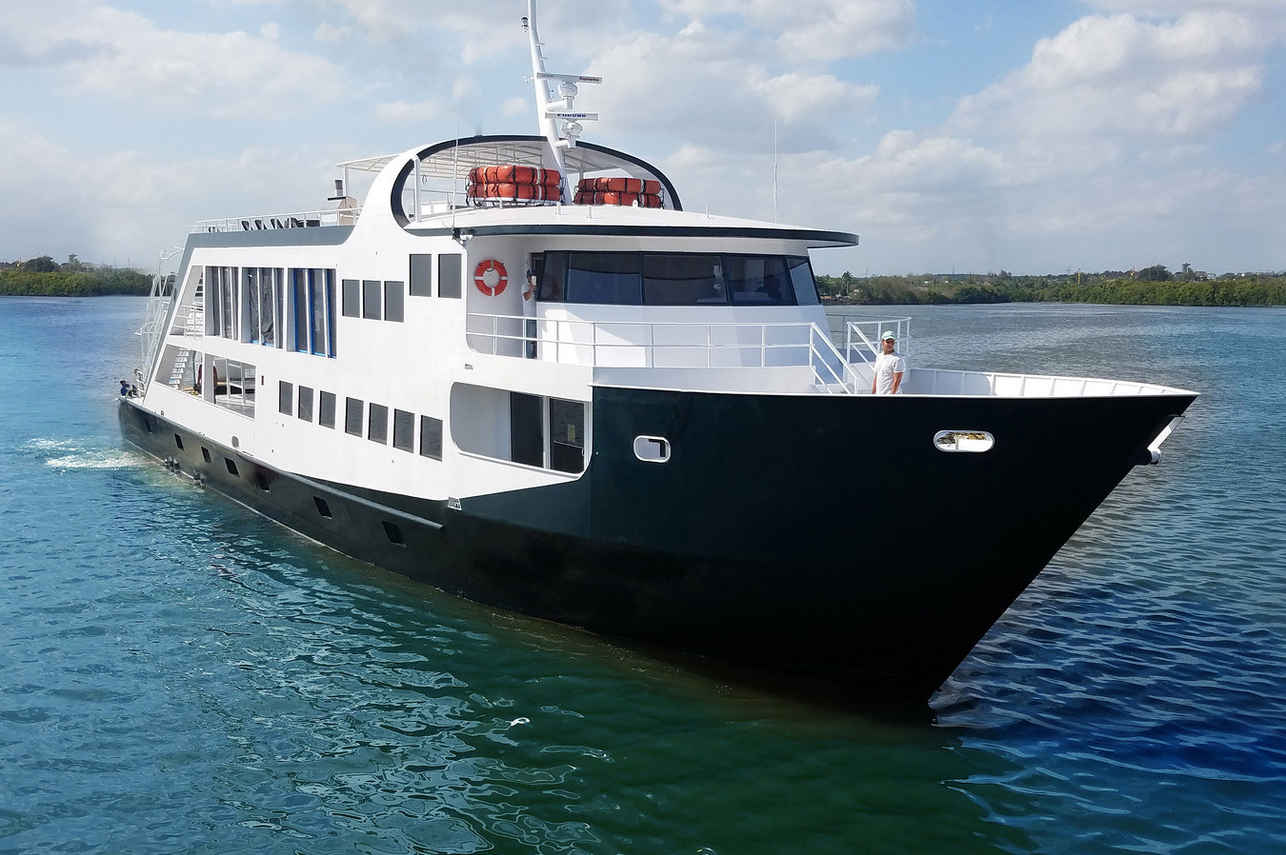
Jardines Avalon Fleet
Cuba
20 guests35.05 m
$494/day
Dive sites similar to Vicente
Same character, same waters — six more sites divers love for the exact same reasons.Compare seasons, access and liveaboard routes — then pick the site that fits your trip best.
© Esri — Maxar, Earthstar, GIS
El Almirante
Cuba
El Almirante is an advanced dive site located off the shores of Maria la Gorda, on Cuba's Guanahacabibes Peninsula.
- Suitable for
- Advanced
- Current
- Moderate
- Access
- Dayboat
- Depth
- 27–30 m
- Theme
- Wall / Reef
La Patana is a prominent dive site within the protected marine park of Jardines de la Reina, a vast archipelago stretching 150 kilometers off Cuba's southern coast.
- Suitable for
- Intermediate
- Current
- Mild
- Access
- Liveaboard only
- Depth
- 15–30 m
- Theme
- Reef / Wall
© Esri — Maxar, Earthstar, GIS
Arrecife Somero
Cuba
Arrecife Somero, located near Key Sigua within the UNESCO-recognized Zapata Swamp biosphere reserve, presents a unique reef crest forming a horseshoe shape.
- Suitable for
- Beginner
- Current
- Mild
- Access
- Liveaboard only
- Depth
- 2–5 m
- Theme
- Reef
© Esri — Maxar, Earthstar, GIS
Puente Escondido
Cuba
Puente Escondido is a notable dive site nestled within the Jardines de la Reina marine park, an expansive and highly protected area off Cuba's southern coast.
- Suitable for
- Beginner
- Current
- Mild
- Access
- Liveaboard only
- Depth
- ≤ 18 m
- Theme
- Reef
© Esri — Maxar, Earthstar, GIS
Black Coral Wall
Cuba
Black Coral I and II are prominent dive sites within Cuba's renowned Jardines de la Reina marine reserve, an area celebrated for its healthy reefs and crystal-clear waters.
- Suitable for
- Advanced
- Current
- Mild
- Access
- Liveaboard or dayboat
- Depth
- 15–40 m
- Theme
- Wall