About Tortuga
Tortuga is a well-regarded dive site located within the National Park of the East, a roughly 30-minute boat journey from Coral Point. As its name suggests, this site is a known hot spot for observing turtles and other significant marine life in the Bayahibe area. The site benefits from its protected national park status, which prohibits fishing and contributes to the healthy and lively underwater ecosystem. The topography features a shallow reef garden, starting at approximately 12 meters and sloping down to 16 meters, with colorful corals and sponges covering the seafloor. The excellent visibility, often exceeding 20 meters, allows for clear views of the extensive marine community and the vibrant reef structures. While turtles are a main attraction, the site also offers frequent sightings of eagle rays, lionfish, and green moray eels. Nudibranchs are also present, adding to the macro diversity. The marine life thrives in the calm, low-current conditions that prevail here, making for a relaxed diving experience. Tortuga is renowned for its easy diving conditions, suitable for divers of all abilities, including beginners. Its shallow depths and minimal currents provide a leisurely environment to explore the reef. Snorkelers can also enjoy the site, viewing the rich marine life from the surface due to the exceptional water clarity.
Highlights
Abundant green and hawksbill turtlesCalm, clear Caribbean reefInside National Park of the EastShallow coral gardensFrequent eagle ray sightingsAccessible for all diver levels
Season calendar
Best months to dive here
Jan
Feb
Mar
Apr
May
Jun
Jul
Aug
Sep
Oct
Nov
Dec
Excellent
Good
Dive site facts: Tortuga
- Depth
- 12–16 m
- Typical dive
- 12–14 m, 50–60 min (estimated)
- Current
- Minimal
- Visibility
- 20–30 m
- Water temperature
- 24–29 °C
- Entry
- Boat from Bayahibe
- Level
- All levels (Beginner friendly)
- Dive type
- Reef, marine life, photography
- Region / port
- Bayahibe, Dominican Republic
- Coordinates
- 18.4639° N, 69.8585° W
Conditions & Currents
Tortuga is characterized by consistently low to minimal currents, providing calm and comfortable diving conditions. This makes it an ideal location for leisurely exploration and suits divers who prefer a relaxed pace. The flat calm surge reported at the site further contributes to an easy and enjoyable underwater experience. Divers should maintain tight buoyancy control to protect the healthy coral heads, especially given the site's popularity. Boat access is typically via Bayahibe operators, and divers should be mindful of boat traffic when ascending, particularly in the boat lane. Overall, the placid conditions ensure a stress-free dive profile, allowing ample time for marine life observation and photography.
Marine life & sighting chances
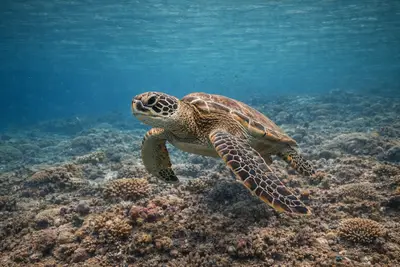
Green Turtle
Year-round, peak May–October · common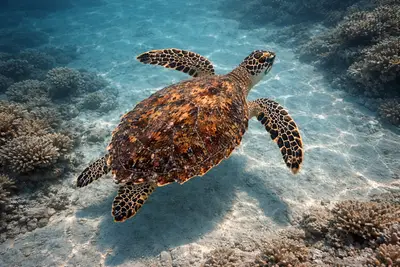
Hawksbill Turtle
occasional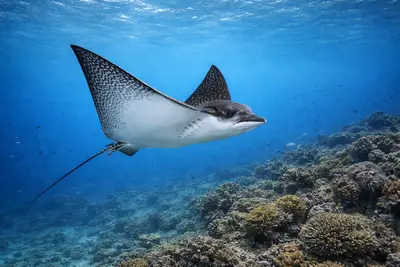
Eagle Ray
common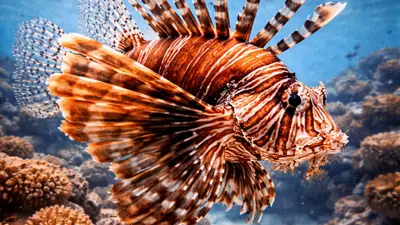
Lionfish
common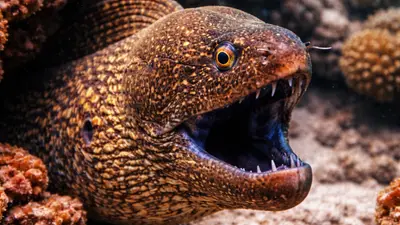
Green Moray Eel
common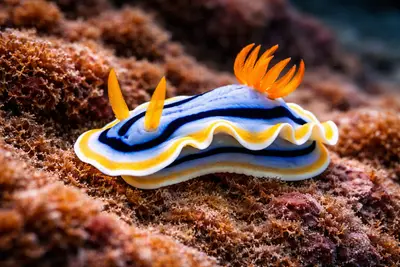
Nudibranch
occasional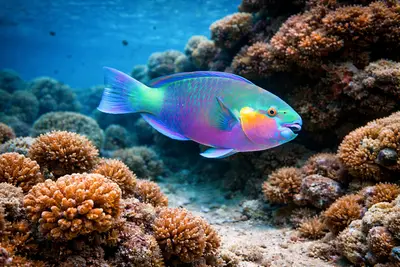
Parrotfish
common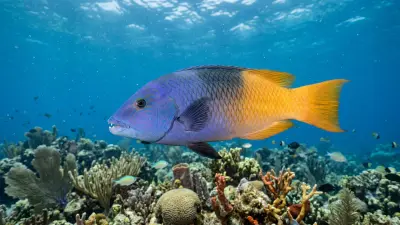
Wrasse
commonDive profile & how the dive runs
Dives at Tortuga typically commence with a boat entry from a local operator in Bayahibe. Given the site's minimal current, a relaxed descent is common, allowing divers to gradually explore the shallow coral gardens that begin around 12 meters. The dive route generally follows the reef, which slopes gently to a maximum depth of 16 meters. Divers often spend their time searching for turtles, which are a primary attraction, as well as observing the diverse reef fish, lionfish, and moray eels tucked into the corals. Eagle rays are also known to swoop through, so looking outwards and upwards is recommended. The low-current environment allows for extended bottom times and leisurely exploration of the vibrant reef. The safety stop is typically conducted in the shallowest sections of the reef or over the reef top, allowing for continued observation of marine life due to the excellent visibility, before a boat exit.
Underwater photography
Tortuga's clear, shallow waters and abundant marine life make it an excellent site for underwater photography, particularly for wide-angle and macro shots. For capturing the expansive coral gardens and potential eagle ray sightings, a wide-angle lens is ideal. When focusing on the resident turtles, lionfish, moray eels, or nudibranchs, a macro lens will highlight intricate details. Given the shallow depth and often bright Caribbean sun, natural light photography is highly feasible, but strobes can enhance colors and reduce backscatter. Buoyancy control is paramount to avoid disturbing the delicate coral formations and to ensure sharp images. Patience is key when photographing the various species; waiting for natural behaviors will yield the best results. The excellent visibility facilitates both close-up and ambient light shots, making it suitable for photographers of all skill levels.
Combine with nearby dive sites
- Peñon Reef
Located within the same National Park of the East, known for abundant life and minimal current, suitable for all levels.
- Hickory
A 44m long freighter wreck, part of an underwater national park, attracting significant marine life.
- Limon
A 21m tugboat purposefully sunk near coral reefs for diving, close to the Hickory wreck.
- Casa Estrella
A deep wall site for experienced divers, known for strong currents and pelagic life.
- Atlantic Princess Wreck
A popular wreck dive, usually combined with other local sites.
Getting there & logistics
Access to Tortuga is primarily through dive operators based in Bayahibe, which acts as the main departure point for sites within the National Park of the East. The site is typically part of a relaxed half-day boat trip, often combined with other nearby reefs. Flights into the Dominican Republic typically arrive at international airports such as Punta Cana (PUJ), Santo Domingo (SDQ), or La Romana (LRM), with transfers then arranged to Bayahibe. The diving packages usually include boat transport to the site. As Tortuga is located within a national park, fishing is forbidden, and specific park rules apply, though no special permits or fees are explicitly mentioned for divers beyond standard dive tour costs. Trips often include multiple dives, with surface intervals spent on board.
Safety & environment
Diving at Tortuga is generally considered safe due to its minimal currents and shallow depths. However, divers should always adhere to standard safety protocols, including monitoring their air consumption and no-decompression limits. The nearest recompression chamber is likely located in Santo Domingo, the capital, which could be several hours away depending on the Bayahibe location. Divers must carry comprehensive dive insurance that covers emergency medical treatment and evacuation. Key site-specific hazards include sharp corals, requiring excellent buoyancy control to prevent injury and preserve the reef. Additionally, given the boat-access nature, divers should be aware of boat traffic, particularly during ascent and descent, and always deploy a surface marker buoy. Local operators typically provide guided dives, reinforcing safe diving practices within the national park.
Who it suits — and who it doesn't
Suited for
- Beginner divers seeking easy conditions
- Underwater photographers due to excellent visibility
- Divers interested in marine life, especially turtles
- Snorkelers and freedivers on calm days
- Divers looking for relaxed, shallow reef exploration
Less suited for
- Technical divers seeking extreme depths or complex profiles
- Divers looking for strong current drift dives
- Those uninterested in macro life or reef ecosystems
- Divers requiring shore entry access
FAQ
Tortuga FAQ
What kind of marine life can I expect to see at Tortuga?
At Tortuga, you can expect a vibrant array of Caribbean marine life. The site is particularly known for frequent sightings of green turtles and hawksbill turtles, as its name suggests. You'll also commonly encounter eagle rays, lionfish, and green moray eels tucked into the reef, along with various colorful reef fish like parrotfish and wrasse. Nudibranchs are also present for those interested in macro subjects.
Is Tortuga suitable for beginner divers or those with limited experience?
Yes, Tortuga is highly suitable for beginner divers and those with limited experience. The dive site is characterized by minimal currents, shallow depths (ranging from 12 to 16 meters), and excellent visibility, often exceeding 20 meters. These calm and easy conditions provide a relaxed environment, allowing new divers to comfortably explore the reef and observe marine life without significant challenges.
How long is the boat ride to Tortuga from Bayahibe?
The boat journey to Tortuga from Bayahibe typically takes approximately 30 minutes. This relatively short travel time makes the site easily accessible for half-day dive excursions. The proximity to Bayahibe allows for more dive time and less transit time, contributing to a more relaxed and enjoyable diving experience.
Can snorkelers enjoy the Tortuga dive site?
Absolutely, snorkelers can definitely enjoy the Tortuga dive site. Thanks to its shallow reef, excellent visibility, and calm water conditions, snorkelers can observe the abundant marine life and vibrant coral gardens from the surface. Many dive operators offer trips that cater to both divers and snorkelers, making it a great spot for mixed groups or families.
What are the typical water conditions at Tortuga regarding temperature and visibility?
Water temperatures at Tortuga are consistently warm, ranging from 24 to 29°C (75 to 84°F) year-round. Visibility is generally excellent, averaging between 20 to 27 meters (60 to 90 feet), and can often peak at 30 meters (100 feet) during certain months, particularly from June to September. These clear, warm waters contribute to a very comfortable and visually rewarding dive.
Why dive Tortuga from a liveaboard?
Tortuga is one of Dominican Republic's signature dive sites. A liveaboard sleeps you on the water and puts you in the water for three to four guided dives per day, including dawn and night dives that day-boat operators rarely offer. You skip the daily commute back to port and reach quieter, less-crowded sites in the same region on a single trip.
Below are the liveaboards that include Tortuga on their Dominican Republic itineraries.
Liveaboards diving Tortuga
These liveaboards may visit Tortuga on selected itineraries — the exact dive sites depend on departure, weather and conditions.
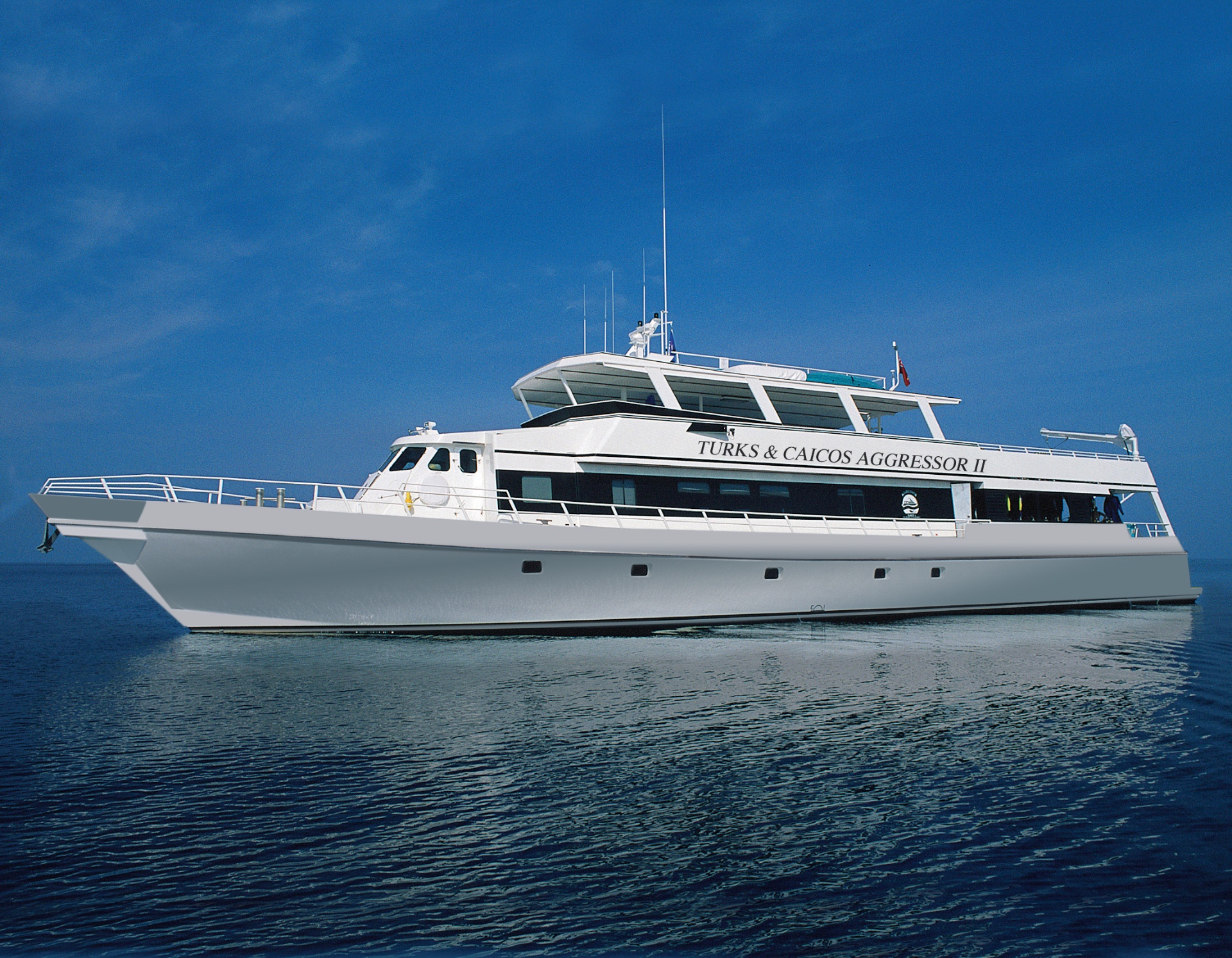
Turks & Caicos Aggressor II
Turks & Caicos
18 guests36.6 m
$287/day
Dive sites similar to Tortuga
Same character, same waters — six more sites divers love for the exact same reasons.Compare seasons, access and liveaboard routes — then pick the site that fits your trip best.
Canal Saona
Dominican Republic
Saona Island Reef, located within Cotubanamá National Park off the southeastern coast of the Dominican Republic, is a well-regarded dive site known for its rich coral ecosystems and abundant marine species.
- Suitable for
- Intermediate
- Current
- Moderate
- Access
- Liveaboard or dayboat
- Depth
- 20–20 m
- Theme
- Reef
El Peñon
Dominican Republic
El Peñon is a highly-regarded dive site located within the protected Parque Nacional del Este, near Bayahibe in the Dominican Republic.
- Suitable for
- Beginner
- Current
- No current
- Access
- Dayboat
- Depth
- 7–28 m
- Theme
- Reef
El Limón
Dominican Republic
El Limón is a notable shipwreck site located within the La Caleta Underwater National Park, close to Santo Domingo.
- Suitable for
- Advanced
- Current
- Mild
- Access
- Dayboat
- Depth
- 30–30 m
- Theme
- Wreck / Reef
Sosua Marine Reserve
Dominican Republic
The Sosua Marine Reserve offers a premier diving experience directly accessible from Playa Sosua on the north coast of the Dominican Republic.
- Suitable for
- Beginner
- Current
- Mild
- Access
- Dayboat
- Depth
- 5–18 m
- Theme
- Reef
Elephante
Dominican Republic
The Dominican Republic presents a varied underwater landscape, suitable for divers of all levels, with its calm Caribbean seas off the south coast providing ideal conditions for…
- Suitable for
- Intermediate
- Current
- Moderate
- Access
- Liveaboard or dayboat
- Depth
- 5–26 m
- Theme
- Reef
Palmeras
Dominican Republic
The Dominican Republic offers a variety of exceptional dive sites, making it a premier Caribbean destination for divers of all experience levels.
- Suitable for
- Beginner
- Current
- Moderate
- Access
- Liveaboard or dayboat
- Depth
- 5–18 m
- Theme
- Reef