About Shark Bank (Mahé)
Shark Bank, located approximately 8 kilometers northwest of Mahé in open water, is a submerged granite plateau that rises from depths exceeding 60 meters to a broad top at around 18 to 20 meters. This seamount effect creates a unique ecosystem, drawing in an exceptional density of marine life, particularly large pelagics. The site's topography features a lunar-like landscape of smooth granite boulders interspersed with sand, providing shelter and resting spots for numerous species. Divers here can expect to see an impressive array of megafauna. Marble rays and bull rays, some with wingspans over two meters, are frequently encountered resting on the granite surfaces. Grey reef sharks patrol the plateau edges in consistent circuits, and nurse sharks can be found tucked into the crevices between boulders. During the transitional monsoon seasons, the bank becomes a reliable interception point for whale sharks, offering the chance of a truly unforgettable encounter. Beyond the large animals, the plateau supports healthy gorgonian fans, barrel sponges, and resident schools of batfish. Giant trevally make aggressive hunting passes, adding to the dynamic underwater scene. The granite substrate provides a distinct diving environment, differing significantly from coral-based reefs and highlighting the Seychelles' geological origins as continental fragments. Shark Bank is considered an advanced dive due to its exposed location and potential for strong, unpredictable currents. Surface conditions can also be rough, making for an uncomfortable boat ride. However, for experienced divers, the site rewards with a raw, wild glimpse into the Seychelles' rich marine biodiversity.
Highlights
Submerged granite plateauWhale shark encounters (seasonal)Dense ray populationsGrey reef and nurse sharksAggressive giant trevallyUnique granite topographyExposed open-water conditionsRich pelagic action
Season calendar
Best months to dive here
Jan
Feb
Mar
Apr
May
Jun
Jul
Aug
Sep
Oct
Nov
Dec
Excellent
Good
Dive site facts: Shark Bank (Mahé)
- Depth
- 15–40 m
- Typical dive
- 25–40 m, 40–50 min
- Current
- Strong and unpredictable
- Visibility
- 15–30 m
- Water temperature
- 25–30°C
- Entry
- Live drop / negative entry
- Level
- Advanced Open Water, current experience required
- Dive type
- Pinnacle, pelagic, drift
- Region / port
- Mahé, Inner Islands
- Coordinates
- -4.5833, 55.3333
Conditions & Currents
Shark Bank is situated in exposed open water and can experience strong, unpredictable currents that may change direction during a dive. These currents are a primary reason the site attracts large pelagic species. Divers should be prepared for potential drift diving conditions and have excellent buoyancy control.
Marine life & sighting chances
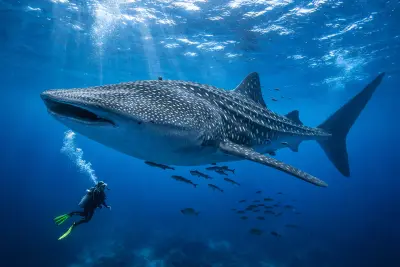
Whale shark
March–May, Sept–Nov · occasional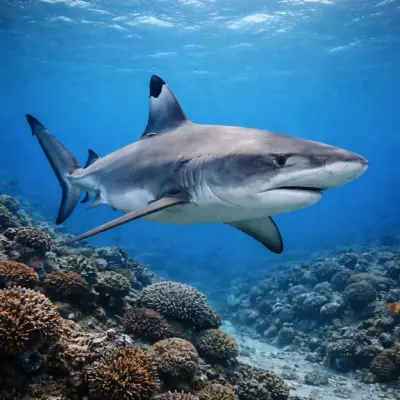
Grey reef shark
common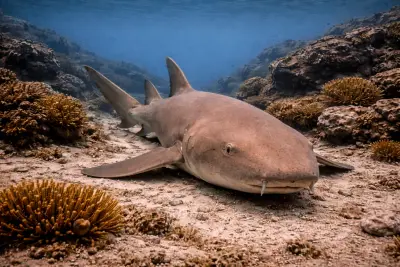
Nurse shark
common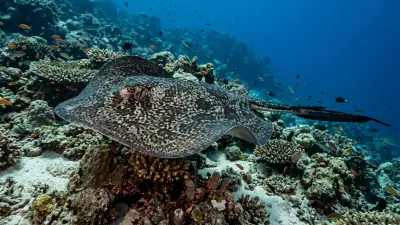
Marble ray
common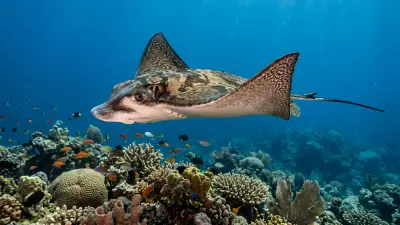
Bull ray
common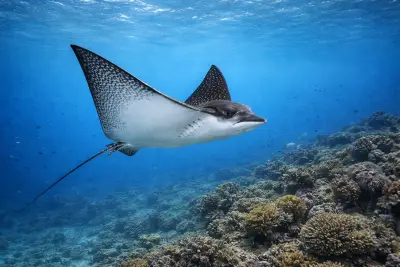
Eagle ray
occasional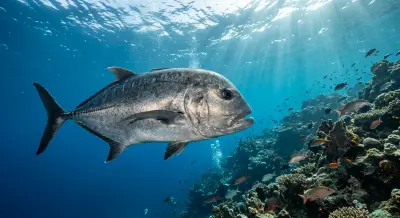
Giant trevally
common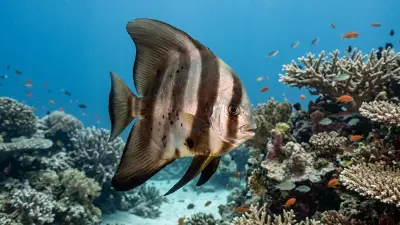
Batfish
common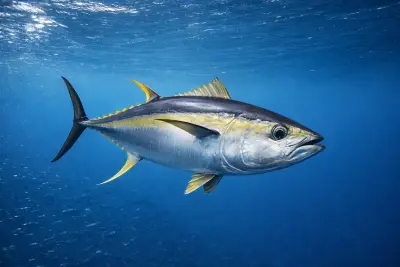
Yellowfin tuna
occasional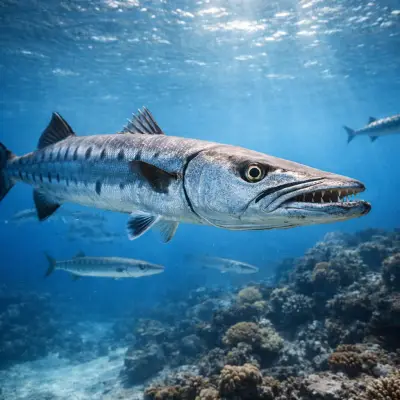
Barracuda
occasional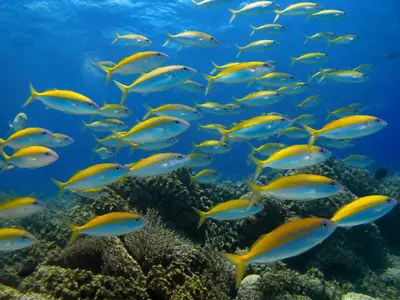
Fusilier
common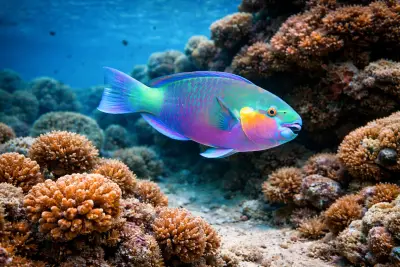
Humphead parrotfish
occasional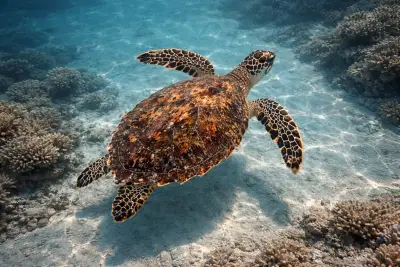
Hawksbill turtle
occasional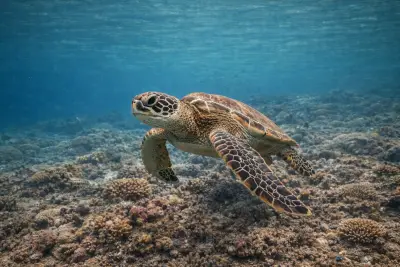
Green turtle
occasionalDive profile & how the dive runs
Dives at Shark Bank typically begin with a live drop from the boat directly onto the top of the submerged granite pinnacle at approximately 15 meters. From there, divers descend to circumnavigate the pinnacle, often at depths of around 25 meters, exploring the edges where pelagic action is most prevalent. The dive may progress deeper, reaching the base of the pinnacle at 40 meters, to observe larger marine life congregating at greater depths. Due to the potential for strong currents, the dive often involves a drift, with divers maintaining close proximity to the granite formations. The turn point is usually dictated by air consumption and bottom time, after which a gradual ascent is made. The safety stop typically occurs at 5 meters in open water, requiring careful management of buoyancy and awareness of boat traffic for pickup.
Underwater photography
Shark Bank is an exceptional site for wide-angle photography, especially given the potential for whale shark encounters and large schools of pelagic fish. A fisheye or wide-angle rectilinear lens will best capture the immense granite formations and the vastness of the marine life. For close-up shots of rays or nurse sharks resting in crevices, a mid-range zoom lens might be useful, but the primary focus should be on the grand scale. Natural light is often sufficient on the pinnacle top, but strobes are recommended to bring out the colors of gorgonian fans and sponges at deeper levels and to properly expose darker areas or subjects against the bright surface. Maintain excellent buoyancy to avoid stirring up sand from the plateau and practice proper etiquette when approaching marine life, particularly whale sharks, to minimize disturbance.
Combine with nearby dive sites
- Brissare Rocks (Mahé)
Another granite pinnacle known for biodiversity and pelagics.
- L'Ilot
A small granite island with arches and swim-throughs, also accessible from Mahé.
- Conception Island
Features majestic granite boulders and seasonal whale shark sightings.
- Twin Barges Wreck
A popular wreck dive near Mahé, good for night diving.
Getting there & logistics
To reach Shark Bank, divers typically fly into Seychelles International Airport (SEZ) on Mahé. Dive trips to Shark Bank are usually day excursions operated by dive centers located on Mahé's northwest coast, primarily from Beau Vallon or Victoria. The boat journey to the site takes approximately 30 to 45 minutes, depending on sea conditions. Due to its exposed location, the trip is weather-dependent and may be cancelled in rough seas. Shark Bank is often offered as a special trip requiring advance booking and may have minimum diver requirements. It is a premium site often combined with other Inner Island dives on multi-day itineraries, though liveaboards also visit. There are no specific park fees mentioned for this particular site, but general marine park fees may apply in Seychelles.
Safety & environment
Safety at Shark Bank is paramount due to its exposed location and potentially strong currents. Divers must hold an Advanced Open Water certification and demonstrate proficiency in current diving. The nearest recompression chamber is located at Victoria Hospital on Mahé, approximately 45-60 minutes by boat and then road from the site. Comprehensive dive insurance that covers emergency evacuation and recompression treatment is essential. Site-specific hazards include unpredictable currents, rough surface conditions, and significant depths which demand conservative dive planning and excellent air management. Divers should always follow their dive guide's instructions, maintain buddy contact, and be prepared for potential drift ascents. It is advisable to dive with experienced local operators familiar with the site's unique conditions.
Who it suits — and who it doesn't
Suited for
- Advanced Open Water divers with current experience
- Divers seeking large pelagic encounters
- Underwater photographers focused on wide-angle subjects
- Experienced divers comfortable with open-water conditions
- Divers interested in unique granite underwater topography
Less suited for
- Beginner divers or Open Water certified divers
- Divers uncomfortable with strong or unpredictable currents
- Divers prone to seasickness on rough boat rides
- Macro-focused photographers
- Divers with limited air consumption
FAQ
Shark Bank (Mahé) FAQ
When is the best time to see whale sharks at Shark Bank?
Whale shark sightings at Shark Bank are most likely during the transitional monsoon seasons, specifically from March to May and again from September to November. These periods bring nutrient-rich waters that attract plankton, a primary food source for whale sharks. While sightings are never guaranteed, these windows offer the highest probability of encountering these majestic animals.
Why is Shark Bank considered an advanced dive site?
Shark Bank is rated as an advanced dive due to its exposed location in open water, approximately 8 kilometers northwest of Mahé. This exposure means it can experience strong and unpredictable currents, and surface conditions can be rough. The depth profile, with the pinnacle top at 18-20 meters and interesting features extending to 40 meters, requires proficient air management and decompression awareness. Operators typically require Advanced Open Water certification and logged experience in similar conditions.
How do I get to Shark Bank from Mahé?
Shark Bank is reached by dive boat from operators based on Mahé, typically departing from Beau Vallon or Victoria. The boat ride takes approximately 30 to 45 minutes, depending on sea conditions. Due to its exposed nature, trips are weather-dependent and may be cancelled if swells are too high. It's advisable to book in advance as it's often a special trip with minimum diver requirements.
What kind of marine life can I expect to see at Shark Bank?
Shark Bank is renowned for its large marine life. You can expect to see numerous marble and bull rays, often resting on the granite plateau. Grey reef sharks commonly patrol the edges, and nurse sharks can be found in crevices. During specific seasons, whale sharks are a major draw. Additionally, the site hosts giant trevally, schools of batfish, barracuda, yellowfin tuna, and various fusilier species, along with gorgonian fans and barrel sponges.
What makes Shark Bank's underwater topography unique?
Shark Bank's unique underwater topography stems from its geological composition of ancient granite, a remnant of the supercontinent Gondwana. Unlike typical coral atolls, this site features a submerged granite pinnacle that rises dramatically from deep water. The top of the bank is characterized by smooth granite boulders and sandy patches, forming a lunar-like landscape with crevices and ledges that provide diverse habitats for marine life.
Why dive Shark Bank (Mahé) from a liveaboard?
Shark Bank (Mahé) is one of Seychelles's signature dive sites. A liveaboard sleeps you on the water and puts you in the water for three to four guided dives per day, including dawn and night dives that day-boat operators rarely offer. You skip the daily commute back to port and reach quieter, less-crowded sites in the same region on a single trip.
Below are the liveaboards that include Shark Bank (Mahé) on their Seychelles itineraries.
Liveaboards diving Shark Bank (Mahé)
These liveaboards may visit Shark Bank (Mahé) on selected itineraries — the exact dive sites depend on departure, weather and conditions.
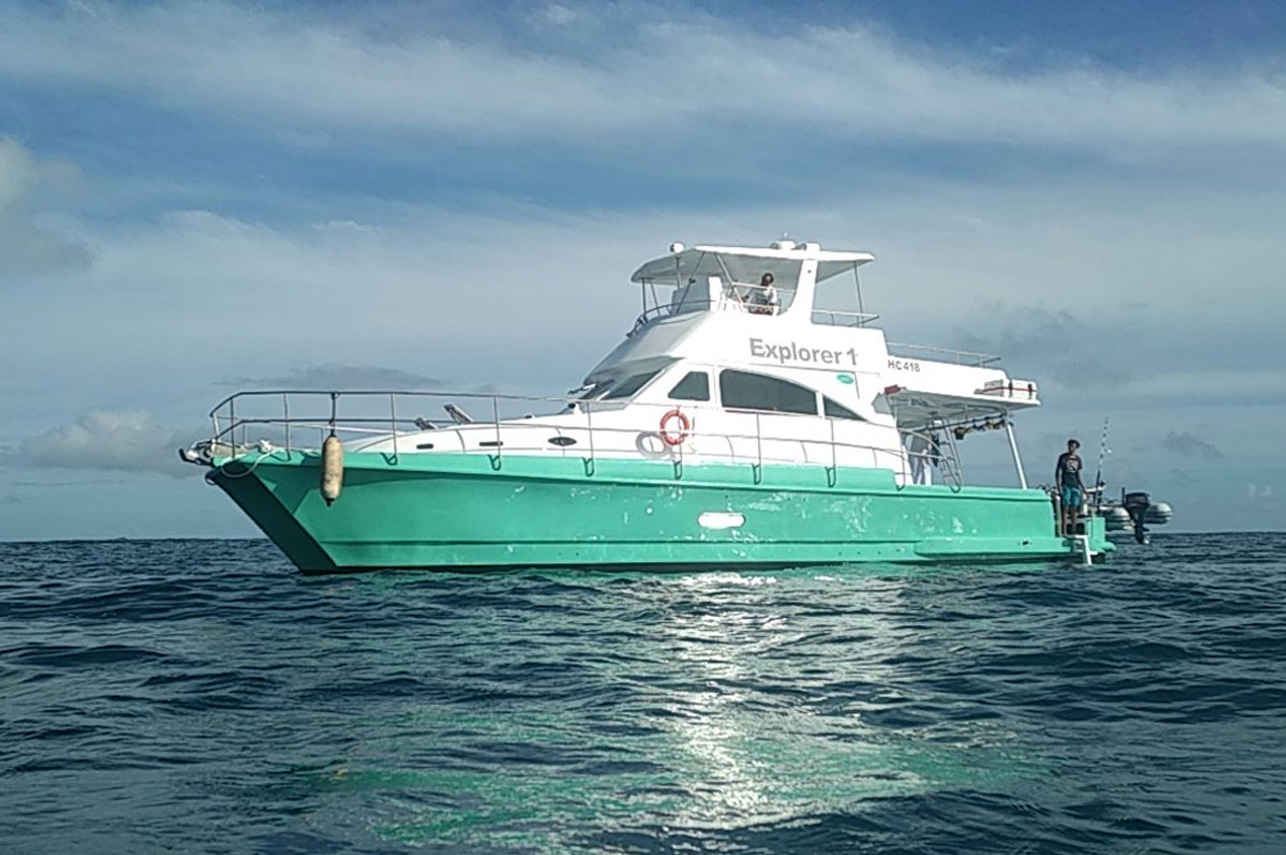
Explorer 1
Seychelles
6 guests17 m
$522/day
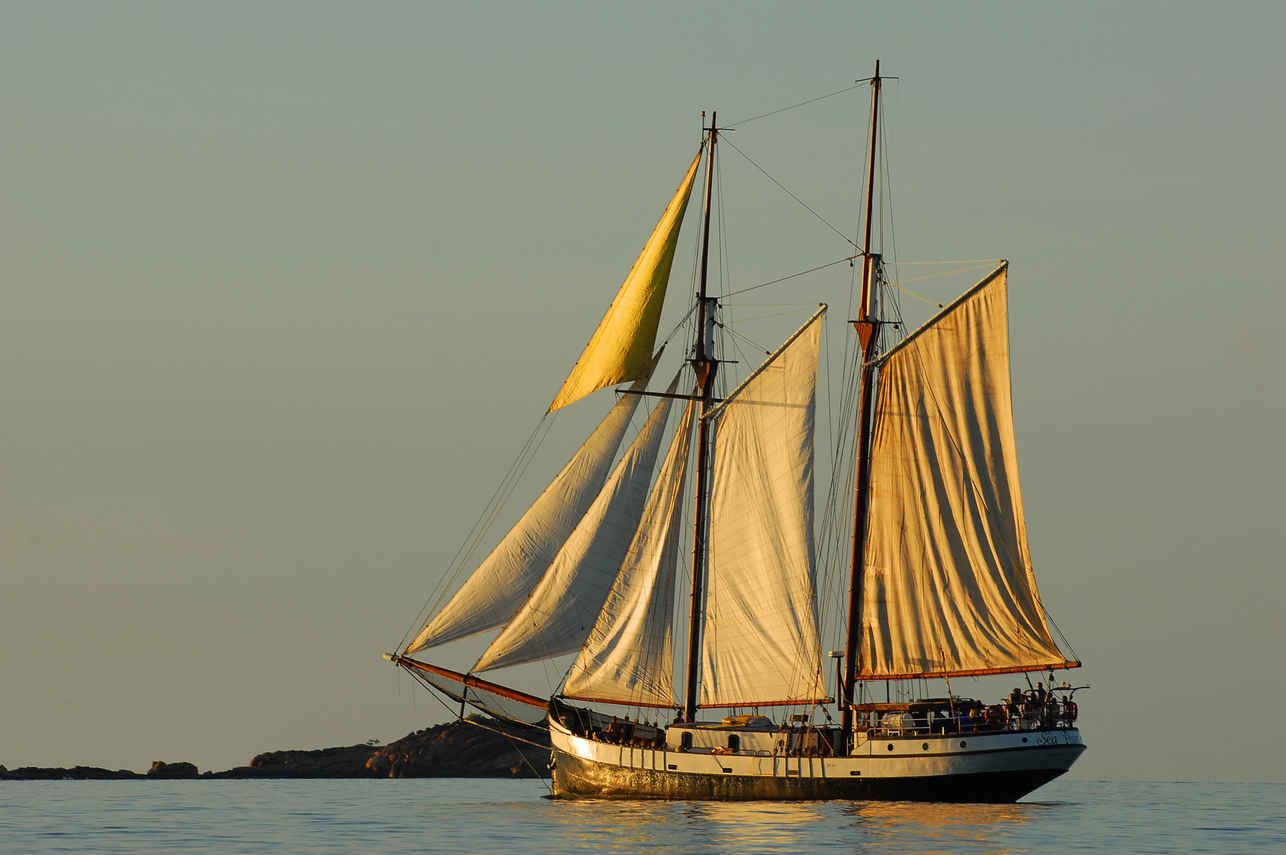
Sea Pearl
Seychelles
16 guests36 m
$212/day
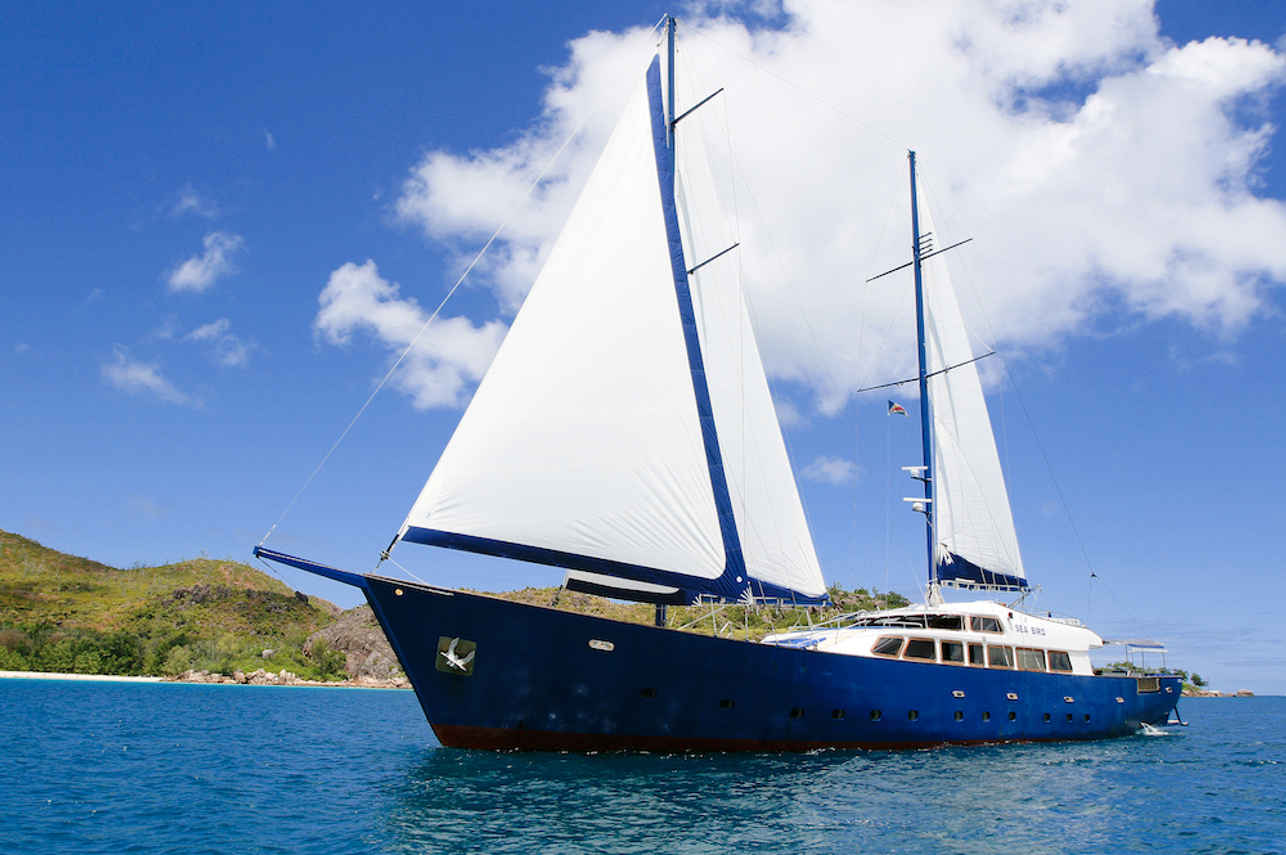
Sea Bird and Sea Star
Seychelles
18 guests42 m
$288/day
Dive sites similar to Shark Bank (Mahé)
Same character, same waters — six more sites divers love for the exact same reasons.Compare seasons, access and liveaboard routes — then pick the site that fits your trip best.
© Esri — Maxar, Earthstar, GIS
Sister Bank
Seychelles
Sister Bank is a notable dive site situated in the Inner Islands of Seychelles, specifically near Praslin Island.
- Suitable for
- Intermediate
- Current
- Mild
- Access
- Liveaboard only
- Depth
- 15–30 m
- Theme
- Reef / Drift
© Esri — Maxar, Earthstar, GIS
Brissare Rocks (Mahé)
Seychelles
Brissare Rocks, located just north of Mahé, is a renowned dive site in Seychelles, widely considered one of Mahé's top five.
- Suitable for
- Intermediate
- Current
- Strong
- Access
- Liveaboard or dayboat
- Depth
- 8–20 m
- Theme
- Cave & cavern / Drift
© Esri — Maxar, Earthstar, GIS
Lighthouse Reef (Mahé)
Seychelles
Lighthouse Reef, situated near Mahé in the Seychelles, presents a captivating underwater experience characterized by thriving reef ecosystems.
- Suitable for
- Beginner
- Current
- Strong
- Access
- Liveaboard or dayboat
- Depth
- 5–18 m
- Theme
- Reef
Napoleon is a renowned dive site located off Alphonse Island in the Seychelles, celebrated for its rich biodiversity and stunning underwater topography.
- Suitable for
- Intermediate
- Current
- Moderate
- Access
- Liveaboard only
- Depth
- 8–30 m
- Theme
- Reef
© Esri — Maxar, Earthstar, GIS
One Tree Island
Seychelles
One Tree Island is a well-known, shallow dive site located off the coast of Mahé, the largest of the Seychelles' Inner Islands.
- Suitable for
- Beginner
- Current
- Moderate
- Access
- Liveaboard only
- Depth
- ≤ 12 m
- Theme
- Reef
© Esri — Maxar, Earthstar, GIS
St. Pierre
Seychelles
St. Pierre Islet is a distinctive granite pinnacle rising from depths of around 25 meters, situated north of Praslin.
- Suitable for
- Beginner
- Current
- Moderate
- Access
- Liveaboard only
- Depth
- 4–25 m
- Theme
- Reef