About North Point
North Point, the northernmost dive site of the Similan Islands, sits just north of Similan Island No. 9. This site is renowned for its diverse underwater topography, featuring massive granite boulders that create an intricate network of swim-throughs, channels, and walls. These structures descend steeply to depths beyond 35 meters, providing a dramatic backdrop for exploration. The shallower areas near the island transition into expansive reefs, primarily composed of staghorn and hard corals, stretching from east to west. The contrast between the deep boulder formations and the colorful, shallow coral gardens makes North Point a compelling dive for various interests. Sandy patches intersperse the rock formations, offering resting places for bottom-dwelling marine life. Marine life here is abundant and varied, ranging from pelagic species like white-tip reef sharks and giant trevally that cruise the deeper waters, to a wealth of macro creatures such as pipefish, nudibranchs, and purple fire gobies found amongst the corals and sand. Leopard sharks and blue-spotted stingrays are also frequent visitors to the sandy seabed. The site's diverse habitats support a rich ecosystem, ensuring something to discover on every dive. Diving North Point typically involves navigating the boulder formations and exploring the coral reefs. Given the potential for moderate to strong currents, it is best suited for intermediate divers with some experience in varying conditions. The excellent visibility, often ranging from 20 to 30 meters, enhances the experience, allowing divers to fully appreciate the site's grandeur and intricate details.
Highlights
Massive granite boulder formationsNumerous swim-throughs and channelsDeep walls beyond 35 metersVibrant hard and staghorn coral reefsLeopard and white-tip reef sharksDiverse macro lifeExcellent visibilityRich pelagic encounters
Season calendar
Best months to dive here
Jan
Feb
Mar
Apr
May
Jun
Jul
Aug
Sep
Oct
Nov
Dec
Excellent
Good
Dive site facts: North Point
- Depth
- 10–35 m
- Current
- Moderate to Strong
- Visibility
- 20–30 m
- Water temperature
- 27–30 °C
- Entry
- Liveaboard or dayboat
- Level
- Intermediate
- Dive type
- Wall, Drift, Coral Garden
- Region / port
- Similan Islands, Andaman Sea
- Coordinates
- 8.7234, 97.6456
Conditions & Currents
North Point can experience moderate to strong currents, particularly around the deeper boulder formations. Divers should be prepared for drift diving conditions and possess good buoyancy control. Entry is typically a negative entry to quickly descend to the sheltered areas behind the boulders. The currents often dictate the dive plan, moving divers along the formations and through channels. Visibility remains excellent even with stronger currents, ranging from 20 to 30 meters, though localized thermoclines are uncommon. Divers should monitor their air consumption and always remain in close proximity to their buddy and guide, as currents can change quickly.
Marine life & sighting chances

Leopard shark
occasional
Blue-spotted stingray
occasional
White-tip reef shark
common
Blue-fin trevally
common
Unicornfish
common
Giant trevally
common
Pipefish
common
Purple fire goby
common
Octopus
common
Nudibranch
common
Moray Eel
common
Barracuda
common
Clownfish
common
Parrotfish
commonDive profile & how the dive runs
Your dive at North Point typically begins with a negative entry due to the potential for moderate to strong currents, allowing for a swift descent to the shelter of the large granite boulders. The route often involves exploring the dramatic underwater landscape, navigating through the numerous swim-throughs and channels that characterize the site. You'll descend along the steeply falling boulders, observing marine life that hides in crevices and cruises the deeper sections. The dive progresses towards the shallower reefs closer to Similan Island No. 9, where expansive coral gardens of staghorn and hard corals provide a vibrant contrast to the granite. The turn point is flexible, often determined by current direction and air consumption, aiming to utilize the current to drift towards the safety stop area. Safety stops are generally conducted in the calmer, shallower waters of the reef, providing a final opportunity to spot macro life before ascending.
Underwater photography
North Point offers diverse photographic opportunities, from wide-angle shots of impressive granite formations and schooling fish to macro subjects hidden within the corals and sandy patches. A wide-angle lens is ideal for capturing the grand scale of the boulders, swim-throughs, and large pelagics. For macro enthusiasts, a macro lens will be rewarded with pipefish, nudibranchs, and gobies. Due to potential currents, stable buoyancy and quick reactions are essential. Consider using strobes to bring out the true colors of the soft corals and reef inhabitants. Be mindful of your fin kicks around fragile corals and when exploring tight swim-throughs, prioritizing the preservation of the delicate ecosystem.
Combine with nearby dive sites
- Christmas Point
Christmas Point, located on Similan Island number 9 (Koh Ba-Ngu), stands out as one of the Similan Islands' most iconic dive sites.
- Breakfast Bend
Breakfast Bend, also known as Three Trees, is a highly regarded dive site located along the eastern side of Similan Island No.
- Koh Bon
Koh Bon is a distinguished dive site located north of Similan Island No.
- Richelieu Rock
Richelieu Rock, often celebrated as Thailand's premier dive site, is a majestic, isolated pinnacle located within Surin National Park in…
- Hin Muang
Hin Muang, translating to 'Purple Rock', is one of Thailand's premier dive sites, located within the Mu Koh Lanta National Park.
- Hin Daeng
Hin Daeng, meaning "Red Rock" in Thai, is a world-renowned dive site situated in the Mu Koh Lanta National Park, approximately 55 km south…
Getting there & logistics
Access to North Point is primarily via liveaboard trips or day trips departing from Khao Lak, the main gateway to the Similan Islands. The Similan Islands National Park is located about 60 kilometers from Thaplamu Pier in Khao Lak. Most international travelers fly into Phuket International Airport (HKT) and then transfer to Khao Lak. Trip lengths vary, with liveaboards typically offering itineraries of multiple days to explore several Similan and Surin Islands dive sites. The National Park is closed annually from mid-May to mid-October, so plan your visit during the open season. Park fees are usually included in liveaboard or day trip packages. The site is often combined with other Similan sites like Christmas Point and Breakfast Bend to create a comprehensive dive itinerary.
Safety & environment
Diving at North Point, while rewarding, requires adherence to safety protocols due to potentially strong currents and depths exceeding 30 meters. Divers should possess an intermediate certification and experience with drift diving. Always dive with a reputable operator and an experienced guide who is familiar with the local conditions. Ensure your equipment is well-maintained and that you have adequate gas planning. The nearest recompression chamber is located in Phuket, which can be several hours away by boat and road depending on your liveaboard's location. Comprehensive dive insurance covering emergency evacuation and recompression treatment is strongly recommended. Avoid touching marine life or coral, and maintain good buoyancy to prevent accidental damage to the fragile ecosystem.
Who it suits — and who it doesn't
Suited for
- Experienced divers comfortable with currents
- Underwater photographers seeking diverse subjects
- Divers interested in pelagic encounters
- Explorers of unique underwater topographies
- Macro photography enthusiasts
Less suited for
- Beginner divers without current experience
- Divers with limited buoyancy control
- Those prone to seasickness in choppy conditions
- Divers expecting only calm, shallow dives
FAQ
North Point FAQ
What kind of dive site is North Point?
North Point is a captivating dive site characterized by massive granite boulders forming walls, channels, and swim-throughs in deeper areas, transitioning to vibrant hard and staghorn coral reefs in shallower sections. It offers a diverse underwater landscape suitable for exploring unique rock formations and colorful marine life.
What marine life can I expect to see at North Point?
You can anticipate seeing a rich variety of marine life, including pelagic species like white-tip reef sharks, blue-fin trevally, and giant trevally. On the sandy bottom, leopard sharks and blue-spotted stingrays are common. Macro life such as pipefish, octopuses, nudibranchs, and purple fire gobies are also frequently sighted among the corals.
What is the best time of year to dive North Point?
The prime diving season for North Point aligns with the operational period of the Similan Islands National Park, typically from October to mid-May. During these months, the weather conditions are generally stable, offering the best visibility and calmer seas for an optimal diving experience.
Are there strong currents at North Point?
Yes, North Point can experience moderate to strong currents, especially around its deeper boulder formations. Divers should be comfortable with drift diving and possess good buoyancy control. Your dive guide will plan the route to best utilize or mitigate the current conditions for a safe and enjoyable dive.
Is North Point suitable for beginner divers?
North Point is generally recommended for intermediate divers due to the potential for strong currents and deeper sections. Beginners without experience in varying current conditions might find it challenging. It is advisable to have an Advanced Open Water certification or equivalent experience before diving this site.
Why dive North Point from a liveaboard?
North Point is one of Thailand's signature dive sites. A liveaboard sleeps you on the water and puts you in the water for three to four guided dives per day, including dawn and night dives that day-boat operators rarely offer. You skip the daily commute back to port and reach quieter, less-crowded sites in the same region on a single trip.
Below are the liveaboards that include North Point on their Thailand itineraries.
Liveaboards diving North Point
These liveaboards may visit North Point on selected itineraries — the exact dive sites depend on departure, weather and conditions.
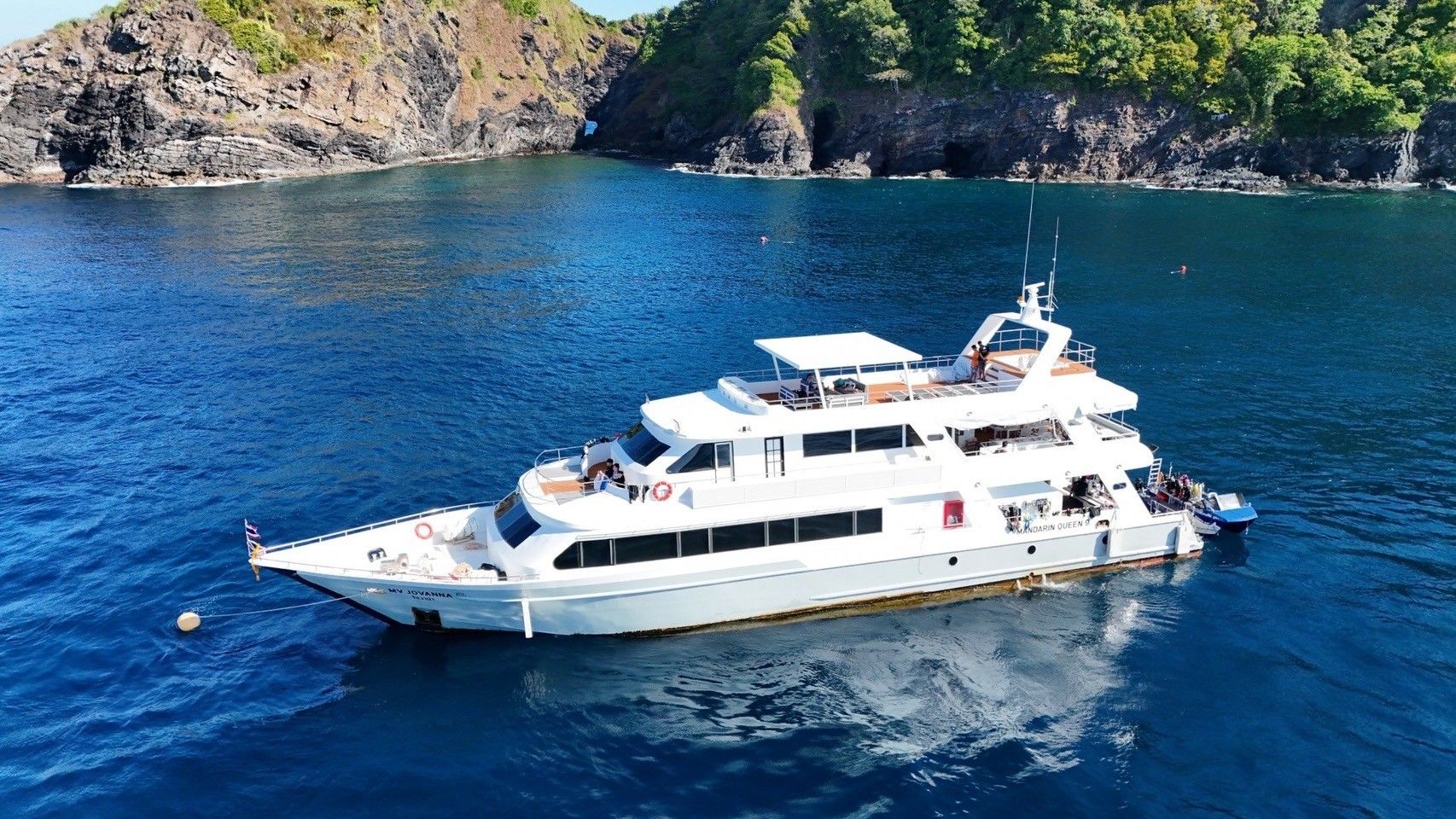
Mandarin Queen 9
Thailand
26 guests37.5 m
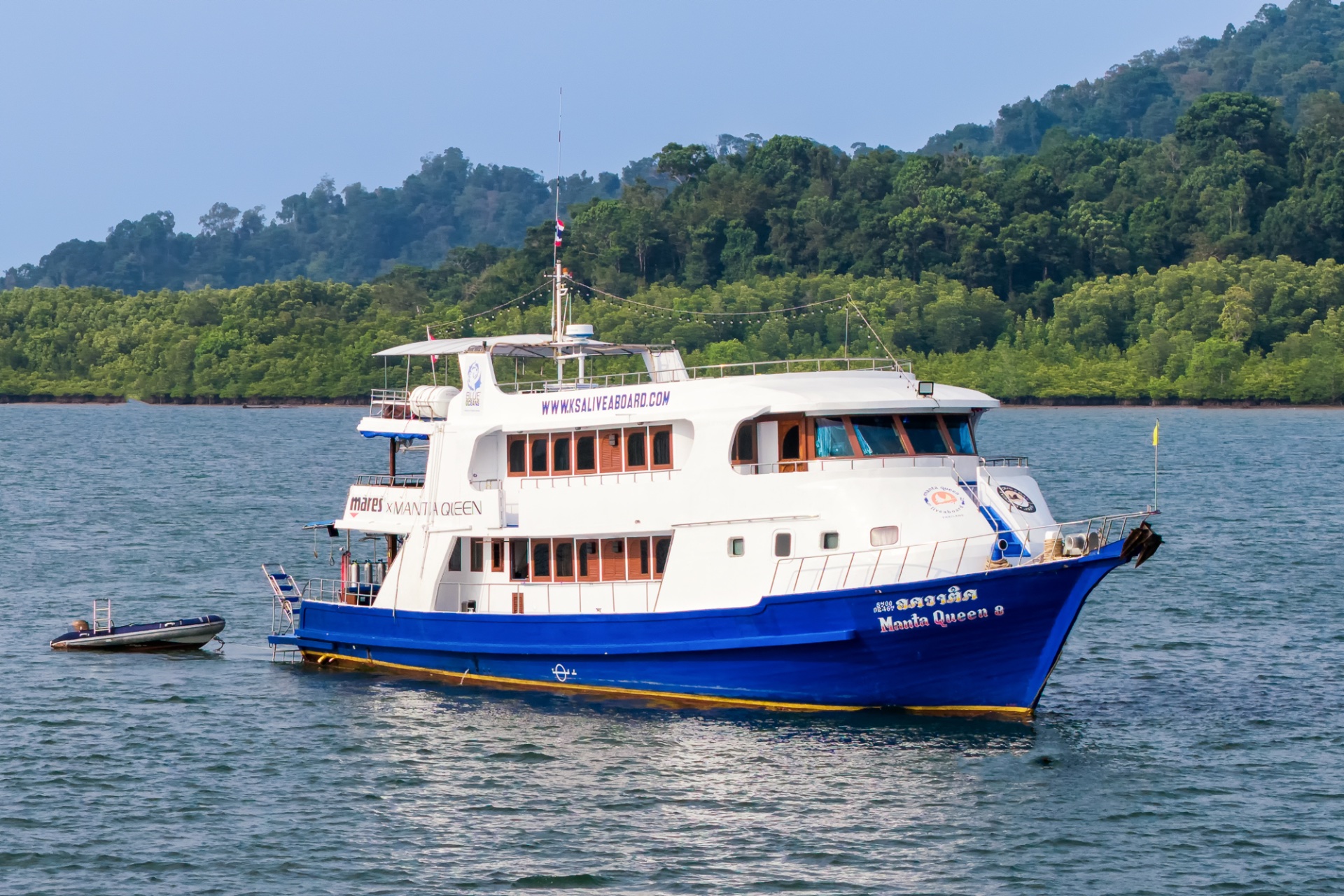
Manta Queen 8
Thailand
24 guests
$127/day
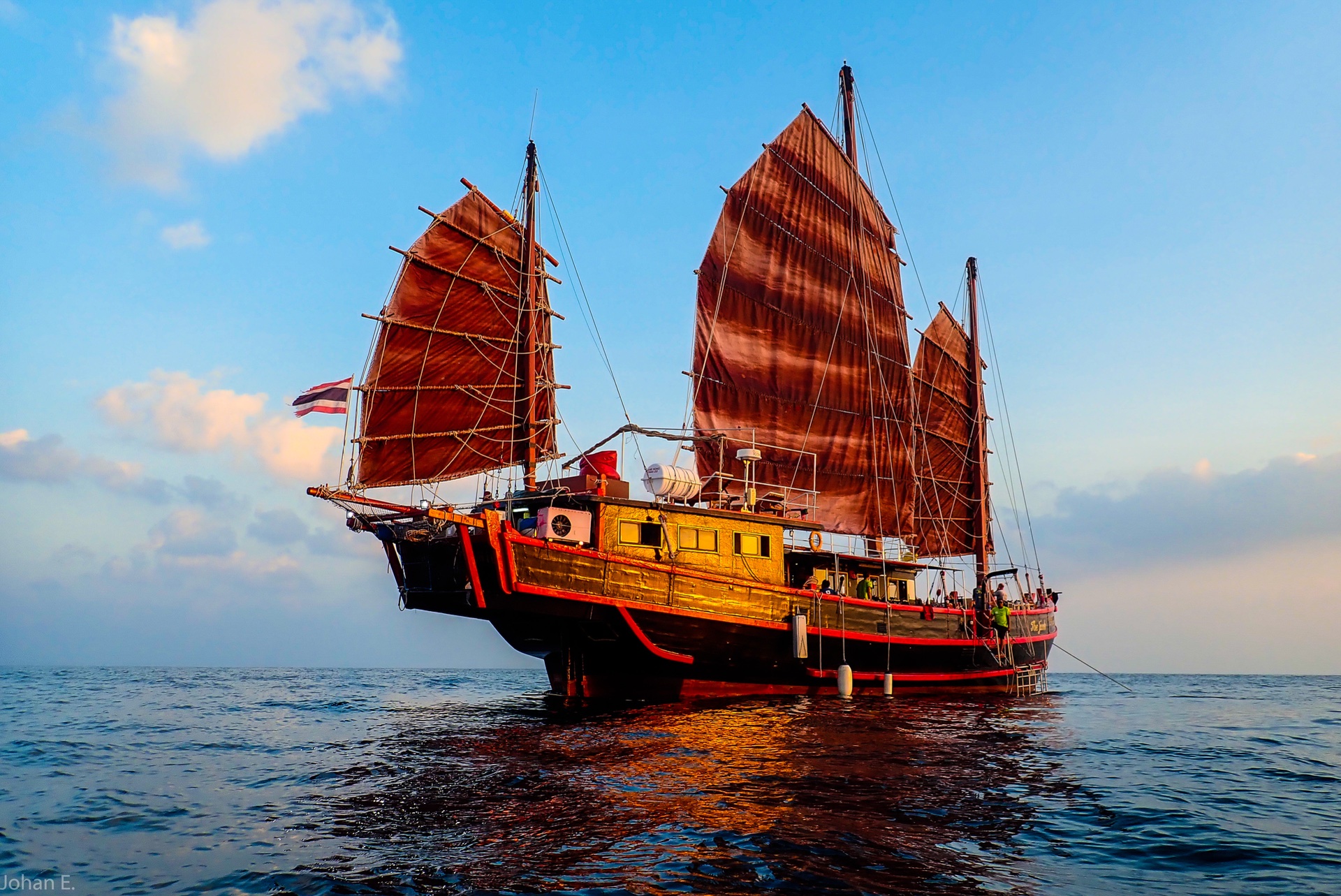
The Junk
Thailand
18 guests33 m
$163/day
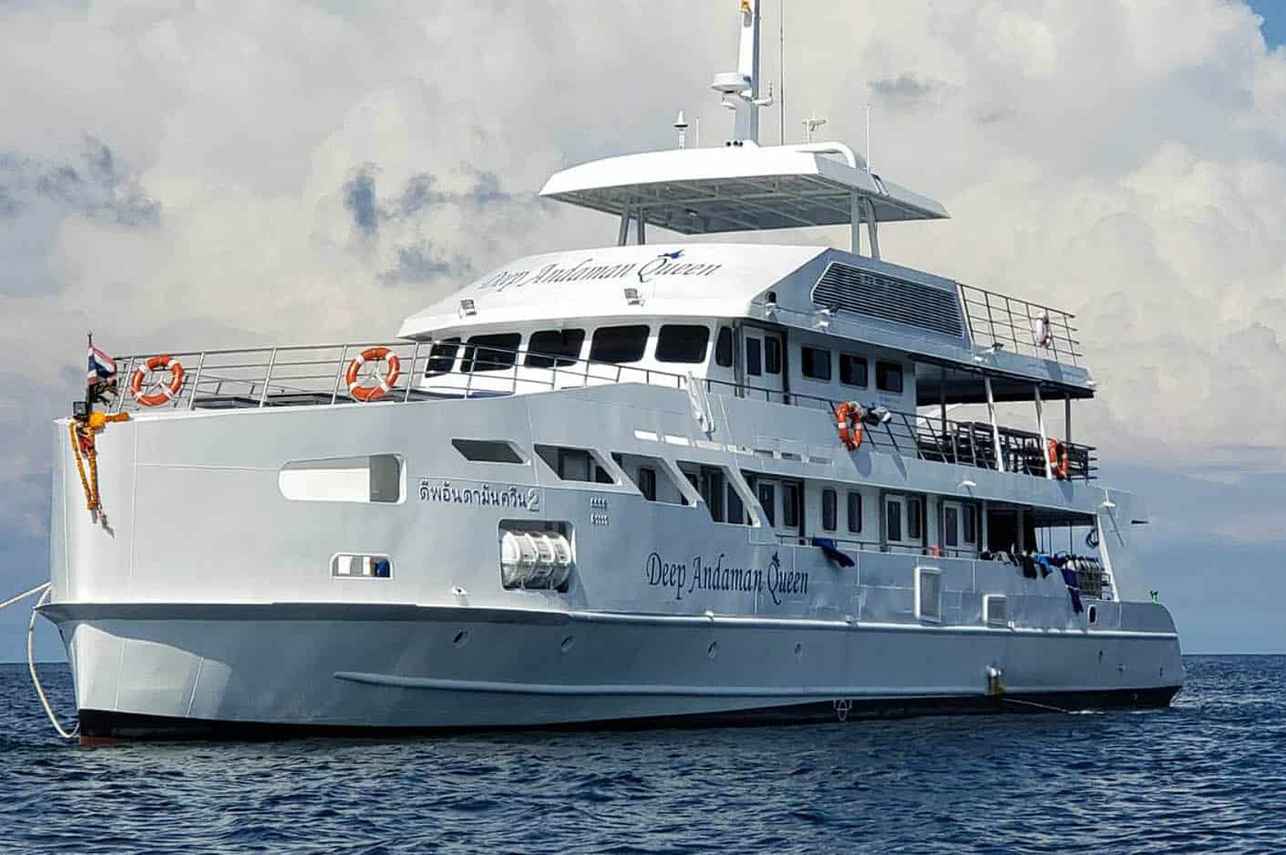
Deep Andaman Queen
Thailand
23 guests30.5 m
$194/day
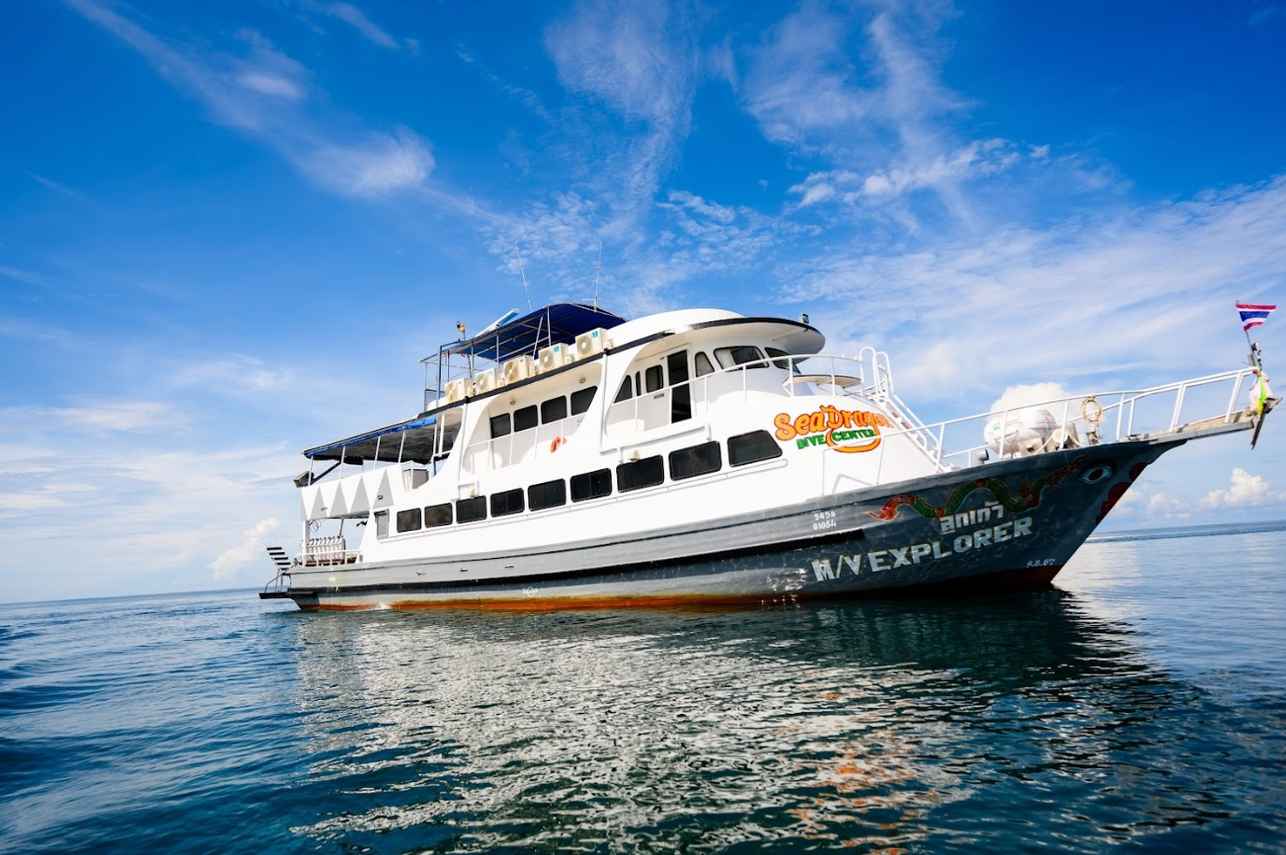
Explorer
Thailand
16 guests25 m
$150/day
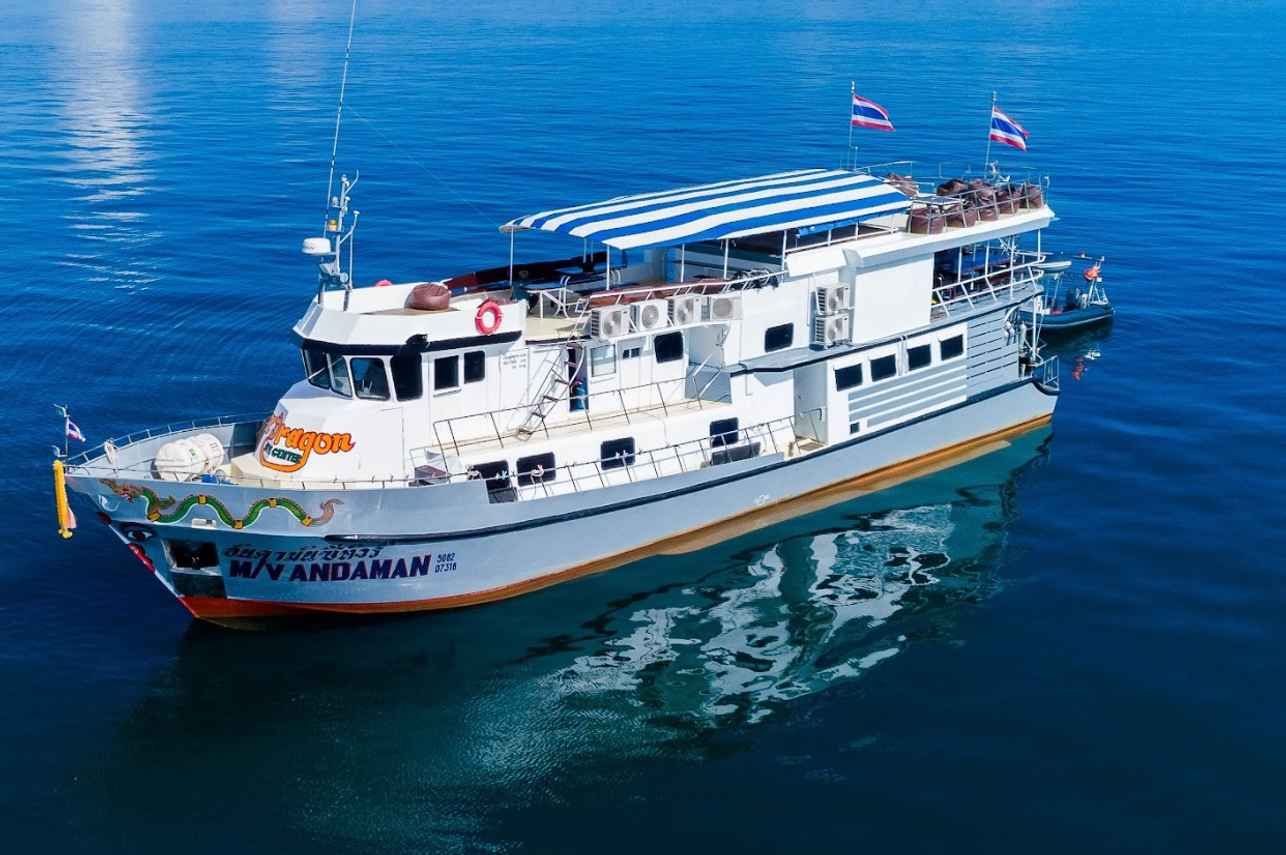
Andaman
Thailand
20 guests26 m
$108/day
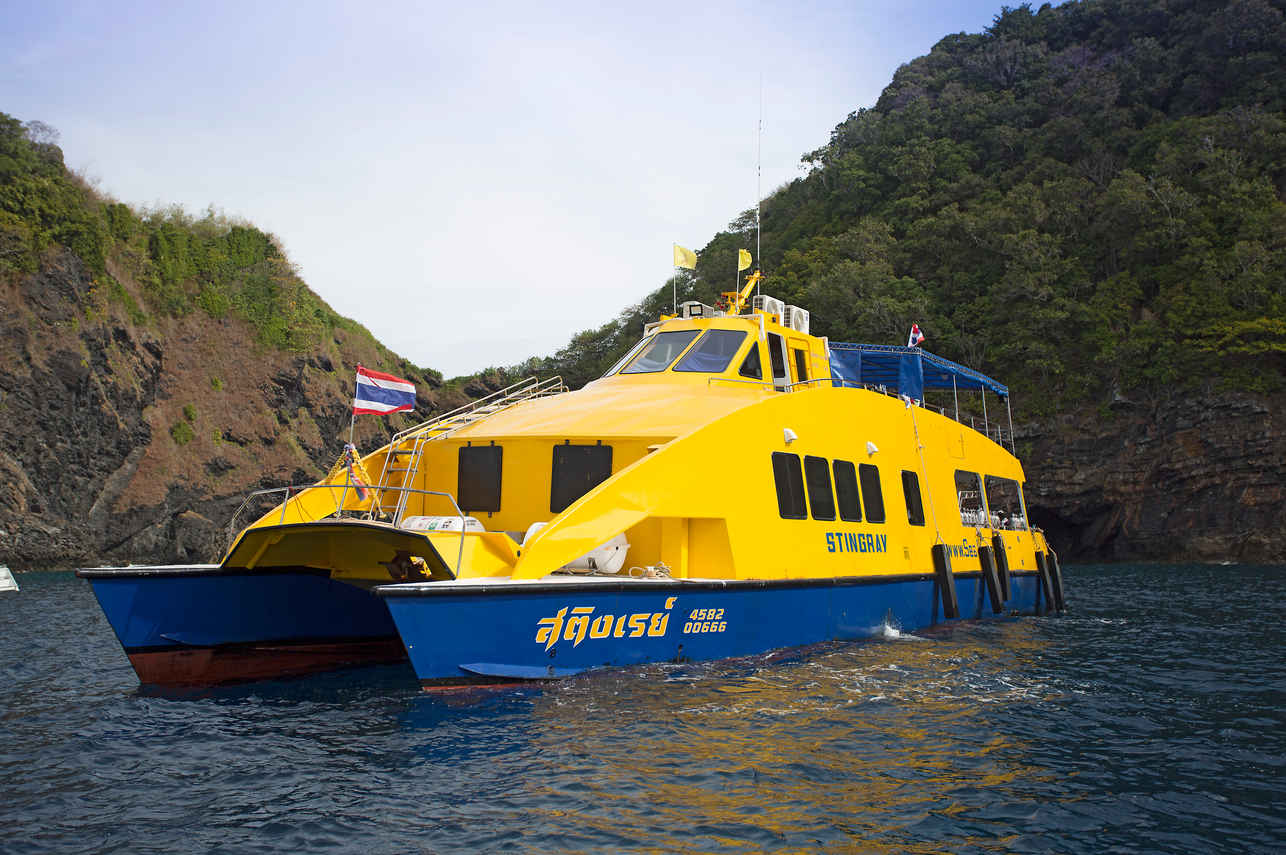
Stingray
Thailand
8 guests24 m
$245/day
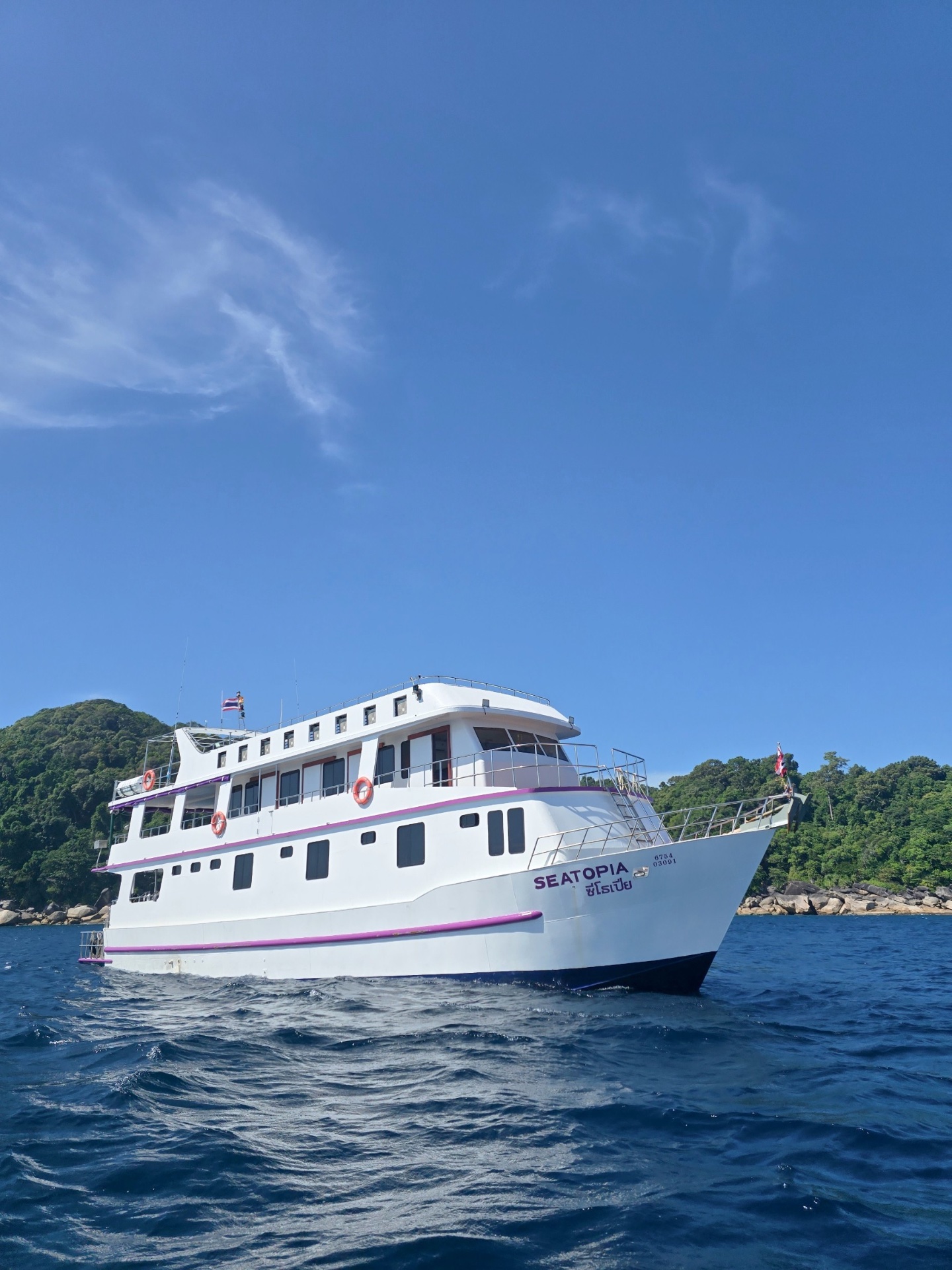
Seatopia
Thailand
24 guests24 m
Dive sites similar to North Point
Same character, same waters — six more sites divers love for the exact same reasons.Compare seasons, access and liveaboard routes — then pick the site that fits your trip best.
Hin Raab is a prominent dive site located in the eastern Gulf of Thailand, near Koh Chang, offering an exceptional underwater experience with its rich coral biodiversity and thriving marine life.
- Suitable for
- Intermediate
- Current
- Moderate
- Access
- Dayboat
- Depth
- 5–22 m
- Theme
- Reef / Pinnacle
© Esri — Maxar, Earthstar, GIS
Christmas Point
Thailand
Christmas Point, located on Similan Island number 9 (Koh Ba-Ngu), stands out as one of the Similan Islands' most iconic dive sites.
- Suitable for
- Intermediate
- Current
- Strong
- Access
- Liveaboard or dayboat
- Depth
- 2–40 m
- Theme
- Pinnacle
© Esri — Maxar, Earthstar, GIS
Koh Haa — Lagoon
Thailand
Koh Haa Lagoon is a picturesque and protected dive site formed by islands #2, #3, and #4 of the Koh Haa archipelago, approximately 1.45 hours by boat from Koh Lanta.
- Suitable for
- Beginner
- Current
- Moderate
- Access
- Liveaboard or dayboat
- Depth
- 2–25 m
- Theme
- Reef / Wall
© Esri — Maxar, Earthstar, GIS
Koh Tao — Twins
Thailand
Twins, a highly popular dive site near Koh Tao, Thailand, is renowned for its accessibility and rich marine life.
- Suitable for
- Beginner
- Current
- Mild
- Access
- Liveaboard or dayboat
- Depth
- 5–18 m
- Theme
- Pinnacle
© Esri — Maxar, Earthstar, GIS
Southwest Pinnacle
Thailand
Southwest Pinnacle, located approximately 45 minutes by boat from Koh Tao's Mae Haad pier, is a renowned dive site in the Gulf of Thailand.
- Suitable for
- Intermediate
- Current
- Strong
- Access
- Liveaboard or dayboat
- Depth
- 8–26 m
- Theme
- Pinnacle / Wall
© Esri — Maxar, Earthstar, GIS
Koh Dok Mai
Thailand
Koh Dok Mai, meaning 'Flower Island,' is a distinctive limestone outcrop located in Thailand's Andaman Sea, between Phuket and Phi Phi Islands.
- Suitable for
- Intermediate
- Current
- Moderate
- Access
- Dayboat
- Depth
- 5–30 m
- Theme
- Wall / Drift