About Koh Bon
Koh Bon is a distinguished dive site located north of Similan Island No. 9, within the same national park administration, though geographically distinct as a limestone island compared to the Similans' granite formations. It is celebrated for its incredible marine biodiversity and stands out as a prime location in Thailand for encountering majestic Manta Rays, especially along its prominent ridge. The island's remote, uninhabited nature means all diving is boat-based, providing an exclusive and often less crowded underwater experience. The main dive site, Koh Bon Ridge, lies on the southwestern corner, featuring a dramatic vertical wall that transitions into a sloping hard coral garden. This unique topography offers varied habitats, from deep wall sections adorned with soft corals and anemones to shallower, pristine hard coral formations teeming with reef fish. The ridge itself consists of large, step-like rocky formations covered in diverse soft corals, creating a visually stunning environment that descends to depths of around 35 meters. Marine life at Koh Bon is abundant and diverse, with regular sightings of pelagic species drawn to the nutrient-rich currents. Manta Rays are a major highlight, frequenting the ridge area which functions as a large cleaning station. Divers can also expect to encounter Leopard Sharks, Nurse Sharks, various moray eels, triggerfish, lionfish, sweetlips, octopus, and the occasional Banded Sea Krait. Whale Sharks and Eagle Rays are also spotted, particularly during the peak season. Diving at Koh Bon involves navigating currents, which can range from mild to strong, especially around the ridge. Divers typically begin their exploration in the more sheltered bay area before moving along the wall and then to the exposed ridge. The site offers opportunities for drift diving, allowing divers to experience the dynamic underwater landscape and its resident marine life as the current carries them along. Night dives are also possible in the cal
Highlights
Manta Ray cleaning stationDramatic vertical wallSloping hard coral gardensDiverse pelagic encountersUnique limestone ridge topographyLeopard and Nurse Sharks
Season calendar
Best months to dive here
Jan
Feb
Mar
Apr
May
Jun
Jul
Aug
Sep
Oct
Nov
Dec
Good
Dive site facts: Koh Bon
- Depth
- 0–45 m
- Current
- Moderate to very strong
- Visibility
- 20–40+ m
- Water temperature
- 27–30°C
- Entry
- Boat / negative entry
- Level
- Intermediate to advanced, current experience helpful
- Dive type
- Wall, slope, drift, pelagic encounters
- Night dive
- Possible in sheltered bay
- Region / port
- Similan Islands, Andaman Sea
- Coordinates
- 8.9234, 97.8567
Conditions & Currents
Currents at Koh Bon range from moderate to very strong, particularly around the exposed ridge where they attract large pelagic species. Divers typically commence their dive in a more sheltered bay area before transitioning to the wall and then the ridge, allowing for a drift dive when conditions permit. Strong currents necessitate careful dive planning, often involving negative entries to avoid being swept away from the boat. Experienced dive guides proficient in reading currents are essential, and divers should maintain excellent buoyancy control to navigate the varying flow. Visibility typically remains high even with strong currents, which replenish nutrients and clear the water, but can also cause surge near the surface or along the reef.
Marine life & sighting chances

Manta Ray
November-April · common
Leopard Shark
occasional
Nurse Shark
occasional
Moray Eel
common
Triggerfish
common
Lionfish
common
Sweetlips
common
Octopus
occasional
Banded Sea Krait
occasional
Whale Shark
February-April · rare
Eagle Ray
occasional
Trevally
common
Tuna
common
Snapper
commonDive profile & how the dive runs
Dives at Koh Bon typically commence near the sheltered bay on the south side of the ridge. Divers descend along a vertical wall, which gradually transforms into a sloping hard coral garden at around 10-12 meters. This area is rich with diverse reef fish and features pristine coral formations. From here, the dive progresses towards the famous ridge, where the topography shifts dramatically to large, step-like rocky formations descending to approximately 35 meters. These steps are adorned with soft corals and are frequented by pelagic species and Manta Rays. Divers are advised to keep an eye towards the blue for larger marine life. The current can be strong on the ridge, often facilitating a drift dive around its northern side, where the bottom returns to a hard coral slope with scattered rocks. Safety stops are usually conducted in shallower, calmer areas of the reef or bay, depending on current conditions and diver preference.
Underwater photography
Koh Bon offers exceptional opportunities for wide-angle photography, especially when Manta Rays are present. A fisheye or wide-angle lens is ideal for capturing their majestic presence in the blue, as well as the expansive coral gardens and dramatic wall sections. For macro enthusiasts, the wall and coral slopes harbor a variety of smaller subjects, including nudibranchs, crabs, and cleaner shrimp, requiring a macro lens. Due to variable currents, maintaining stable buoyancy is crucial for sharp images. Consider using strobes to bring out the vibrant colors of soft corals and anemones, especially at deeper sections. Be mindful of Manta Ray etiquette; avoid chasing or crowding them, and maintain a respectful distance to allow for natural behavior and optimal photographic angles.
Combine with nearby dive sites
- Koh Bon — West Ridge
An exposed pinnacle suitable for experienced divers, known for potential Manta Ray sightings and strong currents.
- Richelieu Rock
Thailand's most famous site, known for whale sharks and abundant marine life, typically visited on Surin Islands liveaboards.
- Hin Muang
Part of a southern Andaman Sea itinerary, featuring large vertical walls and Manta Ray encounters.
- Hin Daeng
Known for Thailand's biggest vertical wall, red and purple corals, and sightings of Grey Reef Sharks and Manta Rays.
- Elephant Head Rock
A Similan Islands pinnacle with swim-throughs, boulders, and medium to strong currents.
Getting there & logistics
Access to Koh Bon is primarily via liveaboard trips that depart from Khao Lak or Phuket, typically as part of a Similan and Surin Islands itinerary. Khao Lak is approximately 80 km northwest of Koh Bon, while Phuket is about 200 km south. International flights land at Phuket International Airport (HKT), from where transfers to Khao Lak are available. Liveaboard trips typically range from 4 days/4 nights to 6 days/6 nights during the high season, which runs from November to April. Koh Bon is part of the Similan Islands National Park, meaning park fees apply and the area is closed to visitors from May to October.
Safety & environment
The nearest recompression chamber is located in Phuket, necessitating prompt evacuation in case of a dive emergency. Divers should ensure they have comprehensive dive insurance that covers emergency medical treatment and evacuation, especially given the remote nature of the site. Strong and unpredictable currents are a significant hazard at Koh Bon, requiring divers to possess advanced buoyancy control and experience in drift diving. Always follow your dive guide's instructions and maintain awareness of current direction and strength. Employing surface marker buoys (SMBs) is crucial for signaling the boat after surfacing, particularly in active current areas. Marine life, such as Banded Sea Kraits and Lionfish, should be observed from a respectful distance without touching.
Who it suits — and who it doesn't
Suited for
- Experienced divers comfortable with currents
- Photographers seeking pelagic and macro subjects
- Manta Ray enthusiasts
- Liveaboard guests seeking remote, pristine sites
- Divers interested in diverse coral topography
Less suited for
- Beginner divers without current experience
- Divers uncomfortable with deep dives
- Those prone to seasickness in choppier conditions
- Divers seeking easy, no-current dives
- Individuals with limited bottom time allowances
FAQ
Koh Bon FAQ
What is Koh Bon best known for?
Koh Bon is primarily renowned as a top Manta Ray cleaning station in Thailand. Divers frequently encounter these majestic creatures here, especially along the island's unique underwater ridge. It's also celebrated for its vibrant coral formations and rich pelagic marine life.
When is the best time to see Manta Rays at Koh Bon?
The peak season for Manta Ray sightings at Koh Bon is typically from November to April. During these months, the conditions are ideal, with clear waters and currents that attract Mantas to the cleaning stations along the ridge.
Are the currents strong at Koh Bon?
Yes, currents at Koh Bon can range from moderate to very strong, particularly around the exposed ridge. This makes it an exciting drift dive for experienced divers but requires careful planning and excellent buoyancy control. Dive guides are crucial for navigating these conditions safely.
What type of marine life can I expect to see besides Manta Rays?
Beyond Manta Rays, Koh Bon hosts a diverse array of marine life. You can anticipate seeing Leopard Sharks, Nurse Sharks, various moray eels, triggerfish, lionfish, and sweetlips. Keep an eye out for octopus and the occasional Banded Sea Krait, with rare sightings of Whale Sharks and Eagle Rays.
Is Koh Bon suitable for beginner divers?
Koh Bon is generally recommended for intermediate to advanced divers due to the potential for strong currents and deeper sections. Beginner divers without experience in currents might find the conditions challenging. However, some sheltered areas might be suitable depending on daily conditions and guided supervision.
How do I get to Koh Bon?
Koh Bon is best accessed via liveaboard trips departing from Khao Lak or Phuket. These trips typically combine Koh Bon with other dive sites in the Similan and Surin Islands National Parks. The dive site is too remote for day trips from most coastal towns.
Why dive Koh Bon from a liveaboard?
Koh Bon is one of Thailand's signature dive sites. A liveaboard sleeps you on the water and puts you in the water for three to four guided dives per day, including dawn and night dives that day-boat operators rarely offer. You skip the daily commute back to port and reach quieter, less-crowded sites in the same region on a single trip.
Below are the liveaboards that include Koh Bon on their Thailand itineraries.
Liveaboards diving Koh Bon
These liveaboards may visit Koh Bon on selected itineraries — the exact dive sites depend on departure, weather and conditions.
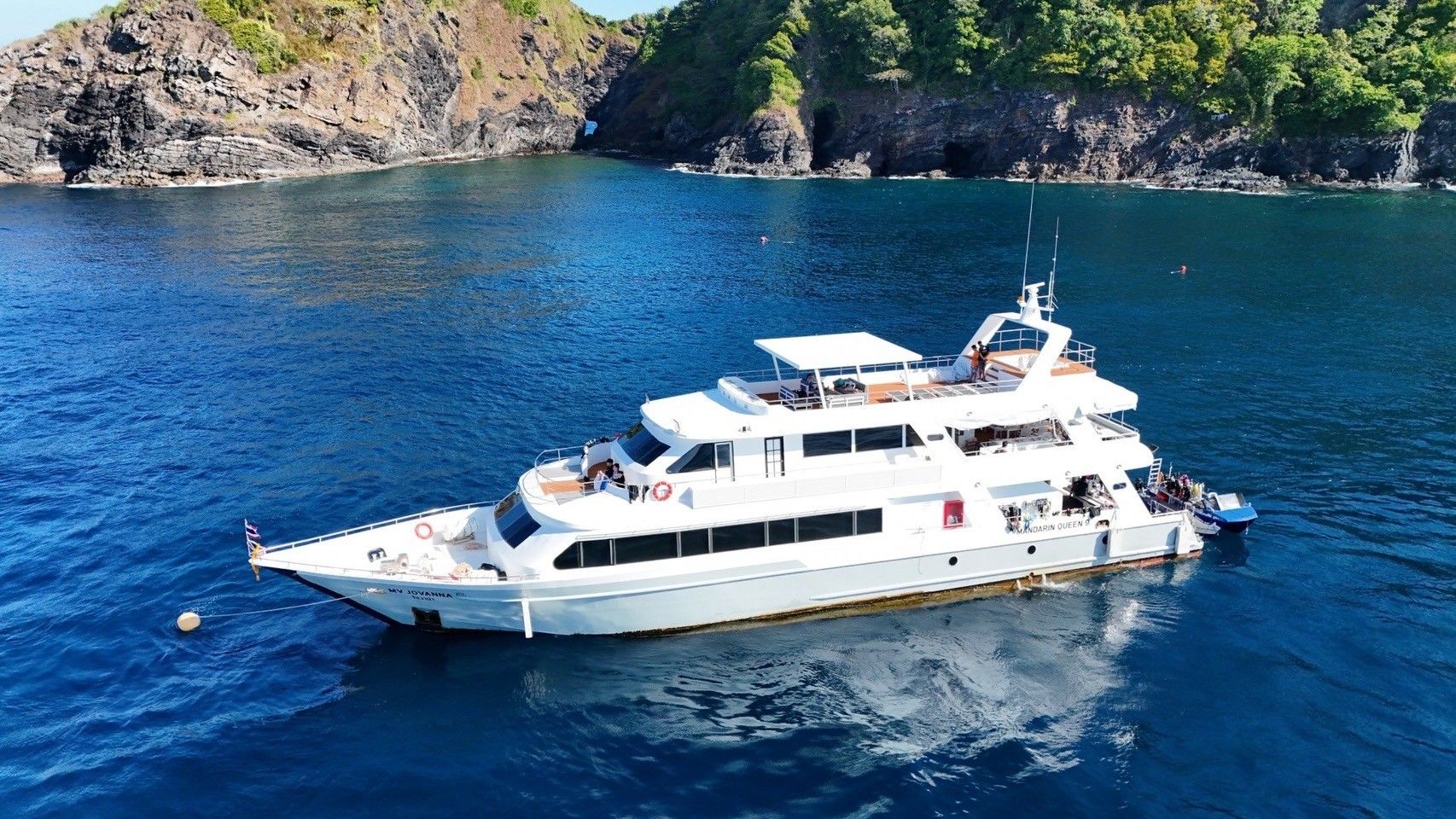
Mandarin Queen 9
Thailand
26 guests37.5 m
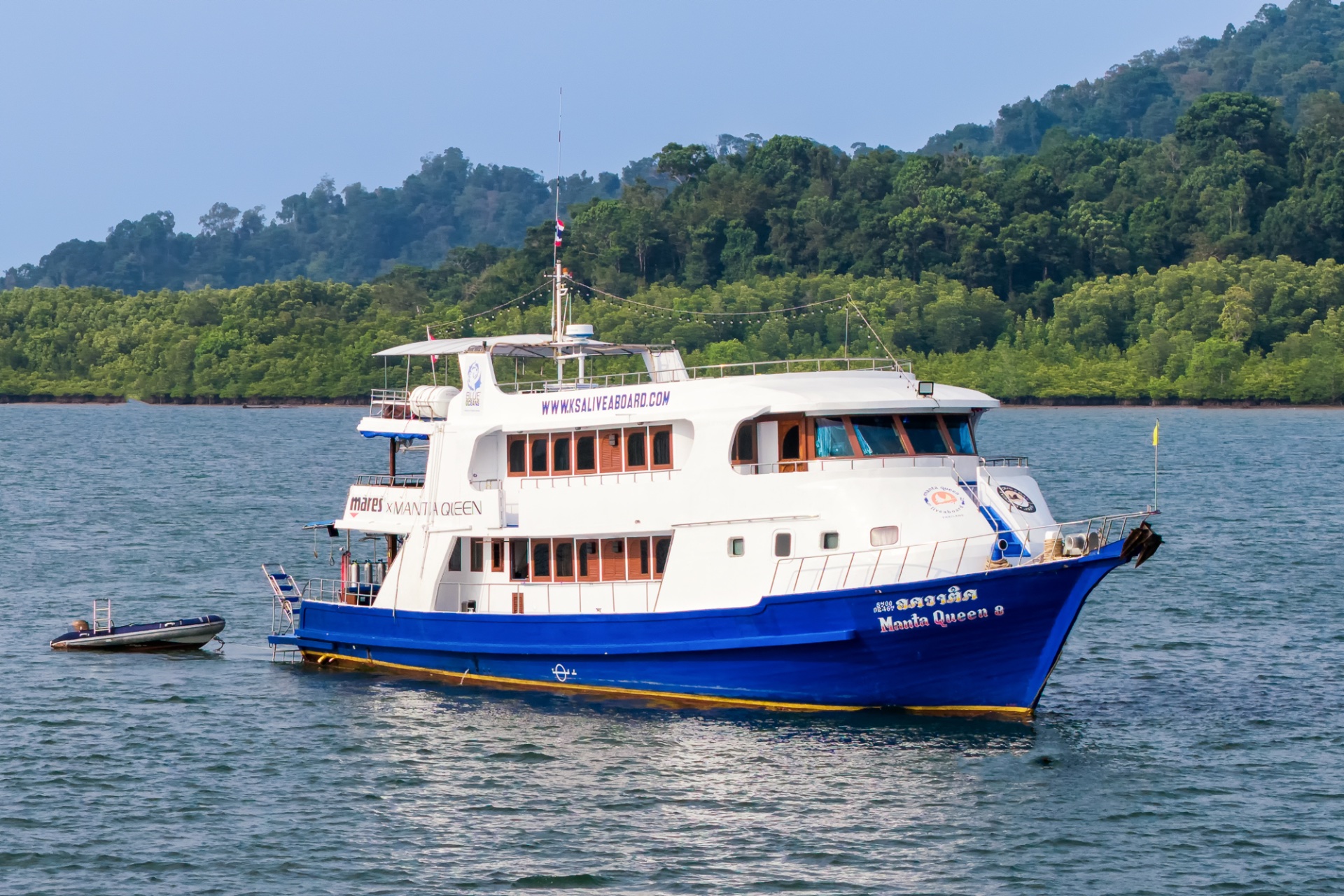
Manta Queen 8
Thailand
24 guests
$127/day
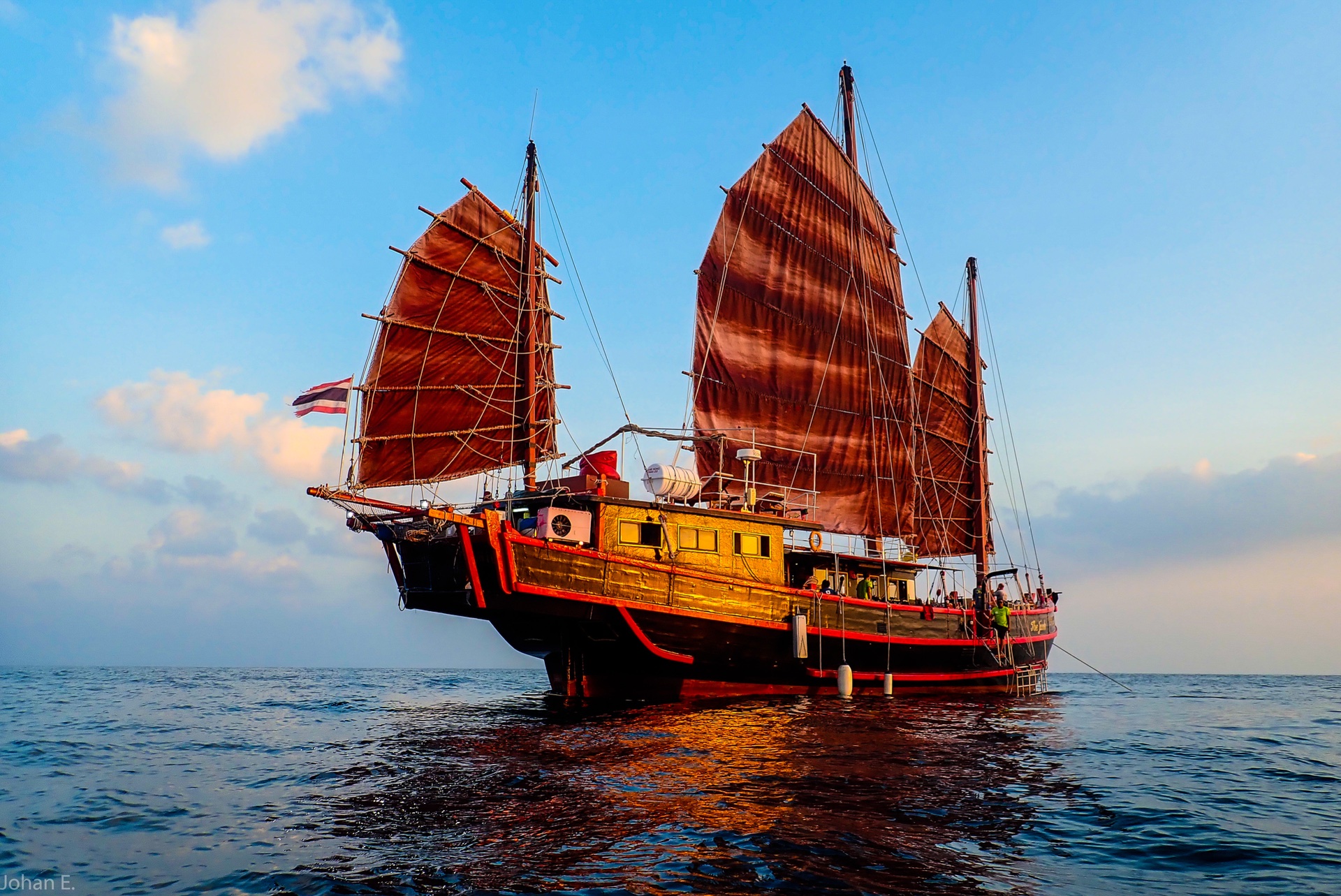
The Junk
Thailand
18 guests33 m
$163/day
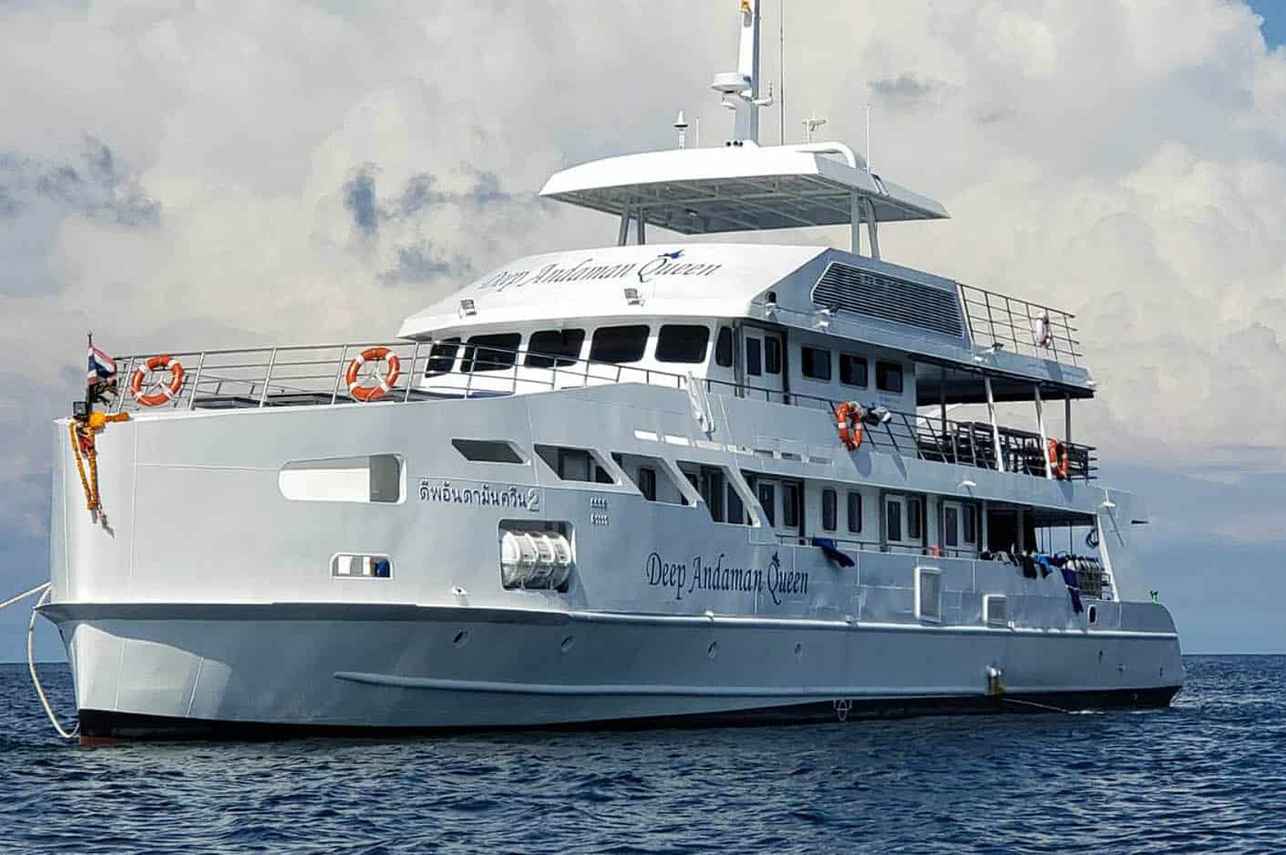
Deep Andaman Queen
Thailand
23 guests30.5 m
$194/day
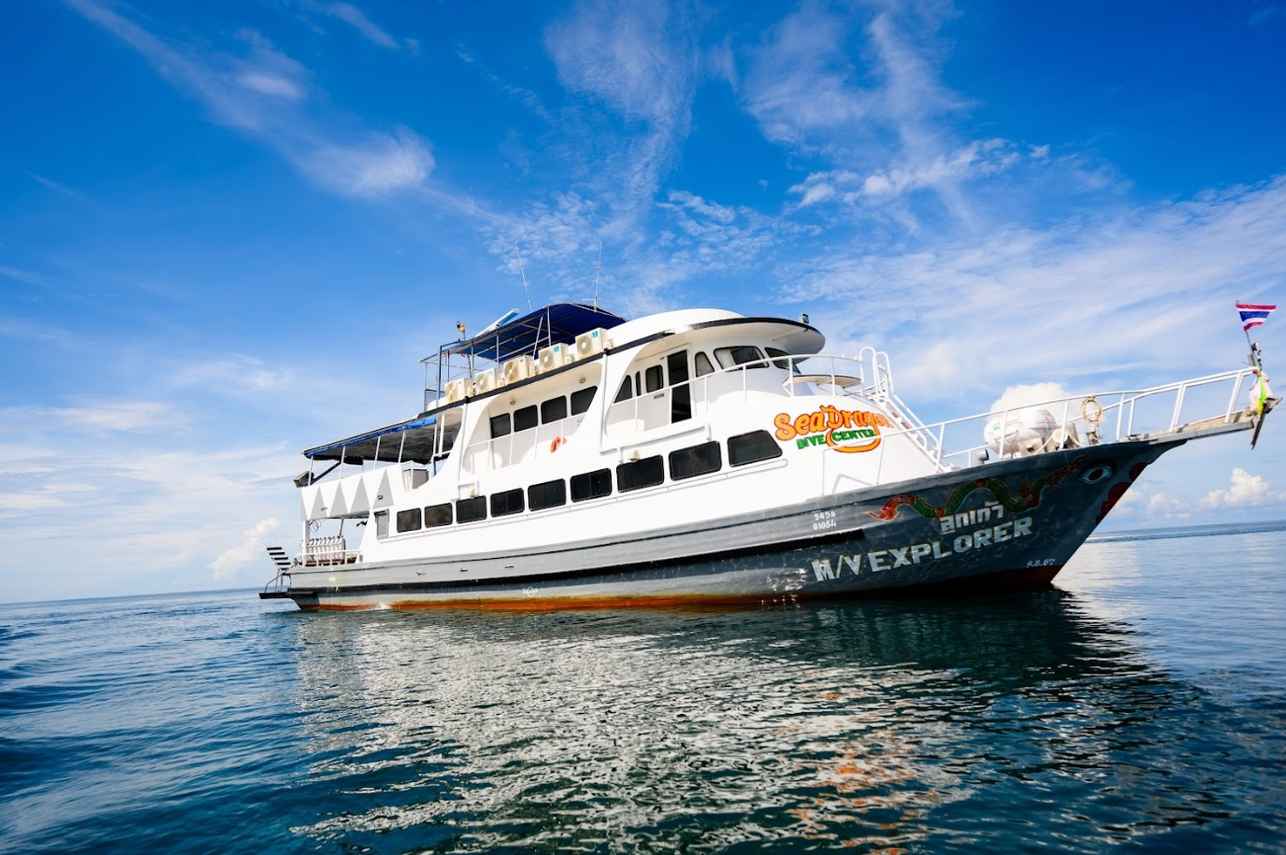
Explorer
Thailand
16 guests25 m
$150/day
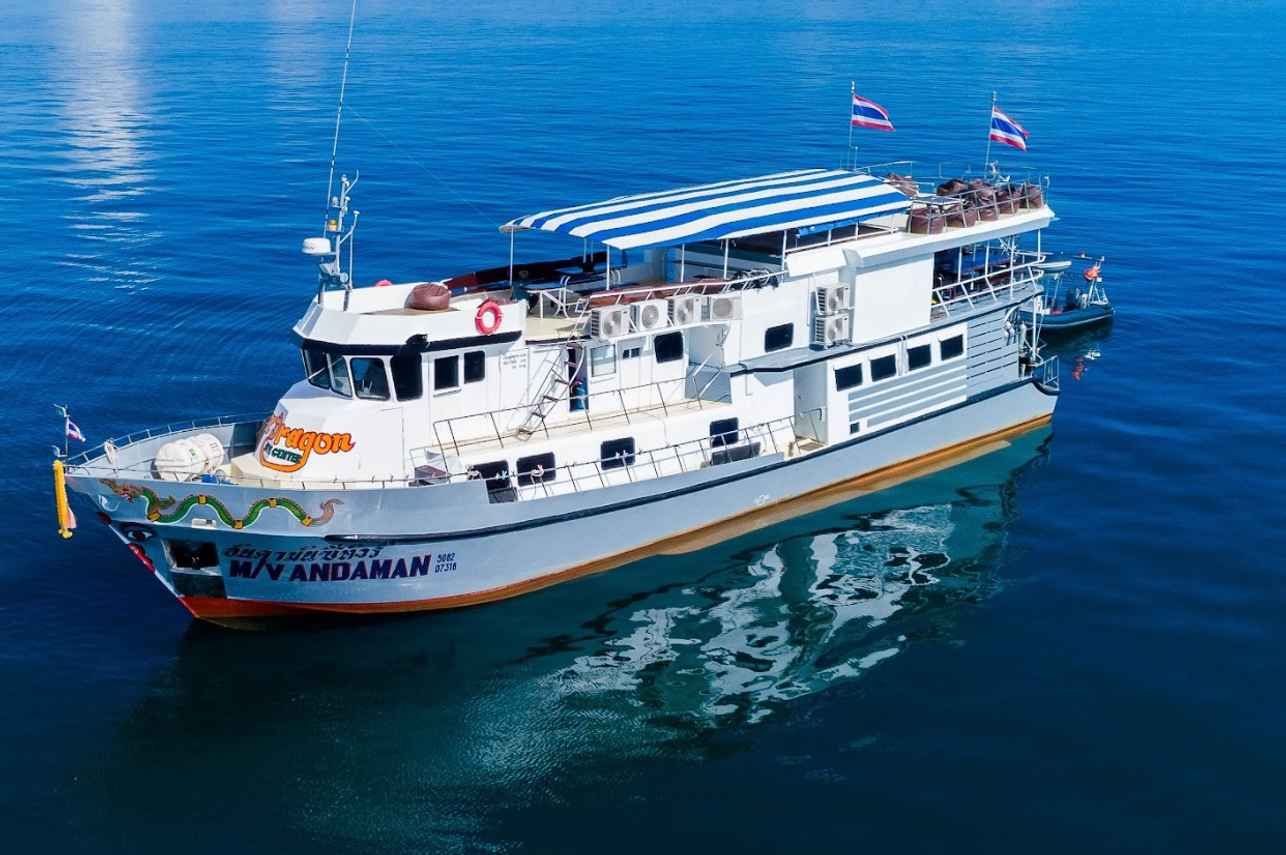
Andaman
Thailand
20 guests26 m
$108/day
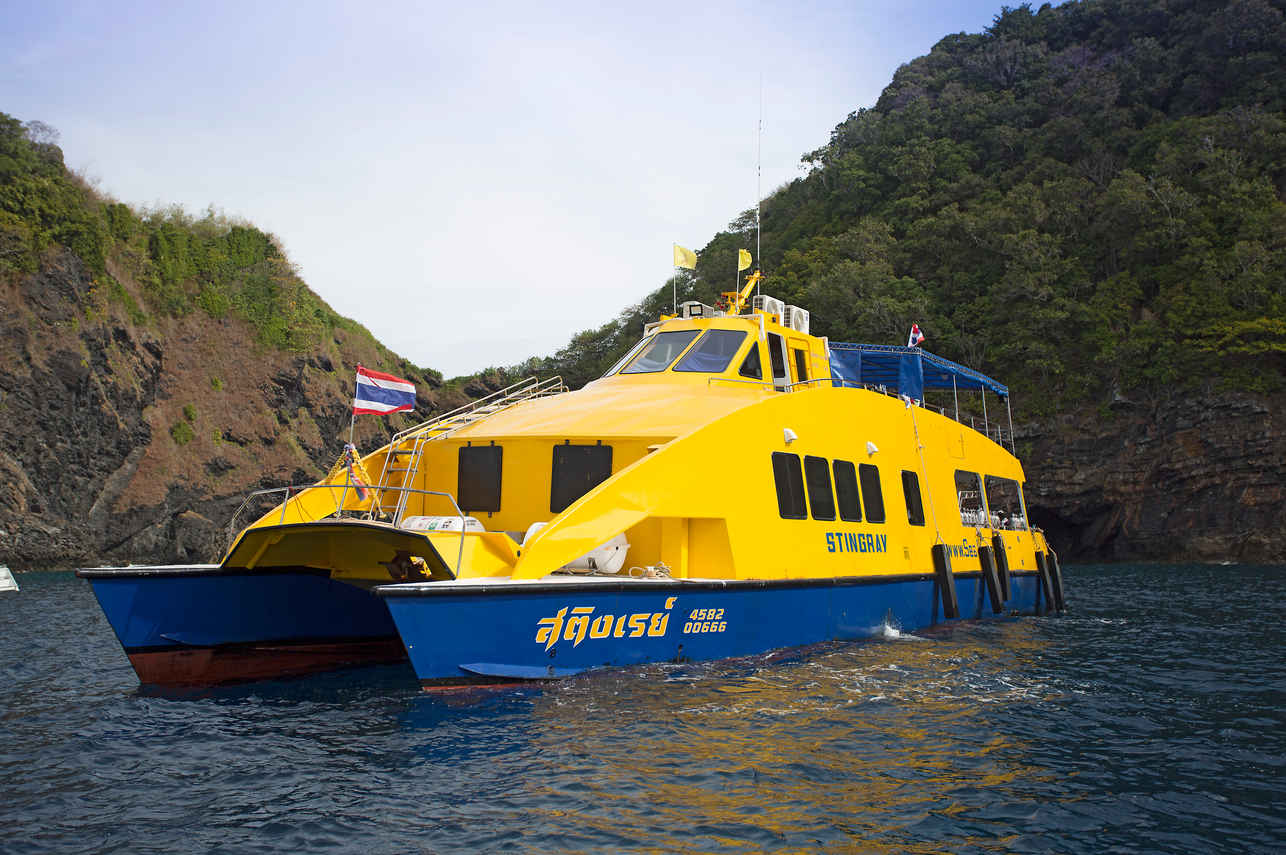
Stingray
Thailand
8 guests24 m
$245/day
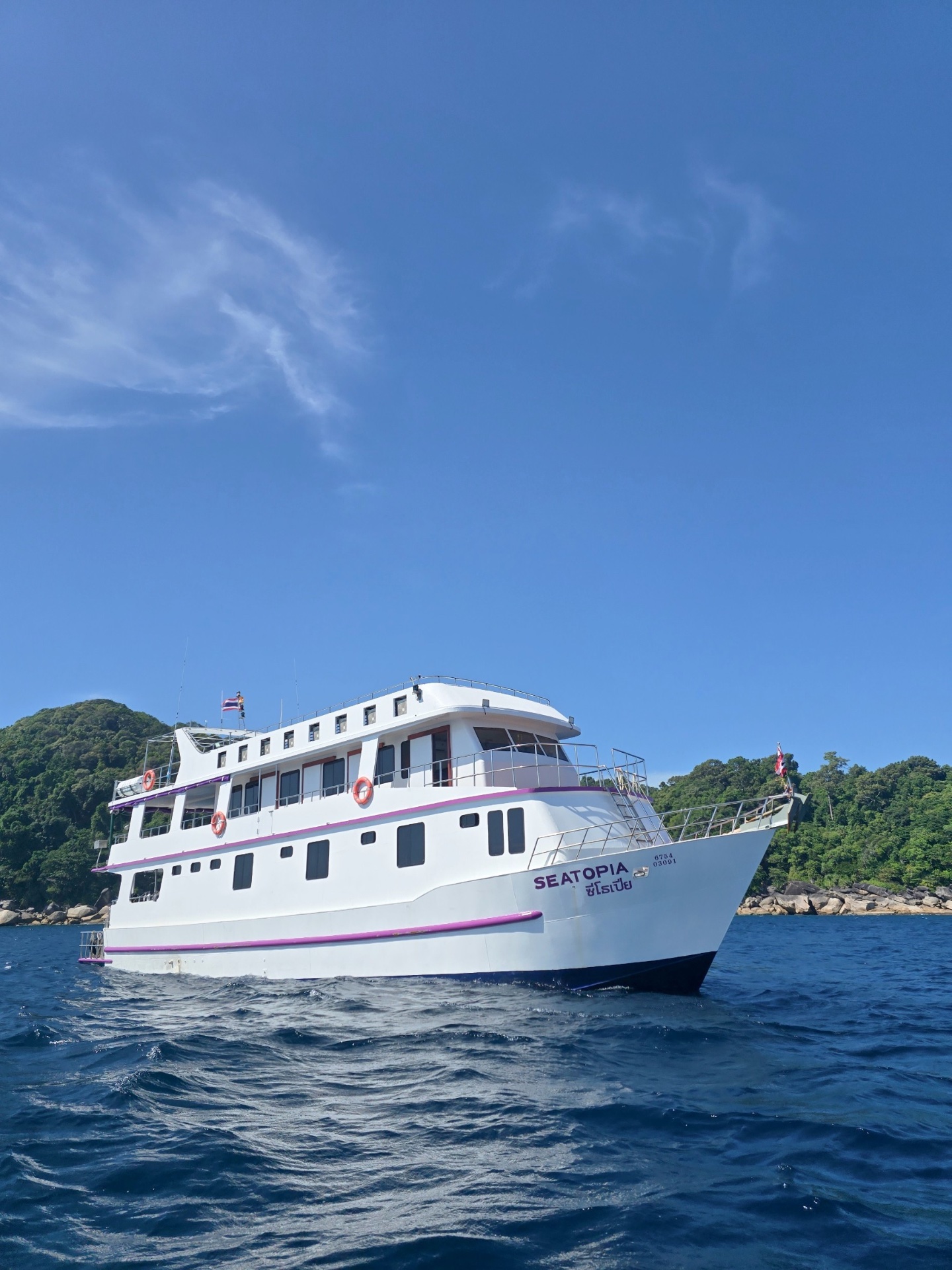
Seatopia
Thailand
24 guests24 m
Dive sites similar to Koh Bon
Same character, same waters — six more sites divers love for the exact same reasons.Compare seasons, access and liveaboard routes — then pick the site that fits your trip best.
© Esri — Maxar, Earthstar, GIS
Anemone Reef
Thailand
Anemone Reef, locally known as "Hin Jom" or "submerged rock," is a significant limestone pinnacle entirely hidden beneath the Andaman Sea's surface.
- Suitable for
- Intermediate
- Current
- Ripping
- Access
- Liveaboard or dayboat
- Depth
- 5–26 m
- Theme
- Pinnacle / Wall
© Esri — Maxar, Earthstar, GIS
Ang Thong — Wao Island
Thailand
Wao Island, nestled within the picturesque Ang Thong National Marine Park, is a captivating dive site characterized by its dramatic limestone formations and intricate underwater landscape.
- Suitable for
- Beginner
- Current
- Strong
- Access
- Liveaboard or dayboat
- Depth
- 3–20 m
- Theme
- Cave & cavern / Reef
© Esri — Maxar, Earthstar, GIS
Koh Phi Phi — Bida Nai
Thailand
Koh Bida Nai, a tiny limestone islet nestled at the southern tip of the Phi Phi Archipelago, stands as one of the premier dive sites among the Phi Phi Islands.
- Suitable for
- Intermediate
- Current
- Strong
- Access
- Liveaboard or dayboat
- Depth
- 5–30 m
- Theme
- Drift / Reef
© Esri — Maxar, Earthstar, GIS
Koh Phi Phi — Bida Nok
Thailand
Koh Phi Phi — Bida Nok is a small, dramatic limestone island approximately two kilometres south of the main Phi Phi island group, offering some of the most visually stunning diving in Southern Thailand.
- Suitable for
- Beginner
- Current
- Moderate
- Access
- Liveaboard or dayboat
- Depth
- 5–24 m
- Theme
- Wall
© Esri — Maxar, Earthstar, GIS
Similan Islands — East of Eden
Thailand
East of Eden is an exquisite dive site nestled within Thailand's Similan Islands, famed for its breathtaking coral formations and abundant marine life.
- Suitable for
- Beginner
- Current
- Strong
- Access
- Liveaboard or dayboat
- Depth
- 5–30 m
- Theme
- Reef / Wall