About Koh Bon — West Ridge
Koh Bon West Ridge, nestled in Thailand's Similan National Park, is a renowned dive site celebrated for its stunning topography and abundant marine life. This uninhabited limestone island, approximately 20 kilometers northwest of the main Similan group, features a horseshoe shape with a distinctive hole cut through by strong waves. The West Ridge itself extends out from the western side of the island. Visible are impressive rock formations, sheer walls, and a variety of colorful soft corals, some forming unique mushroom-shaped bommies and sea fans that sway with the current. The general underwater scenery is well-preserved. It is a cleaning station for manta rays, especially during January to April, when they come to feed on plankton and be cleaned by smaller reef fish. Other frequent sightings include barracudas, tunas, groupers, eagle rays, stingrays, leopard sharks, and various reef fish and invertebrates. The West Ridge features a steep, coral-covered slope on its western side and a dramatic wall on its northern side, both descending to significant depths. While the ridge offers shelter for macrolife like nudibranchs, moray eels, and shrimp, the main draw is the pelagic action, with schools of trevally, barracuda, and rainbow runners often present. The nutrient-rich currents that flow along the ridge are a magnet for larger marine species. Visibility typically ranges from 20 to 30 meters, with comfortable water temperatures between 28 and 30 degrees Celsius. Diving here typically involves a drift along the ridge, often spent hovering, observing the spectacular marine life. Due to its depths and currents, this site is best suited for intermediate to advanced divers. Day trips to Koh Bon are a popular option, with some operators offering two-dive excursions. Conditions are usually good, allowing for clear views of the vibrant underwater world, making it a highlight for divers exploring the Similan National Park area.
Highlights
Manta ray encountersSpectacular vertical wallsColorful soft coralsAbundant pelagic fishMushroom-shaped coral bommiesLeopard shark sightingsExcellent visibility
Season calendar
Best months to dive here
Jan
Feb
Mar
Apr
May
Jun
Jul
Aug
Sep
Oct
Nov
Dec
Excellent
Good
Off-Season
Nov – Apr (Peak)
Best visibility 25–30m, calm Andaman Sea. Similan & Surin Islands open. Whale sharks and manta rays at Richelieu Rock.
May (Transition)
Similan season opening/closing. Variable conditions, occasional rain. Still good diving at coastal sites.
Jun – Oct (Monsoon)
SW Monsoon brings rough seas. Similan Islands CLOSED. Gulf coast (Koh Tao) still diveable Jun–Sep.
Dive site facts: Koh Bon — West Ridge
- Depth
- 5–40 m
- Typical dive
- 15–22 m
- Current
- Mild to strong
- Visibility
- 15–30 m
- Water temperature
- 28–30°C
- Entry
- Liveaboard / day boat
- Level
- Intermediate–Advanced
- Dive type
- Wall, Slope, Reef, Drift
- Night dive
- Possible (liveaboards)
- Region / port
- Similan Islands National Park / Andaman Sea
- Coordinates
- 8.935, 97.838
Conditions & Currents
Currents at Koh Bon West Ridge typically range from mild to moderate, though they can become strong, especially along the outer west-facing wall and around the western tip of the ridge where manta encounters are frequent. The current funnels along the ridge and can pick up suddenly, requiring divers to be prepared to hold position, particularly when observing mantas. These nutrient-rich currents, while occasionally challenging, are precisely what attract the large pelagic species to the site. Visibility is generally excellent, between 20 and 30 meters, but can temporarily reduce to 15 meters during peak manta activity due to plankton, a trade-off many experienced divers welcome. Divers should be comfortable with varied current conditions and have good buoyancy control.
Marine life & sighting chances

Manta ray
Nov-Apr (peak Dec-Mar) · common
Whale shark
Feb-Apr · occasional
Barracuda
common
Giant Trevally
common
Snapper
common
Fusilier
common
Moray eel
common
Octopus
occasional
Lionfish
common
Nudibranch
common
Leopard shark
occasional
Eagle ray
occasional
Stingray
occasionalDive profile & how the dive runs
Dives at Koh Bon West Ridge often begin with an entry over the south-facing wall, which drops vertically. Divers then follow the reef west along the ridge. The primary objective is frequently the coral bommie that serves as a manta ray cleaning station, typically found around 15–22 meters. The dive usually progresses along the ridge, allowing for observation of both the reef life and the open blue for pelagics. The maximum depth can reach 35–40 meters at the base of the west-facing wall. Turning points are often dictated by current conditions or air consumption, with the safety stop conducted in the shallower, more sheltered bay on the east side of the ridge, or along the upper sections of the ridge itself.
Underwater photography
Koh Bon West Ridge offers exceptional opportunities for both wide-angle and macro photography. For manta rays and schooling pelagics in the blue, a wide-angle lens is essential, capturing the scale of these magnificent animals against the vibrant reef backdrop. Consider using strobes to bring out the true colors of the soft corals, which are particularly striking in pastel hues. When mantas are present, practice patience and maintain a respectful distance, allowing them to approach on their own terms. For macro enthusiasts, the healthy coral reefs host a rich variety of smaller subjects, including nudibranchs, moray eels, and diverse reef fish; a macro lens will reveal intricate details. Good buoyancy control is critical to avoid damaging the delicate soft corals and to maintain position in varying currents while composing shots.
Combine with nearby dive sites
- Richelieu Rock
Thailand's most famous site, known for whale sharks and diverse macro life.
- Christmas Point
Another Similan site with diverse marine life and rock formations.
- Hin Muang
Features Thailand's largest vertical wall and frequent manta encounters.
- Hin Daeng
Adjacent to Hin Muang, offering vibrant soft corals and pelagic sightings.
- Surin Islands — Turtle Ledge
Offers relaxed diving with healthy reefs, suitable for all levels.
- Koh Haa — The Chimney
A series of caverns and swim-throughs for experienced divers.
Getting there & logistics
Koh Bon West Ridge is primarily accessed via liveaboards operating from Phuket and Khao Lak. Most liveaboard itineraries that combine the Similan and Surin Islands include Koh Bon as a regular stop. Day trips by speedboat are also available, departing from Khao Lak, specifically from Nam Kem pier. These day trips typically include two dives with surface intervals for lunch and drinks. A speedboat ride from Nam Kem takes approximately one hour to reach the site. National Park fees are usually included in the day trip or liveaboard package. Trip lengths for liveaboards visiting this region generally range from 3 to 5 nights.
Safety & environment
Diving at Koh Bon West Ridge requires attention to safety due to potentially strong and unpredictable currents. Divers should maintain good buoyancy and be prepared to hold position. The nearest recompression chamber is in Phuket, meaning evacuation time could be several hours. Comprehensive dive insurance is highly recommended to cover potential medical emergencies and evacuation costs. Always dive within your certification limits and follow your dive guide's instructions, especially regarding current conditions and manta ray etiquette. Respect marine life by observing from a distance and avoid touching corals or animals to preserve the fragile ecosystem.
Who it suits, and who it doesn't
Suited for
- Advanced Open Water divers seeking pelagic encounters
- Photographers focusing on wide-angle marine life
- Divers comfortable with moderate to strong currents
- Manta ray enthusiasts
- Experienced divers looking for diverse topography
Less suited for
- Brand new Open Water divers (for deeper sections)
- Divers uncomfortable with currents
- Divers with limited buoyancy control
- Snorkelers (for primary manta areas)
- Those prone to seasickness on open ocean crossings
FAQ
Koh Bon — West Ridge FAQ
What makes Koh Bon West Ridge famous for diving?
Koh Bon West Ridge is renowned as one of Thailand's top sites for reliable manta ray encounters, especially from November to April. Its unique topography features a rocky ridge and soft coral walls that attract these majestic pelagics, providing unforgettable diving experiences.
What is the best time of year to see manta rays at Koh Bon?
Manta rays are most consistently seen at Koh Bon West Ridge between November and April, with peak season falling from December to March. During these months, the nutrient-rich waters draw them to cleaning stations along the ridge.
What are the typical diving conditions at Koh Bon West Ridge?
Divers can expect water temperatures between 28-30°C and visibility ranging from 15-30 meters. Currents can vary from mild to strong, particularly around the western tip of the ridge. While visibility is generally excellent, it may decrease slightly during peak manta activity due to plankton.
Is Koh Bon West Ridge suitable for beginner divers?
While the sheltered bay and shallower sections (5-18m) of the West Ridge are accessible to Open Water divers under supervision, the deeper sections where mantas are reliably encountered (15-22m) and the stronger currents make it more suitable for intermediate to advanced divers. Advanced Open Water certification is recommended for exploring the deeper walls and full scope of the site.
How do I get to Koh Bon West Ridge?
Koh Bon West Ridge is typically visited as part of a liveaboard itinerary departing from Phuket or Khao Lak, often combining it with other Similan and Surin Islands sites. Day trips by speedboat are also available from Khao Lak, usually including two dives at the site.
What marine life can I expect to see besides manta rays?
Beyond manta rays, the site is home to diverse marine life including barracudas, tunas, groupers, eagle rays, leopard sharks, and schools of snapper and fusiliers. The vibrant coral reefs also host moray eels, octopus, lionfish, and various nudibranchs, making for rich macro opportunities.
Why dive Koh Bon — West Ridge from a liveaboard?
Koh Bon — West Ridge is one of Thailand's signature dive sites. A liveaboard sleeps you on the water and puts you in the water for three to four guided dives per day, including dawn and night dives that day-boat operators rarely offer. You skip the daily commute back to port and reach quieter, less-crowded sites in the same region on a single trip.
Below are the liveaboards that include Koh Bon — West Ridge on their Thailand itineraries.
Liveaboards diving Koh Bon — West Ridge
These liveaboards may visit Koh Bon — West Ridge on selected itineraries, the exact dive sites depend on departure, weather and conditions.
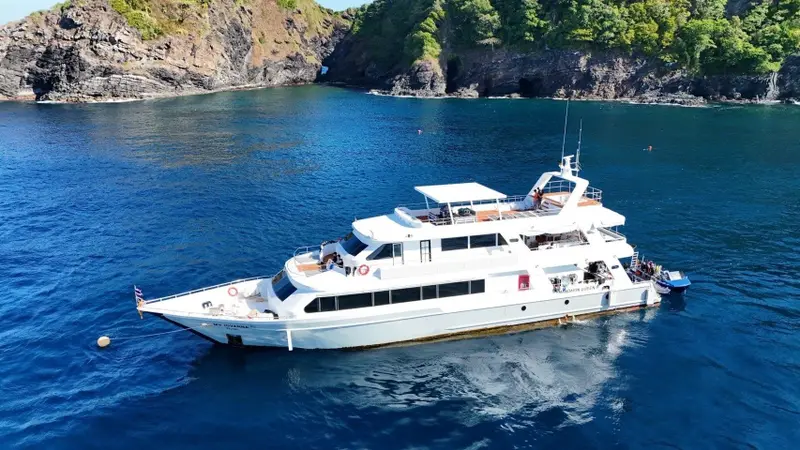
Mandarin Queen 9
Thailand
26 guests38 m
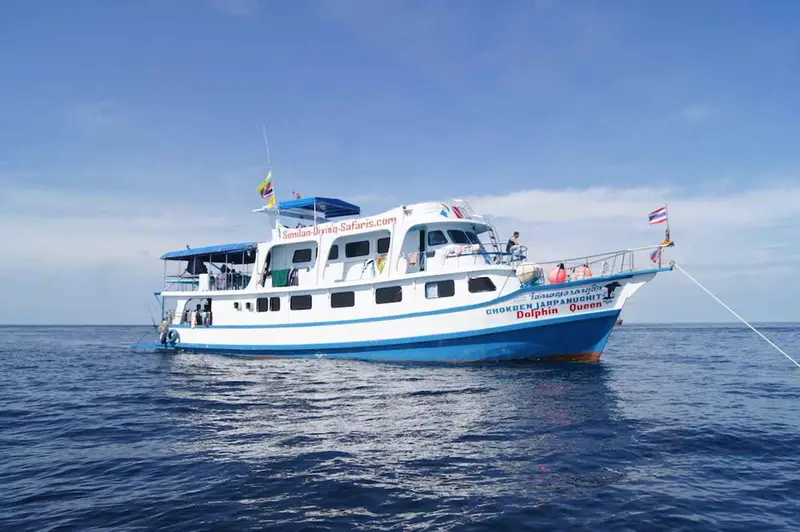
Dolphin Queen
Thailand
20 guests24 m
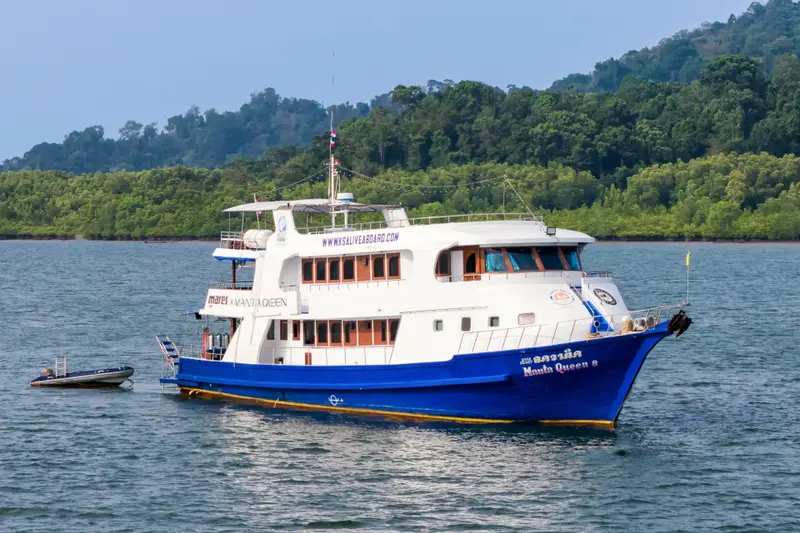
Manta Queen 8
Thailand
24 guests
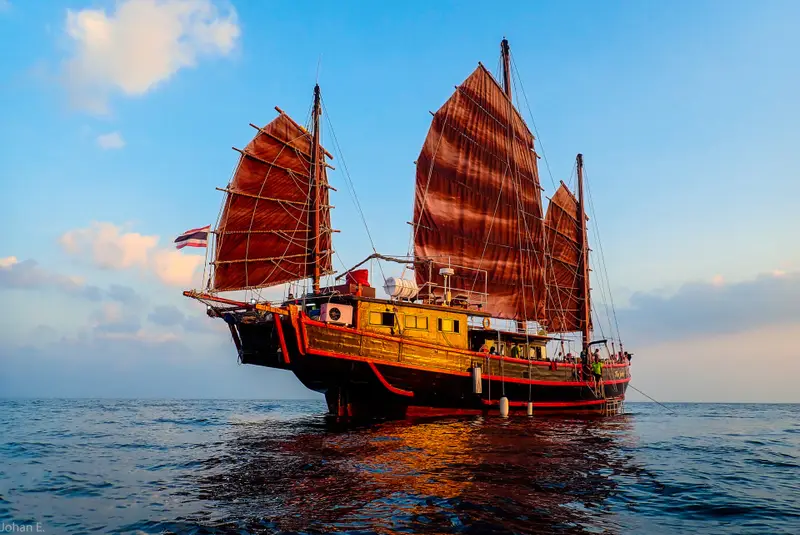
The Junk
Thailand
18 guests33 m
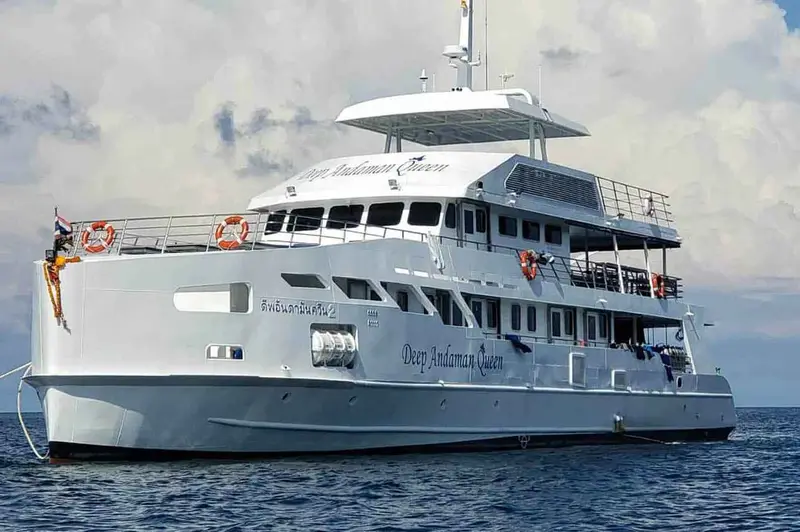
Deep Andaman Queen
Thailand
23 guests31 m
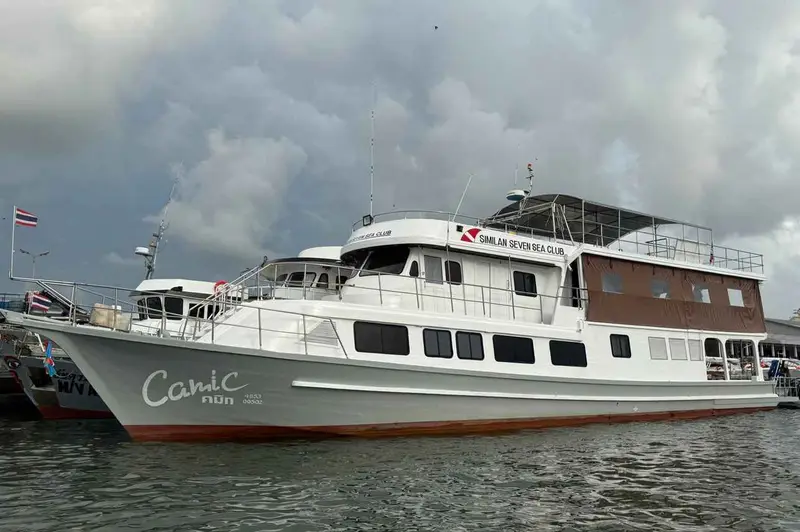
Camic
Thailand
14 guests24 m
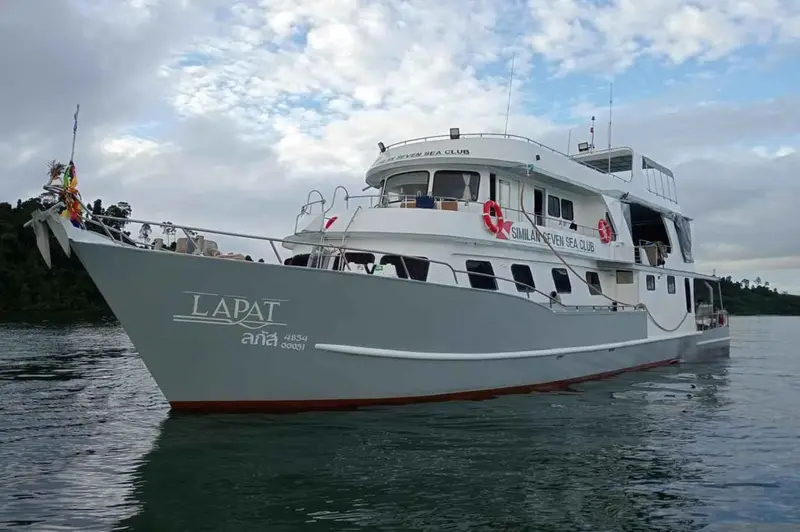
Lapat
Thailand
16 guests24 m
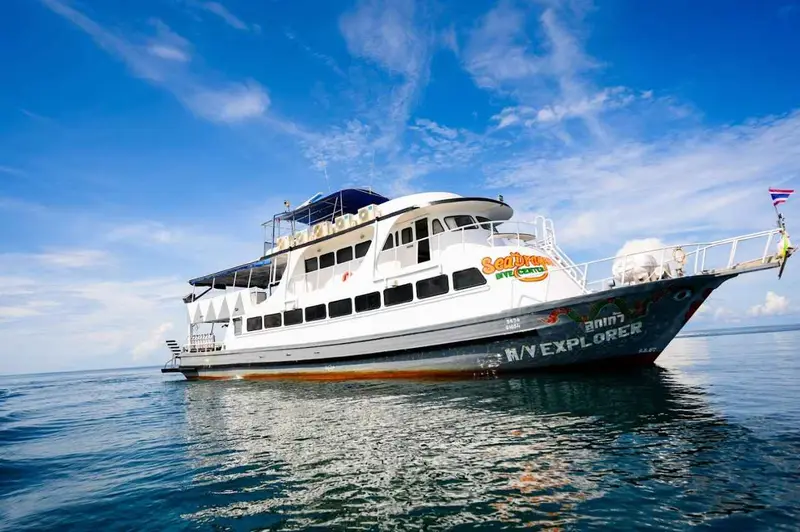
Explorer
Thailand
16 guests25 m
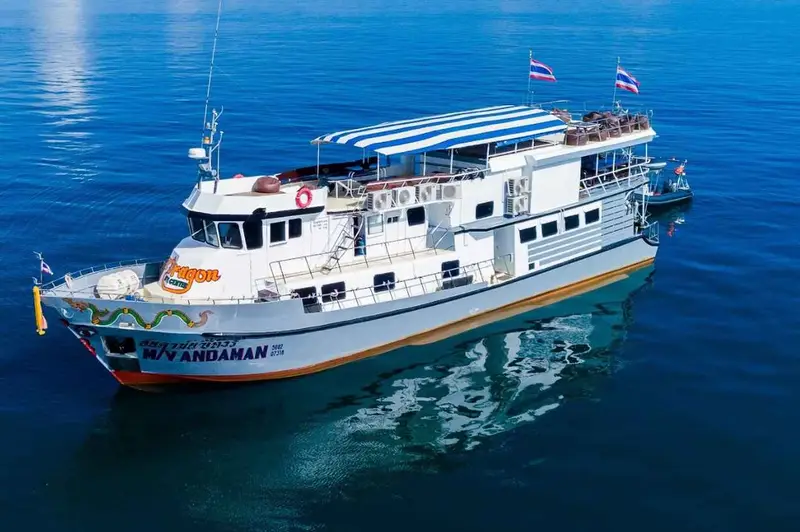
Andaman
Thailand
20 guests26 m
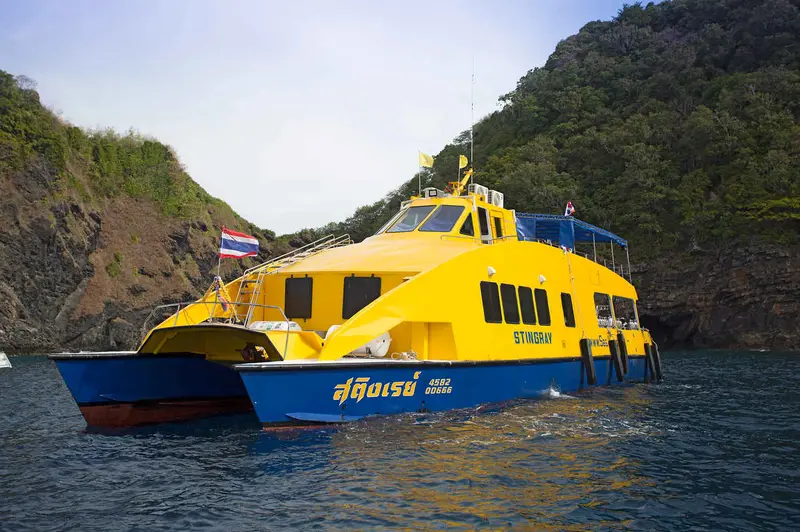
Stingray
Thailand
8 guests24 m
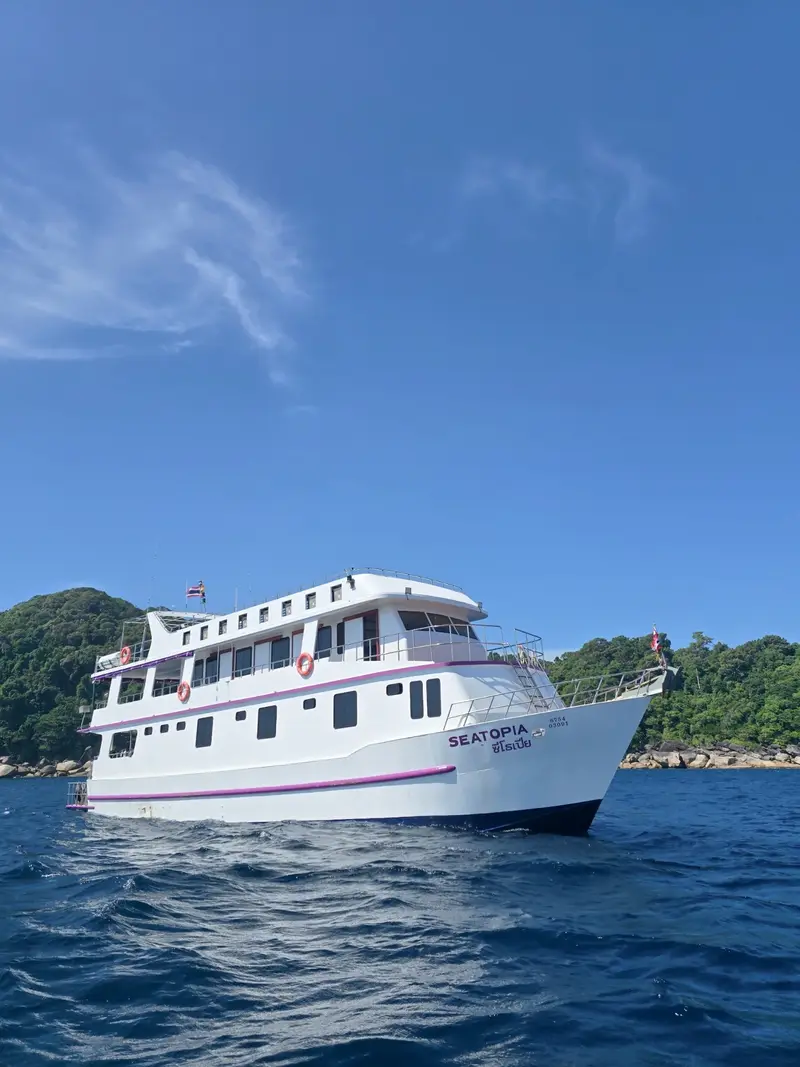
Seatopia
Thailand
24 guests24 m
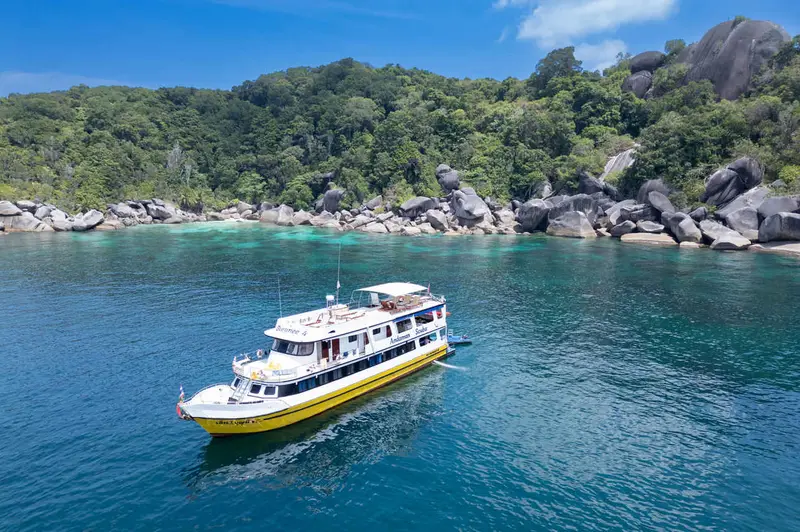
Bunmee 4
Thailand
20 guests29 m
Dive sites similar to Koh Bon — West Ridge
Same character, same waters, six more sites divers love for the exact same reasons.Compare seasons, access and liveaboard routes, then pick the site that fits your trip best.
© EsriMaxar, Earthstar, GIS
Anemone Reef
Thailand
Anemone Reef, locally known as "Hin Jom" or "submerged rock," is a significant limestone pinnacle entirely hidden beneath the Andaman Sea's surface.
- Suitable for
- Intermediate
- Current
- Ripping
- Access
- Liveaboard or dayboat
- Depth
- 5–26 m
- Theme
- Pinnacle / Wall
© EsriMaxar, Earthstar, GIS
Ang Thong, Wao Island
Thailand
Wao Island, nestled within the picturesque Ang Thong National Marine Park, is a captivating dive site characterized by its dramatic limestone formations and intricate underwater landscape.
- Suitable for
- Beginner
- Current
- Strong
- Access
- Liveaboard or dayboat
- Depth
- 3–20 m
- Theme
- Cave & cavern / Reef
© EsriMaxar, Earthstar, GIS
Beacon Reef
Thailand
Beacon Reef, sometimes referred to as Beacon Bay or Beacon Point, is a cherished dive site within Thailand's Similan Islands National Park.
- Suitable for
- Beginner
- Current
- Moderate
- Access
- Liveaboard or dayboat
- Depth
- 5–25 m
- Theme
- Reef / Wreck
© EsriMaxar, Earthstar, GIS
Breakfast Bend
Thailand
Breakfast Bend, also known as Three Trees, is a highly regarded dive site located along the eastern side of Similan Island No. 9, Koh Bangu.
- Suitable for
- Beginner
- Current
- Strong
- Access
- Liveaboard or dayboat
- Depth
- 5–25 m
- Theme
- Reef
© EsriMaxar, Earthstar, GIS
Christmas Point
Thailand
Christmas Point, located on Similan Island number 9 (Koh Ba-Ngu), stands out as one of the Similan Islands' most iconic dive sites.
- Suitable for
- Intermediate
- Current
- Strong
- Access
- Liveaboard or dayboat
- Depth
- 2–40 m
- Theme
- Pinnacle
© EsriMaxar, Earthstar, GIS
Chumphon Pinnacle
Thailand
Chumphon Pinnacle is a renowned deep dive site situated approximately 12 kilometers northwest of Koh Tao in the Gulf of Thailand.
- Suitable for
- Intermediate
- Current
- Strong
- Access
- Liveaboard or dayboat
- Depth
- 12–36 m
- Theme
- Pinnacle