About Moreton Bay
Moreton Bay, located near Brisbane, Australia, encompasses a significant marine park that serves as a unique and fully protected coral reef sanctuary. While not a single dive site, its most notable diving area, Flinders Reef, is Brisbane's only true coral reef, offering a distinct ecosystem compared to more northern reef systems. Depths typically vary, with Flinders Reef often explored from 5 to 18 meters, accommodating a wide range of diver experience. The topography includes vibrant hard and soft coral gardens, small caves, and swim-throughs, providing ample nooks and crannies for marine life. The clear waters and varied structures make it an ideal spot for exploration and underwater photography. Expect encounters with various reef fish, green and hawksbill turtles, wobbegongs, and occasional humpback whales during their migration. The consistent water temperatures contribute to a healthy reef environment, supporting a rich biodiversity of over 600 species of fish and coral. Peak seasons offer the best chances for spotting specific migratory species. Diving here is generally accessible, with boat trips departing from nearby ports. Conditions are typically calm within the protected marine park, making it suitable for both novice and experienced divers. Visibility is often excellent, allowing for expansive views of the reef's inhabitants and topography.
Highlights
Protected marine parkBrisbane's only true coral reefDiverse hard and soft coralsGreen and hawksbill turtlesWobbegong sharksExcellent visibilityHumpback whale sightings (seasonal)
Season calendar
Best months to dive here
Jan
Feb
Mar
Apr
May
Jun
Jul
Aug
Sep
Oct
Nov
Dec
Excellent
Good
Off-Season
Jun – Oct
Dry season with best visibility on the Great Barrier Reef. Minke whale season June–July. Ningaloo whale sharks March–July.
Apr – May & Nov
Comfortable temperatures, good visibility, fewer crowds. Giant cuttlefish aggregation in South Australia May–August.
Dec – Mar
Wet season in the tropics. Reduced visibility, jellyfish season. Warmer water attracts coral spawning.
Dive site facts: Moreton Bay
- Depth
- 5–18 m
- Current
- Mild
- Visibility
- 10–20 m
- Water temperature
- 24–27°C
- Entry
- Boat
- Level
- All levels
- Dive type
- Coral reef, macro, wide-angle
- Region / port
- Queensland, Australia
- Coordinates
- 27.2500° S, 153.2500° E
Conditions & Currents
Diving conditions within Moreton Bay Marine Park, particularly at Flinders Reef, are generally mild due to its protected status. Currents are typically gentle, making it suitable for divers of all experience levels. However, as with any marine environment, localized currents can occur, especially near specific formations or during tidal changes. Entry and exit are usually from a dive boat, with descent made along a mooring line or directly into the water. Visibility is often excellent, ranging from 10 to 20 meters, though it can be affected by weather conditions or recent rainfall. No significant thermoclines are typically reported for recreational depths in this area. Divers should be mindful of boat traffic, especially during peak seasons, and always maintain proper surface signaling. Gas planning should consider conservative limits given the variable depths and potential for extended
Marine life & sighting chances

Green Turtle
Year-round · common
Wrasse
Year-round · common
Humpback Whale
June-September · occasional
Hawksbill Turtle
March · occasional
Moray Eel
March · occasional
Barracuda
March · occasional
Clownfish
Year-round · common
Surgeonfish
Year-round · common
Wobbegong
Year-round · common
Parrotfish
Year-round · common
Angelfish
Year-round · common
Butterflyfish
Year-round · common
Trumpetfish
Year-round · common
Pufferfish
Year-round · commonDive profile & how the dive runs
Your dive at Flinders Reef typically begins with a boat entry, descending along a mooring line to the reef crest. The main reef system gently slopes, allowing for a gradual depth progression. Divers often explore the vibrant coral gardens, which are particularly rich in the 5 to 15 meter range, searching for green and hawksbill turtles at cleaning stations or wobbegongs nestled among the corals. The dive often follows the contours of the reef, exploring small caves and overhangs for macro life and reef fish. Turnaround points are determined by air consumption and bottom time, ensuring a no-decompression dive. The ascent usually involves a slow return to the mooring line, completing a safety stop at 5 meters for three minutes, often surrounded by schooling fish before surfacing back at the boat.
Underwater photography
Moreton Bay's Flinders Reef offers diverse opportunities for both wide-angle and macro photography. For wide-angle shots, a fisheye or wide-angle lens (e.g., 10-17mm or 16-35mm equivalent) is ideal to capture the expansive coral formations and resident green turtles at cleaning stations. Excellent visibility means natural light can be sufficient in shallower areas, but strobes will enhance color and contrast, particularly for corals and larger schools of fish. For macro subjects like clownfish in anemones or smaller critters, a dedicated macro lens (e.g., 60mm or 100mm equivalent) is essential. Focus on stable buoyancy to avoid stirring up sand and damaging delicate corals. Patience is key when photographing shy subjects like wobbegongs, allowing them to acclimate to your presence.
Combine with nearby dive sites
Getting there & logistics
Access to Moreton Bay's dive sites, particularly Flinders Reef, typically involves day trips departing from Brisbane or North Stradbroke Island (Minjerribah). Brisbane is well-served by an international airport (BNE), offering connections to major cities. From Brisbane, you can reach ferry terminals for North Stradbroke Island or direct dive charter departure points. Most dive operators in the region provide boat transport to the reef, with trip durations varying from half to full days. There are no specific permits or park fees mentioned for individual divers, but dive operators will typically cover any necessary access charges to the protected marine park. Trips are often standalone excursions to Moreton Bay or combined with other local diving in Southeast Queensland.
Safety & environment
Diving in Moreton Bay requires adherence to standard dive safety practices and local regulations. The nearest recompression chamber is located in Brisbane. In case of an emergency, evacuation would typically be via dive boat to the nearest port, followed by land transport to medical facilities. Comprehensive dive insurance is highly recommended for all divers, covering medical emergencies and evacuation. Site-specific hazards are minimal due to the generally mild conditions, but divers should be aware of potential boat traffic and maintain visible surface markers. Always dive within your certification limits and follow your dive guide's instructions, especially concerning interaction with marine life, as Moreton Bay is a protected marine park.
Who it suits — and who it doesn't
Suited for
- New certified divers
- Divers seeking easy conditions
- Underwater photographers (macro & wide-angle)
- Marine life enthusiasts
- Divers interested in coral gardens
- Divers wanting to see turtles and wobbegongs
Less suited for
- Divers seeking extreme drift diving
- Divers looking for large pelagic action exclusively
- Technical divers needing extreme depths
- Divers uninterested in reef ecology
- Those prone to seasickness on longer boat rides
FAQ
Moreton Bay FAQ
What kind of marine life can I expect to see at Moreton Bay?
Moreton Bay, especially at Flinders Reef, is rich in marine life. You can commonly encounter green and hawksbill turtles at cleaning stations, various species of wrasse, surgeonfish, parrotfish, and angelfish. Wobbegong sharks are frequently spotted, and seasonal visitors include humpback whales from June to September.
What are the typical dive depths and conditions in Moreton Bay?
Typical dive depths in Moreton Bay's primary dive areas, like Flinders Reef, range from 5 to 18 meters. Conditions are generally mild with gentle currents, making it suitable for divers of all experience levels. Visibility usually ranges from 10 to 20 meters, offering clear views of the vibrant coral and marine inhabitants.
Is Moreton Bay suitable for beginner divers?
Yes, Moreton Bay is highly suitable for beginner divers due to its protected status and generally calm conditions. The shallow depths and mild currents at sites like Flinders Reef provide a comfortable and rewarding environment for those new to diving, allowing them to enjoy the abundant marine life and coral formations.
When is the best time of year to dive Moreton Bay?
The best time to dive Moreton Bay is from May to November, when the weather is drier, and water conditions are typically clearer. This period offers excellent visibility and comfortable water temperatures. Humpback whales can be seen from June to September, adding to the diving experience.
How do I get to the dive sites in Moreton Bay?
Dive sites in Moreton Bay are primarily accessed via boat trips, usually departing from Brisbane or North Stradbroke Island (Minjerribah). Brisbane has an international airport, making it a convenient starting point. Local dive operators offer day tours that include boat transfers to the dive sites within the marine park.
Why dive Moreton Bay from a liveaboard?
Moreton Bay is one of Australia's signature dive sites. A liveaboard sleeps you on the water and puts you in the water for three to four guided dives per day, including dawn and night dives that day-boat operators rarely offer. You skip the daily commute back to port and reach quieter, less-crowded sites in the same region on a single trip.
Below are the liveaboards that include Moreton Bay on their Australia itineraries.
Liveaboards diving Moreton Bay
These liveaboards may visit Moreton Bay on selected itineraries — the exact dive sites depend on departure, weather and conditions.
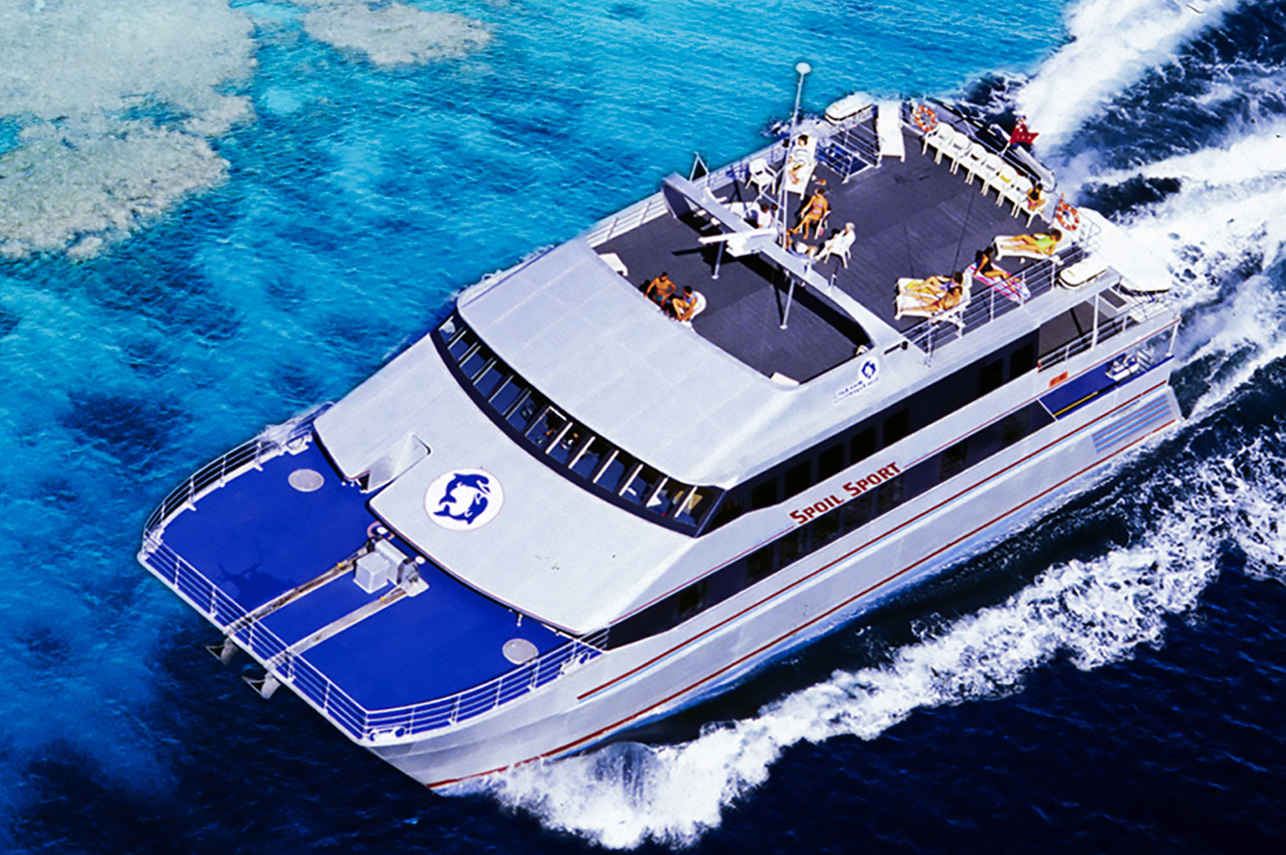
Spoilsport
Australia
28 guests30 m
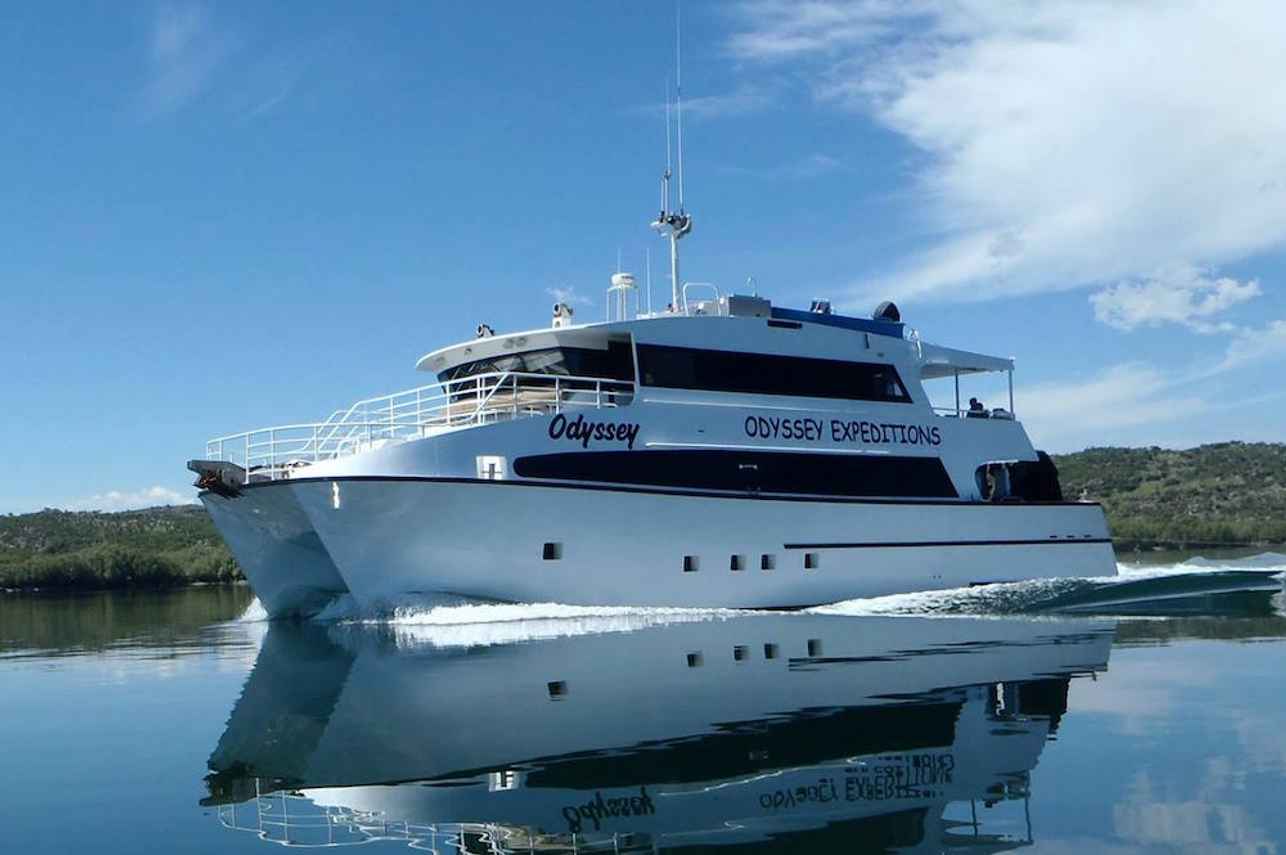
Odyssey Liveaboard
Australia
20 guests24 m
Dive sites similar to Moreton Bay
Same character, same waters — six more sites divers love for the exact same reasons.Compare seasons, access and liveaboard routes — then pick the site that fits your trip best.
© Esri — Maxar, Earthstar, GIS
Agincourt Reef
Australia
Agincourt Reef sits on the outer edge of the Great Barrier Reef, roughly 60–72 km off Port Douglas in Far North Queensland, at the southern end of the true ribbon reefs that run…
- Suitable for
- Beginner
- Current
- Moderate
- Access
- Dayboat
- Depth
- 2–20 m
- Theme
- Reef / Wall
Ahe Atoll, a remote and authentic destination in French Polynesia, offers a dive experience deeply intertwined with its local pearl farming community.
- Suitable for
- Advanced
- Current
- Strong
- Access
- Liveaboard or dayboat
- Depth
- 5–22 m
- Theme
- Channel / Drift
© Esri — Maxar, Earthstar, GIS
Alacrity Shoal
Fiji
Alacrity Shoal is a premier dive site in Fiji, renowned for its spectacular drift diving opportunities and rich marine biodiversity.
- Suitable for
- Advanced
- Current
- Strong
- Access
- Liveaboard or dayboat
- Depth
- 12–40 m
- Theme
- Drift / Seamount
Alibaba is a renowned drift dive located within the Garuae Pass in northern Fakarava, a UNESCO Biosphere Reserve in the Tuamotu Archipelago.
- Suitable for
- Intermediate
- Current
- Strong
- Access
- Liveaboard only
- Depth
- 5–30 m
- Theme
- Reef
© Esri — Maxar, Earthstar, GIS
Aliko Reef
Micronesia
Aliko Reef is a prominent dive site within Yap, Micronesia, characterized by a captivating underwater topography that blends a mini-wall with an expansive coral plateau.
- Suitable for
- Intermediate
- Current
- Mild
- Access
- Dayboat
- Depth
- 6–15 m
- Theme
- Reef / Wall
© Esri — Maxar, Earthstar, GIS
Amity Point
Australia
Amity Point is a popular shore diving destination located at the northwestern tip of North Stradbroke Island, within the protected waters of Moreton Bay.
- Suitable for
- Beginner
- Current
- Moderate
- Access
- Shore / dayboat
- Depth
- 5–15 m
- Theme
- Reef