About Charlie's Shoal
Charlie's Shoal is a pristine fringing reef located just outside Simpson Bay on St. Maarten's south coast. This site remains relatively undisturbed, offering a peaceful and uncrowded diving experience. It features a diverse topography with a rocky break, sandy slopes, and unique barrel sponges, culminating in a small wreck that adds an element of exploration to your dive. The maximum depth at Charlie's Shoal ranges from 16 to 20 meters, making it ideal for Open Water certified divers. The shallow depths and generally calm conditions ensure excellent visibility, which often exceeds 20 meters, allowing for clear views of the vibrant ecosystem. The reef is teeming with tropical fish and provides frequent encounters with larger marine species. Marine life here is abundant and varied, including regular sightings of green and hawksbill turtles, various rays, barracudas, and large groupers. Nurse sharks are also a common and welcome sight, often found resting among the reef's structures. The protected status of the surrounding waters contributes to the rich biodiversity observed at this site. Your dive experience at Charlie's Shoal will typically involve a boat entry from Simpson Bay, leading into a relaxed reef exploration. The site's simple profile and calm conditions make it an accessible and enjoyable dive for a wide range of skill levels, perfect for both leisurely exploration and underwater photography.
Highlights
Undisturbed fringing reefSmall wreck explorationAbundant turtle sightingsCalm, clear watersBarrel spongesNurse shark encounters
Season calendar
Best months to dive here
Jan
Feb
Mar
Apr
May
Jun
Jul
Aug
Sep
Oct
Nov
Dec
Excellent
Dive site facts: Charlie's Shoal
- Depth
- 16–20 m
- Typical dive
- 15 m, 50–60 min
- Current
- None
- Visibility
- 15–30 m
- Water temperature
- 25–30°C
- Entry
- Boat
- Level
- Open Water
- Dive type
- Reef, wreck, marine life
- Region / port
- St. Maarten (Dutch side)
- Coordinates
- 17.99, -63.056
Conditions & Currents
Charlie's Shoal is known for its calm and sheltered conditions, typically experiencing no significant currents. This makes for a relaxed and easy dive experience, particularly suitable for less experienced divers or those looking for a leisurely exploration. Visibility is consistently good, often reaching 24 meters or more on settled days, providing clear views of the reef and its inhabitants. Entry and exit are straightforward boat dives from Simpson Bay, contributing to the overall ease of access. While generally calm, it's always prudent to check local conditions as sea states can vary, especially during winter months, though any surge is usually light.
Marine life & sighting chances

Green Sea Turtle
common
Hawksbill Turtle
common
Nurse Shark
common
Barracuda
common
Grouper
common
Stingray
common
French Angelfish
occasional
Queen Angelfish
occasional
Grey Angelfish
occasional
Trumpetfish
occasional
Pufferfish
occasional
Moray Eel
occasional
Eagle Ray
occasionalDive profile & how the dive runs
Your dive at Charlie's Shoal begins with a boat entry, typically from Simpson Bay. Descend directly onto the reef, which slopes gently from its shallower rocky break. Follow the reef line, observing the diverse coral formations and barrel sponges. The depth generally remains around 15 meters, making it a comfortable no-decompression dive. Towards the end of the planned route, you will encounter a small wreck, providing an interesting exploration point before turning back. The entire profile is designed for a relaxed pass, allowing ample time to observe marine life. Your safety stop will be conducted in the clear, shallow waters above the reef, typically at 5 meters, before resurfacing.
Underwater photography
Charlie's Shoal offers excellent opportunities for underwater photography, particularly for wide-angle and macro shots due to its clear, shallow waters and diverse marine life. Wide-angle lenses are ideal for capturing the expansive reef formations, vibrant barrel sponges, and the small wreck, especially on days with strong natural light. For marine life, a macro lens will allow you to focus on the intricate details of reef fish, nudibranchs, and other smaller creatures hiding within the coral. Since the site is relatively shallow, natural light is often sufficient, but strobes can enhance colors and reduce backscatter. Maintain excellent buoyancy control, especially when photographing close to the reef or the wreck, to avoid disturbing the environment. Be patient with marine subjects like turtles and nurse sharks, allowing them to approach naturally for the best shots.
Combine with nearby dive sites
- The Bridge
A shallow wreck-and-bridge dive with reef life.
- Isabella
A deep reef featuring sponges and wreck remnants.
- Big Mama's Reef
Known for Caribbean reef sharks, suitable for all levels.
- HMS Proselyte
A historic frigate wreck in 6-16m, covered in corals.
- Carib Cargo
A cargo wreck intentionally sunk in 26m south of Cay Bay.
Getting there & logistics
Access to Charlie's Shoal is typically via daily dive charters departing from various points in St. Maarten, most commonly from Simpson Bay. The main international gateway is Princess Juliana International Airport (SXM), which serves numerous flights from North America and Europe. Most dive operators are resort-based, offering packages that include local dives. While St. Maarten does not currently have many liveaboards dedicated solely to its local sites, some itineraries, like the Caribbean Explorer II, combine St. Maarten diving with trips to Saba and St. Kitts. No specific permits or fees are mentioned for diving Charlie's Shoal, but always confirm with your chosen dive operator.
Safety & environment
Diving at Charlie's Shoal is generally safe due to its calm conditions and shallow depths. However, standard dive safety practices are paramount. Always dive within your certification limits and follow your dive guide's instructions. Keep excellent buoyancy to avoid damaging the delicate reef and wreck. The nearest recompression chamber is not explicitly stated for St. Maarten in the provided sources, highlighting the critical importance of proper dive planning to prevent decompression sickness. Divers should have comprehensive travel and dive insurance that covers emergency medical evacuation, as medical facilities for serious dive-related incidents may require transfer to larger regional centers. Be mindful of occasional boat traffic in the vicinity and adhere to safe ascent procedures.
Who it suits — and who it doesn't
Suited for
- Open Water divers
- Divers seeking calm, easy conditions
- Underwater photographers
- Marine life enthusiasts (turtles, rays, sharks)
- Divers preferring uncrowded sites
Less suited for
- Technical divers seeking extreme depths
- Divers exclusively focused on large pelagic encounters
- Those seeking strong current or drift dives
- Snorkelers (main route better for scuba)
FAQ
Charlie's Shoal FAQ
What is the typical depth at Charlie's Shoal?
Charlie's Shoal is a relatively shallow dive site, with a maximum depth ranging between 16 and 20 meters (50 to 65 feet). The average depth is around 15 meters, making it perfectly suited for Open Water certified divers and those who prefer less demanding profiles.
What marine life can I expect to see at Charlie's Shoal?
Divers at Charlie's Shoal frequently encounter green and hawksbill turtles, various species of rays, and large groupers. Barracudas are a common sight, and the site is also known for regular sightings of nurse sharks. The vibrant reef also hosts a wide array of smaller tropical fish.
Are there strong currents at Charlie's Shoal?
No, Charlie's Shoal is well-regarded for its calm and sheltered conditions, with typically no significant currents. This makes it an ideal spot for new divers or those looking for a very relaxed and easy diving experience without the challenge of strong water movement.
Is Charlie's Shoal suitable for beginners?
Absolutely, Charlie's Shoal is highly suitable for beginner divers, including Open Water certified individuals. Its shallow depths, calm waters, and excellent visibility provide a stress-free environment for learning and enjoying the underwater world. Many dive operators recommend it as a perfect introductory site.
Can I see a wreck at Charlie's Shoal?
Yes, Charlie's Shoal features a small wreck located towards the end of the typical dive route. This adds an interesting point of exploration to the reef dive, providing additional habitat for marine life and an extra element for underwater photographers.
Why dive Charlie's Shoal from a liveaboard?
Charlie's Shoal is one of St. Maarten's signature dive sites. A liveaboard sleeps you on the water and puts you in the water for three to four guided dives per day, including dawn and night dives that day-boat operators rarely offer. You skip the daily commute back to port and reach quieter, less-crowded sites in the same region on a single trip.
Below are the liveaboards that include Charlie's Shoal on their St. Maarten itineraries.
Liveaboards diving Charlie's Shoal
These liveaboards may visit Charlie's Shoal on selected itineraries — the exact dive sites depend on departure, weather and conditions.
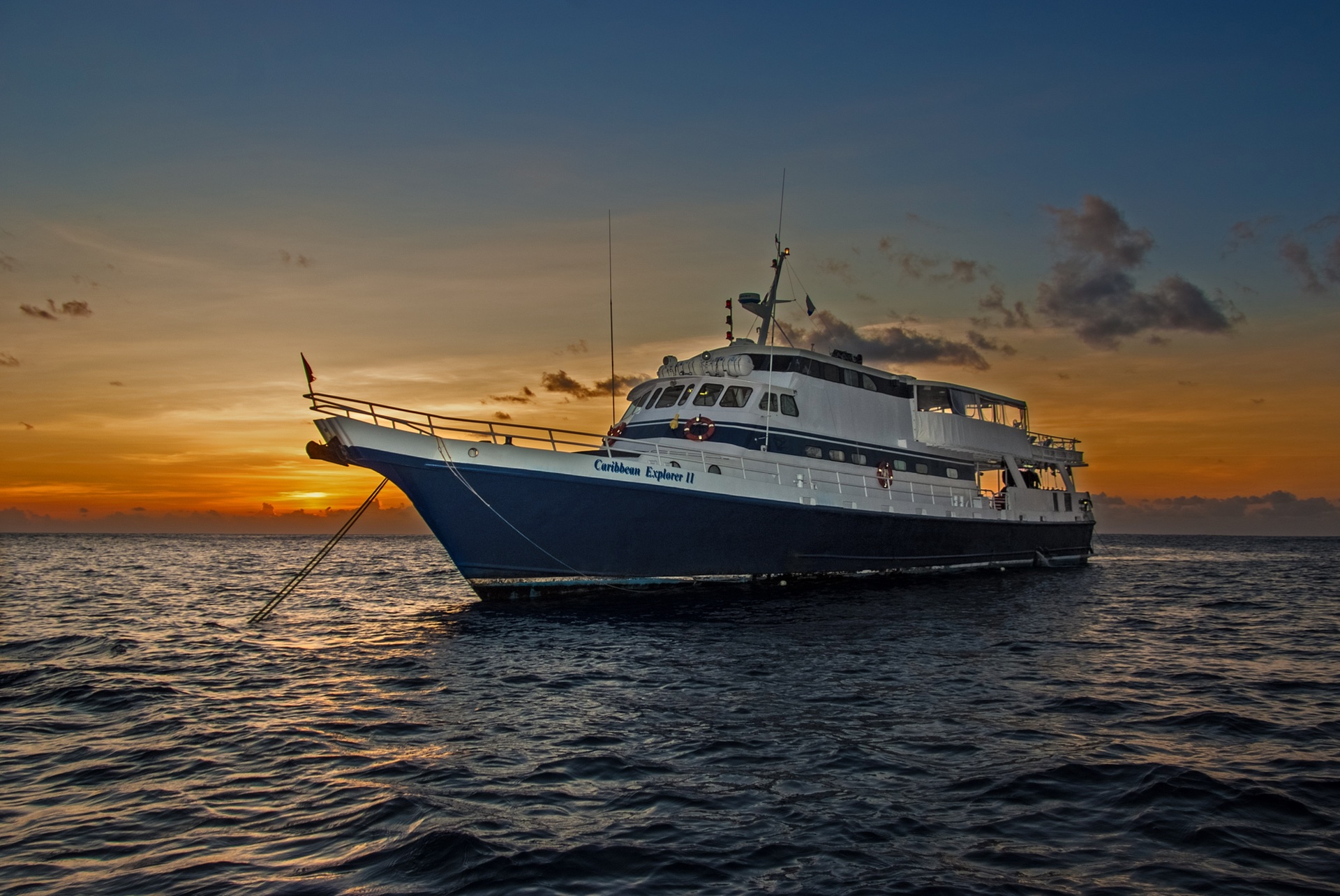
Caribbean Explorer II
St. Maarten
18 guests
$224/day
Dive sites similar to Charlie's Shoal
Same character, same waters — six more sites divers love for the exact same reasons.Compare seasons, access and liveaboard routes — then pick the site that fits your trip best.
© Esri — Maxar, Earthstar, GIS
Silver Caves
Belize
Silver Caves offers a distinctive diving experience within the Lighthouse Reef Atoll, one of Belize's healthiest reef systems.
- Suitable for
- Advanced
- Current
- Mild
- Access
- Liveaboard only
- Depth
- 18–28 m
- Theme
- Reef / Cave & cavern
Cozumel's western coast features a dramatic reef shelf that plunges thousands of feet into the ocean.
- Suitable for
- Intermediate
- Current
- Mild
- Access
- Liveaboard or dayboat
- Depth
- 15–27 m
- Theme
- Reef
© Esri — Maxar, Earthstar, GIS
North Wall
Cayman Islands
The North Wall of Grand Cayman stands as one of the most celebrated and visually striking dive regions, stretching along the island's northern coastline.
- Suitable for
- Advanced
- Current
- Mild
- Access
- Liveaboard or dayboat
- Depth
- 50–100 m
- Theme
- Reef
© Esri — Maxar, Earthstar, GIS
Lighthouse Reef
Cayman Islands
Lighthouse Reef, situated near the West End dock of Cayman Brac, provides a distinctive shallow reef diving experience.
- Suitable for
- Beginner
- Current
- Strong
- Access
- Shore / dayboat
- Depth
- 10–25 m
- Theme
- Reef
© Esri — Maxar, Earthstar, GIS
Long Caye Ridge
Belize
Long Caye Ridge is a highly-rated dive site situated within Belize's Lighthouse Reef Atoll, an area renowned for its pristine conditions due to its distance from the mainland.
- Suitable for
- Intermediate
- Current
- No current
- Access
- Liveaboard only
- Depth
- 21–21 m
- Theme
- Reef
Roatán, part of the Bay Islands of Honduras, offers a diverse underwater landscape situated along the Mesoamerican Barrier Reef System, which is the second largest barrier reef globally.
- Suitable for
- Intermediate
- Current
- Moderate
- Access
- Liveaboard or dayboat
- Depth
- 9–40 m
- Theme
- Reef