About Carib Cargo
The Carib Cargo, also known as Carib Ghost or RoRo, is an inter-island trader that now serves as one of St. Maarten's premier wreck dive sites. Originally damaged by Hurricane Luis in 1995, it was subsequently taken off its moorings by Hurricane Bertha in 1996, eventually settling upright on a sandy patch off Philipsburg. Its clear waters and position make it an excellent location for both wreck diving training and photography. Sitting at a depth of 18 to 20 meters, the wreck is easily accessible, especially through shore entry, providing a true shipwreck experience rather than a manufactured artificial reef. The structure offers various points of interest, including its open sections for exploration, though some interior areas are restricted for safety. Surrounding the wreck, a pristine sandy bottom contributes to excellent visibility, allowing divers to appreciate the structure and the diverse marine life it attracts. The site is bustling with activity, frequently visited by large schools of fish such as trevally, French grunts, and yellow snapper. Divers often encounter southern stingrays, reef sharks, green sea turtles, barracudas, and moray eels. Spiny lobsters are also commonly found both within and around the wreck, adding to the rich biodiversity. If fortunate, divers might even spot eagle rays or dolphins. Carib Cargo is well-suited for a calm morning dive, when conditions are typically optimal for visibility and exploration. It's part of the Man of War Shoal Marine Protected Area, which prohibits fishing and emphasizes the preservation of the site. Its straightforward nature and diverse ecosystem make it appealing to various diver levels, from those undergoing wreck training to experienced photographers.
Highlights
Former inter-island trader wreckUpright position on sandy bottomExcellent wreck penetration trainingClear water, superb visibilityAbundant marine life habitatIdeal for underwater photographyAccessible shore entryPart of protected marine park
Season calendar
Best months to dive here
Jan
Feb
Mar
Apr
May
Jun
Jul
Aug
Sep
Oct
Nov
Dec
Excellent
Good
Dive site facts: Carib Cargo
- Depth
- 18–20 m
- Typical dive
- 18 m, 43–60 min
- Current
- Mild to none
- Visibility
- 12–30 m
- Water temperature
- 25–28°C
- Entry
- Boat / shore entry
- Level
- Open Water, Wreck Diver for penetration
- Dive type
- Wreck, artificial reef, photography
- Night dive
- Possible
- Region / port
- Philipsburg, St. Maarten
- Coordinates
- 18.002, -63.062
Conditions & Currents
Dive conditions at Carib Cargo are typically characterized by little to no current, making it a comfortable site for divers of various skill levels. The relatively calm seas and absence of strong currents allow for relaxed exploration of the wreck. Visibility is generally excellent, ranging from 12 to 30 meters, but it can occasionally be influenced by Atlantic swells. Divers should be aware that while the site is usually placid, surface chop can occur, particularly during stronger trade winds in winter. The clear water and minimal current contribute to Carib Cargo being an ideal spot for detailed wreck exploration and underwater photography without significant drift or strenuous swimming.
Marine life & sighting chances

Southern stingray
common
Caribbean reef shark
common
Green sea turtle
common
Great barracuda
common
Moray eel
common
Spiny lobster
common
Eagle ray
occasional
Dolphin
occasional
Trevally
common
French grunt
common
Yellow snapper
common
Hawksbill sea turtle
occasional
Nurse shark
occasionalDive profile & how the dive runs
Diving the Carib Cargo typically begins with a descent to the sandy bottom at approximately 18 to 20 meters, where the wreck rests upright. Divers can approach the wreck either from a boat or through a shore entry, with the open sand offering clear navigation. The initial exploration focuses on the exterior, observing schooling fish and other marine life that frequent the structure. As you circumnavigate the wreck, you'll find various open sections suitable for careful inspection. For those with appropriate wreck diving certifications, selective penetration into the wheelhouse and other internal areas is possible, though some sections are now closed. The dive often progresses along the length of the vessel, allowing close observation of marine inhabitants like lobsters and moray eels. A gradual ascent along the wreck or nearby sandy areas is recommended, concluding with a safety stop at 5 meters in the clear, often current-free waters before surfacing.
Underwater photography
The Carib Cargo offers excellent conditions for underwater photography, particularly for wide-angle shots due to its clear water and the wreck's upright, intact structure. A wide-angle lens is ideal for capturing the entire vessel or large sections of it, especially when schooling fish like trevally and grunts are present around the deck. For macro enthusiasts, the wreck's nooks and crannies provide ample opportunities to find spiny lobsters, moray eels, and smaller reef creatures. Consider bringing strobes to enhance color and definition, as natural light can fade at depth, especially within the wreck's interior. When exploring internal sections, use a dive light to illuminate dark areas and reveal hidden subjects. Maintaining excellent buoyancy is crucial to avoid stirring up sediment from the sandy bottom or damaging the wreck, ensuring clear shots and preserving the site for future photographers. Patience is key for capturing the frequently seen stingrays, sharks, and turtles that visit the wreck.
Combine with nearby dive sites
- HMS Proselyte
A historic frigate wreck in shallow water, known for its coral growth and artifacts.
- Fish Bowl
A circular reef within Man O'War Shoal Marine Park, featuring a spectacular swim-through.
- Gregory
A sunken transport barge lying upside down, attracting barracudas, eagle rays, and turtles.
- Charlie's Shoal
An undisturbed fringing reef with calm waters, great visibility, and frequent turtle and ray sightings.
- The Bridge
Features several yacht wrecks and bridge remains, now heavily colonized by marine life, with stingrays and reef sharks.
Getting there & logistics
Accessing St. Maarten usually involves flying into Princess Juliana International Airport (SXM), which serves as a major hub in the Caribbean. From the airport, many dive operations are based in Philipsburg, where the Carib Cargo is located nearby. Dive trips to Carib Cargo are typically part of daily dive excursions offered by local dive shops, often combined with a second, shallower dive site. Most dive packages are resort-based, though the Caribbean Explorer II liveaboard occasionally includes St. Maarten in its itineraries. There is a marine park fee of approximately $3 per diver, as the Carib Cargo is situated within the Man O'War Shoal Marine Protected Area. Full dive gear rental is available from local operators, and some divers opt to bring only personal items like masks and computers. Trips are generally planned for the morning to capitalize on calmer conditions and best visibility.
Safety & environment
Diving the Carib Cargo requires careful attention to safety protocols, particularly due to its nature as a wreck dive. While the wreck itself is accessible and generally in good condition, some interior sections are restricted for safety reasons. Divers are advised to only attempt penetration if they possess appropriate wreck diving certifications and have received a thorough local briefing. Always stay within guide-approved areas. The nearest recompression chamber is in St. Maarten, located within a reasonable distance for emergencies, but divers should always carry adequate dive insurance, such as DAN, to cover potential evacuation and medical treatment. Standard diving practices, including monitoring air consumption, depth, and bottom time, are paramount. As with any dive, never dive beyond your training or comfort level, and consult with your dive operator regarding daily conditions, as Atlantic swells can occasionally affect visibility and sea state. The site is part of a marine park, so adhering to rules against disturbing marine life or artifacts is essential.
Who it suits — and who it doesn't
Suited for
- Open Water divers seeking their first wreck experience
- Advanced divers interested in wreck penetration training
- Underwater photographers due to clear water and abundant life
- Divers comfortable with depths up to 20 meters
- Those looking for a wreck with easy shore access
Less suited for
- Snorkelers, as main features are at depth
- Freedivers, due to the depth and wreck-focused nature
- Divers uncomfortable with overhead environments
- Those who prefer strong current or drift dives
- Beginners without proper wreck orientation or certification for penetration
FAQ
Carib Cargo FAQ
What is the history of the Carib Cargo wreck?
The Carib Cargo, also known as Carib Ghost or RoRo, was an inter-island trader that was severely damaged by Hurricane Luis in 1995. It was then dislodged by Hurricane Bertha in 1996, eventually settling upright on the sandy seafloor off Philipsburg. It has since transformed into a thriving artificial reef and a popular dive site.
Can divers penetrate the Carib Cargo wreck?
Yes, some sections of the Carib Cargo wreck are suitable for penetration, particularly for divers undergoing wreck diving training or those with appropriate certifications. However, certain interior areas, like the wheelhouse and stern swim-throughs, are now closed for safety. Always follow your guide's instructions and ensure your qualification aligns with the planned penetration.
What kind of marine life can I expect to see at Carib Cargo?
Carib Cargo is teeming with marine life. Divers frequently encounter schools of trevally, French grunts, and yellow snapper. Common sightings also include southern stingrays, Caribbean reef sharks, green sea turtles, great barracudas, and various moray eels. Lucky divers might even spot eagle rays, dolphins, or nurse sharks around the wreck.
Is Carib Cargo suitable for beginner divers?
Carib Cargo is generally suitable for Open Water certified divers, especially for external exploration and as an introduction to wreck diving. Its minimal currents and clear visibility make for a comfortable experience. However, any form of wreck penetration requires advanced certification and specific training to ensure safety.
What are the typical diving conditions at Carib Cargo?
The diving conditions at Carib Cargo are usually excellent, characterized by warm Caribbean water ranging from 25-28°C and little to no current. Visibility is typically clear, often between 12 to 30 meters. The site is best enjoyed on calm mornings, though Atlantic swells can occasionally impact visibility. It's part of a protected marine park, ensuring pristine conditions.
Why dive Carib Cargo from a liveaboard?
Carib Cargo is one of St. Maarten's signature dive sites. A liveaboard sleeps you on the water and puts you in the water for three to four guided dives per day, including dawn and night dives that day-boat operators rarely offer. You skip the daily commute back to port and reach quieter, less-crowded sites in the same region on a single trip.
Below are the liveaboards that include Carib Cargo on their St. Maarten itineraries.
Liveaboards diving Carib Cargo
These liveaboards may visit Carib Cargo on selected itineraries — the exact dive sites depend on departure, weather and conditions.
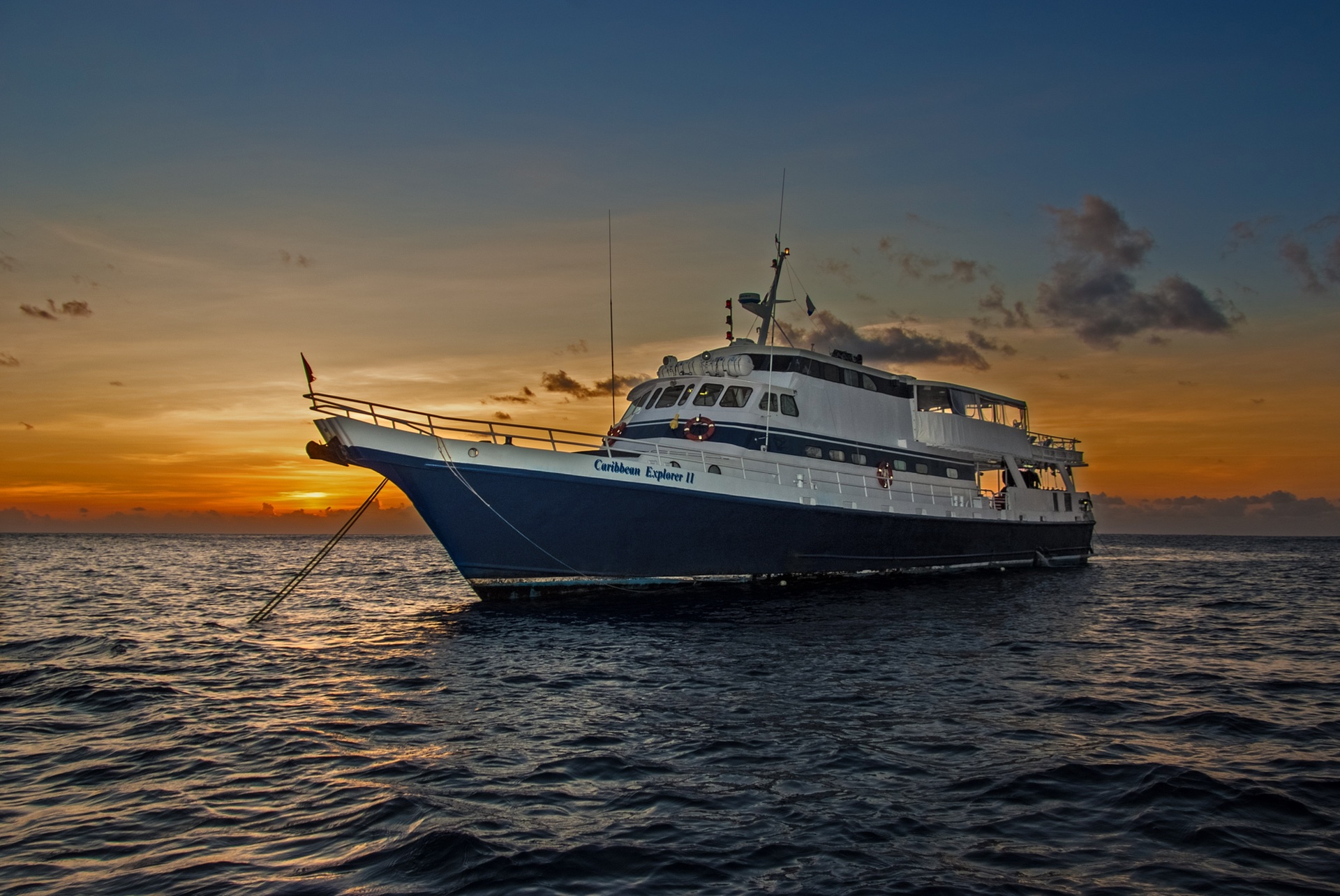
Caribbean Explorer II
St. Maarten
18 guests
$224/day
Dive sites similar to Carib Cargo
Same character, same waters — six more sites divers love for the exact same reasons.Compare seasons, access and liveaboard routes — then pick the site that fits your trip best.
The Gregory is a purpose-sunk barge, deployed in 1993, that now rests upside-down off the Dutch side of St. Maarten.
- Suitable for
- Intermediate
- Current
- Strong
- Access
- Liveaboard or dayboat
- Depth
- 10–17 m
- Theme
- Drift / Wall
© Esri — Maxar, Earthstar, GIS
Tug Boat Annie
St. Maarten
Tug Boat Annie, located off the coast of St. Maarten, is a popular wreck dive known for its shallow depth and rich marine biodiversity.
- Suitable for
- Beginner
- Current
- Strong
- Access
- Liveaboard or dayboat
- Depth
- 8–15 m
- Theme
- Wreck
The Isabella wreck in St. Maarten offers an engaging dive experience, featuring a barge intentionally sunk to create an artificial reef.
- Suitable for
- Beginner
- Current
- Strong
- Access
- Liveaboard or dayboat
- Depth
- 5–12 m
- Theme
- Reef / Wreck
The Fuh Sheng is a captivating deep wreck dive located near Cupecoy Cay in St. Maarten.
- Suitable for
- Advanced
- Current
- Moderate
- Access
- Liveaboard or dayboat
- Depth
- 20–30 m
- Theme
- Wreck
© Esri — Maxar, Earthstar, GIS
Charlie's Shoal
St. Maarten
Charlie's Shoal is a pristine fringing reef located just outside Simpson Bay on St. Maarten's south coast.
- Suitable for
- Beginner
- Current
- Mild
- Access
- Liveaboard or dayboat
- Depth
- 4–18 m
- Theme
- Reef / Wreck
© Esri — Maxar, Earthstar, GIS
Cay Bay Reef
St. Maarten
Cay Bay Reef in St. Maarten offers a welcoming dive experience for all levels, situated in a sheltered area ideal for tranquil exploration.
- Suitable for
- Beginner
- Current
- Strong
- Access
- Liveaboard or dayboat
- Depth
- 5–15 m
- Theme
- Reef / Wreck