Conditions in November
November in Honduras's Bay Islands, encompassing Roatan, Utila, and Guanaja, often marks a transition period, leaning towards the tail end of the wet season and the approach of the drier, cooler months. Typically, you can expect a mix of sunshine and occasional, short-lived tropical downpours. These showers usually don't last long, clearing quickly to reveal brilliant Caribbean skies, so don’t worry about your vacation being a washout. Air temperatures are comfortably warm, averaging around 25-28°C (77-82°F), making for enjoyable surface intervals without being oppressively hot. Humidity levels start to decrease compared to the peak summer months, adding to the comfort.
Underwater, the conditions remain consistently appealing for divers. Water temperatures in November are generally a balmy 27-29°C (81-84°F), meaning many divers happily opt for a 3mm shorty or even just a rash guard. Visibility is usually excellent, typically ranging from 20-30 meters (65-100 feet), providing crystal-clear views of the vibrant reef systems. While occasional rain might temporarily reduce visibility in shallower, coastal areas, offshore sites are generally unaffected. Sea states are mostly calm, especially within the shelter of the islands' leeward sides. However, as November progresses and winter fronts begin to push through the Caribbean, you might encounter slightly choppier conditions on exposed northern sites for a day or two, but this is rare and usually means simply shifting to a more protected location.
Currents around the Bay Islands are typically mild to moderate, making for relaxed drift dives and easy exploration of the extended Mesoamerican Barrier Reef. Stronger currents are less common but can occur on certain exposed points, particularly around Utila, which is known for its more dynamic diving environment. Local dive guides are experts at reading these conditions, ensuring your dives are always safe and enjoyable, regardless of any slight shifts in the weather or sea.
What you will see
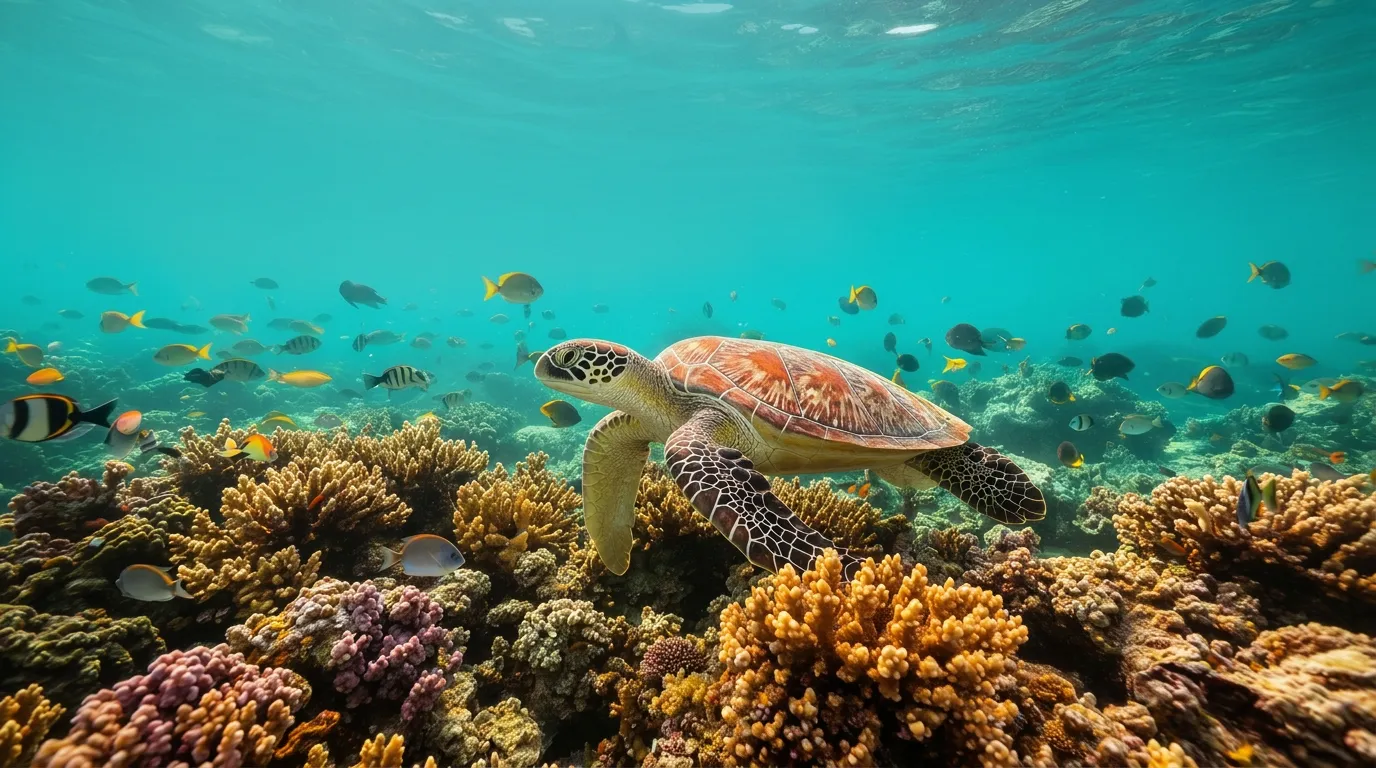
November is a fantastic month to experience the rich biodiversity of the Bay Islands' reefs. The slightly cooler air temperatures after the summer heat can sometimes signal the arrival of certain pelagic species. While not guaranteed, manta rays and eagle rays are often more frequently sighted cruising along the reef edges and over cleaning stations. You’ll be constantly surrounded by a kaleidoscope of reef fish: massive schools of creole wrasse, snapper, grunts, and triggerfish are ubiquitous. Keep an eye out for larger groupers, particularly Goliath Groupers, which can be spotted in deeper cracks and overhangs around sites like Mary's Place. The health of the coral here is truly impressive, with vibrant gorgonians, massive brain corals, and intricate fan corals creating a stunning backdrop for all the marine activity.
Shark sightings, too, become more reliable as the water potentially clears up further. Reef sharks, such as Caribbean Reef Sharks, are a common and welcome sight, often patrolling leisurely along the reef or resting on sandy bottoms. Nurse sharks are also frequently encountered, often found sleeping under ledges or in small caves. For macro enthusiasts, November doesn't disappoint. The reefs are teeming with small wonders: numerous species of nudibranchs, often in brilliant colors, cleaner shrimp, crabs hidden in crevices, and tiny blennies peeking out of coral heads. Seemingly every sponge and fan coral hosts a treasure trove of smaller critters, making every square inch of the reef a discovery.
One of the potential highlights of diving in the Bay Islands, particularly Utila, during November is the chance to encounter whale sharks. While these gentle giants are present year-round, November can be a fruitful month as the plankton blooms, drawing them closer to the surface. It’s certainly not a guarantee, as they are wild animals, but the possibility always adds an extra layer of excitement to any dive trip here. Keep your eyes peeled towards the blue during safety stops or on surface intervals when transiting between sites; you never know when a dark shadow might appear!
Top dive sites this month
For a November dive trip, you'll want to hit some of the classics that truly shine in these conditions. In Roatan, Mary's Place is an absolute must-do. This iconic dive features a dramatic, narrow crack or crevice that opens up to a stunning wall teeming with life, excellent visibility, and often lighter currents in November, making for a truly memorable experience. Its unique geological formation and vibrant coral health are exceptional. Another fantastic Roatan site is El Aguila, a sunken cargo ship that has become a thriving artificial reef. With the excellent visibility, you'll get great views of the wreck itself, completely encrusted with corals, and the schools of fish that call it home, including resident groupers and moray eels.
Over in Utila, the diving leans towards larger, often pelagic encounters. The Pinnacles, located offshore, are a series of seamounts that rise from the deep, attracting schooling fish and offering a greater chance of seeing larger marine life like reef sharks and eagle rays, especially with the clear November waters. Another great spot in Utila is Black Hills, another offshore seamount known for its potential for whale shark encounters and rich pelagic activity, where strong currents can occasionally make for exhilarating drifts, though November often sees these slightly tempered. Finally, don’t miss the opportunity to explore some of the lesser-dived areas around Guanaja, often accessed via liveaboard; sites like The Jimmy wreck offer incredible historical exploration combined with vibrant marine life, often in undisturbed conditions due to fewer divers.
Practical tips for your trip
Given the comfortable water temperatures of 27-29°C (81-84°F) in November, most divers will be perfectly happy with a 3mm shorty or a full 3mm wetsuit. If you’re someone who gets cold easily or plans to do multiple dives a day, a 5mm full suit might offer extra comfort, but it’s certainly not essential. This month is fantastic for all levels of divers. Beginners will appreciate the generally calm conditions and excellent visibility, which makes learning and exploring a breeze. Advanced divers will find plenty to explore in deeper sections of the walls, wrecks, and potential pelagic encounters. Liveaboard availability in November is generally good, as it's just before the peak holiday season crowds. Booking ahead is always a good idea to secure your preferred itinerary, especially if you have specific dates in mind.
When packing for your trip, think light and casual. Swimsuits, shorts, t-shirts, and sandals will be your daily uniform. Don't forget reef-safe sunscreen, a good hat, and sunglasses for sun protection between dives. A light rain jacket or poncho can be handy for those occasional showers. Of course, bring all your essential dive gear, and definitely pack an underwater camera! Things to be aware of include practicing responsible tourism; the Bay Islands are a delicate ecosystem, so avoid touching marine life or corals. While English is widely spoken in the tourist areas, a few basic Spanish phrases can always be appreciated. The local currency is the Honduran Lempira, but US dollars are also widely accepted. Remember that November can see the start of some northern winds, so if you're prone to motion sickness, pack some remedies, just in case. Otherwise, prepare for an unforgettable dive adventure!
Year-round overview for Honduras
Frequently asked questions
Is November a good month to dive in Honduras?
What can you see diving in Honduras in November?
Should I book a Honduras liveaboard for November or wait?
Find a liveaboard for November
Compare available Honduras liveaboards departing in November.
Search and Book