Caribbean Reef Octopus
Octopus briareus
About Caribbean Reef Octopus
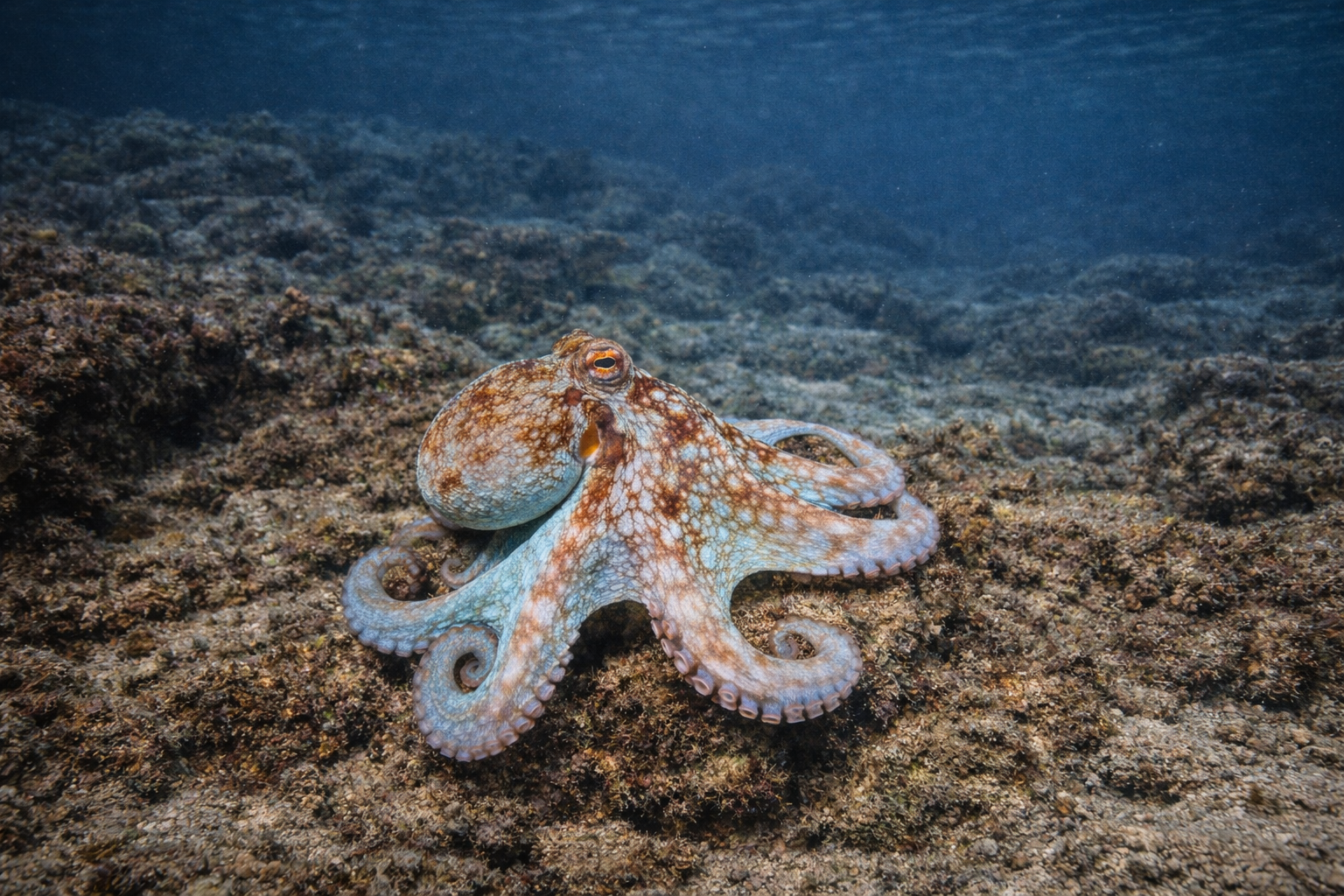
A colorful and curious species native to Caribbean coral reefs. Known for its vibrant blue-green coloration and bold behavior, often spotted during night dives emerging from crevices to hunt.
Quick Facts
- Habitat: The Caribbean Reef Octopus, *Octopus briareus*, is a common invertebrate found throughout the **tropical and subtropical Western Atlantic Ocean**. Its range extends from the **coasts of Florida**, throughout the **Caribbean Sea**, and south to **Brazil**. These octopuses prefer **shallow, warm waters**, typically dwelling in depths ranging from 1 to 20 meters (3-65 feet), though they can occasionally be found deeper. Their preferred habitats are **coral reefs**, seagrass beds, and rubble areas, where they can utilize the complex structures for shelter and hunting. They are particularly adept at camouflage, blending seamlessly with their surroundings by changing skin texture and color. Divers can often spot them in the intricate crevices of **elkhorn and staghorn coral formations** or hidden amongst the rocks and sponges of a reef. While they are present year-round, their activity levels and visibility to divers can vary, often being more active and observable during warmer months or at night. They are not migratory and tend to establish a territory within a suitable reef system, making them a consistent, if sometimes elusive, resident of many popular dive sites.
- Diet: The Caribbean Reef Octopus is a skilled and opportunistic predator, with a diet primarily consisting of **crustaceans and small fish**. They are particularly fond of **crabs and shrimp**, which they expertly extract from their hiding places. Their hunting strategy is fascinating to observe; they use their **highly sensitive suckers** to explore cracks and crevices, and once prey is located, they are incredibly quick to capture it. They can also envelop their prey using their webbed arms. Once captured, the octopus uses its powerful beak to puncture the exoskeleton of crabs or the skin of fish, injecting a **neurotoxin** that paralyzes and predigests the prey. This allows them to effectively consume their meal. They are also known to drill a small hole into the shells of mollusks to access the soft tissue inside. Their nocturnal habits mean much of their active hunting occurs **under the cover of darkness**, though they are occasionally seen foraging during the day, especially if food is scarce or they are disturbed from their dens.
- Best season: Encounters with the Caribbean Reef Octopus are possible **year-round** throughout its warm water range in the Western Atlantic, but certain seasons offer better opportunities due to water temperature, clarity, and octopus activity. In the **Florida Keys and Bahamas**, the **late spring and summer months (May to September)** offer particularly good viewing, as the warmer waters contribute to higher octopus activity levels, especially during their nocturnal foraging. Similarly, in the **southern Caribbean**, such as **Bonaire, Curaçao, and the Cayman Islands**, encounters are consistently good from **April through November**, coinciding with generally calm seas and excellent visibility. While they are present during the cooler, drier season (December to April), their activity might be slightly reduced, and they may be more reclusive. Diving during **night dives** significantly increases the chances of spotting these fascinating creatures actively hunting, as they are primarily nocturnal. Regardless of the month, prioritizing night dives in their preferred reef and rubble habitats will maximize your chances of a memorable encounter.
Fun Facts
They can squeeze through any gap larger than their beak,Caribbean reef octopuses have been shown to learn by observing other octopuses,Females guard their eggs for weeks without eating,They have three hearts and blue blood
Diving Tips
When diving for the Caribbean Reef Octopus, **patience and keen observation** are your best allies. These creatures are masters of **camouflage and concealment**. Look for subtle color and texture changes on rocks, corals, or within crevices, or an unusual cluster of shells that might indicate a den. Their eyes are often the most defining feature when they are perfectly blended. During **night dives**, they are much more active and easier to spot as they emerge to hunt; use your dive light to scan the reef slowly, but avoid shining it directly into their eyes for extended periods. When you do find one, maintain a **respectful distance** to avoid stressing the animal, allowing it to continue its natural behaviors. **Never attempt to touch, chase, or harass** an octopus; this can cause injury to the animal and disrupt its hunting or resting. Observe their natural movements and color changes, which can indicate their mood. For example, a sudden paling or darkening may signal alarm or excitement. Remember to be **buoyant and streamlined** to prevent accidental damage to the delicate reef structures they inhabit. **Responsible diving practices** protect both the marine environment and the animals within it. Flash photography is generally acceptable, but minimize rapid flashes or excessive use to avoid startling them. Enjoy the privilege of observing these intelligent invertebrates in their natural habitat.