About Cueva Azul
Cueva Azul, translating to "Blue Cave," stands out as one of Cuba's most remarkable cave diving experiences, particularly around Isla de la Juventud. This site offers an immersive adventure into a complex underwater environment, characterized by its intricate cave system and vibrant ecosystems. Divers navigate through vast chambers adorned with ancient coral and sponges, encountering unique species adapted to these sheltered conditions. The cave system features multiple exits and impressive geological formations that create a natural labyrinth, guiding divers through a spectacular visual display. Beyond the cave itself, the dive often transitions into an area referred to as the "big blue," where the ocean floor plunges dramatically to depths of 1,500 meters, showcasing the profound scale of the Caribbean's underwater topography. Marine life within Cueva Azul is notably rich, featuring dense shoals of silver glassfish that shimmer in the filtered light, alongside various sponges and coral formations that paint the cave walls in diverse colors. Large tarpons are also a significant draw, often seen patrolling the cave's entrances and interior. The site's pristine condition reflects Cuba's strong environmental protection efforts, providing a glimpse into an untouched marine world. Located approximately a 45-minute drive from El Colony, Cueva Azul is generally accessible by boat, providing divers with a comprehensive and unforgettable experience. The combination of its unique geology, diverse marine inhabitants, and the thrill of cave exploration makes it a bucket-list destination for experienced divers seeking an extraordinary underwater adventure.
Highlights
Intricate cave systemStunning geological formationsSilver glassfish schoolsDeep water "big blue" sectionLarge tarpon sightingsVibrant sponge and coralMultiple cave exits
Season calendar
Best months to dive here
Jan
Feb
Mar
Apr
May
Jun
Jul
Aug
Sep
Oct
Nov
Dec
Excellent
Good
Dive site facts: Cueva Azul
- Depth
- 65 feet (cave entrance) to 1,500 meters (big blue)
- Typical dive
- 30-50 min, variable depth
- Current
- Mild to calm inside cave
- Visibility
- Excellent inside cave, variable outside
- Water temperature
- 25-30°C (77-86°F)
- Entry
- Boat
- Level
- Intermediate to Advanced (cave diving experience beneficial)
- Dive type
- Cave, geological formations, macro
- Night dive
- Not typically offered
- Region / port
- Isla de la Juventud, Western Cuba
- Coordinates
- 21.585, -83.175
Conditions & Currents
Currents within Cueva Azul are generally calm inside the cave system, making for a relatively tranquil exploration experience. However, divers should be prepared for potential mild currents near the cave entrances or when transitioning to the "big blue" area, where open ocean conditions can influence water movement. Visibility inside the cave is usually excellent, often exceeding 20 meters, though particulate matter stirred up by divers can temporarily reduce it in confined spaces. Due to the nature of cave diving, proper buoyancy control is paramount to avoid disturbing the delicate environment and maintaining clear visibility. Entry and exit points are well-defined, typically involving a boat drop-off and pickup, with descent and ascent managed along the cave's natural formations. Divers must possess good air management skills and situational awareness to navigate the cave safely and e
Marine life & sighting chances


Dive profile & how the dive runs
Diving Cueva Azul typically begins with a boat ride to the site, followed by a descent into one of the cave's natural entrances. The initial dive focuses on exploring the main cavern, where divers can observe the dramatic rock formations and colorful marine growth. You'll navigate through various passages, often encountering dense schools of glassfish shimmering in the cave's filtered light. The route includes ascending and descending through different sections, showcasing the cave's multi-layered structure. A key feature is the transition to the "big blue," a section where the cave opens to a massive deep-water drop-off, offering a contrasting experience of vast open water. Divers then return through another exit, making a safety stop in shallower, sunlit waters before surfacing for boat pick-up. Buoyancy control is critical throughout the dive to protect the delicate cave environment.
Underwater photography
Cueva Azul presents unique challenges and rewards for underwater photographers. For wide-angle shots, a fisheye or wide-angle rectilinear lens is ideal to capture the expansive cave chambers and dramatic geological formations. External strobes are essential to properly illuminate the cave's dark interiors and bring out the vibrant colors of sponges and corals, while avoiding backscatter from particulate matter. For capturing schools of glassfish or individual tarpon, a macro lens can also be effective if you plan to focus on smaller details or specific marine life. Maintaining excellent buoyancy is crucial to avoid stirring up silt and to position yourself carefully without damaging the delicate cave structures. Given the variable light conditions, a good quality video light or focus light is also highly recommended to aid in focusing and composition.
Combine with nearby dive sites
Getting there & logistics
Access to Cueva Azul is typically facilitated through dive centers operating on Isla de la Juventud. The nearest major airport with international connections is José Martí International Airport (HAV) in Havana. From Havana, travelers usually take a domestic flight or ferry to Isla de la Juventud, often arranging transport through their dive operator or hotel. The site itself is approximately a 45-minute drive from El Colony, a common base for divers on the island. Dive trips usually involve daily boat excursions, often including two dives. There are no specific park fees mentioned for Cueva Azul, but costs will include dive packages, equipment rental, and island transportation. Liveaboards in Cuba primarily focus on Jardines de la Reina, so most visits to Cueva Azul are day trips from land-based accommodations.
Safety & environment
Diving Cueva Azul requires appropriate training and experience due to its cave environment. It is crucial for divers to have advanced open water certification and preferably specialized cave diving experience. Always dive with a reputable local guide who is familiar with the cave system. Emergency medical facilities on Isla de la Juventud are basic, and the nearest recompression chamber is located in Havana, requiring significant evacuation time. Therefore, comprehensive dive insurance that covers emergency evacuation and recompression treatment is absolutely mandatory. Divers must maintain excellent buoyancy control to prevent disturbing the fragile cave ecosystem and to avoid silting out the visibility. Adhere strictly to the dive plan, monitor air consumption diligently, and carry backup lights. Never penetrate beyond your training limits or without adequate light sources.
Who it suits — and who it doesn't
Suited for
- Experienced open water divers seeking unique topography
- Certified cave divers
- Underwater photographers
- Divers interested in geological formations
- Those who appreciate pristine marine environments
Less suited for
- Beginner divers
- Divers without proper buoyancy control
- Those prone to claustrophobia
- Divers without appropriate certifications for overhead environments
- Individuals without dive insurance
FAQ
Cueva Azul FAQ
What kind of dive is Cueva Azul?
Cueva Azul is primarily a cave dive, known for its extensive underwater cave system and impressive geological formations. It offers a unique experience combining cavern exploration with encounters with vibrant marine life and dramatic deep-water drop-offs, making it a distinctive site in Cuba.
Do I need special certification to dive Cueva Azul?
While not exclusively a technical dive, an advanced open water certification is generally required, and previous experience with overhead environments or cave diving is highly recommended. It is essential to dive with a local guide experienced in navigating this specific cave system to ensure safety and enjoyment.
What marine life can I expect to see in Cueva Azul?
Within Cueva Azul, you can expect to see large schools of silver glassfish, which are a highlight in the cave's interior. Tarpon are also frequently sighted near the entrances and within the larger chambers. The cave walls are adorned with various sponges and coral formations, contributing to the site's rich biodiversity.
How deep is Cueva Azul?
The main cave sections of Cueva Azul are accessible at recreational depths, but the site also features an area known as the "big blue," where the ocean floor plunges dramatically to depths of up to 1,500 meters. Divers typically explore the shallower cave passages and then observe the sheer drop-off.
How do I get to Cueva Azul?
Cueva Azul is located on Isla de la Juventud and is approximately a 45-minute drive from El Colony, a popular diver's base. Access to the dive site usually involves a short boat ride from the nearest shore point. Most dive operations on the island can arrange transportation and guided dives to this location.
Why dive Cueva Azul from a liveaboard?
Cueva Azul is one of Cuba's signature dive sites. A liveaboard sleeps you on the water and puts you in the water for three to four guided dives per day, including dawn and night dives that day-boat operators rarely offer. You skip the daily commute back to port and reach quieter, less-crowded sites in the same region on a single trip.
Below are the liveaboards that include Cueva Azul on their Cuba itineraries.
Liveaboards diving Cueva Azul
These liveaboards may visit Cueva Azul on selected itineraries — the exact dive sites depend on departure, weather and conditions.
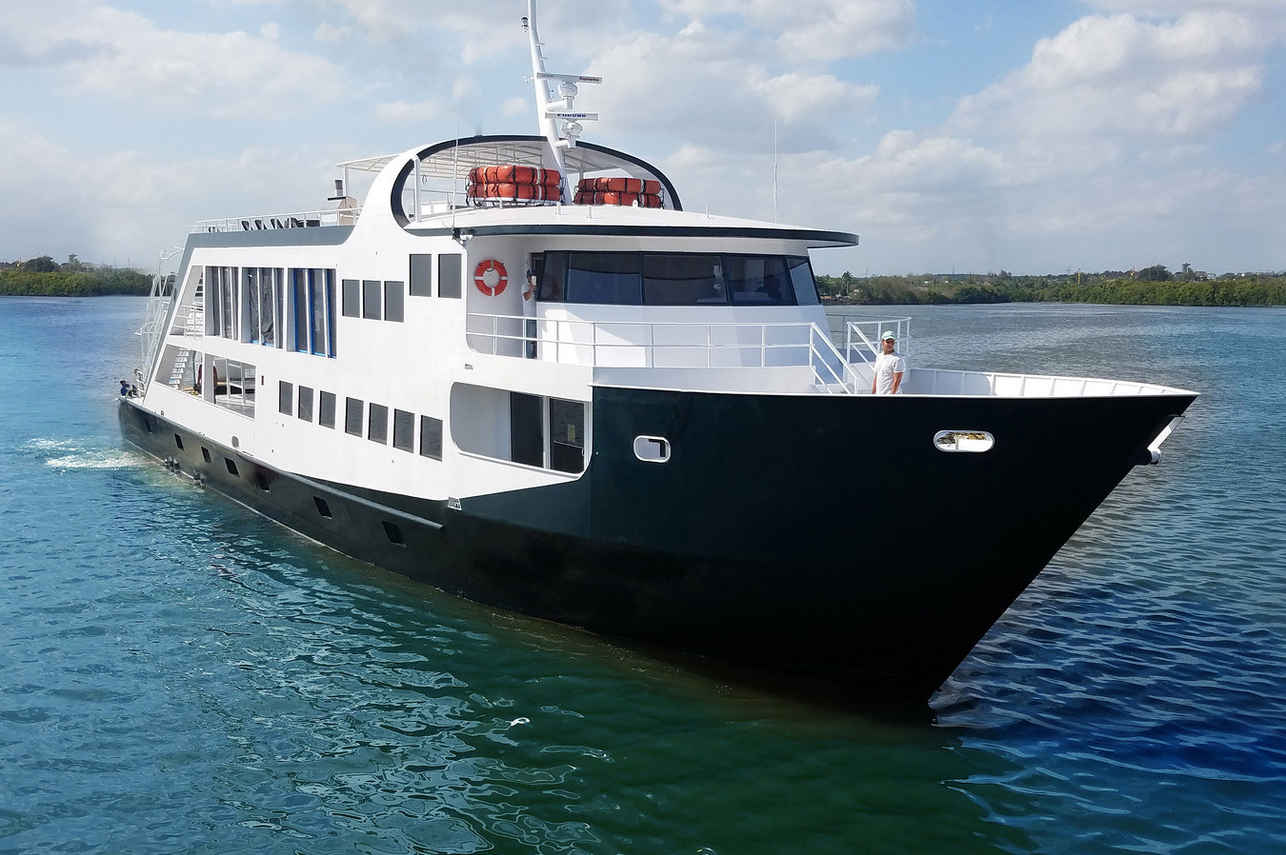
Jardines Avalon Fleet
Cuba
20 guests35.05 m
$494/day
Dive sites similar to Cueva Azul
Same character, same waters — six more sites divers love for the exact same reasons.Compare seasons, access and liveaboard routes — then pick the site that fits your trip best.
© Esri — Maxar, Earthstar, GIS
El Almirante
Cuba
El Almirante is an advanced dive site located off the shores of Maria la Gorda, on Cuba's Guanahacabibes Peninsula.
- Suitable for
- Advanced
- Current
- Moderate
- Access
- Dayboat
- Depth
- 27–30 m
- Theme
- Wall / Reef
La Patana is a prominent dive site within the protected marine park of Jardines de la Reina, a vast archipelago stretching 150 kilometers off Cuba's southern coast.
- Suitable for
- Intermediate
- Current
- Mild
- Access
- Liveaboard only
- Depth
- 15–30 m
- Theme
- Reef / Wall
© Esri — Maxar, Earthstar, GIS
Black Coral Wall
Cuba
Black Coral I and II are prominent dive sites within Cuba's renowned Jardines de la Reina marine reserve, an area celebrated for its healthy reefs and crystal-clear waters.
- Suitable for
- Advanced
- Current
- Mild
- Access
- Liveaboard or dayboat
- Depth
- 15–40 m
- Theme
- Wall
La Corona is a captivating dive site situated within the expansive 35-kilometer barrier reef off Playa Santa Lucía in Cuba's Camagüey province.
- Suitable for
- Beginner
- Current
- Mild
- Access
- Dayboat
- Depth
- 5–40 m
- Theme
- Reef / Wall
© Esri — Maxar, Earthstar, GIS
Sueño de Pescador, meaning 'Fisherman's Dream', is an advanced dive site situated within Coiba National Park in Panama.
- Suitable for
- Advanced
- Current
- Strong
- Access
- Liveaboard only
- Depth
- ≤ 42 m
- Theme
- Reef / Wall
© Esri — Maxar, Earthstar, GIS
Danger Point
Cuba
Danger Point is a notable location within the Gansbaai region of South Africa, characterized by its rugged coastline and the perilous reef system lying beneath the ocean's surface.
- Suitable for
- Intermediate
- Current
- Mild
- Access
- Dayboat
- Depth
- 5–30 m
- Theme
- Reef / Wall