About Maria la Gorda
Maria la Gorda is a premier diving destination located on the Guanahacabibes Peninsula in western Cuba, within a UNESCO Natural Biosphere Reserve. Experts often rank its seabed among the top ten in Latin America due to exceptional coral health and abundant marine life. The area is renowned for its diverse underwater topography, including vertical walls, coral canyons, tunnels, and caves, with some sites even featuring historical Spanish galleon remnants. Diving here typically ranges from 15 to 35 meters, often adjacent to the continental shelf, which plunges to depths between 200m and 1000m. Notable sites like "Salon de Maria" showcase a wide variety of corals and sea lilies, while the "Black Coral Valley" boasts Cuba's largest extension of black coral. Other popular spots include the "Yemaya" wall with its tunnel, "El Jardín de Gorgonias," "El Ancla de Francois," "El Almirante," and "Tetas de María." Marine life is abundant and diverse, with regular sightings of black grouper, green and spotted morays, barracuda, yellowtail snapper, and queen angels. Coral populations are visible from as shallow as five meters, making the area also ideal for snorkeling. The water temperature averages 28°C annually, with visibility often reaching 30 meters, providing excellent conditions for underwater photography. Daily dive excursions are short, typically 5-10 minutes by boat to the sites, with two departures available each day.
Highlights
Black Coral ValleySalon de Maria siteYemaya wall and tunnelHistoric Spanish galleonsLarge black grouper encountersDiverse coral formationsClear 30-meter visibilityGuanahacabibes Biosphere Reserve
Season calendar
Best months to dive here
Jan
Feb
Mar
Apr
May
Jun
Jul
Aug
Sep
Oct
Nov
Dec
Excellent
Good
Dive site facts: Maria la Gorda
- Depth
- 5–30 m
- Typical dive
- 12–27 m, 45–60 min
- Current
- Mild to occasional moderate
- Visibility
- 18–30 m+
- Water temperature
- 28–29°C
- Entry
- Boat
- Level
- Open Water Diver+
- Dive type
- Wall, reef, cavern, macro
- Night dive
- Possible
- Region / port
- Pinar del Río, Cuba
- Coordinates
- 21.825, -84.615
Conditions & Currents
Currents at Maria la Gorda are typically mild, making for generally easy and relaxed diving experiences suitable for most skill levels. However, occasional stronger currents can occur, particularly when returning to the boat after a dive, as one divemaster experienced, causing a group to surface downcurrent. Visibility is consistently good, averaging 18-23 meters and often reaching over 30 meters, with calm seas predominating. Water temperatures are warm, ranging from 28-29°C in warmer periods, which minimizes the need for thick wetsuits. Divers should still be mindful of their group and divemaster, as some dive operations may have less stringent oversight than expected.
Marine life & sighting chances

Black Grouper
common
Green Moray Eel
commonSpotted Moray Eel
common
Barracuda
common
Yellowtail Snapper
common
Queen Angelfish
common
Pufferfish
common
Lobster
common
Lionfish
occasional
Dive profile & how the dive runs
Dives at Maria la Gorda often begin with a short boat ride, typically 5-10 minutes, to sites very close to shore. A common profile involves descending to a depth of around 14 meters, then following the reef top or wall. The dive master usually leads the group along the wall, exploring the various swim-throughs, canyons, and black coral formations, maintaining an average depth of 14 meters with excursions down to 27 meters. The typical dive duration is around 45 minutes, with a maximum depth limit of 27 meters often enforced. Ascents generally include a safety stop at 5 meters, often conducted along the reef before surfacing near the boat.
Underwater photography
Maria la Gorda offers excellent opportunities for wide-angle photography due to its extensive and healthy coral formations, dramatic walls, and numerous swim-throughs and canyons. Wide-angle lenses are ideal for capturing the grandeur of the black coral walls and the overall reef structure. Macro photography is also rewarding, with abundant small reef fish, moray eels, and other critters hiding within the coral. The clear, warm waters and good visibility allow for vibrant natural light shots in shallower areas, but strobes are recommended to bring out the true colors at deeper depths and within shaded swim-throughs. Maintaining excellent buoyancy is crucial to avoid damaging the pristine corals and to position yourself effectively for diverse shots.
Combine with nearby dive sites
- Farallón
A massive coral mountain with tunnels, known for rays, turtles, and reef sharks.
- Cueva Azul
Cueva Azul, translating to "Blue Cave," stands out as one of Cuba's most remarkable cave diving experiences, particularly around Isla de la…
- Cinco Pesos
Cinco Pesos is a notable dive site in Cuba, renowned for its dramatic wall and diverse marine life.
- Black Coral Wall
A site known for its impressive black coral formations.
- Meseta de los Meros
Meseta de los Meros is a prominent dive site within Cuba's renowned Jardines de la Reina marine reserve, an area celebrated for its healthy…
Getting there & logistics
Access to Maria la Gorda is primarily via a five-hour drive from Havana's José Martí International Airport (HAV). Due to its isolated location, divers typically stay at the Villa Maria la Gorda resort, which hosts the international diving center. The resort handles all diving payments, often offering package deals that reduce the per-immersion cost. While day trips are possible, multi-day stays are common to fully experience the numerous local dive sites. Dive packages can range from single dives to multi-dive options, with equipment rental available on-site, though personal gear is recommended due to varying quality. There are no known specific park entry fees for divers beyond the dive costs.
Safety & environment
Maria la Gorda's dive operations are supported by a national health care system in Cuba, including a network of hyperbaric chambers. The nearest recompression chambers are located in Havana, Matanzas, Isla de la Juventud, and Santiago de Cuba, with medical assistance available 24/7 across the country. Divers should always ensure they have comprehensive dive accident insurance. Site-specific hazards are minimal, with generally mild currents, but divers must adhere to dive limits, typically a 27-meter maximum depth. While divemasters are present, personal accountability for dive profiles and air consumption is expected, as some operations may not strictly enforce guidelines like minimum air reserves. It is advisable to inspect rental equipment thoroughly if not bringing your own. Mosquitoes and sand fleas can be a significant nuisance on land, requiring effective insect repellent.
Who it suits — and who it doesn't
Suited for
- Divers seeking pristine, uncrowded reefs
- Macro and wide-angle underwater photographers
- Divers who appreciate healthy coral ecosystems
- Those who enjoy quiet, secluded resort experiences
- Divers comfortable with independent dive planning
Less suited for
- Divers expecting frequent large pelagic sightings
- Those looking for vibrant nightlife and extensive off-gassing activities
- Divers who rely heavily on strictly enforced dive group supervision
- Travelers sensitive to insect bites
- Divers needing modern, guaranteed high-quality rental gear
FAQ
Maria la Gorda FAQ
What is the visibility like in Maria la Gorda?
Visibility at Maria la Gorda is consistently excellent, often ranging between 18 to 23 meters and frequently exceeding 30 meters. The clear, warm Caribbean waters contribute to superb viewing conditions for its vibrant coral reefs and marine life, making it a highly desirable destination for underwater exploration.
Are there many large marine animals to see?
While Maria la Gorda boasts abundant reef fish and a variety of smaller creatures like moray eels, barracudas, and puffers, it is not primarily known for large pelagic sightings such as sharks, manta rays, or dolphins. Divers seeking frequent encounters with big marine animals might find the fish life less overwhelming than other sites.
What kind of coral formations can I expect to see?
Maria la Gorda is famous for its exceptionally healthy and extensive coral formations, including impressive walls of black coral. Divers will also encounter intricate reef systems, dramatic drop-offs, and numerous natural swim-throughs, canyons, and chimneys that create a highly interesting underwater topography.
Is Maria la Gorda suitable for beginner divers?
Yes, Maria la Gorda is generally suitable for beginner divers. Many sites feature shallow depths and typically mild currents, with average dive depths around 12-25 meters. The clear, warm water also contributes to a comfortable and less challenging diving experience for those newer to the sport, though deeper options are available for advanced divers.
How do I get to Maria la Gorda?
Maria la Gorda is located on the remote Guanahacabibes Peninsula, requiring a significant journey. The most common way to reach it is via a roughly five-hour drive from Havana's José Martí International Airport (HAV). Due to its isolation, staying at the on-site Villa Maria la Gorda resort is the standard accommodation option for divers.
Why dive Maria la Gorda from a liveaboard?
Maria la Gorda is one of Cuba's signature dive sites. A liveaboard sleeps you on the water and puts you in the water for three to four guided dives per day, including dawn and night dives that day-boat operators rarely offer. You skip the daily commute back to port and reach quieter, less-crowded sites in the same region on a single trip.
Below are the liveaboards that include Maria la Gorda on their Cuba itineraries.
Liveaboards diving Maria la Gorda
These liveaboards may visit Maria la Gorda on selected itineraries — the exact dive sites depend on departure, weather and conditions.
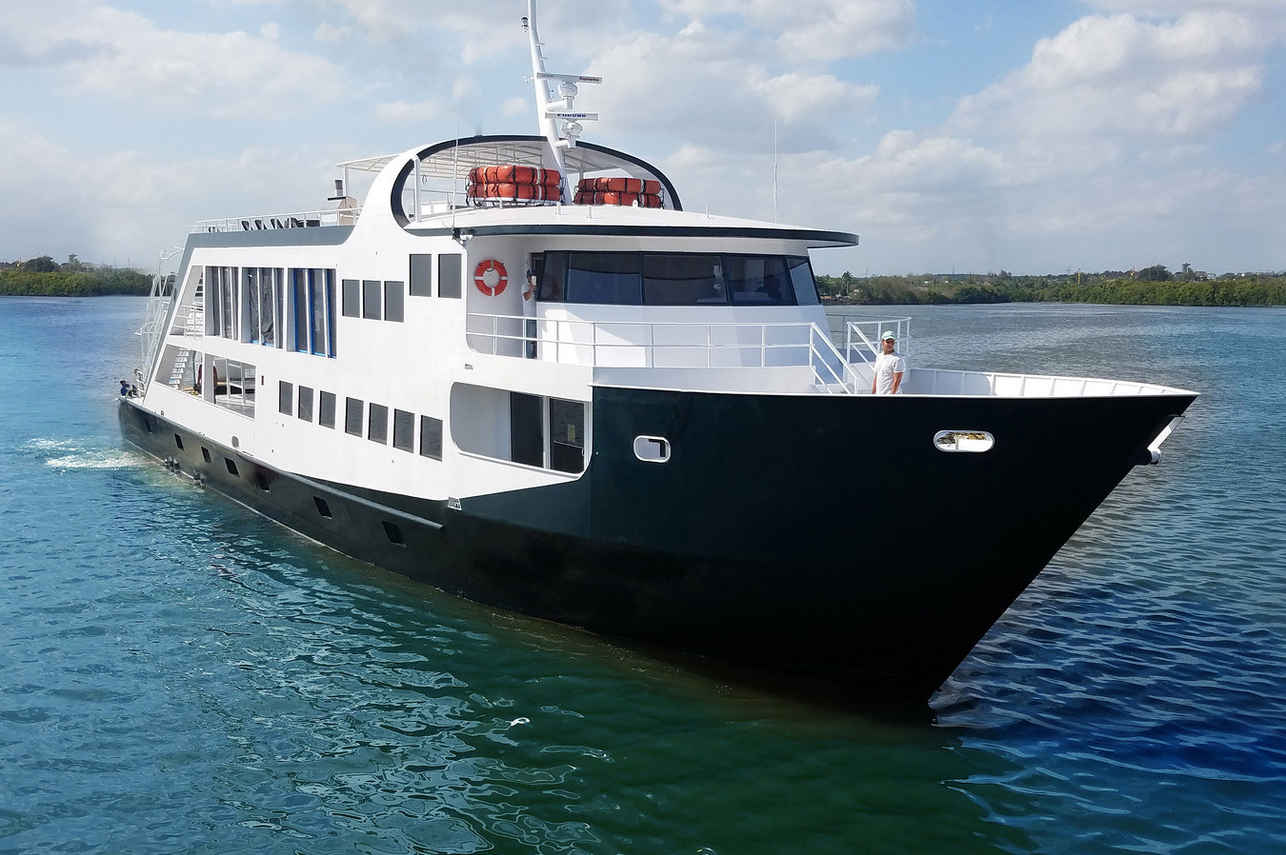
Jardines Avalon Fleet
Cuba
20 guests35.05 m
$494/day
Dive sites similar to Maria la Gorda
Same character, same waters — six more sites divers love for the exact same reasons.Compare seasons, access and liveaboard routes — then pick the site that fits your trip best.
© Esri — Maxar, Earthstar, GIS
Silver Caves
Belize
Silver Caves offers a distinctive diving experience within the Lighthouse Reef Atoll, one of Belize's healthiest reef systems.
- Suitable for
- Advanced
- Current
- Mild
- Access
- Liveaboard only
- Depth
- 18–28 m
- Theme
- Reef / Cave & cavern
Cozumel's western coast features a dramatic reef shelf that plunges thousands of feet into the ocean.
- Suitable for
- Intermediate
- Current
- Mild
- Access
- Liveaboard or dayboat
- Depth
- 15–27 m
- Theme
- Reef
© Esri — Maxar, Earthstar, GIS
North Wall
Cayman Islands
The North Wall of Grand Cayman stands as one of the most celebrated and visually striking dive regions, stretching along the island's northern coastline.
- Suitable for
- Advanced
- Current
- Mild
- Access
- Liveaboard or dayboat
- Depth
- 50–100 m
- Theme
- Reef
© Esri — Maxar, Earthstar, GIS
Lighthouse Reef
Cayman Islands
Lighthouse Reef, situated near the West End dock of Cayman Brac, provides a distinctive shallow reef diving experience.
- Suitable for
- Beginner
- Current
- Strong
- Access
- Shore / dayboat
- Depth
- 10–25 m
- Theme
- Reef
© Esri — Maxar, Earthstar, GIS
Long Caye Ridge
Belize
Long Caye Ridge is a highly-rated dive site situated within Belize's Lighthouse Reef Atoll, an area renowned for its pristine conditions due to its distance from the mainland.
- Suitable for
- Intermediate
- Current
- No current
- Access
- Liveaboard only
- Depth
- 21–21 m
- Theme
- Reef
Roatán, part of the Bay Islands of Honduras, offers a diverse underwater landscape situated along the Mesoamerican Barrier Reef System, which is the second largest barrier reef globally.
- Suitable for
- Intermediate
- Current
- Moderate
- Access
- Liveaboard or dayboat
- Depth
- 9–40 m
- Theme
- Reef