About Punta Frances
Punta Frances is a celebrated dive destination located on the Isla de la Juventud, southwest of the Cuban mainland. This site is part of a marine biosphere reserve, offering some of Cuba's most esteemed diving experiences. The area is steeped in history and legend, with tales of buried treasure adding to its allure, though its primary draw is its exceptional natural beauty. Specialists often regard the seabeds here as among the best worldwide for scuba diving. The underwater topography is incredibly varied, featuring an intricate network of tunnels, passages, grottos, and deep channels. Divers navigate through extensive underwater valleys and dramatic coral formations. These structures provide a rich habitat for a wide array of marine species, making each dive a journey through a vibrant submarine landscape. The marine environment at Punta Frances benefits from its protected status, leading to a notably bold and approachable array of sea life. While specific seasonal details for marine life sightings are not extensively detailed, the area is consistently teeming with fish due to its preservation. The clear waters generally offer excellent visibility, enhancing the experience of exploring these pristine reefs. Diving at Punta Frances typically involves boat trips from nearby resorts, often requiring a significant travel time to reach the sites. The focus here is on the natural reef systems and the abundant marine biodiversity. Divemasters often lead tours, pointing out key features and resident species, making it an engaging experience for divers of various skill levels, especially those keen on experiencing a well-preserved Caribbean ecosystem.
Highlights
Marine biosphere reserveTunnels and grottosExtensive coral formationsBold, audacious marine lifeDeep channels and valleysIsla de la Juventud's best diving
Season calendar
Best months to dive here
Jan
Feb
Mar
Apr
May
Jun
Jul
Aug
Sep
Oct
Nov
Dec
Excellent
Good
Dive site facts: Punta Frances
- Depth
- Not specified
- Current
- Mild
- Visibility
- Up to 30 m
- Water temperature
- 25–29°C (77–84°F)
- Entry
- Boat
- Level
- All levels
- Dive type
- Reef, wall, tunnels, grottos
- Region / port
- Isla de la Juventud
- Coordinates
- 21.6487° N, 80.3876° W
Conditions & Currents
Currents at Punta Frances are generally described as little to sometimes mild, making it suitable for a wide range of diver experience levels. However, as with any site accessed by boat, conditions can vary, and divers should be prepared for potential changes. Visibility is consistently excellent, often reaching up to 30 meters (98 feet), ensuring clear views of the abundant marine life and intricate topography. Surface conditions are usually calm, but boat travel to the sites can be lengthy, with some rides taking up to 80 minutes, which might involve surface chop. Entry and exit are typically from dive boats, so divers should be comfortable with standard boat diving procedures. While specific thermocline data is not available, the tropical waters of Cuba maintain comfortable temperatures year-round, minimizing concerns about sudden temperature drops.
Marine life & sighting chances

Green Moray
occasional
Lobster
common
Yellowtail Snapper
common
Black Durgon
common
Sponges
common
Gorgonians
common
Hard corals
common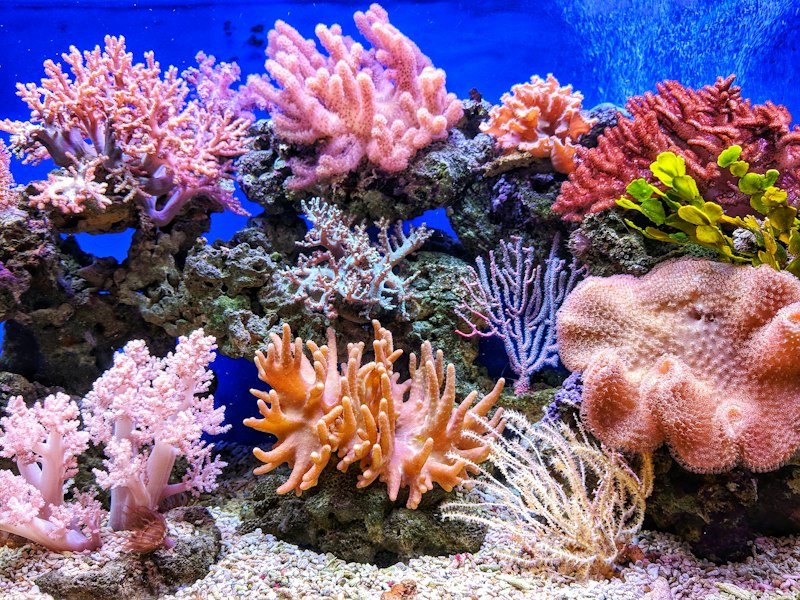
Soft corals
common
Barracuda
occasional
Grouper
occasional
Nurse Shark
occasional
Eagle Ray
occasionalDive profile & how the dive runs
Dives at Punta Frances begin with a boat ride, which can be significant, sometimes up to 80 minutes from the Hotel Colony. Upon arrival at the site, divers perform a back-flop entry into the water. Initial dives often serve as checkouts, with divemasters leading the group. The typical route involves descending to depths around 13-14 meters (45 feet) to explore finger reefs composed of hard coral interspersed with profuse soft corals and sandy channels. Divers then progress through an underwater landscape rich with tunnels, passages, grottos, and deep channels. The dive continues along these features, allowing ample time to observe the bold marine life. Safety stops are conducted in the shallower sections of the reef or during ascent, often in areas with continued marine activity due to the excellent visibility.
Underwater photography
Punta Frances, with its consistently excellent visibility and rich, bold marine life, offers superb opportunities for underwater photography. Wide-angle lenses are ideal for capturing the expansive coral formations, dramatic tunnels, and deep channels, as well as schooling fish or larger pelagics like green morays and nurse sharks. For macro subjects, such as small invertebrates hidden within the corals, a macro lens would be beneficial. Due to the clarity of the water, natural light can be very effective in shallower areas, but strobes are recommended to bring out the true colors of the corals and fish, especially in deeper sections or within the grottos and passages. Buoyancy control is paramount to avoid disturbing the delicate reef structures and ensure clear shots. Ethical photography practices, such as maintaining a respectful distance and not harassing marine life, are essential in this protected marine biosphere.
Combine with nearby dive sites
- Danger Point
Danger Point is a notable location within the Gansbaai region of South Africa, characterized by its rugged coastline and the perilous reef…
- Arrecife Somero
Arrecife Somero, located near Key Sigua within the UNESCO-recognized Zapata Swamp biosphere reserve, presents a unique reef crest forming a…
- El Farallon
El Farallon is a notable dive site located within Cuba's protected Jardines de la Reina marine park, an archipelago renowned for its…
- Carlos' Corner
Carlos' Corner is a notable dive site located within Cuba's Jardines de la Reina (Gardens of the Queen) Marine Protected Area, a vast and…
- La Corona
La Corona is a captivating dive site situated within the expansive 35-kilometer barrier reef off Playa Santa Lucía in Cuba's Camagüey…
Getting there & logistics
Access to Punta Frances is primarily from the Hotel Colony on the Isla de la Juventud. Divers typically fly into Jose Marti International Airport in Havana, then take a short domestic flight to the Isla de la Juventud, followed by ground transport to the hotel. The Hotel Colony operates as a dedicated dive resort. Dive trips to Punta Frances often involve boat rides that can take up to 80 minutes each way. There are no specific marine park fees mentioned, but the area is a protected reserve, indicating a focus on conservation. Liveaboard options are less common for this specific site, with day boat trips being the norm from the Hotel Colony. The typical trip length depends on the overall Cuba itinerary, but dedicated diving at Punta Frances would usually span several days based out of the resort.
Safety & environment
While specific details for recompression chambers are not provided, serious dive accidents in remote Cuban locations like Isla de la Juventud would likely necessitate emergency evacuation to a larger medical facility, potentially in Havana. Divers are strongly advised to have comprehensive dive insurance that covers emergency medical treatment and evacuation. Site-specific hazards are minimal, with generally mild currents and excellent visibility, but divers should always be aware of their surroundings and maintain good buoyancy control to avoid contact with the reef. As a protected marine biosphere, adherence to responsible diving practices, such as not touching or collecting marine life, is expected. Divemasters typically accompany groups, but divers are responsible for their own gear checks and dive planning.
Who it suits — and who it doesn't
Suited for
- Divers seeking pristine, protected reefs
- Underwater photographers looking for clear water and bold marine life
- Divers interested in exploring tunnels, grottos, and varied topography
- Those who appreciate longer boat rides to reach remote dive sites
- Divers of all experience levels due to mild currents
Less suited for
- Divers who prefer short boat rides or shore entry
- Those expecting guaranteed large pelagic encounters
- Divers who prefer highly structured, fast-paced diving
- Anyone seeking extensive wreck diving experiences
- Divers unwilling to travel to more remote locations
FAQ
Punta Frances FAQ
What kind of marine life can I expect to see at Punta Frances?
Punta Frances is known for its diverse and bold marine life due to its protected status. You can commonly spot yellowtail snappers and black durgons, which often swim close to divers. Occasional sightings include green morays, lobsters, barracudas, groupers, nurse sharks, and eagle rays, all thriving amongst the vibrant coral reefs and intricate underwater structures.
Is Punta Frances suitable for beginner divers?
Yes, Punta Frances is generally suitable for divers of all experience levels. The currents are typically mild, and visibility is excellent, often reaching up to 30 meters. Divemasters are usually present to guide groups, making it a comfortable and enjoyable experience even for those with less diving experience. However, comfort with boat diving is recommended.
How do I get to Punta Frances for diving?
To dive Punta Frances, you typically first fly to Havana, then take a domestic flight to Isla de la Juventud. From there, ground transportation will take you to the Hotel Colony, which serves as the primary dive resort for the area. Dive trips to Punta Frances are then conducted via day boats departing from the resort, often involving a boat ride of up to 80 minutes.
What are the underwater features like at Punta Frances?
The underwater landscape at Punta Frances is remarkably varied and engaging. Divers will explore extensive finger reefs composed of both hard and soft corals, interspersed with sandy channels. The site is also famous for its dramatic topography, including numerous tunnels, passages, grottos, deep channels, and impressive underwater valleys, creating a rich and complex environment.
When is the best time of year to visit Punta Frances for diving?
The best time to visit Punta Frances for diving is during Cuba's dry season, which runs from December to April. During these months, you can expect optimal conditions with comfortable water temperatures ranging from 25-29°C (77-84°F), generally calm seas, and exceptional underwater visibility, often exceeding 30 meters.
Why dive Punta Frances from a liveaboard?
Punta Frances is one of Cuba's signature dive sites. A liveaboard sleeps you on the water and puts you in the water for three to four guided dives per day, including dawn and night dives that day-boat operators rarely offer. You skip the daily commute back to port and reach quieter, less-crowded sites in the same region on a single trip.
Below are the liveaboards that include Punta Frances on their Cuba itineraries.
Liveaboards diving Punta Frances
These liveaboards may visit Punta Frances on selected itineraries — the exact dive sites depend on departure, weather and conditions.
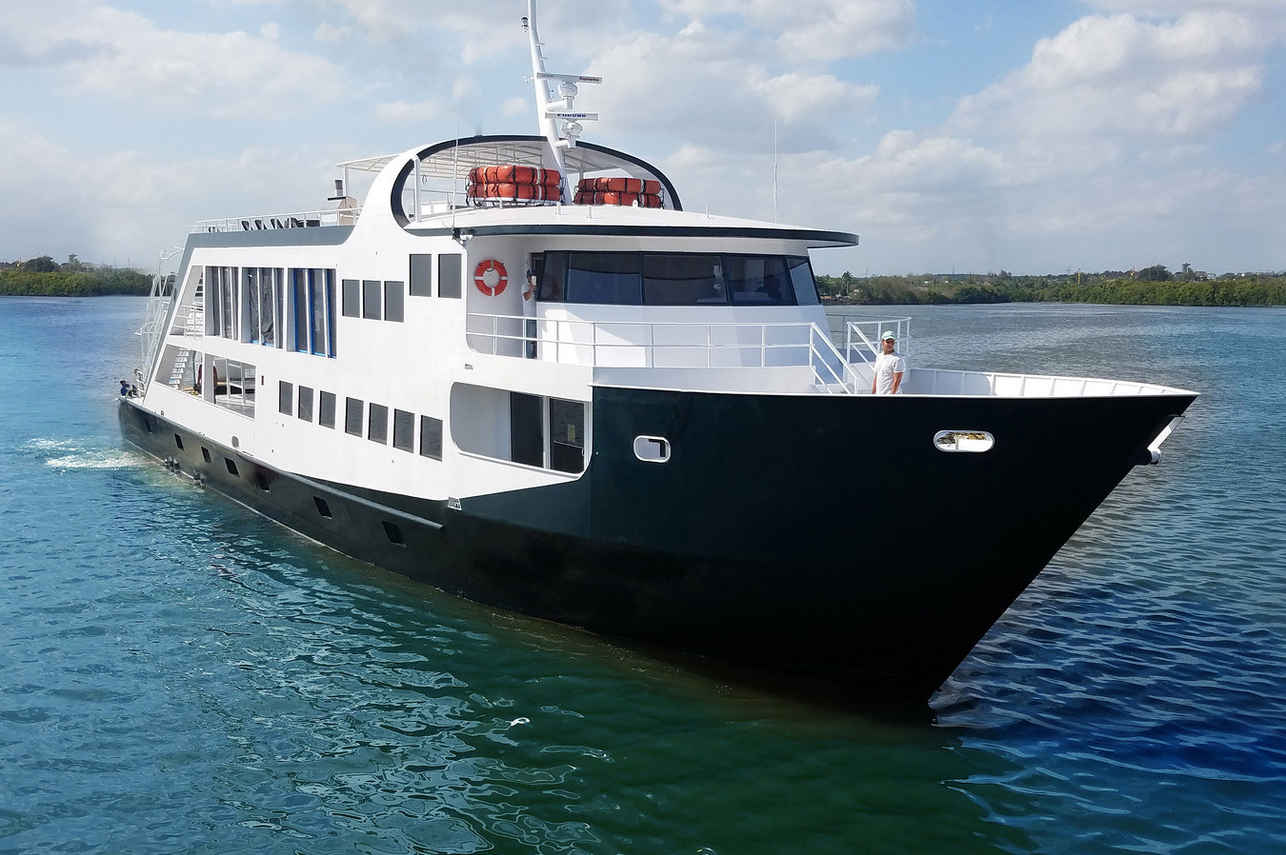
Jardines Avalon Fleet
Cuba
20 guests35.05 m
$494/day
Dive sites similar to Punta Frances
Same character, same waters — six more sites divers love for the exact same reasons.Compare seasons, access and liveaboard routes — then pick the site that fits your trip best.
© Esri — Maxar, Earthstar, GIS
El Almirante
Cuba
El Almirante is an advanced dive site located off the shores of Maria la Gorda, on Cuba's Guanahacabibes Peninsula.
- Suitable for
- Advanced
- Current
- Moderate
- Access
- Dayboat
- Depth
- 27–30 m
- Theme
- Wall / Reef
La Patana is a prominent dive site within the protected marine park of Jardines de la Reina, a vast archipelago stretching 150 kilometers off Cuba's southern coast.
- Suitable for
- Intermediate
- Current
- Mild
- Access
- Liveaboard only
- Depth
- 15–30 m
- Theme
- Reef / Wall
© Esri — Maxar, Earthstar, GIS
Arrecife Somero
Cuba
Arrecife Somero, located near Key Sigua within the UNESCO-recognized Zapata Swamp biosphere reserve, presents a unique reef crest forming a horseshoe shape.
- Suitable for
- Beginner
- Current
- Mild
- Access
- Liveaboard only
- Depth
- 2–5 m
- Theme
- Reef
© Esri — Maxar, Earthstar, GIS
Puente Escondido
Cuba
Puente Escondido is a notable dive site nestled within the Jardines de la Reina marine park, an expansive and highly protected area off Cuba's southern coast.
- Suitable for
- Beginner
- Current
- Mild
- Access
- Liveaboard only
- Depth
- ≤ 18 m
- Theme
- Reef
© Esri — Maxar, Earthstar, GIS
Black Coral Wall
Cuba
Black Coral I and II are prominent dive sites within Cuba's renowned Jardines de la Reina marine reserve, an area celebrated for its healthy reefs and crystal-clear waters.
- Suitable for
- Advanced
- Current
- Mild
- Access
- Liveaboard or dayboat
- Depth
- 15–40 m
- Theme
- Wall