
Blue-ringed Octopus
Hapalochlaena lunulata
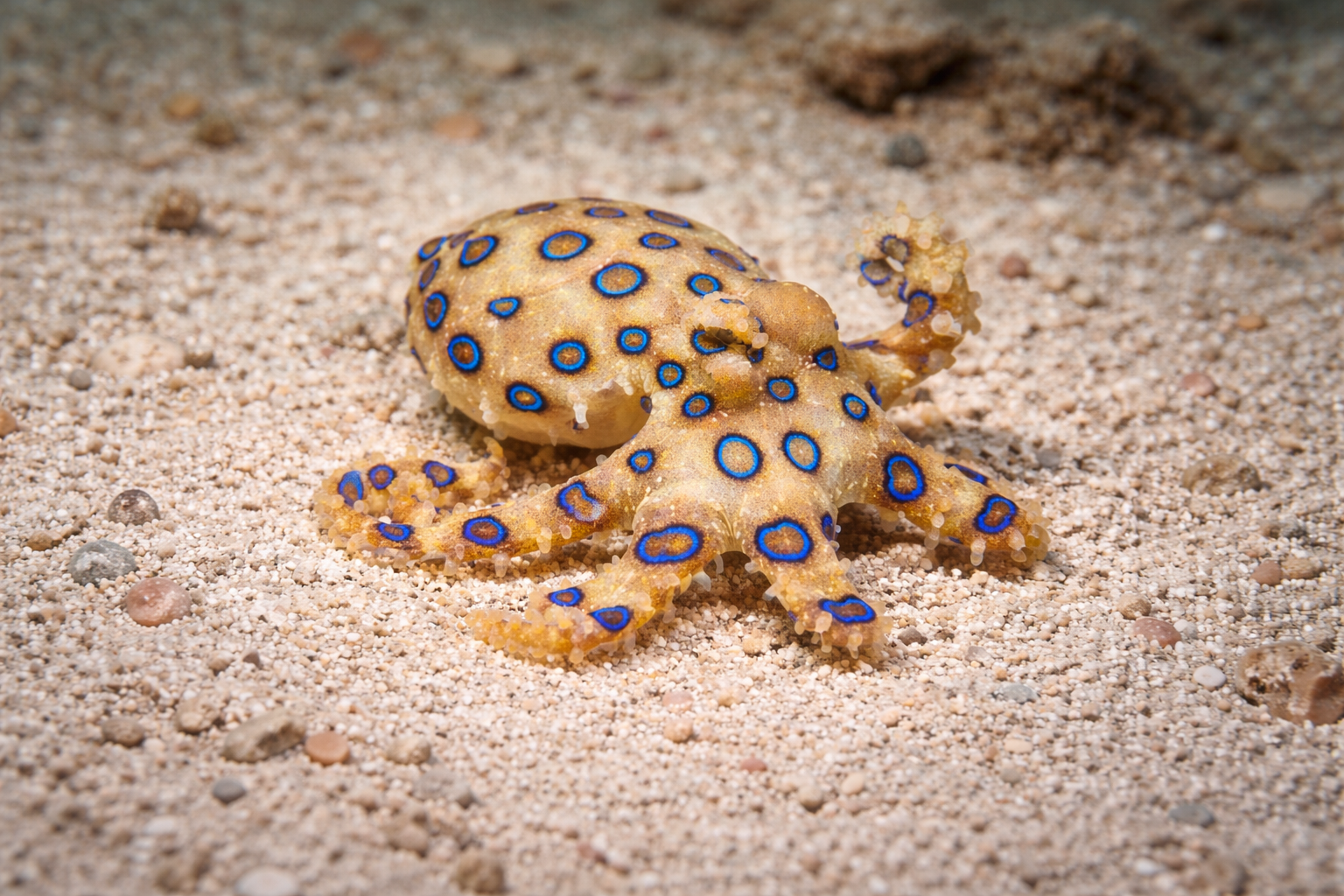
About Blue-ringed Octopus
One of the most venomous marine animals in the world despite its tiny size. The vivid blue rings flash as a warning when threatened. Found in tide pools and coral reefs across the Indo-Pacific.
Quick Facts
- Habitat: The Blue-ringed Octopus (**Hapalochlaena lunulata**) is found throughout the **Indo-Pacific region**, inhabiting shallow coral reefs, tide pools, and sandy or silty seabeds from the intertidal zone down to depths of about 50 meters. Its range extends from **Australia**, particularly the coastlines of Queensland and New South Wales, northward to **Japan**, including Okinawa, and westward to parts of Southeast Asia, such as the Philippines, Indonesia (e.g., Bali, Raja Ampat), and Malaysia. These small cephalopods prefer areas with plenty of crevices and small rocks for shelter, often camouflaging themselves amongst rubble or under ledges. They are generally **nocturnal** or **crepuscular**, becoming more active during sunrise and sunset, though they can be encountered during the day under specific conditions, often when disturbed or hunting. Their preferred calm, protected waters make them resident features of many popular dive sites, often found near shore. While not migratory, their activity patterns can slightly vary with lunar cycles and tidal movements.
- Diet: The Blue-ringed Octopus is a **carnivorous predator**, feeding primarily on small crustaceans and mollusks. Its diet largely consists of **small crabs** and **shrimp**, which it ambushes or stalks within its reef or rubble habitat. The octopus uses its powerful venom, delivered through a bite from its beak, to paralyze its prey rapidly. Occasionally, it may also consume **small fish** if the opportunity arises. They are active hunters, often observed delicately probing crevices with their arms to flush out hidden prey. Once prey is secured, the octopus delivers its potent neurotoxins, incapacating the victim almost instantaneously, allowing the octopus to then consume its meal at leisure. Their hunting strategy is highly effective despite their small size, relying on **stealth and venom** rather than brute force.
- Best season: Encounters with the Blue-ringed Octopus can happen **year-round** across its wide Indo-Pacific range, though certain seasons might offer slightly better conditions for spotting them. In **Australia**, particularly along the New South Wales and Queensland coasts, the **warmer months** from **spring to autumn** (roughly September to May) might see slightly increased activity due to more abundant prey and warmer waters. Similarly, in **Southeast Asia**, such as the Philippines or Indonesia, the **dry season** (typically April to October) often provides the calmest waters and best visibility for diving, increasing the chances of observation. However, given their reclusive and nocturnal nature, **patience and keen observation** are more critical than seasonal timing. They are often found in the same locations for extended periods, making regular dive site visits potentially fruitful. Early morning or late afternoon dives, aligning with their crepuscular activity, might offer a marginal advantage regardless of the season.
Fun Facts
Their venom contains tetrodotoxin — there is no antivenom,The blue rings are produced by specialized cells called iridophores,Females die shortly after their eggs hatch,Despite their deadly venom, no confirmed fatalities have occurred in decades
Diving Tips
Encountering a Blue-ringed Octopus is a **special privilege**, but divers must maintain a **safe and respectful distance** due to its **highly venomous bite**. The venom contains powerful **neurotoxins (tetrodotoxin)**, capable of causing paralysis and respiratory failure, with **no known antivenom**. Look for them in shallow, rocky areas, under coral rubble, or in crevices, especially during **muck dives** or **night dives** around destinations like Lembeh Strait in Indonesia or Anilao in the Philippines. Their full display of **pulsating blue rings** is a clear warning sign, often triggered when the animal feels threatened. **Never touch or provoke** any marine life, especially this species. Maintain **neutral buoyancy** and avoid stirring up sediment to prevent accidental contact or stressing the animal. A good spotting cue is their subtle movement among rocks; they are highly camouflaged until their rings flash. If you spot one, alert your **dive guide**, who is trained in identifying and observing these creatures safely. Remember the **"look, don't touch"** rule is paramount for your safety and the well-being of the octopus. Observe from a distance of at least a few feet, and use cameras with zoom lenses for close-up shots. Educate yourself and your dive buddies about the potential dangers before diving in areas where they are known to reside.