About Shark Fin Reef
Shark Fin Reef is one of the most iconic and largest dive sites within Thailand's Similan Islands, specifically designated as Similan Is. No. 3. Its name originates from three distinct granite pinnacles that break the surface at low tide, resembling shark fins. This extensive underwater ridge stretches for nearly a kilometer, showcasing some of the most impressive granite formations in the Andaman Sea. Unlike typical coral-dominated reefs, Shark Fin Reef is characterized by enormous granite boulders, dramatic valleys, towering rock structures, and narrow channels. Depths vary significantly, ranging from shallower reef sections down to drop-offs exceeding 30 meters, accommodating diverse dive profiles. This complex and varied terrain ensures that each dive offers new opportunities for exploration, making every experience unique based on the chosen route and prevailing conditions. The site supports a rich array of marine life amidst its rocky habitat and healthy coral growth. Divers can frequently observe schools of snapper, fusiliers, trevally, and barracuda navigating the channels. Whitetip reef sharks are occasionally found resting under ledges, while blacktip reef sharks may patrol the shallower areas. Moray eels, octopus, lionfish, and numerous reef fish species also thrive here, utilizing the rocks and corals for shelter. Healthy hard corals, soft corals, and sea fans add vibrant color, supporting a diverse ecosystem of smaller marine species and creating highly photogenic underwater scenery. Generally, visibility is excellent, often between 20 to 30 meters during the dive season, allowing for clear views of the massive granite formations and marine life in the blue water. Currents at Shark Fin Reef can vary from mild to moderate, depending on tides and weather patterns. Stronger currents, especially around the pinnacles and deeper sections, can create exciting drift diving opportunities and attract larger schools of fish. This site is primarily accessed via
Highlights
Kilometer-long granite formationsShark-fin shaped pinnaclesDramatic underwater valleysMassive boulders and swim-throughsSchools of snapper and barracudaOccasional reef shark sightingsHealthy soft and hard coralsExcellent visibility (20-30m)
Season calendar
Best months to dive here
Jan
Feb
Mar
Apr
May
Jun
Jul
Aug
Sep
Oct
Nov
Dec
Excellent
Good
Dive site facts: Shark Fin Reef
- Depth
- 15–30 m+
- Current
- Moderate, can be strong
- Visibility
- 20–30 m+
- Water temperature
- 29–30°C
- Entry
- Liveaboard / Tender
- Level
- Intermediate–Advanced
- Dive type
- Reef, drift, boulders, swim-throughs, pelagic
- Region / port
- Similan Islands, Andaman Sea
- Coordinates
- 8.5600° N, 97.6400° E
Conditions & Currents
Currents at Shark Fin Reef are typically moderate but can fluctuate significantly with tidal patterns and weather, sometimes becoming strong, particularly around the pinnacles and in deeper sections. While many dives feature mild conditions, stronger flows can present exciting drift diving opportunities, often attracting larger pelagic schools. Divers should be prepared for varying current strengths and possess good buoyancy control, especially when navigating swim-throughs and boulder fields. Entry is usually a liveaboard back-roll or giant stride directly into the water, and exit involves ascending to the liveaboard. Visibility is consistently excellent, ranging from 20 to 30 meters, which allows clear observation of the reef's topography and marine life, even in moderate currents. There are no notable thermoclines or significant boat traffic concerns during dives, but divers should pl
Marine life & sighting chances
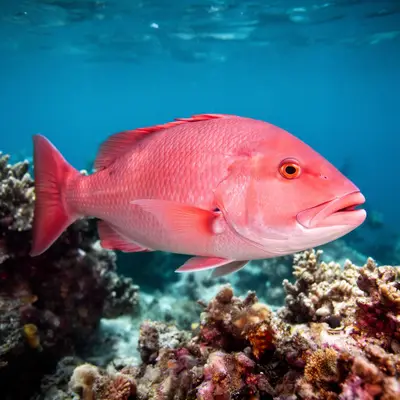
Schools of snapper
occasional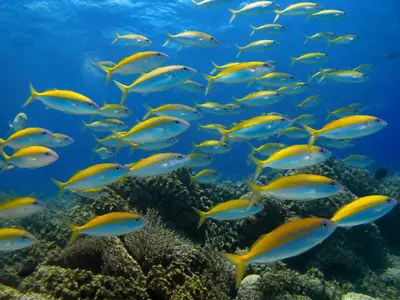
Schools of fusiliers
occasional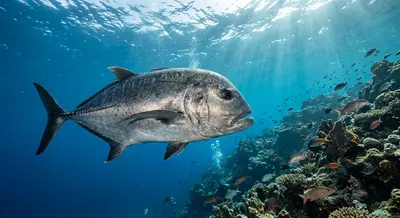
Schools of trevally
occasional
Schools of barracuda
occasional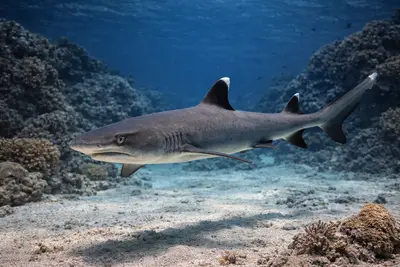
Whitetip reef sharks
occasional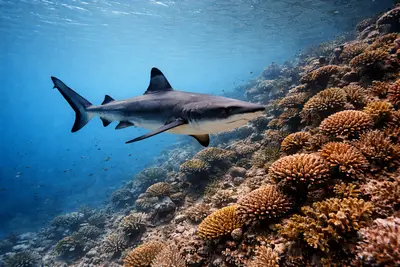
Blacktip reef sharks
occasional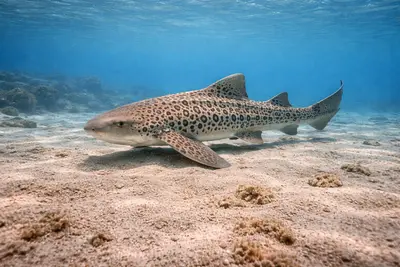
Leopard sharks
occasional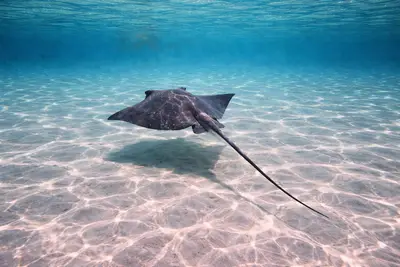
Stingrays
occasional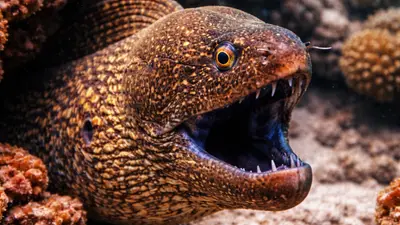
Moray eels
common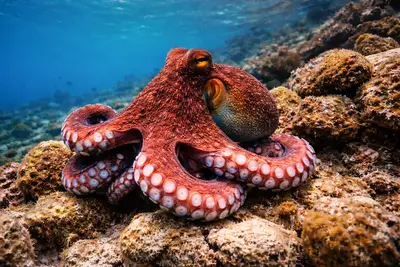
Octopus
common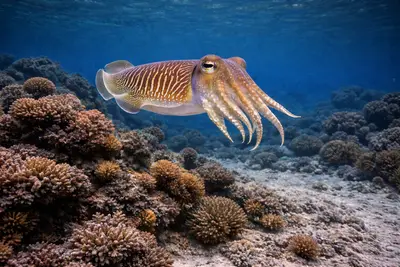
Cuttlefish
common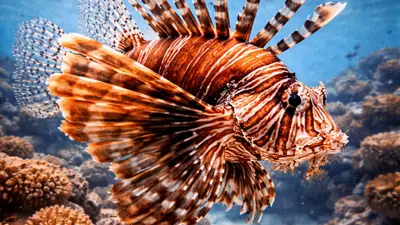
Lionfish
common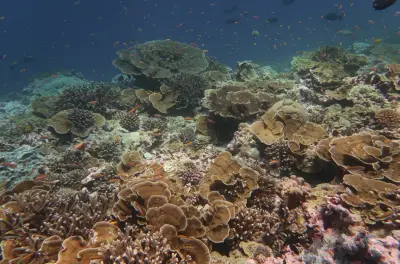
Reef fish
common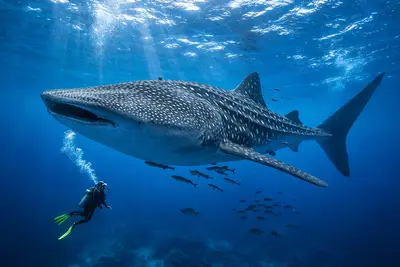
Whale sharks
seasonal · occasionalDive profile & how the dive runs
Dives at Shark Fin Reef typically begin with a tender or back-roll entry from a liveaboard, often into an area chosen based on current direction for a drift dive. The initial descent leads to the top of the ridge, usually around 15 meters, where divers can begin exploring the massive granite boulders. Routes often involve navigating through narrow channels and swim-throughs that cut between these impressive formations, gradually descending along the sloping reef walls to deeper sections, sometimes exceeding 30 meters. Divers commonly explore the eastern side of the site due to prevailing currents. The complex topography allows for varied routes, moving from the shallower coral gardens to deeper rock formations where larger pelagics might cruise in the blue. The turn point is determined by air consumption and no-decompression limits. The safety stop is typically conducted in the shallower, calmer sections of the reef or in the blue water, depending on the drift, before ascending to the surface for liveaboard pick-up.
Underwater photography
Shark Fin Reef offers fantastic wide-angle opportunities due to its dramatic granite topography, expansive boulder formations, and clear visibility. A fisheye or wide-angle lens (e.g., 10-17mm or 16-35mm equivalent) is highly recommended to capture the immense scale of the underwater landscape, including the swim-throughs and canyons. When currents are moderate, utilizing a slow shutter speed with strobes can create dynamic images of schooling fish against the rocky backdrop. For macro subjects like moray eels, octopus, or smaller reef fish, a 60mm or 100mm macro lens will be suitable, particularly when exploring the numerous cracks and crevices. Pay attention to light and shadow play within the boulder formations, as this can add significant drama to your shots. Maintaining excellent buoyancy is crucial to avoid contact with the fragile corals and marine life, especially in confined swim-throughs and current-swept areas.
Combine with nearby dive sites
- Similan Islands — East of Eden
East of Eden is an exquisite dive site nestled within Thailand's Similan Islands, famed for its breathtaking coral formations and abundant…
- Turtle Rock (Similan)
Turtle Rock is a renowned dive site nestled within the Similan Islands, situated on the western side of Island 8.
- Christmas Point
Christmas Point, located on Similan Island number 9 (Koh Ba-Ngu), stands out as one of the Similan Islands' most iconic dive sites.
- Deep Six
Deep Six, also known as Fanfare Point, is a captivating dive site situated at the northern tip of Similan Island No.7 in Thailand's Andaman…
- Elephant Head Rock
Elephant Head Rock, locally known as Hin Pusa, is a renowned dive site in the Similan Islands, Thailand, located about 1 kilometer…
Getting there & logistics
Shark Fin Reef is exclusively accessed via liveaboard trips to the Similan Islands. These multi-day itineraries typically depart from Phuket or Khao Lak, both of which are accessible through Phuket International Airport (HKT). Flights to HKT are available from Bangkok (BKK) and other international hubs. Liveaboard durations vary but often range from 3 to 7 nights, combining Shark Fin Reef with other renowned Similan and sometimes Surin Islands sites like Koh Bon and Koh Tachai. There are no specific additional permits or fees beyond the national park entry fees, which are usually included in the liveaboard package. It's advisable to book liveaboard trips well in advance, especially during the peak season from November to April, to secure preferred dates and vessels.
Safety & environment
For diving at Shark Fin Reef, comprehensive dive insurance covering emergency medical treatment, recompression chamber costs, and evacuation is essential. The nearest recompression chamber is located in Phuket, necessitating a potentially lengthy sea and land transfer in case of an emergency. Liveaboards are equipped with first aid, emergency oxygen, and communication systems, but evacuation can still take several hours depending on the vessel's location within the Similan National Park. Divers must possess appropriate certification (Intermediate to Advanced recommended) and experience with currents. Always follow your dive guide's instructions, maintain proper buoyancy to avoid damaging corals, and respect depth limits. Be aware of varying currents, which can change rapidly; stay close to your buddy and group. Surface marker buoys (SMBs) are mandatory for all divers for drift diving and emergency surface signaling.
Who it suits — and who it doesn't
Suited for
- Intermediate to advanced divers seeking varied topography
- Photographers looking for wide-angle opportunities
- Divers comfortable with moderate to strong currents
- Liveaboard enthusiasts exploring the Similans
- Divers interested in pelagic encounters and schooling fish
Less suited for
- Beginner divers or those without current experience
- Divers prone to seasickness on liveaboards
- Individuals seeking shore diving access
- Divers unwilling to travel by liveaboard
- Those looking exclusively for muck diving or tiny critters
FAQ
Shark Fin Reef FAQ
What kind of marine life can I expect to see at Shark Fin Reef?
Shark Fin Reef is teeming with schooling fish such as snapper, fusiliers, trevally, and barracuda. You also have a good chance of spotting whitetip and blacktip reef sharks, moray eels, octopus, and lionfish. During certain seasons, there are even occasional sightings of whale sharks and manta rays, adding to the excitement.
How challenging are the diving conditions at Shark Fin Reef?
This site is considered suitable for intermediate to advanced divers due to its potentially moderate to strong currents. While some dives may experience mild conditions, stronger flows can occur around the pinnacles and deeper sections, creating exciting drift diving. Good buoyancy control and current experience are highly recommended.
What is the typical visibility like at Shark Fin Reef?
Visibility at Shark Fin Reef is generally excellent, often ranging between 20 to 30 meters or more during the diving season. This clear water allows divers to fully appreciate the impressive scale of the granite formations and easily spot marine life both on the reef and in the surrounding blue water.
What are the main topographical features of Shark Fin Reef?
The reef is characterized by a kilometer-long formation of massive granite boulders, dramatic underwater valleys, and towering rock formations. It features numerous narrow channels, swim-throughs, and steep drop-offs, providing a highly varied and engaging underwater landscape that makes each dive unique.
How do I access Shark Fin Reef, and what is the best time to visit?
Shark Fin Reef is primarily accessed via liveaboard trips operating in the Similan Islands, typically departing from Phuket or Khao Lak. The optimal diving season for this site, offering the best conditions and marine life encounters, runs from November to April. Booking a liveaboard during this period is recommended for the best experience.
Why dive Shark Fin Reef from a liveaboard?
Shark Fin Reef is one of Thailand's signature dive sites. A liveaboard sleeps you on the water and puts you in the water for three to four guided dives per day, including dawn and night dives that day-boat operators rarely offer. You skip the daily commute back to port and reach quieter, less-crowded sites in the same region on a single trip.
Below are the liveaboards that include Shark Fin Reef on their Thailand itineraries.
Liveaboards diving Shark Fin Reef
These liveaboards may visit Shark Fin Reef on selected itineraries — the exact dive sites depend on departure, weather and conditions.
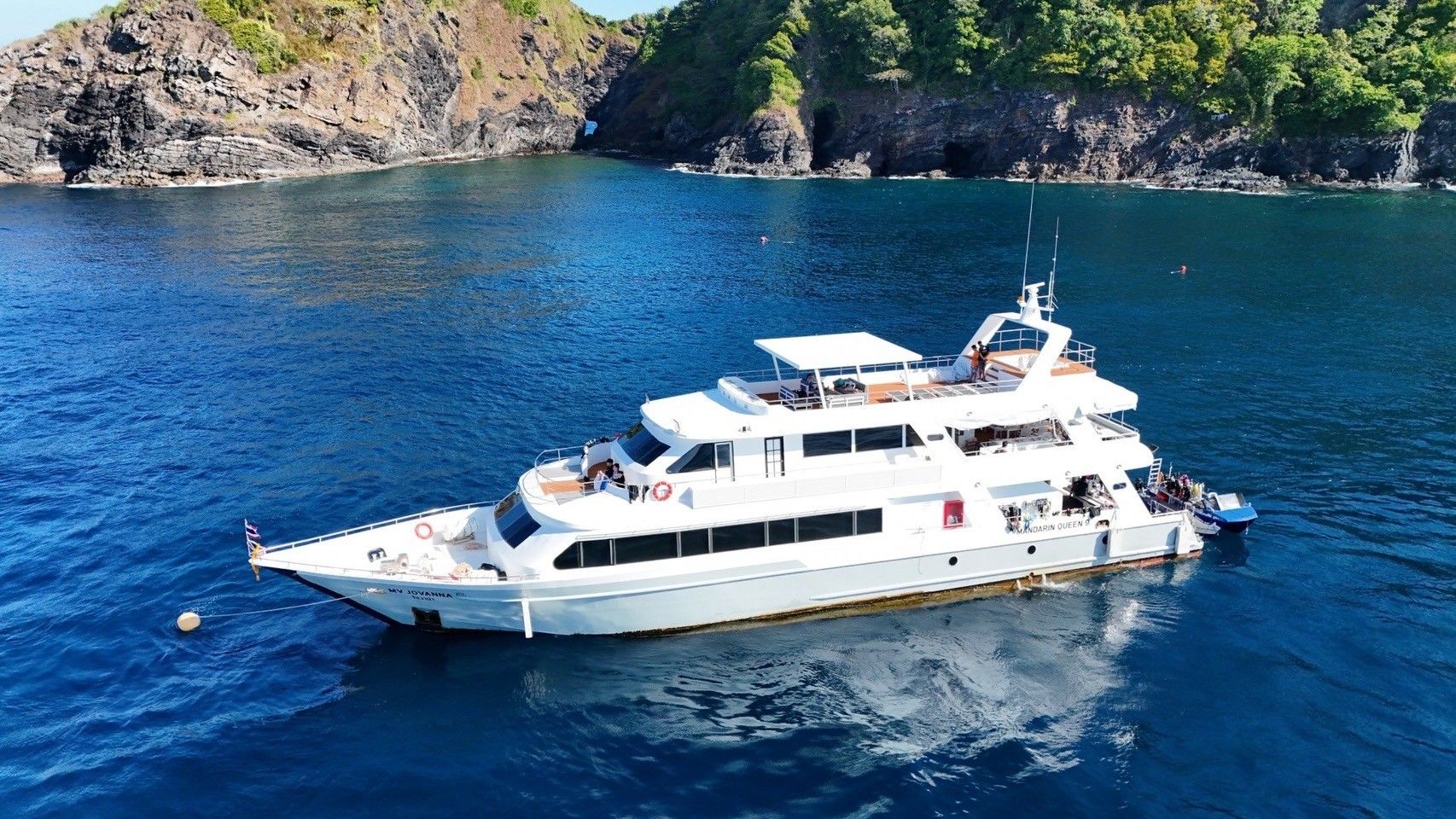
Mandarin Queen 9
Thailand
26 guests37.5 m
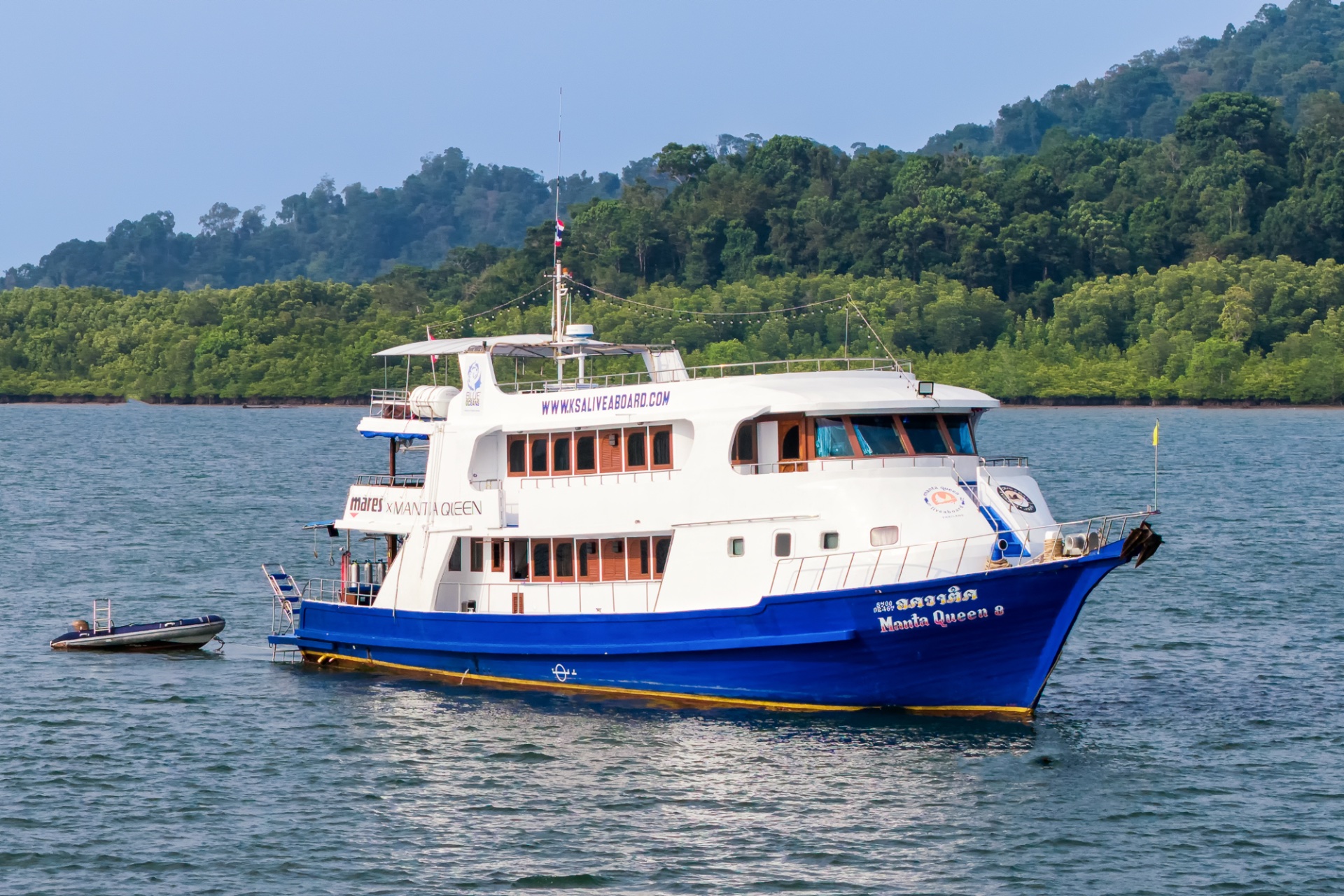
Manta Queen 8
Thailand
24 guests
$127/day
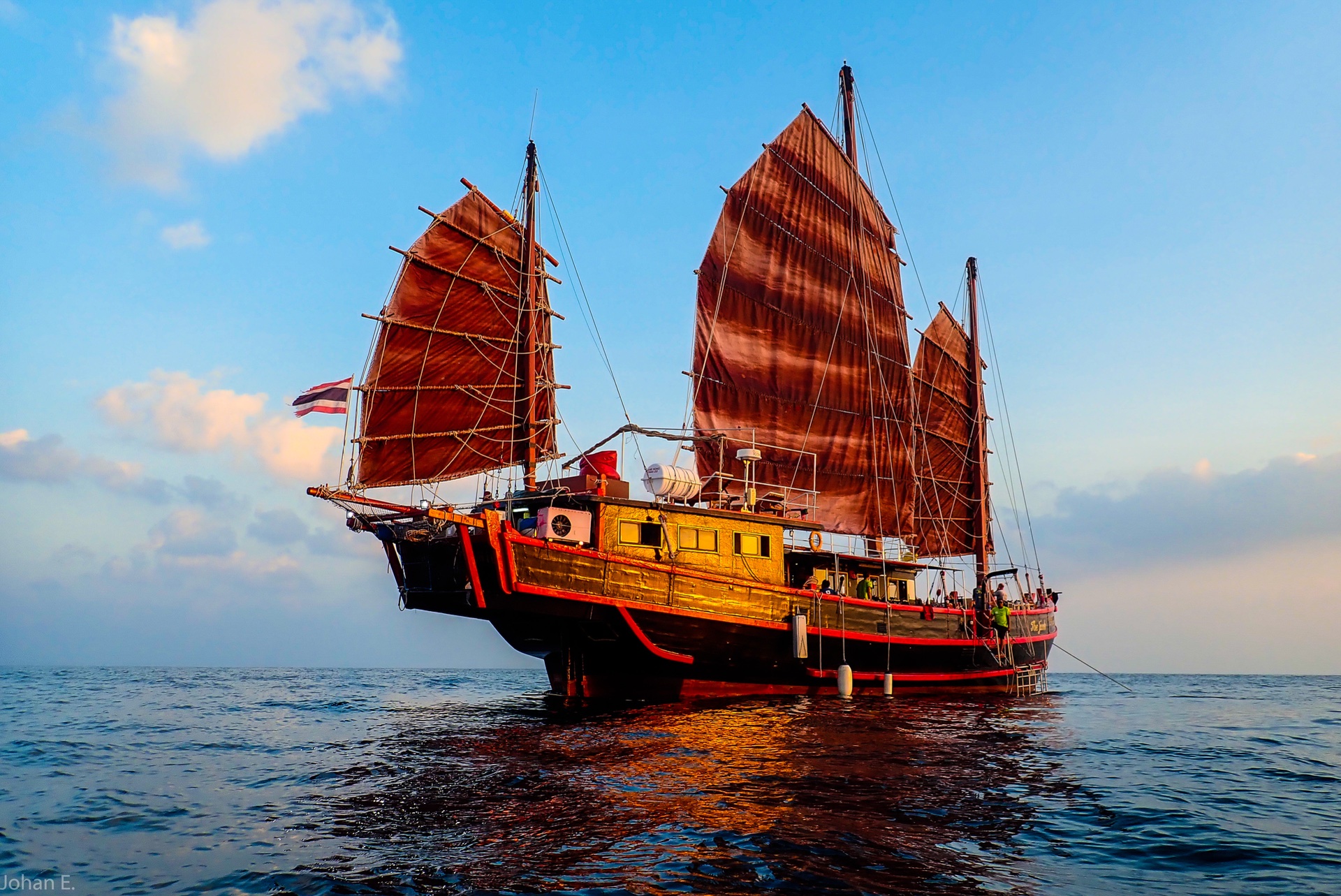
The Junk
Thailand
18 guests33 m
$163/day
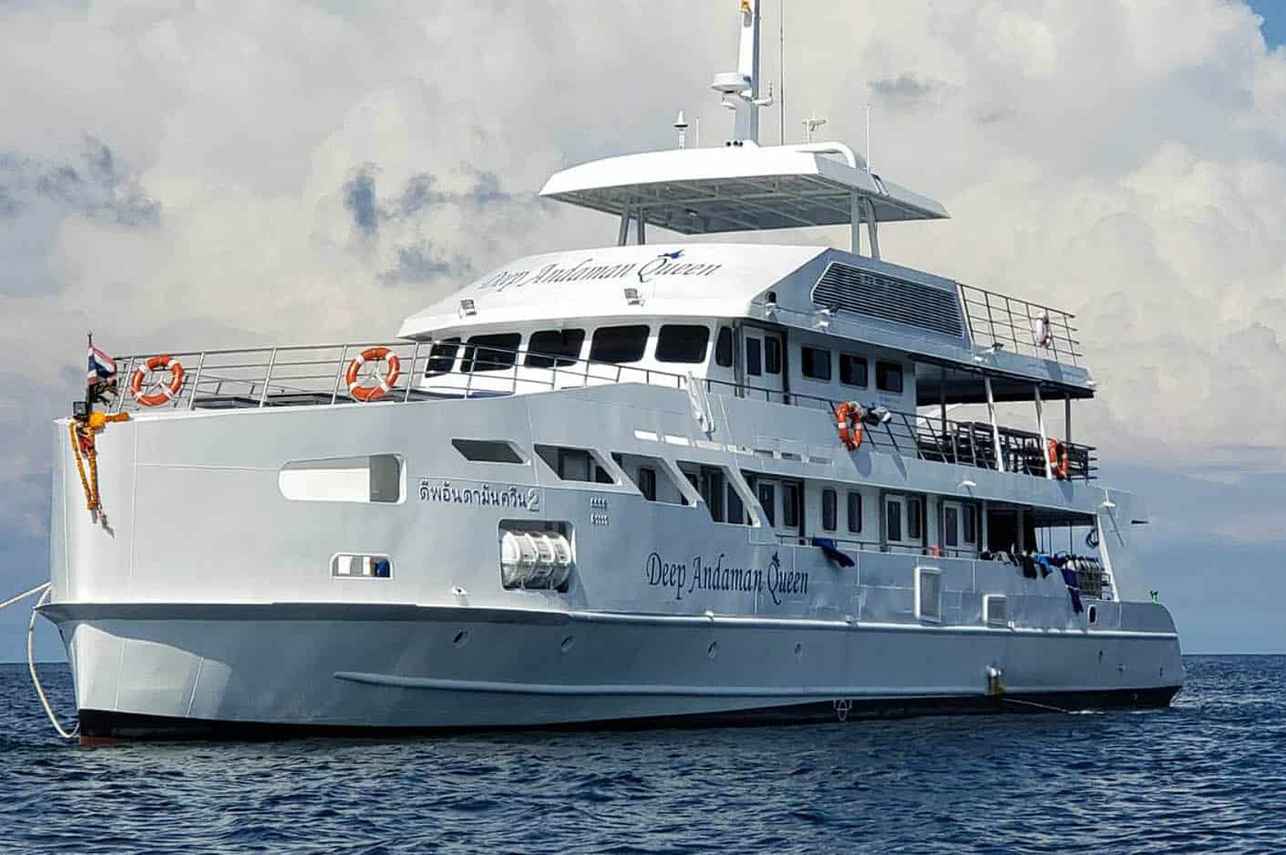
Deep Andaman Queen
Thailand
23 guests30.5 m
$194/day
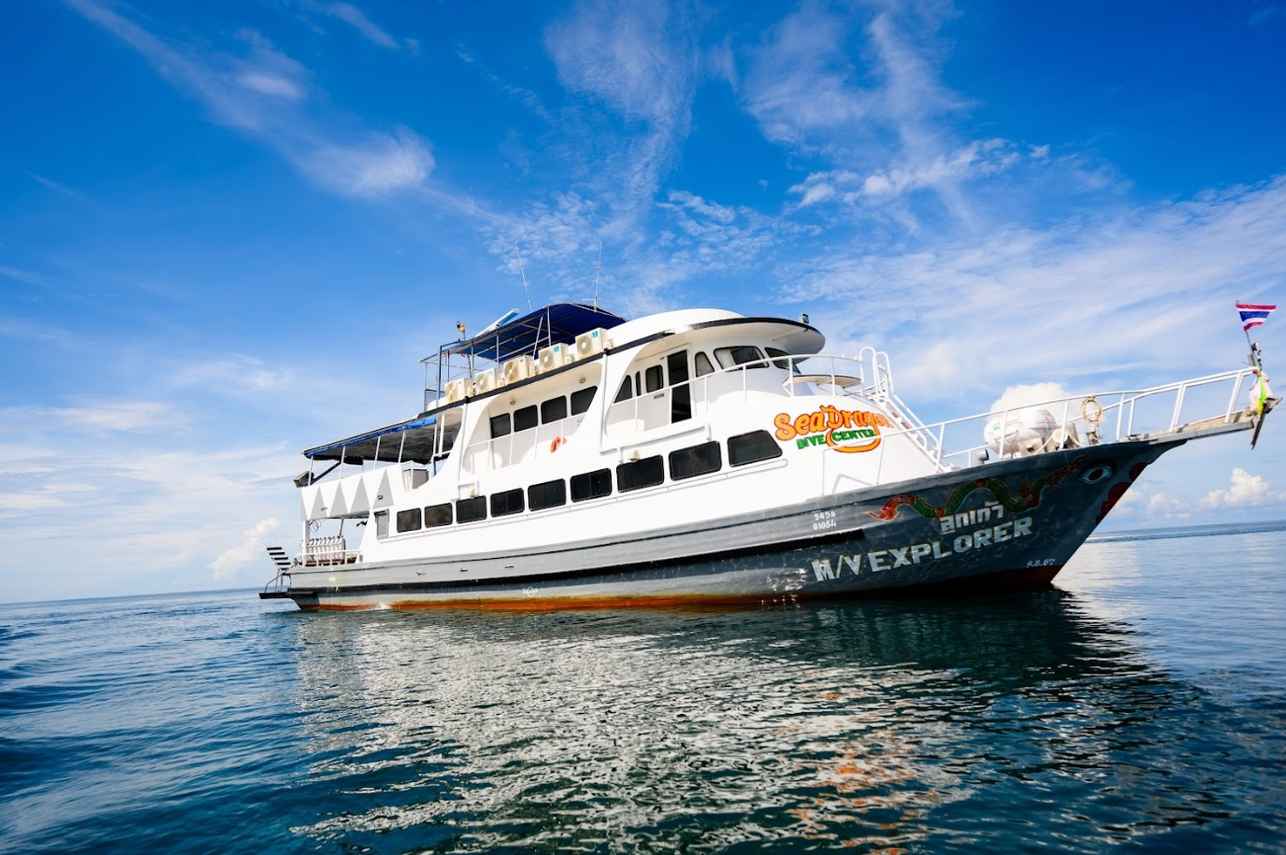
Explorer
Thailand
16 guests25 m
$150/day
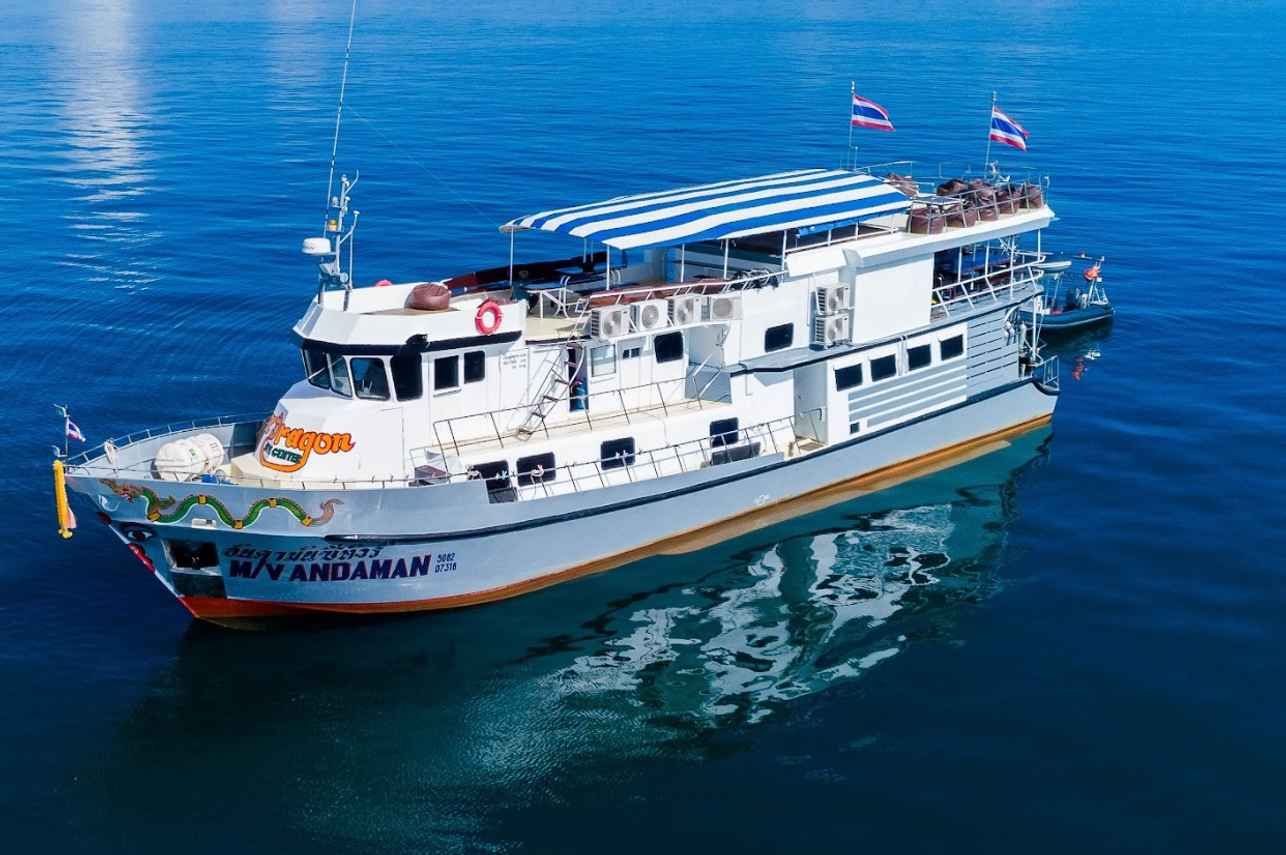
Andaman
Thailand
20 guests26 m
$108/day
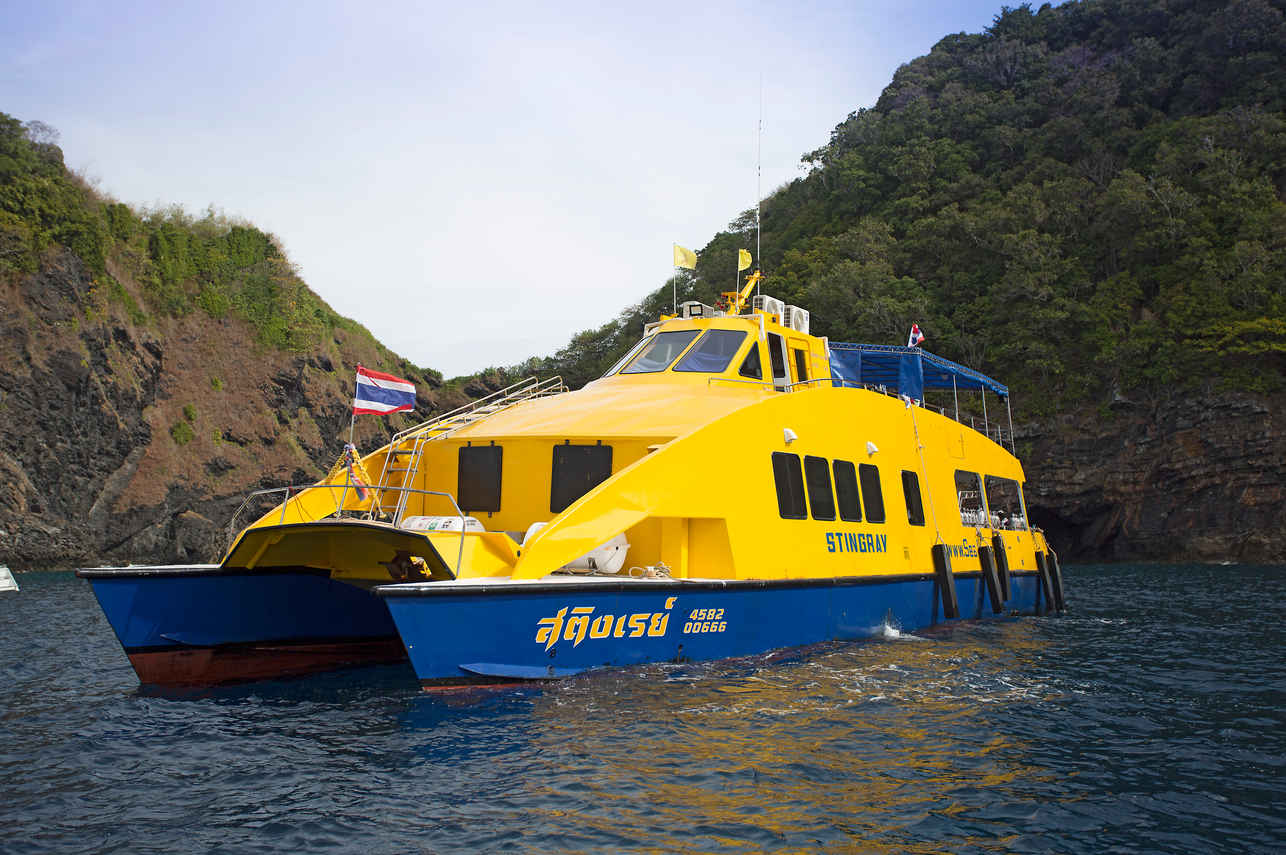
Stingray
Thailand
8 guests24 m
$245/day
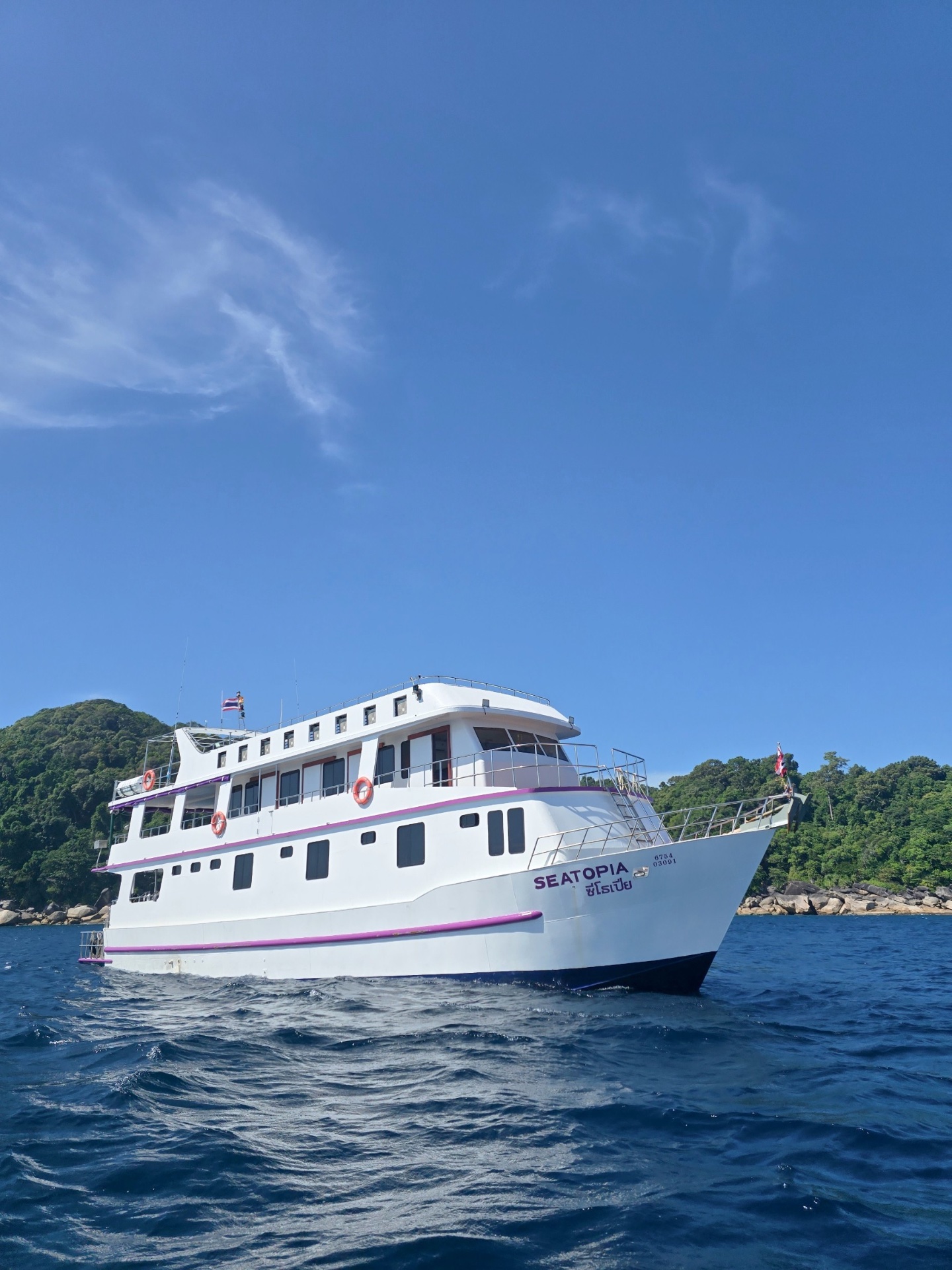
Seatopia
Thailand
24 guests24 m
Dive sites similar to Shark Fin Reef
Same character, same waters — six more sites divers love for the exact same reasons.Compare seasons, access and liveaboard routes — then pick the site that fits your trip best.
Hin Raab
Thailand
Hin Raab is a prominent dive site located in the eastern Gulf of Thailand, near Koh Chang, offering an exceptional underwater experience with its rich coral biodiversity and thriving marine life.
- Suitable for
- Intermediate
- Current
- Moderate
- Access
- Dayboat
- Depth
- 5–22 m
- Theme
- Reef / Pinnacle
Christmas Point
Thailand
Christmas Point, located on Similan Island number 9 (Koh Ba-Ngu), stands out as one of the Similan Islands' most iconic dive sites.
- Suitable for
- Intermediate
- Current
- Strong
- Access
- Liveaboard or dayboat
- Depth
- 2–40 m
- Theme
- Pinnacle
Koh Haa — Lagoon
Thailand
Koh Haa Lagoon is a picturesque and protected dive site formed by islands #2, #3, and #4 of the Koh Haa archipelago, approximately 1.45 hours by boat from Koh Lanta.
- Suitable for
- Beginner
- Current
- Moderate
- Access
- Liveaboard or dayboat
- Depth
- 2–25 m
- Theme
- Reef / Wall
Koh Tao — Twins
Thailand
Twins, a highly popular dive site near Koh Tao, Thailand, is renowned for its accessibility and rich marine life.
- Suitable for
- Beginner
- Current
- Mild
- Access
- Liveaboard or dayboat
- Depth
- 5–18 m
- Theme
- Pinnacle
Secret Reef
Thailand
Secret Reef, nestled adjacent to Hin Raab South, is a captivating dive site close to Koh Chang, forming a unified, diverse underwater ecosystem.
- Suitable for
- Beginner
- Current
- Mild
- Access
- Dayboat
- Depth
- 5–12 m
- Theme
- Reef
Southwest Pinnacle
Thailand
Southwest Pinnacle, located approximately 45 minutes by boat from Koh Tao's Mae Haad pier, is a renowned dive site in the Gulf of Thailand.
- Suitable for
- Intermediate
- Current
- Strong
- Access
- Liveaboard or dayboat
- Depth
- 8–26 m
- Theme
- Pinnacle / Wall