About Shark Fin Point
Shark Fin Point, also known as Shark Point, is located off the northeast coast of Koro Island in Fiji. This dive site is renowned for its dynamic drift diving opportunities, particularly when the tides are running strongly, carrying nutrient-rich waters past its vibrant reefs. Part of the broader Koro Sea region, which is known for its exceptional marine biodiversity and significant pelagic action, Shark Fin Point offers a quintessential Fijian dive experience. The topography features a wall richly adorned with both hard and soft corals, providing a habitat for a diverse array of fish and macro life. Depths vary, with the drift allowing divers to observe different layers of this teeming ecosystem. The site's position within the Koro Sea ensures a constant supply of food for its inhabitants, contributing to exceptionally healthy and colorful coral formations. Key marine encounters include massive schools of barracuda, often numbering around 500 individuals, alongside frequent sightings of whitetip and grey reef sharks. Occasional appearances by larger pelagics like eagle rays, manta rays, and even whale sharks add to the excitement. The dive provides a comprehensive view of Fiji's underwater beauty, from the smallest critters nestled in the reef to powerful apex predators. Diving here typically involves a negative entry into a swift current, with divers drifting along the coral-covered wall. The experience is designed for observing the rich pelagic life that congregates in the current, making it an exhilarating and visually stunning dive for those comfortable with drift conditions.
Highlights
Large barracuda schoolsWhitetip reef sharksGrey reef sharksColorful hard and soft coralsExciting drift divingOccasional manta raysAbundant fish life
Season calendar
Best months to dive here
Jan
Feb
Mar
Apr
May
Jun
Jul
Aug
Sep
Oct
Nov
Dec
Excellent
Good
Dive site facts: Shark Fin Point
- Depth
- 4.5–29 m (Koro Gardens range, likely similar)
- Current
- Strong (when tide is running)
- Visibility
- Excellent, often around 30 m
- Water temperature
- 23–27°C (73–81°F)
- Entry
- Drift / Negative entry
- Level
- Advanced recommended (for drift diving)
- Dive type
- Drift, reef, big animals
- Night dive
- Possible (mentioned for Nai'a liveaboard)
- Region / port
- Koro Sea (off Koro Island), Fiji
- Coordinates
- -17.5338, 115.611
Conditions & Currents
Shark Fin Point is specifically highlighted as a drift dive site, with the currents being a defining feature. The most exciting diving occurs when the tide is running, indicating potentially strong currents that transport substantial marine life and nutrients. Divers can expect to enter the water into a swift current and be carried along the coral wall, requiring good buoyancy control and comfort with drift diving techniques. While specific current speeds are not detailed for this site, the general Koro Sea area, where Shark Fin Point is located, is known for strong currents that provide nutrient-rich waters, attracting large pelagic species. Visibility is generally excellent in Fiji, often exceeding 30 meters, though plankton blooms in warmer months might slightly reduce it while attracting filter feeders. Divers should be prepared for negative entries and exits facilitated by the livea
Marine life & sighting chances

Barracuda (schools)
common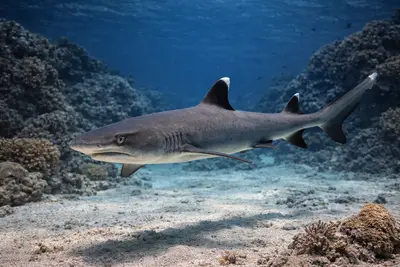
Whitetip reef shark
common
Grey reef shark
common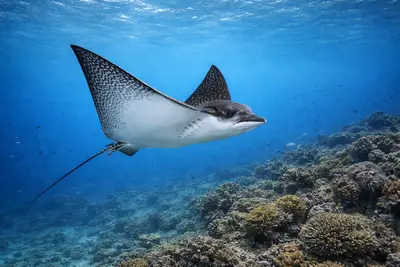
Eagle ray
occasional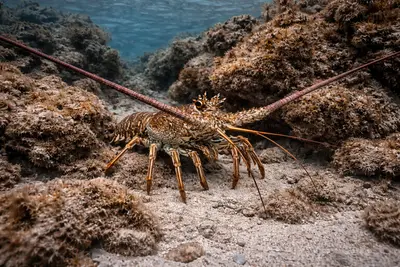
Lobster
occasional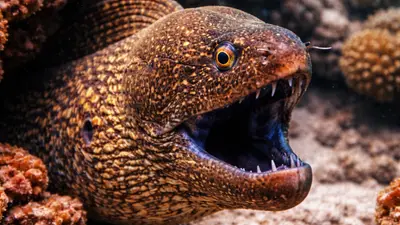
Eel
occasional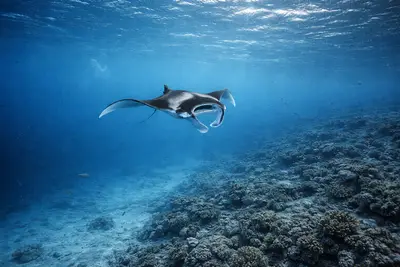
Manta ray
occasional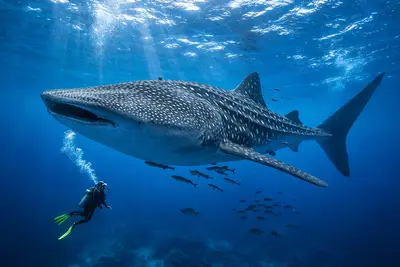
Whale shark
rare
Hard corals
common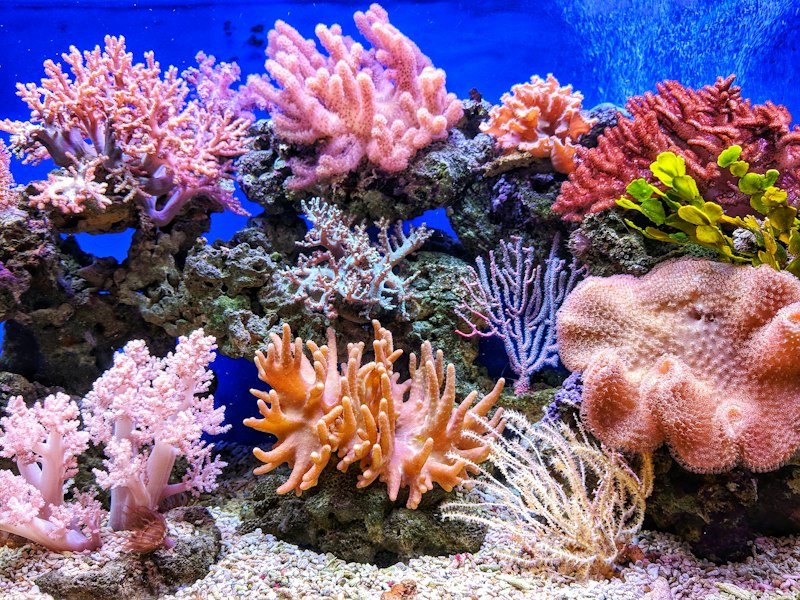
Soft corals
common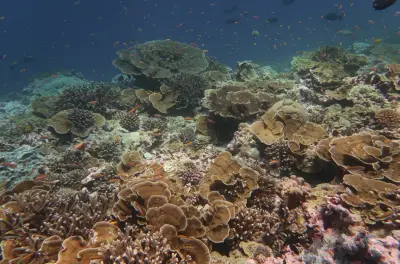
Dive profile & how the dive runs
Diving at Shark Fin Point is primarily a drift dive, often initiated with a negative entry from a liveaboard or day boat directly into the current. Divers immediately descend to the desired depth, usually along a vibrant coral wall. The dive progresses as the current carries you past schools of barracuda, whitetip and grey reef sharks, and a multitude of smaller reef fish. Attention should be paid to the colorful hard and soft corals adorning the wall. There is no specific turn point as the dive is current-dependent, concluding when divers are picked up by the boat further along the drift. A safety stop is typically performed mid-water at the end of the drift, often with a visual reference to the reef below, before surfacing to meet the dive vessel.
Underwater photography
Shark Fin Point offers exceptional wide-angle photography opportunities, especially when capturing the immense schools of barracuda and the active reef and whitetip sharks in the current. A wide-angle lens with external strobes is highly recommended to properly illuminate the vast coral wall and capture the scale of the pelagic action against the clear blue water. Given the drift nature of the dive, maintaining good buoyancy is crucial for stable shots. For macro enthusiasts, there are smaller critters like lobsters and eels nestled in the reef, though the primary focus for most photographers will be the larger subjects. Be mindful of current strength when attempting to compose shots, and always prioritize safe diving over photography. The clear visibility provides a strong advantage for both wide and macro compositions.
Combine with nearby dive sites
- Koro Gardens
Features extensive hard corals and numerous reef fish around a large bommie.
- Jim's Alley
A soft coral garden with three shallow bommies and regular manta ray sightings.
- Nigali Passage
A renowned drift dive with fast currents, pelagic life, and diverse shark species.
- Namena Marine Reserve
Visited by liveaboards, offering pristine reefs and abundant marine life.
- Wakaya Island
A liveaboard destination in the Koro Sea with exceptional diving.
Getting there & logistics
Diving at Shark Fin Point is typically accessed via liveaboard trips that explore the Koro Sea and Bligh Water regions of Fiji. These liveaboards usually depart from main hubs like Viti Levu, though specific departure ports are not detailed for this site. Common trip lengths range from 8 days and 7 nights, with longer 10 or 11-day itineraries also available, allowing for more extensive exploration of remote sites. Flights into Fiji typically land at Nadi International Airport (NAN). Liveaboards are considered the best way to experience these outer island sites, as they are often inaccessible by day boats from resorts. Dive packages generally include all meals, accommodation, and multiple dives per day, with equipment rental an additional fee. Divers should ensure they have appropriate diving insurance before commencing their trip.
Safety & environment
While diving conditions in Fiji are generally favorable, robust diving insurance is absolutely essential for any trip, especially for drift dives like Shark Fin Point. The nearest recompression chamber is located in Suva on Viti Levu, though evacuation realities from remote sites in the Koro Sea would likely involve boat transfer to an island, followed by air transport, which can be time-consuming. Divers should be comfortable with strong currents and drift diving techniques, as this site is specifically noted for them; proper buoyancy and air consumption management are critical. Staying with the dive group and following the dive guide's instructions is paramount. Liveaboard operations typically have comprehensive safety briefings and emergency procedures, but individual preparedness, including maintaining fitness and understanding personal limits, is crucial.
Who it suits — and who it doesn't
Suited for
- Experienced drift divers
- Shark enthusiasts
- Photographers seeking wide-angle subjects
- Liveaboard divers
- Divers seeking pelagic encounters
Less suited for
- Absolute beginner divers
- Divers uncomfortable with strong currents
- Divers prone to seasickness (due to liveaboard travel)
- Those preferring shore dives
FAQ
Shark Fin Point FAQ
What kind of marine life can I expect to see at Shark Fin Point?
At Shark Fin Point, you can anticipate seeing large schools of barracuda, often numbering around 500 individuals, making for a spectacular sight. It's also a prime location for encountering various sharks, including whitetip and grey reef sharks. Occasionally, lucky divers may spot eagle rays, manta rays, and even whale sharks, alongside a diverse array of colorful reef fish and macro life like lobsters and eels.
Is Shark Fin Point suitable for all diver levels?
Shark Fin Point is best suited for experienced divers comfortable with drift diving, especially when the tide is running strongly. While Fiji generally caters to all levels, the specific nature of this site with its potentially swift currents means that divers should have good buoyancy control and prior drift diving experience. It is not recommended for absolute beginners.
How do I access Shark Fin Point for diving?
This dive site is typically accessed via liveaboard operations exploring the Koro Sea and Bligh Water regions of Fiji. Liveaboards provide the best means to reach remote sites like Shark Fin Point, offering multi-day itineraries that include accommodation, meals, and multiple daily dives. Day trips from resorts are generally not feasible for this location due to its remote setting off Koro Island.
What are the typical water conditions at Shark Fin Point?
Water temperatures at Shark Fin Point generally range between 23-27°C (73-81°F), making for comfortable diving. Visibility is often excellent, frequently exceeding 30 meters, especially during Fiji's cooler months (July to December). Currents can be strong, particularly when the tide is running, which is precisely when the site comes alive with pelagic action.
Why is it called 'Shark Fin Point'?
The name 'Shark Fin Point' is indicative of the frequent shark sightings at this dive site. Divers regularly encounter multiple species, including whitetip and grey reef sharks, particularly when the currents are strong. The abundance of these apex predators makes it a thrilling location for those hoping to dive with sharks in their natural habitat.
Why dive Shark Fin Point from a liveaboard?
Shark Fin Point is one of Fiji's signature dive sites. A liveaboard sleeps you on the water and puts you in the water for three to four guided dives per day, including dawn and night dives that day-boat operators rarely offer. You skip the daily commute back to port and reach quieter, less-crowded sites in the same region on a single trip.
Below are the liveaboards that include Shark Fin Point on their Fiji itineraries.
Liveaboards diving Shark Fin Point
These liveaboards may visit Shark Fin Point on selected itineraries — the exact dive sites depend on departure, weather and conditions.
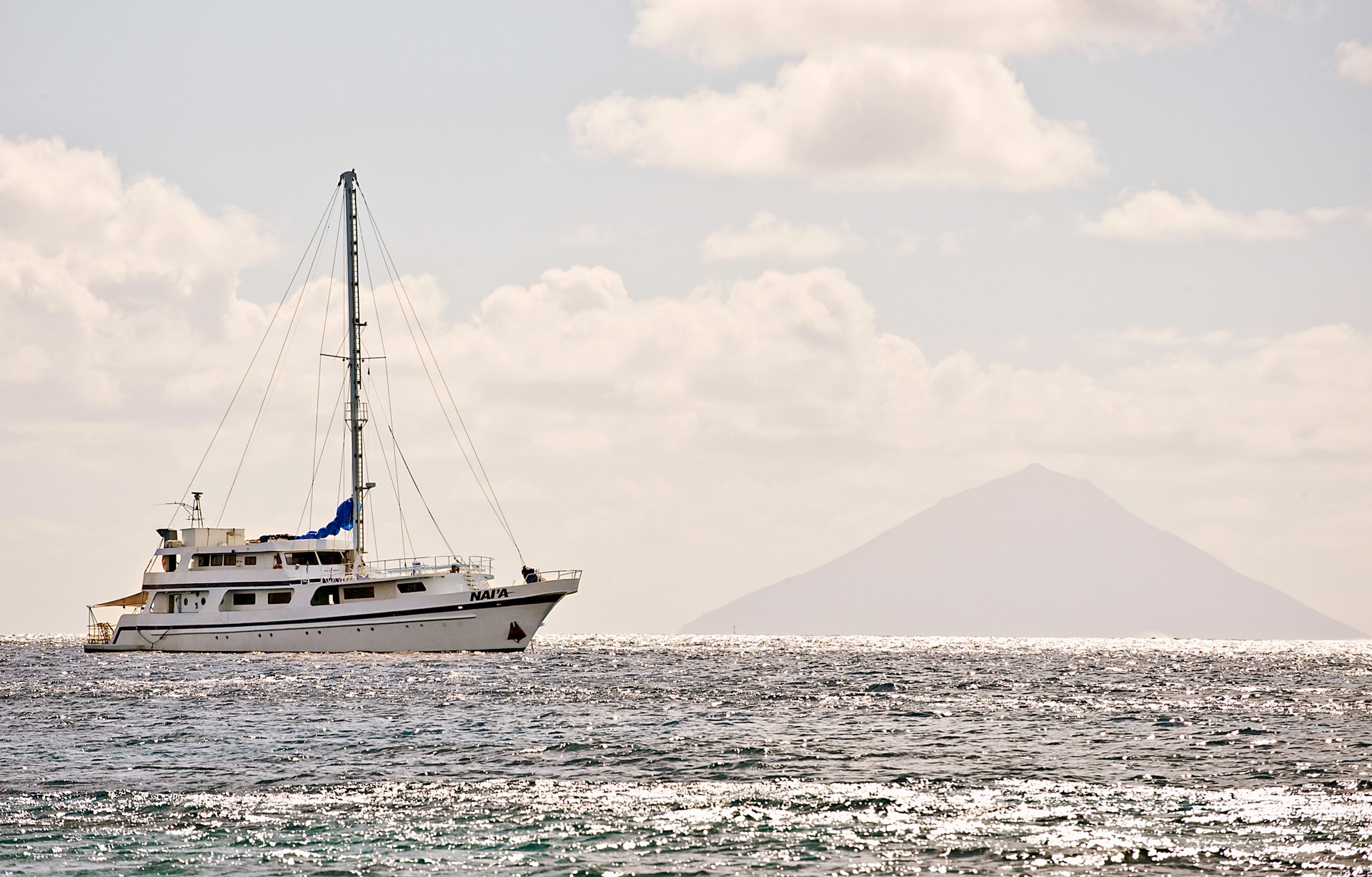
Nai'a
Fiji
16 guests36.576 m
$547/day
Dive sites similar to Shark Fin Point
Same character, same waters — six more sites divers love for the exact same reasons.Compare seasons, access and liveaboard routes — then pick the site that fits your trip best.
Jim's Alley
Fiji
Jim's Alley is a renowned soft coral garden located off Gau Island in Fiji's Koro Sea, forming part of a multi-stop diving itinerary in the region.
- Suitable for
- Beginner
- Current
- Mild
- Access
- Liveaboard only
- Depth
- ≤ 21 m
- Theme
- Reef
Manta Channel, situated off Kadavu Island in Fiji, is a world-class dive destination primarily celebrated for its frequent sightings of manta rays.
- Suitable for
- Advanced
- Current
- Strong
- Access
- Liveaboard or dayboat
- Depth
- 8–20 m
- Theme
- Channel / Drift
Sam's Point
Fiji
Sam's Point is one of the celebrated patch reefs found within the Somosomo Strait, a narrow channel between Vanua Levu and Taveuni in Fiji.
- Suitable for
- Advanced
- Current
- Strong
- Access
- Dayboat
- Depth
- 8–27 m
- Theme
- Reef / Drift
Rainbow's End
Fiji
Rainbow's End is a top dive site located in the Somosomo Strait, a channel separating Taveuni and Vanua Levu islands, known as the 'Soft Coral Capital of the World'.
- Suitable for
- Intermediate
- Current
- Moderate
- Access
- Liveaboard or dayboat
- Depth
- 10–30 m
- Theme
- Reef / Drift
Wilkes Passage
Fiji
Wilkes Passage is a dive site located within the Malolo Barrier Reef in Fiji's Mamanuca Group, southwest of Nadi on Viti Levu.
- Suitable for
- Intermediate
- Current
- Moderate
- Access
- Dayboat
- Depth
- 15–20 m
- Theme
- Reef / Drift
Makogai Island
Fiji
Makogai Island, located in Fiji's Lomaiviti Group and visible from Wakaya Island, is home to a significant marine sanctuary.
- Suitable for
- Intermediate
- Current
- Moderate
- Access
- Liveaboard only
- Depth
- 3–18 m
- Theme
- Reef