About Makogai Island
Makogai Island, located in Fiji's Lomaiviti Group and visible from Wakaya Island, is home to a significant marine sanctuary. This sanctuary operates a government station dedicated to protecting and repopulating both turtles and giant clams throughout Fiji's waters. The protected lagoon within the sanctuary showcases some of the world's largest giant clams, emphasizing the island's conservation efforts and ecological importance. The dive sites surrounding Makogai feature a series of small coral bommies that rise from the seafloor. These formations typically top out at depths between 3 to 5 meters (10 to 15 feet), while the maximum dive depth generally extends to about 18 meters (60 feet). The pristine condition of these reefs makes Makogai a prime example of a healthy Fijian marine ecosystem. Divers at Makogai can anticipate encounters with a variety of marine species. Common sightings include lionfish, several species of turtles, and white-tip sharks patrolling the reef. The proximity to Wakaya Island also suggests potential for pelagic interactions, although the primary focus here is on the diverse reef life. Access to Makogai's dive sites is convenient, with many located just minutes from the sheltered lagoon. This ease of access, combined with a dive profile that typically remains within recreational limits, contributes to a relaxed yet rewarding dive experience, allowing ample time to observe the rich biodiversity.
Highlights
Healthy Fijian reef ecosystemSmall coral bommiesGiant clam sanctuaryTurtle sightingsWhite-tip shark encountersLionfish presenceEasy access from lagoon
Best Season
The best time to visit for diving is generally between April and October to ensure optimal visibility. While water temperatures remain balmy year-round, conditions between December and March can bring higher rainfall and potentially reduced visibility due to plankton blooms.
Dive site facts: Makogai Island
- Depth
- 3–18 m
- Typical dive
- 12–18 m
- Current
- Moderate
- Entry
- Liveaboard only
- Level
- Open Water
- Dive type
- Coral reef, macro
- Region / port
- Lomaiviti Group, Fiji
- Coordinates
- -17.4148, 115.613
Conditions & Currents
While specific current information for Makogai Island is not detailed in the sources, its proximity to Wakaya Island suggests a potential for dynamic conditions. Wakaya Passage, located between Wakaya and Makogai, is known for strong, nutrient-laden currents. These currents, which attract large pelagic life, would necessitate advanced diving skills, including proficiency in negative entries and drift diving techniques. Divers in the broader region must maintain constant awareness and good buoyancy control due to potentially changing current directions, which can also contribute to excellent visibility often exceeding 30 meters.
Marine life & sighting chances


Dive profile & how the dive runs
A typical dive at Makogai Island begins with entry near the coral bommies, which rise to within 3 to 5 meters of the surface. Divers explore the vibrant reef system, gradually descending along the slopes of these bommies, with a maximum depth generally around 18 meters. The route often involves circumnavigating the bommies to observe the diverse coral formations and marine life such as lionfish, turtles, and white-tip sharks. Given the relatively shallow depths, bottom time can be generous, allowing for thorough exploration. The turn point is determined by air consumption and the planned no-decompression limits. Safety stops are typically performed during the gradual ascent, usually in the shallower areas near the bommie tops.
Underwater photography
Makogai Island's healthy reef and diverse macro life make it suitable for both wide-angle and macro photography. A wide-angle lens is ideal for capturing the expanse of the coral bommies and the overall health of the reef. For macro enthusiasts, the presence of smaller creatures like lionfish and the potential for ribbon eels (often found in Fiji) warrants a dedicated macro lens. Proper buoyancy is crucial to avoid disturbing the delicate corals and to get close to subjects without contact. Consider external strobes to bring out the vibrant colors of the soft corals and reef inhabitants, enhancing the visual impact of your images.
Combine with nearby dive sites
- Jim's Alley
Jim's Alley is a renowned soft coral garden located off Gau Island in Fiji's Koro Sea, forming part of a multi-stop diving itinerary in the…
- Nigali Passage
Nigali Passage stands as a premier dive site near Gau Island, recognized globally for its exceptional pelagic encounters and powerful…
- Wakaya Island
Wakaya Island, a private retreat within Fiji's Lomaiviti Group, offers exceptional diving opportunities less than 10 minutes from its…
- Maytag
Maytag is a jewel within Fiji's renowned Bligh Water, famous for its exceptionally colorful soft corals and abundant marine life.
- Humann Nature
Humann Nature in Fiji is renowned for its dynamic drift diving, where divers are carried along by ocean currents past spectacular…
Getting there & logistics
Makogai Island, located in the Lomaiviti Group, is typically accessed via liveaboard or private charter, as it is remote from the mainland. While specific departure ports are not detailed for Makogai, liveaboards operating in the Lomaiviti Group often depart from major Fijian hubs. Trips usually involve multi-day itineraries that combine Makogai with other renowned sites in the region like Wakaya Island and Nigali Passage. The island hosts a government station focused on conservation, indicating a managed environment, though specific permit fees for diving are not mentioned. Liveaboard travel is the most practical way to experience the area's pristine sites.
Safety & environment
Diving at Makogai Island and its surrounding areas, particularly given the proximity to sites with potentially strong currents, necessitates a high level of preparedness. Divers should ensure they have comprehensive dive insurance that covers emergency medical evacuation, as medical facilities and recompression chambers may be distant. For Fiji generally, the nearest recompression chamber is located in Suva. Site-specific hazards might include dynamic currents, especially if venturing into passages between islands, requiring proficiency in drift diving. Always dive with a safety sausage and ensure your dive computer is properly set. Maintain excellent buoyancy to protect the fragile coral ecosystems.
Who it suits — and who it doesn't
Suited for
- Divers interested in conservation
- Divers seeking healthy coral reefs
- Photographers of reef biodiversity
- Divers comfortable with bommie explorations
- Open Water certified divers
Less suited for
- Divers uncomfortable with potential currents
- Divers solely seeking large pelagic aggregations
- Divers requiring shore access
FAQ
Makogai Island FAQ
What kind of marine life can I expect to see at Makogai Island?
Makogai Island is known for a variety of marine life including lionfish, several species of turtles, and white-tip sharks. The island's marine sanctuary also hosts some of the largest giant clams in the world within its protected lagoon, offering unique viewing opportunities.
Is Makogai Island suitable for beginner divers?
Yes, Makogai Island is generally suitable for open water certified divers. The dive sites feature small bommies with a maximum depth of around 18 meters (60 feet), making them accessible for less experienced divers. However, conditions can vary, so always consult your dive guide.
Why is Makogai Island important for marine conservation?
Makogai Island houses a significant marine sanctuary with a government station actively working to protect and repopulate turtles and giant clams across Fiji. This conservation effort makes it a prime example of a healthy Fijian reef and highlights successful marine protection initiatives.
How do I get to Makogai Island for diving?
Makogai Island is remote and typically accessed via liveaboard vessels or private charters operating in Fiji's Lomaiviti Group. Many dive itineraries combine Makogai with other nearby renowned dive sites, providing a comprehensive exploration of the region's underwater world.
What are the typical dive depths at Makogai Island?
The dive sites at Makogai Island feature coral bommies that top out at 3 to 5 meters (10 to 15 feet) from the surface. Dives generally extend to a maximum depth of approximately 18 meters (60 feet), offering ample bottom time for exploration within recreational limits.
Why dive Makogai Island from a liveaboard?
Makogai Island is one of Fiji's signature dive sites. A liveaboard sleeps you on the water and puts you in the water for three to four guided dives per day, including dawn and night dives that day-boat operators rarely offer. You skip the daily commute back to port and reach quieter, less-crowded sites in the same region on a single trip.
Below are the liveaboards that include Makogai Island on their Fiji itineraries.
Liveaboards diving Makogai Island
These liveaboards may visit Makogai Island on selected itineraries — the exact dive sites depend on departure, weather and conditions.
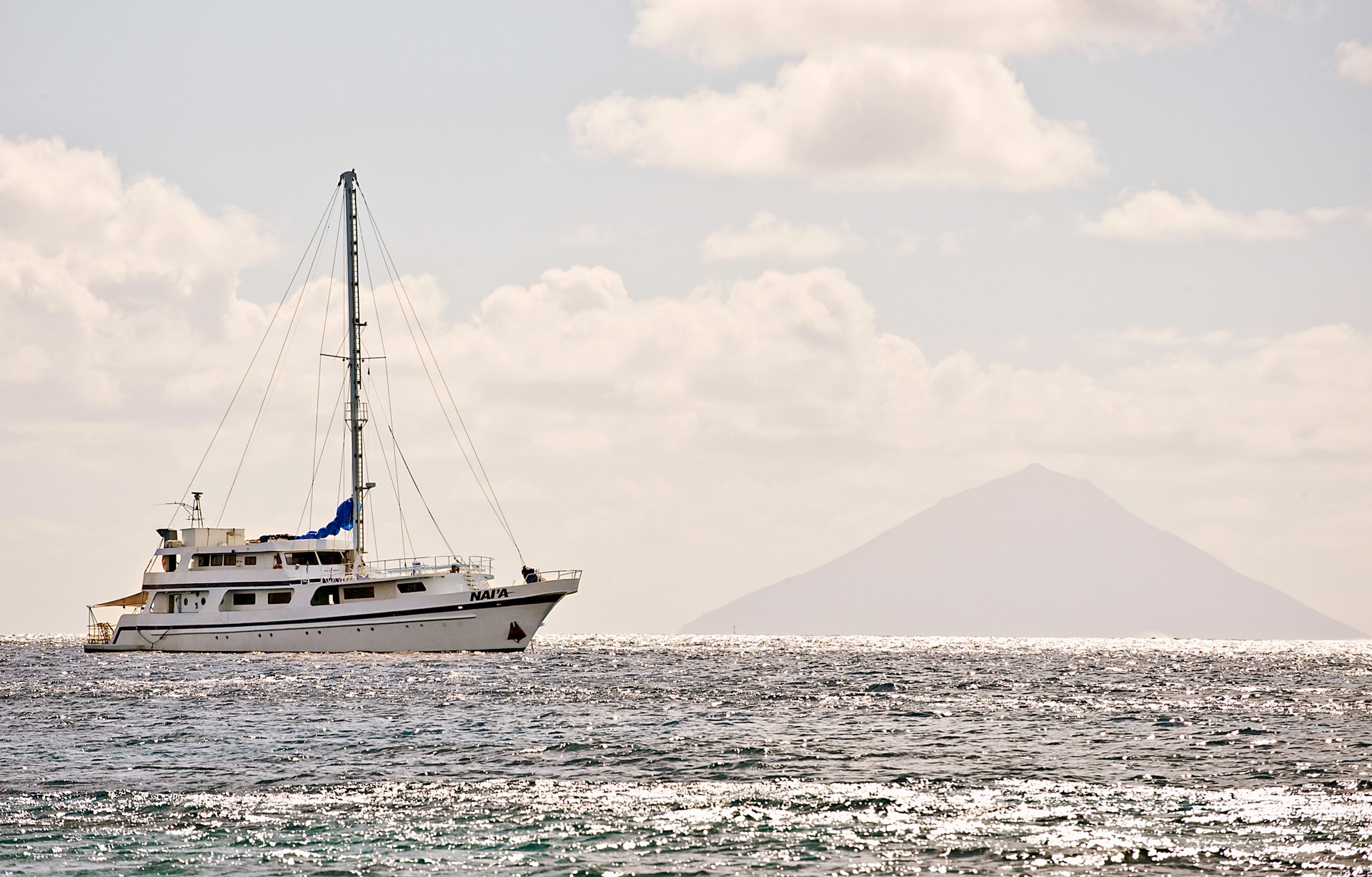
Nai'a
Fiji
16 guests36.576 m
$547/day
Dive sites similar to Makogai Island
Same character, same waters — six more sites divers love for the exact same reasons.Compare seasons, access and liveaboard routes — then pick the site that fits your trip best.
© Esri — Maxar, Earthstar, GIS
Jim's Alley
Fiji
Jim's Alley is a renowned soft coral garden located off Gau Island in Fiji's Koro Sea, forming part of a multi-stop diving itinerary in the region.
- Suitable for
- Beginner
- Current
- Mild
- Access
- Liveaboard only
- Depth
- ≤ 21 m
- Theme
- Reef
© Esri — Maxar, Earthstar, GIS
Sam's Point
Fiji
Sam's Point is one of the celebrated patch reefs found within the Somosomo Strait, a narrow channel between Vanua Levu and Taveuni in Fiji.
- Suitable for
- Advanced
- Current
- Strong
- Access
- Dayboat
- Depth
- 8–27 m
- Theme
- Reef / Drift
© Esri — Maxar, Earthstar, GIS
Rainbow's End
Fiji
Rainbow's End is a top dive site located in the Somosomo Strait, a channel separating Taveuni and Vanua Levu islands, known as the 'Soft Coral Capital of the World'.
- Suitable for
- Intermediate
- Current
- Moderate
- Access
- Liveaboard or dayboat
- Depth
- 10–30 m
- Theme
- Reef / Drift
© Esri — Maxar, Earthstar, GIS
Wilkes Passage
Fiji
Wilkes Passage is a dive site located within the Malolo Barrier Reef in Fiji's Mamanuca Group, southwest of Nadi on Viti Levu.
- Suitable for
- Intermediate
- Current
- Moderate
- Access
- Dayboat
- Depth
- 15–20 m
- Theme
- Reef / Drift
© Esri — Maxar, Earthstar, GIS
Namena Marine Reserve, nestled in Fiji's Koro Sea, is a crown jewel among the world's elite dive spots, consistently ranked as one of the best global destinations for scuba diving.
- Suitable for
- Advanced
- Current
- Moderate
- Access
- Liveaboard only
- Depth
- 5–40 m
- Theme
- Reef / Wall
© Esri — Maxar, Earthstar, GIS
Shark Fin Point
Fiji
Shark Fin Point, also known as Shark Point, is located off the northeast coast of Koro Island in Fiji.
- Suitable for
- Advanced
- Current
- Strong
- Access
- Liveaboard only
- Depth
- 5–29 m
- Theme
- Drift / Reef