About Nigali Passage
Nigali Passage stands as a premier dive site near Gau Island, recognized globally for its exceptional pelagic encounters and powerful currents. Often incorporated into multi-stop liveaboard itineraries, this passage offers a unique drift diving experience through a cut in the reef that opens into a serene lagoon. Gau Island itself, the fifth largest in the Fijian archipelago and dubbed the "Amazon of the Seas," is a biodiversity hotspot situated 90 kilometers east of Viti Levu. The dive navigates a sandy-bottomed channel approximately 20 meters long, flanked by steep walls adorned with a rich tapestry of hard and soft corals. The consistent flow of water attracts an impressive array of marine life, making it a prime location for observing larger species. After drifting through the exhilarating current, divers transition into a more sheltered lagoon area where a vast field of healthy green cabbage corals provides a contrasting, calmer exploration. Optimal diving conditions are limited to a narrow three-hour window daily, coinciding with favorable tidal currents. Outside this period, currents can exceed four knots, significantly reducing visibility and making diving impractical. This specific timing ensures divers can safely experience the exhilarating drift and the vibrant ecosystem within the passage. The site is celebrated for its diverse shark population, including numerous whitetip and grey reef sharks, with occasional hammerhead sightings. Schools of barracuda, jacks, and snappers are also common, contributing to the passage's reputation as a thrilling and action-packed dive.
Highlights
Shark encountersPelagic actionFast drift diveCoral-lined channelCabbage coral fieldThree-hour dive window
Season calendar
Best months to dive here
Jan
Feb
Mar
Apr
May
Jun
Jul
Aug
Sep
Oct
Nov
Dec
Excellent
Good
Dive site facts: Nigali Passage
- Depth
- 18–29 m
- Typical dive
- 18 m, 45-60 min
- Current
- Strong
- Visibility
- Low to high, current dependent
- Water temperature
- 24–29 °C
- Entry
- Tender / negative entry
- Level
- Advanced, current experience essential
- Dive type
- Drift dive, pelagic encounters
- Region / port
- Gau Island, Fiji
- Coordinates
- -18, 179.3167
Conditions & Currents
Nigali Passage is characterized by strong, swift currents, which are a defining feature of the dive. The site is only diveable during a specific three-hour window each day, outside of which currents can exceed four knots, making it unsafe and diminishing visibility. Divers initiate the dive by dropping into the current at the channel's mouth, drifting through the passage. The current strength dictates a rapid drift, requiring divers to be comfortable with fast-paced movement and maintaining proper buoyancy control. As divers exit the channel and enter the lagoon, the current typically subsides, allowing for a more relaxed exploration of the cabbage coral fields. This dependence on tidal flow necessitates precise dive planning and coordination with dive operators.
Marine life & sighting chances

Grey reef shark
common
Whitetip reef shark
common
Barracuda
common
Jackfish
common
Snapper
common
Malabar grouper
common
Sea snake
common
Eagle ray
occasional
Manta ray
occasional
Hammerhead shark
occasionalJewfish
occasionalDive profile & how the dive runs
Diving at Nigali Passage begins with a swift entry into the top of the strong current, requiring divers to descend quickly. The initial phase is a drift through a sandy-bottomed channel, approximately 20 meters long, with steep walls covered in vibrant hard and soft corals. Divers spend most of this segment observing the pelagic action, including schools of barracuda, jacks, and various sharks, often at a depth around 18 meters. A coral ledge on the right side of the passage serves as a vantage point for watching the sharks and other large fish. After this observation period, divers release their hold and continue with the current into the adjacent lagoon. The current then dissipates, allowing for a slower, more contemplative exploration of an extensive field of healthy green cabbage corals, which marks the final section of the dive before ascent and safety stop.
Underwater photography
Capturing the dynamic environment of Nigali Passage requires careful consideration of the strong currents and the diverse marine life. For wide-angle photography, focus on the dramatic coral-lined walls and the schooling pelagics like barracuda and jacks. The vibrant soft corals in the passage and the expansive cabbage coral fields in the lagoon make for excellent scenic shots, particularly when bathed in strong sunlight during the dry season. A powerful strobe setup is essential to bring out the true colors, especially in the deeper sections and against the strong ambient light. When photographing sharks, anticipate their movements and maintain a respectful distance. Given the fast-moving nature of the dive, quick focusing and burst shooting modes can be advantageous.
Combine with nearby dive sites
- Koro Gardens
Known for hard corals and abundant reef fish around a large bommie.
- Shark Fin Point
A drift dive off Koro Island, excellent for barracuda schools, eagle rays, and various sharks.
- Jim’s Alley
Features three shallow bommies with rich soft coral gardens and regular manta ray sightings.
- E6
A seamount dive known for its diverse marine life and colorful corals in Bligh Water.
- Black Magic
Offers dramatic coral walls and varied reef topography for wide-angle photography.
- Purple Wall
Renowned for its vibrant purple soft corals, best viewed with strong sunlight and strobes.
Getting there & logistics
Access to Nigali Passage typically involves liveaboard cruises as part of a multi-stop Fijian dive itinerary, departing from ports like Suva or Lautoka on Viti Levu. International flights arrive at Nadi International Airport (NAN) on Viti Levu. From Nadi, domestic flights connect to Suva, where some liveaboards embark. These trips usually last 7-10 days, combining Nigali Passage with other key sites in the Lomaiviti Group or Bligh Water. Dive operators often handle marine park fees and permits. Booking well in advance, especially for the dry season (May-October), is highly recommended as liveaboard spaces are limited. The remote location means less frequent trips and fewer land-based options for reaching this specific site.
Safety & environment
Diving Nigali Passage requires an advanced certification and proven experience with strong currents due to its challenging drift conditions. Always follow your dive guide's instructions regarding entry, trajectory, and exit points. Maintaining excellent buoyancy control and being comfortable with negative entries are crucial. The nearest recompression chamber is located in Suva, Viti Levu, requiring significant travel time in case of an emergency. Divers should ensure they have comprehensive dive accident insurance that covers medical evacuation and treatment. Given the remote location, evacuation procedures can be complex and time-consuming. Adhere to all safety briefings and maintain situational awareness, particularly regarding current strength and other divers.
Who it suits — and who it doesn't
Suited for
- Experienced drift divers
- Divers seeking pelagic encounters
- Underwater photographers (wide-angle)
- Liveaboard enthusiasts
- Advanced divers comfortable with strong currents
Less suited for
- Beginner divers
- Divers uncomfortable with strong currents
- Macro-focused photographers
- Divers prone to seasickness on liveaboards
- Those seeking calm, shallow dives
FAQ
Nigali Passage FAQ
What makes Nigali Passage a unique dive site?
Nigali Passage is unique for its exhilarating drift dive experience through a narrow channel, which attracts a high volume of pelagic life. The combination of strong, predictable currents and a specific three-hour diving window creates an environment rich in shark sightings and schooling fish, unlike many other Fiji dive sites. The transition from a dynamic channel to a calm cabbage coral lagoon also adds to its distinct profile.
What kind of sharks can I expect to see at Nigali Passage?
Nigali Passage is renowned for its consistent shark presence. Divers frequently encounter numerous whitetip reef sharks and grey reef sharks. On occasion, lucky divers may also spot hammerhead sharks, making it a prime location for diverse shark encounters.
Is Nigali Passage suitable for all levels of divers?
No, Nigali Passage is best suited for advanced divers with experience in strong currents. The dive involves a fast drift through the channel, requiring excellent buoyancy control and comfort with dynamic conditions. Beginners or those uncomfortable with swift currents would find the site challenging and potentially overwhelming.
How long is the optimal diving window at Nigali Passage?
The optimal diving window at Nigali Passage is approximately three hours each day. This short period aligns with specific tidal conditions when the current is manageable and visibility is best. Outside of this window, currents can be excessively strong, reaching over four knots, and visibility significantly decreases, making diving unsafe.
What is the typical marine life beyond sharks at Nigali Passage?
Beyond its famous sharks, Nigali Passage teems with a variety of marine life. You can expect to see large schools of barracuda, jackfish, snappers, and groupers. Sea snakes are also common, and occasional sightings of eagle rays and manta rays add to the pelagic spectacle within the passage.
Why dive Nigali Passage from a liveaboard?
Nigali Passage is one of Fiji's signature dive sites. A liveaboard sleeps you on the water and puts you in the water for three to four guided dives per day, including dawn and night dives that day-boat operators rarely offer. You skip the daily commute back to port and reach quieter, less-crowded sites in the same region on a single trip.
Below are the liveaboards that include Nigali Passage on their Fiji itineraries.
Liveaboards diving Nigali Passage
These liveaboards may visit Nigali Passage on selected itineraries — the exact dive sites depend on departure, weather and conditions.
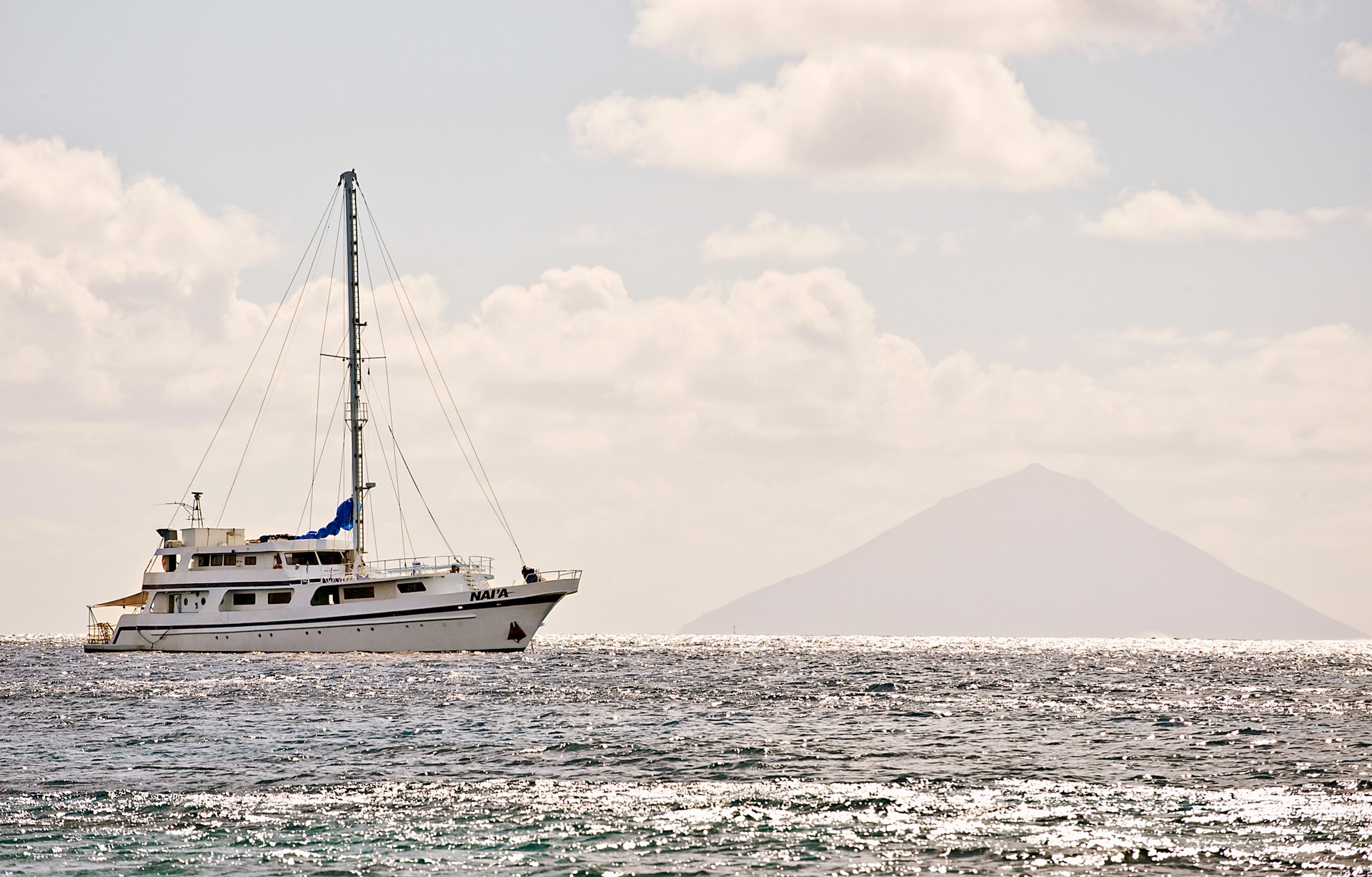
Nai'a
Fiji
16 guests36.576 m
$547/day
Dive sites similar to Nigali Passage
Same character, same waters — six more sites divers love for the exact same reasons.Compare seasons, access and liveaboard routes — then pick the site that fits your trip best.
© Esri — Maxar, Earthstar, GIS
Manta Channel, situated off Kadavu Island in Fiji, is a world-class dive destination primarily celebrated for its frequent sightings of manta rays.
- Suitable for
- Advanced
- Current
- Strong
- Access
- Liveaboard or dayboat
- Depth
- 8–20 m
- Theme
- Channel / Drift
© Esri — Maxar, Earthstar, GIS
Sam's Point
Fiji
Sam's Point is one of the celebrated patch reefs found within the Somosomo Strait, a narrow channel between Vanua Levu and Taveuni in Fiji.
- Suitable for
- Advanced
- Current
- Strong
- Access
- Dayboat
- Depth
- 8–27 m
- Theme
- Reef / Drift
© Esri — Maxar, Earthstar, GIS
Rainbow's End
Fiji
Rainbow's End is a top dive site located in the Somosomo Strait, a channel separating Taveuni and Vanua Levu islands, known as the 'Soft Coral Capital of the World'.
- Suitable for
- Intermediate
- Current
- Moderate
- Access
- Liveaboard or dayboat
- Depth
- 10–30 m
- Theme
- Reef / Drift
© Esri — Maxar, Earthstar, GIS
Wilkes Passage
Fiji
Wilkes Passage is a dive site located within the Malolo Barrier Reef in Fiji's Mamanuca Group, southwest of Nadi on Viti Levu.
- Suitable for
- Intermediate
- Current
- Moderate
- Access
- Dayboat
- Depth
- 15–20 m
- Theme
- Reef / Drift
© Esri — Maxar, Earthstar, GIS
Namena Marine Reserve, nestled in Fiji's Koro Sea, is a crown jewel among the world's elite dive spots, consistently ranked as one of the best global destinations for scuba diving.
- Suitable for
- Advanced
- Current
- Moderate
- Access
- Liveaboard only
- Depth
- 5–40 m
- Theme
- Reef / Wall
© Esri — Maxar, Earthstar, GIS
Shark Fin Point
Fiji
Shark Fin Point, also known as Shark Point, is located off the northeast coast of Koro Island in Fiji.
- Suitable for
- Advanced
- Current
- Strong
- Access
- Liveaboard only
- Depth
- 5–29 m
- Theme
- Drift / Reef