About Sam's Point
Sam's Point is one of the celebrated patch reefs found within the Somosomo Strait, a narrow channel between Vanua Levu and Taveuni in Fiji. This region is world-renowned for its exceptional biodiversity and breathtaking soft coral diving, earning Fiji the title of the "soft coral capital of the world" by Jacques Cousteau. The Somosomo Strait's unique topography creates strong tidal currents that funnel nutrient-rich water across these reefs, fostering an unparalleled environment for coral growth and a thriving marine ecosystem. As a patch reef, Sam's Point is a submerged volcanic pinnacle, distinct from the strait's extensive fringing or barrier reefs. These isolated structures are dynamic habitats, constantly visited by pelagic species drawn to the abundance of food. The currents here are vital, bringing plankton and nutrients that fuel the entire food chain, resulting in a vibrant underwater spectacle. The site is characterized by an explosion of multi-colored soft corals that blanket its surfaces, creating scenes comparable to those found in dive magazines. Divers can anticipate encountering a wide variety of reef fish and invertebrates, all thriving in the nutrient-rich waters. The constant flow ensures healthy coral gardens and a lively environment. Diving Sam's Point typically involves navigating the currents, which are a defining feature of the Somosomo Strait. Dive operators schedule visits based on tidal conditions to optimize the experience, often allowing for drift dives. The site offers a chance to witness the intricate dance between current and marine life, making it a truly immersive and world-class Fijian dive.
Highlights
Vibrant soft coral growthNutrient-rich Somosomo Strait currentsDiverse reef fish speciesIsolated volcanic patch reefExplosion of marine lifeDynamic pelagic visitors
Season calendar
Best months to dive here
Jan
Feb
Mar
Apr
May
Jun
Jul
Aug
Sep
Oct
Nov
Dec
Excellent
Good
Off-Season
May – Oct
Dry season with best visibility up to 35m. Cooler water brings manta rays. Peak soft coral season.
Apr & Nov
Transition months with good conditions. Fewer tourists and competitive liveaboard rates.
Dec – Mar
Wet season with higher rainfall and reduced visibility. Warmer water. Cyclone season possible.
Dive site facts: Sam's Point
- Depth
- 8–27 m
- Current
- Strong, tide-dependent
- Visibility
- 20–30 m
- Water temperature
- 26–29°C
- Entry
- Liveaboard / day boat
- Level
- Intermediate to Advanced
- Dive type
- Reef, drift, soft coral
- Region / port
- Taveuni, Somosomo Strait
- Coordinates
- -17.5398, 115.587
Conditions & Currents
Sam's Point is situated in the Somosomo Strait, where powerful tidal currents are a dominant feature, crucial for nourishing the abundant soft corals. These currents are highly tide-dependent; the full and new moon periods bring the strongest flows, while slackest currents occur during the half moon. Approximately 75% of dives in this area are drift dives due to these predictable currents. Divers typically enter upstream and are carried along the reef, requiring careful buoyancy control and an understanding of drift diving techniques. Strong currents can also influence visibility, though generally, the area maintains excellent clarity between 20-30 meters. Dive operators carefully schedule dives around specific tidal conditions to ensure both safety and an optimal experience, often seeking slack water or planning for controlled drift.
Marine life & sighting chances
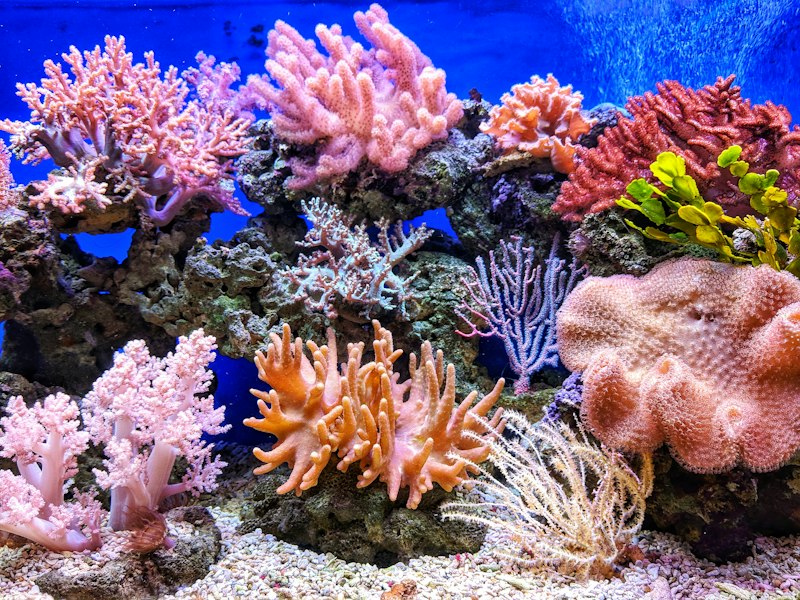
Soft corals
common
Anemones
common
Clownfish
common
Reef sharks
occasional
Schooling barracuda
occasional
Schooling jacks
occasional
Dogtooth tuna
occasional
Spanish mackerel
occasional
Manta rays
December-July (plankton-rich) · occasional
Moray eels
occasional
Wrasse
common
Anthias
common
Butterflyfish
commonDive profile & how the dive runs
Dives at Sam's Point are typically drift dives, dictated by the strong, tide-generated currents of the Somosomo Strait. Entry is usually a negative entry from a day boat, allowing divers to quickly descend to the reef. The dive typically begins by drifting along the vibrant patch reef, observing the prolific soft corals and abundant reef fish. Divers maintain a depth consistent with the reef's topography, usually between 10-25 meters, allowing the current to carry them past the most colorful sections. The dive route is often an 'out and back' or a one-way drift, depending on current strength and the specific dive plan for the day, with the turn point determined by air consumption and bottom time. A safety stop is conducted in the blue water at the end of the drift, often while slowly ascending, before surfacing for boat pick-up down current.
Underwater photography
Sam's Point, with its abundant soft corals and colorful reef life, is an excellent subject for wide-angle photography, especially when the currents cause the polyps to fully extend. A wide-angle lens (e.g., 10-17mm or fisheye) will capture the expansive beauty of the coral formations and schooling fish. For close-up shots of anemones, clownfish, or smaller invertebrates, a macro lens (e.g., 60mm or 100mm) is ideal. External strobes are highly recommended to bring out the true colors of the corals and marine life, as natural light diminishes quickly at depth. Pay close attention to buoyancy, especially in currents, to avoid contact with the delicate corals. Be mindful of marine life; approach subjects slowly and never harass them for a shot. Consider shooting when currents are moderate to allow for stable positioning.
Combine with nearby dive sites
- Rainbow Reef
Sam's Point is part of the larger Rainbow Reef system.
- Great White Wall
Another iconic site in the Somosomo Strait, known for its white soft corals.
- Purple Wall
A wall dive within the Somosomo Strait, featuring different soft coral colors.
- Mini White Wall
A smaller version of the Great White Wall, also a patch reef.
- Rainbow's End
Another vibrant patch reef within the Somosomo Strait.
- Cabbage Patch
Known for hard coral formations, suitable for easier dives.
Getting there & logistics
Access to Sam's Point is primarily via day boat charters departing from Taveuni Island. Divers typically fly into Nadi International Airport (NAN) on Viti Levu, then take a domestic flight to Matei Airport (TVU) on Taveuni. Several resorts and dive operators on Taveuni offer guided dive trips to sites within the Somosomo Strait, including Sam's Point. A typical dive package often includes two to three dives per day, with surface intervals on the boat. Prices for a two-tank dive are around $300 FJD (excluding tax). While there are no specific marine park fees mentioned for Sam's Point, liveaboards operating in Fiji generally visit this region and may incorporate it into longer itineraries, usually lasting 7-10 nights.
Safety & environment
For diving at Sam's Point and throughout the Somosomo Strait, dive accident insurance, such as through DAN, is highly recommended due to the remote location. While Taveuni has medical facilities, emergency evacuation to larger hospitals or recompression chambers (e.g., in Suva) can be time-consuming and costly. Given the strong, tide-dependent currents at Sam's Point, divers must be proficient in drift diving and maintain excellent buoyancy control. Always follow your dive guide's instructions closely, especially regarding entry and exit procedures in currents. Dive groups are typically small, limited to four divers per guide, ensuring personalized attention and enhanced safety. Always carry your certification card and logbook. Divers should also be aware of the moon cycle as it directly impacts current strength, influencing site selection and dive planning for the day.
Who it suits, and who it doesn't
Suited for
- Experienced divers comfortable with currents
- Photographers seeking vibrant soft corals
- Divers interested in diverse reef ecosystems
- Those who enjoy drift diving
- Explorers of remote, nutrient-rich marine environments
Less suited for
- Beginner divers without current experience
- Divers uncomfortable with drift diving
- Those seeking calm, current-free conditions
- Divers prone to seasickness in choppier waters
- Individuals with poor buoyancy control
FAQ
Sam's Point FAQ
What kind of currents can I expect at Sam's Point?
Sam's Point experiences strong, tide-dependent currents due to its location in the Somosomo Strait. These currents are a defining feature, bringing nutrient-rich water that sustains the vibrant soft corals. Dives are typically planned as drifts, so comfort with current diving is essential. The strongest currents occur during full and new moons, while half moons offer slacker conditions.
What marine life is commonly seen at Sam's Point?
At Sam's Point, you can expect an explosion of colorful soft corals, which are its main draw. The reef teems with diverse reef fish, including anthias and butterflyfish. Pelagic species like schooling barracuda, jacks, dogtooth tuna, and Spanish mackerel are often seen cruising the area. Moray eels, anemones, and clownfish are also common inhabitants of this lively patch reef.
Is Sam's Point suitable for beginner divers?
Sam's Point is generally recommended for intermediate to advanced divers who are comfortable with strong currents and drift diving. The unpredictable nature of the Somosomo Strait's currents means that inexperienced divers may find conditions challenging. Excellent buoyancy control and prior current diving experience are beneficial for a safe and enjoyable dive.
When is the best time of year to dive Sam's Point?
The best time to dive Sam's Point is typically from May through October. During these months, the weather topside is calmer, and underwater visibility tends to be excellent, ranging from 20-30 meters. The soft corals are often at their most vibrant during this period. While diving is possible year-round, November to March can bring increased rainfall and stronger swells.
How do I get to Sam's Point?
Sam's Point is accessed via day boat trips departing from Taveuni Island. Most divers fly into Fiji's Nadi International Airport (NAN) and then take a domestic flight to Matei Airport (TVU) on Taveuni. Resorts and dive operators on Taveuni arrange daily dive excursions to sites within the Somosomo Strait, including this specific patch reef, tailoring trips to current conditions.
Why dive Sam's Point from a liveaboard?
Sam's Point is one of Fiji's signature dive sites. A liveaboard sleeps you on the water and puts you in the water for three to four guided dives per day, including dawn and night dives that day-boat operators rarely offer. You skip the daily commute back to port and reach quieter, less-crowded sites in the same region on a single trip.
Below are the liveaboards that include Sam's Point on their Fiji itineraries.
Liveaboards diving Sam's Point
These liveaboards may visit Sam's Point on selected itineraries, the exact dive sites depend on departure, weather and conditions.
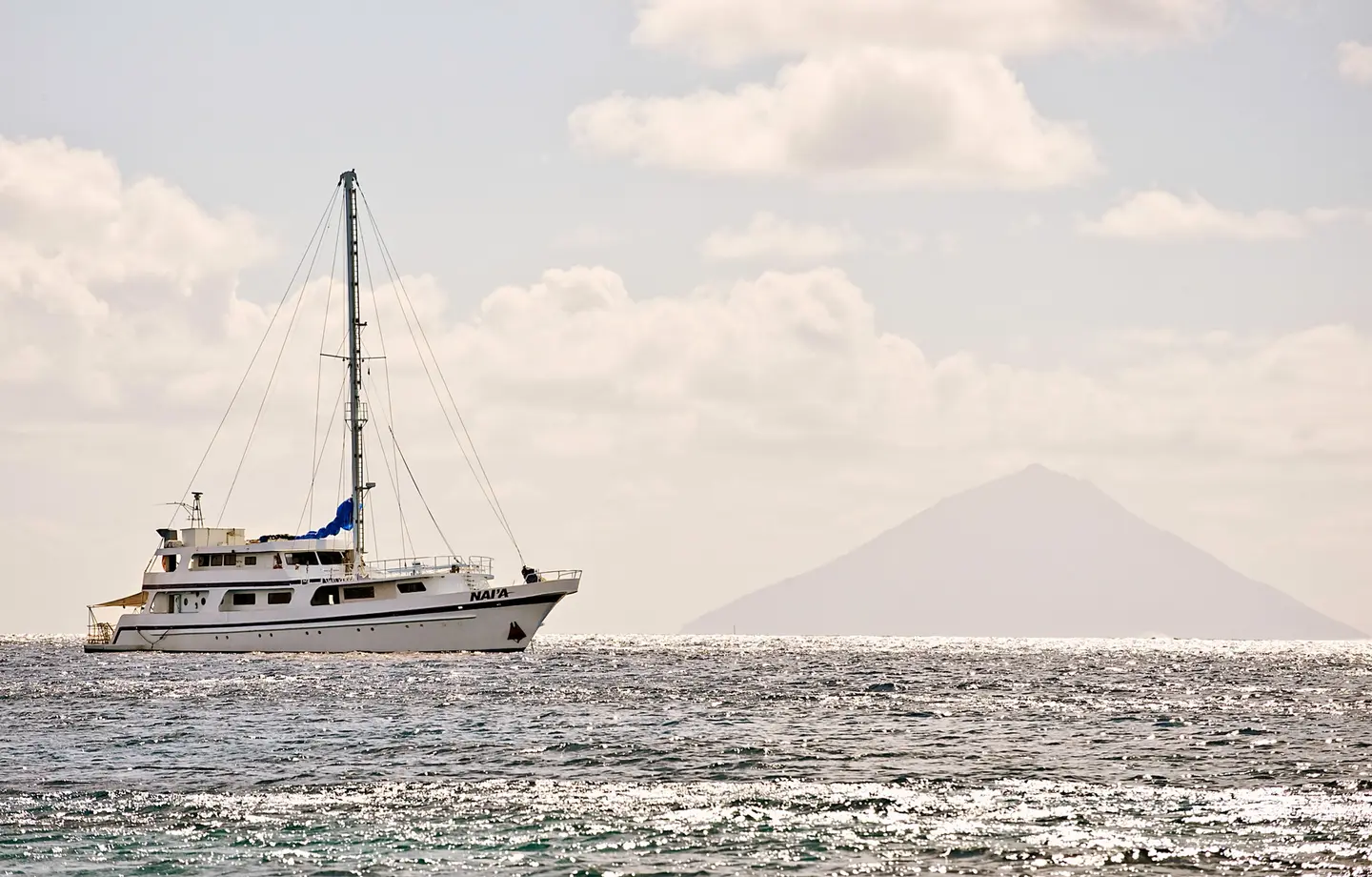
Nai'a
Fiji
16 guests37 m
Dive sites similar to Sam's Point
Same character, same waters, six more sites divers love for the exact same reasons.Compare seasons, access and liveaboard routes, then pick the site that fits your trip best.
© EsriMaxar, Earthstar, GIS
Agincourt Reef
Australia
Agincourt Reef sits on the outer edge of the Great Barrier Reef, roughly 60–72 km off Port Douglas in Far North Queensland, at the southern end of the true ribbon reefs that run…
- Suitable for
- Beginner
- Current
- Moderate
- Access
- Dayboat
- Depth
- 2–20 m
- Theme
- Reef / Wall
Ahe Atoll, a remote and authentic destination in French Polynesia, offers a dive experience deeply intertwined with its local pearl farming community.
- Suitable for
- Advanced
- Current
- Strong
- Access
- Liveaboard or dayboat
- Depth
- 5–22 m
- Theme
- Channel / Drift
© EsriMaxar, Earthstar, GIS
Alacrity Shoal
Fiji
Alacrity Shoal is a premier dive site in Fiji, renowned for its spectacular drift diving opportunities and rich marine biodiversity.
- Suitable for
- Advanced
- Current
- Strong
- Access
- Liveaboard or dayboat
- Depth
- 12–40 m
- Theme
- Drift / Seamount
Alibaba is a renowned drift dive located within the Garuae Pass in northern Fakarava, a UNESCO Biosphere Reserve in the Tuamotu Archipelago.
- Suitable for
- Intermediate
- Current
- Strong
- Access
- Liveaboard only
- Depth
- 5–30 m
- Theme
- Reef
© EsriMaxar, Earthstar, GIS
Aliko Reef
Micronesia
Aliko Reef is a prominent dive site within Yap, Micronesia, characterized by a captivating underwater topography that blends a mini-wall with an expansive coral plateau.
- Suitable for
- Intermediate
- Current
- Mild
- Access
- Dayboat
- Depth
- 6–15 m
- Theme
- Reef / Wall
© EsriMaxar, Earthstar, GIS
Amity Point
Australia
Amity Point is a popular shore diving destination located at the northwestern tip of North Stradbroke Island, within the protected waters of Moreton Bay.
- Suitable for
- Beginner
- Current
- Moderate
- Access
- Shore / dayboat
- Depth
- 5–15 m
- Theme
- Reef